Author: admin

  • The Role of Technology in Shaping Future Appraisals

    The Role of Technology in Shaping Future Appraisals

    Employee performance appraisals have evolved significantly over the past decade. Traditional annual reviews, paper-based evaluations, and subjective feedback are no longer sufficient to meet the expectations of today’s dynamic workforce. As organizations embrace digital transformation, technology has become a key driver in redefining how employee performance is measured, managed, and improved.

    Modern businesses require agile performance management systems that provide continuous feedback, data-driven insights, and personalized development plans. Technologies such as Artificial Intelligence (AI), machine learning, automation, predictive analytics, and cloud-based HRMS platforms are making employee appraisals more transparent, objective, and impactful.

    Organizations that invest in digital appraisal solutions not only improve employee productivity but also strengthen engagement, retention, and overall business performance. By replacing manual evaluation processes with intelligent HR technology, managers can focus on coaching employees rather than spending valuable time on administrative tasks.

    This shift is transforming performance management from a once-a-year event into an ongoing process that supports employee growth, aligns business objectives, and enables informed decision-making across every level of the organization.


    Why Traditional Performance Appraisals Are No Longer Effective

    Many organizations still rely on annual or semi-annual performance reviews. While these methods were effective in the past, they struggle to meet the needs of today’s fast-paced work environment.

    Some common challenges include:

    • Delayed feedback that prevents timely improvement.
    • Subjective evaluations influenced by personal bias.
    • Lack of measurable performance metrics.
    • Limited visibility into employee progress throughout the year.
    • Minimal employee participation in the appraisal process.
    • Administrative burden caused by manual documentation.
    • Difficulty aligning individual goals with business objectives.

    As workplaces become more collaborative, remote, and data-driven, organizations need appraisal systems that provide continuous insights rather than isolated performance snapshots.

    Technology addresses these challenges by enabling real-time tracking, automated workflows, and evidence-based decision-making.


    The Evolution of Technology in Performance Management

    Performance management has progressed through several stages, each introducing greater efficiency and accuracy.

    Phase 1: Manual Performance Reviews

    Organizations traditionally relied on paper forms, spreadsheets, and manager observations. Reviews were often conducted annually, making it difficult to recognize achievements or resolve issues promptly.

    Characteristics:

    • Manual paperwork
    • Annual reviews
    • Limited reporting
    • High administrative effort
    • Subjective assessments

    Phase 2: Digital HR Systems

    The introduction of Human Resource Management Systems (HRMS) digitized employee records and simplified performance documentation.

    Organizations gained:

    • Digital employee records
    • Automated review scheduling
    • Standardized appraisal forms
    • Better documentation
    • Centralized performance history

    Phase 3: Cloud-Based Performance Management

    Cloud technology enabled employees and managers to collaborate from anywhere.

    Key improvements included:

    • Real-time performance tracking
    • Continuous feedback
    • Goal management
    • Mobile accessibility
    • Team collaboration
    • Remote workforce support

    Phase 4: AI-Powered Performance Management

    Artificial Intelligence is now transforming performance appraisals through intelligent automation and predictive insights.

    Modern AI-powered appraisal systems can:

    • Analyze employee performance trends.
    • Recommend personalized learning paths.
    • Detect skill gaps.
    • Identify high-potential employees.
    • Predict employee turnover risks.
    • Suggest promotion readiness.
    • Generate automated performance summaries.
    • Reduce unconscious bias in evaluations.

    Instead of relying solely on manager opinions, organizations can now combine human judgment with data-driven insights for fairer and more accurate appraisals.


    Why Technology Is Becoming Essential for Future Appraisals

    The future workplace demands faster decisions, higher transparency, and continuous employee development. Technology enables organizations to move beyond static reviews and create a culture of ongoing performance improvement.

    Some of the biggest advantages include:

    • Faster appraisal cycles
    • Increased employee engagement
    • Objective performance measurement
    • Automated reminders and workflows
    • Better collaboration between employees and managers
    • Personalized development recommendations
    • Actionable workforce analytics
    • Improved compliance and record management

    Companies using intelligent performance management software are better equipped to align employee goals with organizational strategy while fostering a high-performance culture.


    Expert Insight

    High-performing organizations no longer treat appraisals as isolated HR activities. Instead, they integrate performance management with talent development, employee engagement, workforce planning, and business strategy. Leveraging AI-driven HR technology allows businesses to make informed decisions based on measurable outcomes rather than assumptions, creating a more agile and future-ready workforce.


    Internal Linking Recommendations

    To strengthen topical authority and improve user navigation, include contextual links to related Phi EDGE resources such as:

    • Performance Management System – when discussing digital appraisals and continuous feedback.
    • Talent Management System – when explaining employee development and succession planning.
    • HRMS Software – when describing centralized employee data and automation.
    • Employee Engagement Software – when covering continuous feedback and recognition.
    • Goal Management (OKR/KPI) – when discussing performance alignment.
    • Learning Management System (LMS) – when mentioning personalized learning and upskilling.
    • Recruitment Management Software – when explaining how appraisal data supports hiring and internal mobility.
    • Workforce Analytics – when discussing predictive insights and data-driven decision-making.

    These contextual internal links help search engines understand the relationship between your HR technology content while improving the user journey across your website.


    The days of performance management being an annual event are long gone and have been replaced by a differentiator impacting strategy. Technology is playing a pivotal role in determining the future of appraisal, and, in the digital age of agility, transparency, and personalisation, which determine success, it is a mission-critical lever of HR transformation.

    Future-ready organisations are investing in digital support tools, some AI-driven, to help to match performance with purpose, as well as in ecosystems that provide feedback continuously and at scale. This Phi EDGE brief reveals the power of technology in enabling leaders, managers, and employees to work together in co-creating a culture of accountability, growth, and recognition.

    Non- electronic appraisal is built on the documents and physical encounters. They may restrict employees in four ways:

    1. Feedback is hard to come by.
    2. Evaluations are prone to biasness.
    3. Bias by managers may find its way in.
    4. It does not solve problems in a short time.

    The utilisation of tech-enabled appraisal is possible so that employees can exchange and casually receive and give feedback at any moment. They also support the process by using data. Repetitive HR tasks are programmed, and each participant is supplied with an individual learning plan. This will enhance the system to be more efficient, accurate and meaningful.

    Important Technologies Revolutionising Appraisals

    1. Machine learning and artificial intelligence (AI)
    Large amounts of performance data are analysed by AI tools to find patterns, identify top performers, and forecast future possibilities. Machine learning algorithms, for instance, can identify disengaged workers before they quit, allowing HR to take action.

    2. Tools for Real-Time Feedback
    Managers and staff can have continuous performance discussions thanks to platforms like Lattice and 15Five. These resources encourage consistent communication, raise spirits, and avoid unpleasant surprises during official evaluations.

    3. Systems of 360-Degree Feedback
    Digital 360-degree platforms allow employees to get feedback from supervisors, peers, and subordinates. This all-encompassing viewpoint promotes equitable treatment and well-rounded growth.

    4. Systems for Cloud-Based Performance Management
    Appraisal data is centralised by cloud solutions and is available from any location. Real-time goal-setting, progress monitoring, and feedback review by managers promotes increased accountability and transparency.

    5. Features of Gamification
    Including game-like components, like leaderboards, badges, and reward points, keeps staff members interested in their performance reviews and promotes ongoing development.

    A Tech-Driven Appraisal System’s Advantages

    1) Fairness and Accuracy: By concentrating on quantifiable results, technology lessens bias and human error.

    2) Engagement and Motivation: Employee alignment and motivation are maintained through frequent feedback and immediate recognition.

    3) Goal Alignment: Linking personal goals with corporate strategy is made simpler by digital tools.

    4) Development Focus: Automated data tracking identifies areas for professional development and skill improvement.

    Problems to Be Aware of

    Although technology improves appraisals, there are some risks involved:

    Data privacy: It’s critical to guarantee the privacy of performance data.

    Over-Reliance on Metrics: Qualitative insights must be used to counterbalance quantitative data.

    Change management: Training and cultural adjustment are necessary when implementing new systems.

    Top Implementation Techniques

    • Select Tools That Are Scalable: Make sure the platform is appropriate for your workforce’s size and requirements.
    • Give Training: Give supervisors and staff the skills they need to use tools efficiently.
    • Combine Technology and Human Touch: Make use of data as a starting point, but maintain communication and empathy at the heart of the process.
    • Review Systems Frequently: Modify procedures and tools in response to user input and company objectives.

    Looking Ahead: What’s Next for Technology-Enabled Appraisals?

    After considering the directions of appraisals via technology, I see a definite rise in interactivity and prediction. We can expect to see:

    • AI that delivers coaching suggestions in real-time
    • VR simulations for skill assessment
    • Chat bots that support managers with review templates and feedback scripts
    • Predictive career pathing based on performance patterns

    Conclusion

    The Role of Technology in Future Appraisals provides the modern-day HR professional with the tools needed to break out of a reactive performance culture. With the technology it is possible to construct a continuous performance and recognition journey rather than just performance evaluations.

    The organizations that equip themselves with digital appraisal systems today will obtain a workforce of improved cognition, engagement and capability for the future.

  • Fixing the Feedback Loop: How a Leading Manufacturing Firm Transformed Appraisals with Phi EDGE

    Fixing the Feedback Loop: How a Leading Manufacturing Firm Transformed Appraisals with Phi EDGE

    A leading manufacturing company with over 1,500 employees across several plants was at a tipping point: their legacy appraisal system no longer captured true employee performance or potential. Managers often struggled to distinguish high achievers from average contributors, hampered by infrequent, generic feedback cycles. This disconnect not only dampened engagement but also led to increased turnover among top performers and missed opportunities for internal growth.

    The Core Challenges
    The organization’s annual review process suffered from major flaws:

    • Uniform ratings with little recognition for exceptional or struggling employees.
    • No real insight into role-specific capabilities or skill gaps.
    • Managers reluctant to engage, citing complexity and time constraints.
    • Vague feedback, leaving staff unclear about their development path.
    • No systematic way to link performance with either reward or learning plans.

    The result: a fractured and ineffective feedback system.

    Phi EDGE Transformational Approach
    Phi EDGE partnered with the company to deliver a robust solution built for the future:

    • Dynamic 9-Box Grid for Talent Mapping:
      By introducing the 9-box grid, the company gained immediate clarity around employee performance versus potential—enabling smart succession planning, strategic development, and targeted coaching interventions.
    • Competency-Based Appraisals:
      Customized frameworks for each role type—blue-collar, supervisor, and manager—ensured employees were evaluated on relevant skills and behaviors, providing a fair and standardized review process. Skill gaps became highly visible, allowing for proactive, tailored training.
    • Next-Gen Performance Management System (PMS):
      Phi EDGE digital PMS replaced spreadsheets with real-time goal monitoring, transparent workflows, ongoing feedback, self-assessment tools, and data-rich dashboards for managers and HR.

    Impact

    • Appraisal accuracy jumped by 30% thanks to competency-driven evaluations.
    • Every manager across all locations adopted the 9-box grid within the first review cycle.
    • Employee engagement surged, with feedback conversations quadrupling through the new PMS.
    • For the first time, there was a clear link from performance insights to learning and promotion decisions, resulting in targeted L&D and more internal mobility.
    • Attrition among high performers dropped by 18% in just one year.

     “Phi EDGE helped us turn a chaotic, outdated process into a streamlined and strategic talent conversation. Our managers now feel empowered, and our employees finally feel seen.”
    — CHRO, Manufacturing Client

    Through an integrated approach—blending the 9-box grid, competency-based evaluations, and digital performance management—Phi EDGE transformed performance reviews into a powerful driver of business growth, engagement, and culture. This initiative was not just an upgrade, but a pivotal shift towards continuous talent development and organizational excellence.

  • How AI is Transforming HRMS Software in India: Key Trends for 2026

    How AI is Transforming HRMS Software in India: Key Trends for 2026

    The landscape of human resource management in India is being rapidly reshaped by artificial intelligence (AI). As organisations seek to stay agile and competitive, AI-powered HRMS solutions are at the heart of this transformation. Let’s explore the top trends driving this change and how Indian businesses are leveraging AI to build smarter, more resilient HR systems.

    1. Moving from AI Adoption to AI Integration

    Indian companies are no longer just experimenting with AI—they’re weaving it into the fabric of daily HR operations. This means not only using AI tools but also redesigning workflows and job roles to maximize the benefits of automation and data-driven insights.

    Example:
    A leading Indian IT services company integrated AI into its HRMS to automate candidate screening and shortlisting. This not only reduced hiring time by 40% but also allowed HR managers to focus more on strategic talent development.

    1. Unlocking AI’s Untapped Potential in HR

    While AI has made inroads into HR functions, many organisations are still in the early stages of realising its full capabilities. The focus is shifting towards upskilling HR teams, choosing the right technology partners, and developing a clear understanding of how AI can drive better outcomes in recruitment, engagement, and workforce planning.

    Example:
    A large Indian conglomerate trained its HR team to use AI-powered analytics, which helped them uncover hidden patterns in employee engagement surveys and proactively address low morale in specific departments.

    1. Bridging the Skills Gap

    With technology evolving at breakneck speed, the gap between existing skills and future requirements is widening. AI-enabled HRMS platforms are helping organizations map current talent, anticipate future needs, and deliver personalized learning paths, ensuring employees are equipped for tomorrow’s challenges.

    Example:
    A major Indian bank used AI to analyze employee competency data from performance management systems, identifying skill gaps and recommending targeted online courses for each employee.

    1. Redefining Blue-Collar and New-Collar Roles

    AI is not just impacting traditional office jobs. It’s also transforming blue-collar and emerging tech-driven roles by streamlining hiring, onboarding, and upskilling processes. This shift is making HR practices more inclusive and responsive to India’s diverse talent pool.

    Example:
    A manufacturing firm deployed AI chatbots to conduct initial screening interviews in regional languages for factory workers, speeding up the hiring process and ensuring fairer assessments.

    1. Supporting an Age-Diverse Workforce

    As more professionals in India continue working beyond conventional retirement ages, AI-powered HRMS solutions are being used to create flexible work arrangements, ergonomic policies, and benefits tailored to older employees, fostering a culture of generational diversity.

    Example:
    A healthcare organization used AI to analyze work patterns and health data, leading to the introduction of part-time roles and ergonomic support for employees over 60.

    1. Promoting Gender Equity

    AI is playing a crucial role in advancing gender equality at the workplace. By enabling unbiased performance evaluations and pay equity analysis, HRMS tools are helping organizations identify and address gaps, paving the way for more women to take on leadership roles.

    Example:
    An Indian tech company leveraged AI to audit pay and promotion data, identifying and correcting gender-based disparities and ensuring equal opportunities for women.

    1. Managing Change and Uncertainty

    In times of economic and organizational change, employee anxiety can become a challenge. AI-driven HRMS platforms now offer tools to monitor employee sentiment, provide real-time feedback, and suggest wellness initiatives, helping HR teams maintain a positive workplace culture.

    Example:
    During a major merger, a retail chain used AI sentiment analysis on employee feedback to detect rising stress levels, prompting the launch of targeted wellness and communication programs.

    1. Turning HR Strategy into Action

    AI is making it easier for HR teams to execute their strategies effectively. Automated processes, real-time dashboards, and actionable analytics are helping organizations implement people initiatives efficiently and track their impact.

    Example:
    A telecom company used AI-powered dashboards to monitor the rollout of a new diversity initiative, allowing HR to adjust tactics in real time and achieve targets faster.

    1. Embedding HR into Business Strategy

    With AI handling routine administrative tasks, HR professionals can now focus on strategic business partnerships. This shift allows HR to play a more active role in driving organizational growth and performance.

    Example:
    A startup automated attendance and payroll with AI, freeing HR leaders to collaborate with business heads on workforce planning and expansion strategies.

    1. Building Resilient Workforces

    AI-powered HRMS platforms are helping organizations identify stress factors, monitor well-being, and support mental health initiatives. This proactive approach is key to building teams that can thrive in a rapidly changing environment.

    Example:
    A tech company used AI to monitor employee workload and flag potential burnout, enabling HR to intervene early with counseling and flexible work options.

    1. Evolving Employee Engagement

    Employee engagement is becoming more data-driven, thanks to AI. HRMS solutions now provide deep insights into what motivates employees, enabling organizations to tailor engagement strategies that boost satisfaction and productivity.

    Example:
    An e-commerce firm used AI to analyze daily feedback and engagement surveys, allowing HR to introduce personalized recognition programs that increased employee satisfaction scores.

    1. Skills Gap Identification & Upskilling

    AI in HRMS analyzes workforce data to pinpoint skill gaps and anticipate future needs. It recommends personalized learning paths, ensuring targeted upskilling for each employee. This approach helps Indian organizations stay competitive and future-ready.

    Example:
    A financial services company used AI to match employees’ current skills with industry benchmarks and automatically enrolled them in relevant upskilling courses.

    1. Flexible Work & Remote Management

    AI tools track productivity and engagement in remote teams, helping optimize flexible work policies. They ensure compliance with labor laws and provide insights for better support and performance management of distributed workforces.

    Example:
    A consulting firm implemented AI to monitor remote employee performance and engagement, enabling managers to identify and support team members who needed additional resources or flexibility.

    1. Predictive Workforce Analytics

    AI-driven analytics forecast attrition and identify employees at risk of leaving. This enables HR to take proactive retention measures and align workforce planning with future business goals, reducing turnover and supporting growth.

    Example:
    A large retail company used AI to analyze exit interviews, manager comments, and employee sentiment, accurately predicting attrition trends and launching retention programs for high-risk groups.

    Conclusion

    AI is no longer a futuristic concept for Indian HR—it’s a practical tool that’s redefining how organizations attract, develop, and retain talent. By embracing these trends and investing in AI-powered HRMS, Indian businesses are setting themselves up for sustainable growth and a more dynamic, engaged workforce in 2026 and beyond.


  • Transforming Workforce Strategy in Pharma Manufacturing with Phi EDGE HRMS

    Transforming Workforce Strategy in Pharma Manufacturing with Phi EDGE HRMS

    Background

    A leading pharmaceutical manufacturing company, ABC Pharma, was grappling with the complexities of managing a diverse and highly regulated workforce. Challenges included high compliance demands, skills shortages in critical roles, inconsistent performance management, and limited visibility into workforce trends. The leadership team recognized that manual HR processes and scattered data were impeding their ability to attract, retain, and develop top talent in a rapidly evolving industry.

    HR Head challenge

    “Managing compliance and talent needs with manual processes was slowing us down and causing gaps.”

    Business Challenge

    • Fragmented HR data and manual processes leading to inefficiencies and compliance risks
    • Difficulty forecasting talent needs in R&D, quality control, and production
    • High turnover in specialized roles and limited succession planning
    • Inconsistent employee engagement and recognition
    • Lack of actionable insights for workforce planning and development


    Phi EDGE HRMS Implementation

    ABC Pharma partnered with Phi EDGE to implement a comprehensive HRMS Software in India, aiming to streamline HR operations, ensure compliance, and drive a data-driven approach to workforce management.

    Key Modules Deployed:

    • Performance Management System (PMS): Continuous feedback, structured reviews, and compliance-linked goal setting
    • Talent & Succession Management: Identification and development of future leaders in critical pharma roles
    • Learning & Development: Regulatory training, certification tracking, and personalized skill development
    • Employee Engagement & 360-Degree Feedback: Real-time pulse surveys and actionable engagement analytics
    • Recognition & Rewards (R&R): Transparent, criteria-based recognition to boost morale
    • Workforce Analytics Dashboard: Real-time insights into turnover, skill gaps, and compliance status
    • Payroll & Lifecycle Automation: Streamlined onboarding, payroll, and exit processes

    This implementation brought the power of Best HRMS software in India to ABC Pharma’s fingertips.

    Transformation Process

    1. Diagnostic Assessment:
      Phi EDGE conducted a thorough analysis of ABC Pharma’s HR workflows, compliance requirements, and workforce challenges.
    2. Custom Implementation:
      Modules were tailored to address pharma-specific needs, including compliance tracking and skill certification. Training sessions ensured smooth adoption across HR and business units.
    3. Continuous Improvement:
      Ongoing data analytics and feedback loops allowed HR leaders to refine processes, address gaps, and respond to emerging workforce trends.

    Results & Impact

    • 25% reduction in compliance-related errors: Automated tracking and reminders ensured timely certifications and regulatory training.
    • 15% decrease in turnover among critical roles: Data-driven career development and succession planning improved retention.
    • 20% improvement in employee engagement scores: Regular feedback and recognition programs fostered a positive culture.
    • Enhanced workforce visibility: Real-time dashboards empowered HR to make informed, proactive decisions.

    The adoption of this HR management software allowed ABC Pharma to move from reactive HR to strategic HR.

    Key Learnings

    • Integrated data is a game changer: Centralizing HR information enables pharma companies to meet compliance, anticipate talent needs, and drive strategic workforce planning.
    • Continuous feedback and recognition matter: Engaged employees are more likely to stay and perform at their best, especially in high-stakes, regulated environments.
    • Automation frees HR for strategy: By reducing manual tasks, HR can focus on initiatives that drive innovation and growth.

      “With Phi EDGE, we have real-time data and smoother processes—now we can focus on people, not paperwork.” HR Head ,ABC Pharma

    Conclusion

    By implementing Phi EDGE HRMS, ABC Pharma transformed its HR function from operational to strategic. The platform’s robust analytics and automation capabilities enabled the company to meet regulatory demands, retain top talent, and build a future-ready workforce.

    This case highlights the vital role of data-driven HRMS Software in India in the pharmaceutical manufacturing sector—empowering organizations to navigate complexity, ensure compliance, and achieve sustainable success.

    “With Phi EDGE HRMS, we have the clarity and control to manage our workforce strategically, ensuring compliance and driving business growth in a demanding industry.”

  • The Role of Artificial Intelligence in the Future of HR

    The Role of Artificial Intelligence in the Future of HR

    Rethinking HR in the Age of AI

    The rapid rise of artificial intelligence is rewriting the playbook for Human Resources. No longer just a back-office function, HR is emerging as a driver of organizational agility, resilience, and innovation thanks in large part to the strategic adoption of AI and the use of advanced HR AI tools.

    But what does this transformation really look like, and how are forward-thinking organizations preparing for the future?

    Beyond Automation: AI as a Phi EDGE for HR Transformation

    While many associate AI with automation and efficiency, its true value for HR goes much deeper. AI is enabling HR teams to:

    • Anticipate workforce needs before they arise
    • Personalize the employee experience at scale
    • Make unbiased, evidence-based decisions
    • Continuously adapt to business and market changes
    • Hire effectively through AI-based resume screening and shortlisting

    This shift isn’t just about new tools, it’s about reimagining the potential of HR with support from the top HRMS software in India like Phi EDGE.

    How AI Is Redefining Core HR Capabilities

    1. Strategic Workforce Intelligence

    AI-powered analytics platforms allow HR leaders to shift from reactive reporting to proactive forecasting. With robust HRMS payroll software in India, HR can:

    • Forecast skills gaps and talent shortages
    • Model workforce impacts of business changes
    • Predict attrition based on behavioral patterns
    • Suggest engagement strategies using smart dashboards and feedback tools

    This enables proactive talent planning and smarter strategic decisions.

    2. Hyper-Personalized Employee Journeys

    Gone are the days of generic training programs and one-size-fits-all career paths. AI is making it possible to create unique, adaptive employee experiences by:

    • Recommending learning modules based on goals and skills
    • Suggesting internal career moves
    • Providing contextual coaching through AI-powered HR bots

    This personalization improves retention and engagement key outcomes supported by robust HRMS in India like Phi EDGE.

    3. Ethical and Transparent Decision-Making

    AI helps HR identify unconscious bias in hiring, promotions, and compensation. But with power comes responsibility. Responsible AI:

    • Ensures transparent, explainable algorithms
    • Requires regular fairness audits
    • Needs cross-functional governance (HR + IT + Legal)

    Ethical AI practices are built into leading platforms like Phi EDGE, one of the best HRMS software in India.

    4. Dynamic Organizational Design

    As businesses become more project-driven, AI enables real-time visibility into workforce capabilities:

    • Mapping team strengths dynamically
    • Suggesting optimal teams for projects
    • Facilitating rapid redeployment of skills

    Agile team formation is key to thriving in today’s fast-moving markets and AI-powered HRMS software India solutions make this possible.

    Preparing HR for an AI-Driven Future

    A Gartner study emphasizes that successful AI adoption is as much about culture as it is about technology. HR leaders must:

    • Upskill HR professionals in data fluency and digital thinking
    • Create a culture of experimentation using pilot programs
    • Communicate transparently about AI’s role in decision-making
    • Balance automation with empathy, focusing HR efforts on human-centric needs

    Adopting tools like Phi EDGE, a leading HRMS in India, enables organizations to do just that.

    Looking Ahead: HR as an Engine for Growth

    As AI becomes more embedded in HR processes, the function is poised to:

    • Drive organizational strategy with data-backed insights
    • Champion responsible tech use and employee well-being
    • Lead workforce upskilling and future-ready initiatives

    The future of HR isn’t just digital, it’s dynamic, inclusive, and deeply human.

    Empower Your HR with AI and Phi EDGE

    To stay ahead, organizations need an intelligent, flexible HR system. Phi EDGE delivers one of the top HRMS software in India, empowering HR leaders to:

    • Automate with purpose
    • Make smarter decisions
    • Drive organizational growth

    Ready to transform HR with AI? Visit Phi EDGE HRMS

  • Top Benefits of AI in HR Management Systems for Growing Organizations

    Top Benefits of AI in HR Management Systems for Growing Organizations

    As organizations scale, managing human resources becomes increasingly complex. The demands on HR teams multiply—recruitment, onboarding, compliance, learning and development, employee engagement, performance management, and employee retention—all need to operate seamlessly and efficiently. This is where Artificial Intelligence (AI) integrated into HR Management Systems (HRMS) becomes a game-changer, especially for growing organizations like those using Phi EDGE HRMS—an AI-based HRMS software built for scalability and agility. Many AI tools for HR professionals today rely on generative AI tools for HR to improve decision-making, accuracy, and speed.

    Let’s explore in detail how AI is reshaping HRMS and the top HRMS benefits it brings to organizations poised for growth.

    1. Smarter, Faster Recruitment

    AI revolutionizes recruitment by automating repetitive tasks and enhancing decision-making. These advancements are made possible through AI tools for HR recruitment:

    • Automated Resume Screening: AI algorithms quickly sift through thousands of applications, highlighting the best-fit candidates based on skills, experience, and cultural fit.
    • Bias Reduction: AI-based HR solutions help minimize unconscious bias, ensuring a fairer, more diverse hiring process.
    • Predictive Hiring: AI HR tools can forecast candidate success and retention, helping HR teams make smarter hiring decisions and reduce turnover.

    2. Personalized Onboarding and Training

    First impressions matter, especially for new hires. AI-powered HRMS platforms deliver:

    • Tailored Onboarding Journeys: New employees receive personalized onboarding plans, training modules, and resources based on their role and experience.
    • Adaptive Learning Paths: Generative AI tools for HR recommend training content suited to each employee’s learning style and career goals, boosting engagement and accelerating productivity.

    3. Enhanced Employee Engagement and Satisfaction

    AI-driven HRMS tools actively monitor and improve employee experience:

    • Sentiment Analysis: By analyzing feedback, surveys, and communication patterns, AI HR software identifies engagement issues early.
    • Proactive Interventions: The system, supported by AI-based HR solutions, can suggest wellness initiatives, training, or recognition programs to keep employees motivated and satisfied.

    4. Continuous Performance Management

    Traditional annual reviews are being replaced by real-time, data-driven performance management, made more efficient with HR AI software:

    • Automated KRA-KPI (goal) setting: AI ensures relevant goals aligned to organizational objectives and industry trends—an example of AI HR tools in action 
    • Ongoing Feedback: AI enables continuous monitoring of employee performance, collecting feedback from multiple channels.
    • Unbiased Evaluations: Machine learning helps ensure appraisals are based on objective data, reducing favoritism and supporting fair career progression.
    • Skill Gap Analysis: The system identifies areas for improvement and recommends targeted training, fostering a culture of growth

    5. Streamlined HR Operations and Automation

    As organizations grow, administrative overhead can bog down HR teams. AI-powered HRMS platforms automate:

    • Routine Tasks: Filling employment application forms, Attendance tracking, AI in payroll processing, leave management, and compliance checks are handled by AI HR tools, reducing errors and freeing up HR staff for strategic work.
    • Self-Service Tools: AI chatbots provide instant support for employee queries, from benefits information to policy clarifications, improving efficiency and response times.

    6. Improved employee engagement and retention

    AI transforms HR from a reactive to a proactive function with the help of AI tools for HR professionals:

    • Culture tracking and building: AI can be used extensively in designing 360 feedback and employee satisfaction questions relevant to industry as per standards. This can reduce precious time of HR and leaders in designing such quality interventions resulting in improved culture.
    • Predictive Analytics: AI forecasts attrition, identifies future skill needs, and helps HR leaders plan for growth and change with confidence

    7. Improved Compliance and Risk Management

    Staying compliant with labor laws and regulations is critical, especially for expanding organizations:

    • Automated Compliance Monitoring: AI HR software keeps HR policies updated with the latest legal requirements and flags potential issues before they escalate.
    • Audit Trails: Every action is logged, ensuring transparency and simplifying audits.

    8. Cost Efficiency and Scalability

    By automating manual processes and optimizing workflows, AI-based HRMS software:

    • Reduces Administrative Costs: Less time spent on paperwork means more resources for strategic initiatives.
    • Scales Effortlessly: AI-based HR software adapts to growing organizational needs without adding operational overhead.

    Conclusion

    AI in HRMS is not just a technological upgrade; it’s a strategic necessity. From smarter hiring using AI recruitment tools in India, to personalized experiences powered by AI HR tools, continuous performance management through HR AI software, and robust AI in payroll automation, AI empowers HR to support organizational growth.

    Phi EDGE HRMS, an advanced AI-based HRMS software, harnesses these capabilities to help you stay competitive in a rapidly changing workplace.

    FAQs

    1. How does AI in HRMS improve hiring quality?
      AI screens candidates faster and more accurately, reduces bias, and uses predictive analytics to identify applicants most likely to succeed and stay with the company
    2. Can AI-powered HRMS help with employee retention?
      Yes, by monitoring engagement and sentiment, AI can flag at-risk employees and recommend interventions to boost satisfaction and reduce turnover
    3. What HR tasks can be automated with AI?
      AI can be used in almost all modules of an HRMS starting with the operational modules like payroll, leave, attendance, ELCM, recruitment & selection and can be extended to many talent management modules like 360, employee satisfaction, 9 box, L&D, succession and career planning etc.
    4. Is AI in HRMS suitable for small and growing organizations?
      Absolutely. AI-powered HRMS platforms like Phi EDGE are scalable and adaptable to the needs of organizations as they expand. To make it affordable, Phi EDGE provides AI at various levels which can be chosen by organisations based on their budgets.
  • What is AI-Powered HRMS and How It’s Changing Human Resource Management

    What is AI-Powered HRMS and How It’s Changing Human Resource Management

    The world of Human Resource Management (HRM) is undergoing a profound transformation by the use of Artificial Intelligence (AI). With the rise of AI-powered Human Resource Management Systems (HRMS), the HR function is evolving from set analytics to intuitive and ever learning analytics thus catapulting Human resources  into a strategic powerhouse that drives business value, enhances employee experience, and enables data-driven decision-making.

    Let’s dive deep into what an AI-powered HRMS is, how it works, and why it’s revolutionizing the HR landscape for organizations of all sizes.

    Understanding AI-Powered HRMS

    An AI-powered HRMS is an integrated suite of HR software tools that leverage artificial intelligence and machine learning to automate, optimize, and personalize core and strategic HR processes. Unlike traditional HRMS platforms that focus on digitizing paperwork and workflows, AI-based HRMS software actively learns from data, predicts outcomes, and offers actionable recommendations for HR professionals and employees alike—improving their productivity multifold. These are now key AI tools for HR professionals across industries.

    Core Capabilities of AI-Powered HRMS:

    • Automates repetitive, manual tasks (e.g., resume screening, interview scheduling, leave requests) through AI HR tools
    • Analyzes large datasets to uncover trends in employee performance, engagement, and retention
    • Personalizes employee experiences, from onboarding to learning and development with AI-based HR solutions
    • Supports decision-making with predictive analytics and real-time insights

    How AI is Transforming Human Resource Management

    1. Streamlining Talent Acquisition and Recruitment

    Recruitment has always been a time-consuming process, but AI recruitment tools are changing the game:

    • Resume Screening: AI tools for HR recruitment can analyze thousands of resumes in minutes, identifying top candidates based on skills, experience, and fit.
    • Chatbots: Virtual assistants (often part of AI HR tools) engage with candidates, answer FAQs, and even conduct initial assessments, ensuring a consistent and engaging candidate experience.
    • Predictive Analytics: AI-based HR software predicts which candidates are most likely to succeed and stay, enabling smarter AI hiring decisions and reducing turnover.

    2. Enhancing Onboarding and Training

    Generative AI tools for HR drive onboarding personalization, guiding employees through compliance, documentation, and orientation. Adaptive learning platforms recommend training modules based on role, skills, and learning pace, aligning with strategic AI-based HR solutions.

    3. Revolutionizing Performance Management

    Gone are the days of annual reviews as the sole measure of performance. AI-powered HRMS platforms enable:

      • Continuous Feedback: Real-time performance tracking and feedback loops with HR AI tools help managers and employees stay aligned.
      • Sentiment Analysis: AI tools gauge employee mood and satisfaction through surveys, emails, and chat, allowing HR to address issues proactively.
      • Data-Driven Appraisals: Machine learning reduces bias in evaluations, a key aspect of AI-based HR solutions.
    • Automated goal setting: AI also identifies and recommends KRA/ KPI basis industry, function and bands/ grades thus saving crucial time of employees, HODs and HR in finalising KRA/ KPIs

    4. Boosting Employee Engagement and Experience

    AI tools for HR professionals monitor engagement, identify at-risk employees, and suggest interventions to improve satisfaction. Chatbots and virtual HR assistants powered by AI-based HR software make HR services more responsive and user-centric.

    5. Supporting Strategic Workforce Planning

    With AI HR tools, HR teams can:

    • Analyze workforce data to identify skills gaps
    • Forecast future talent needs based on business objectives
    • Recommend targeted learning and development opportunities.
    • Set meaningful goals and cascade them across levels
    • Identify potential attrition cases in advance

    This empowers HR to move from reactive problem-solving to proactive, strategic planning.

    Benefits of AI-Powered HRMS

    Benefit

    Description

    Efficiency & Automation Automates repetitive tasks, freeing HR for strategic work.
    Improved Hiring Identifies top candidates quickly and accurately
    Enhanced Engagement Monitors sentiment and boosts employee satisfaction
    Data-Driven Decisions Provides actionable insights for better HR strategies
    Diversity & Inclusion Reduces bias in hiring and tracks diversity metrics
    Personalized Development

    Recommends learning paths tailored to each employee.

    Challenges and Responsible AI Use

    While the promise of AI in payroll and HR is immense, it’s vital to deploy it responsibly:

    • Data Quality: AI models are only as good as the data they learn from. Ensuring accurate, up-to-date data is critical
    • Ethical Use: AI should augment—not replace—human judgment. For example, AI can draft performance reviews, but managers should always review and finalize them
    • Transparency: HR teams must be transparent with employees about how AI is used, especially in sensitive areas like performance evaluation and hiring

    The Future of HR: Strategic, Human-Centric, and AI-Enabled

    AI-powered HRMS platforms like Phi HRMS are not about replacing HR professionals—they’re about empowering them. By automating routine tasks and surfacing strategic insights, AI-based HRMS software frees HR teams to focus on what matters most: connecting with people, nurturing talent, and driving success.

    As AI adoption in HR grows, organizations using AI-based HR software will gain a competitive edge—reducing costs, improving efficiency, and delivering a superior employee experience.

    In summary: AI-powered HRMS is not just a technological upgrade; it’s a paradigm shift in how HR operates. The future of HR is here, and it’s intelligent, data-driven, and deeply human.

    FAQs

    Q1: What is an AI-powered HRMS?
    An AI-powered HRMS is a human resource management system that uses artificial intelligence to automate HR tasks, analyze data, and provide personalized experiences. It goes beyond traditional systems by offering predictive insights and smarter decision-making through AI tools for HR professionals.

    Q2: How does AI improve recruitment in HRMS?
    AI streamlines recruitment by automatically screening resumes, engaging candidates through chatbots, and predicting which applicants are most likely to succeed—thanks to AI recruitment tools in India.

    Q3: Can AI-powered HRMS help with employee engagement?
    Yes, AI-based HR software monitors employee sentiment, detects issues early, and recommends targeted interventions—boosting engagement and retention.

    Q4: What are the main benefits of using AI in HRMS?
    Key benefits include automation, improved hiring, personalized development, better decisions, and enhanced experience using AI HR tools and AI in payroll systems.

    Q5: Are there any challenges in adopting AI-powered HRMS?
    Challenges include data quality, ethical use, and transparency around how AI-based HR solutions influence decisions.

  • Artificial Intelligence: Transforming the Future of HR

    Artificial Intelligence: Transforming the Future of HR

    Artificial Intelligence (AI) is revolutionizing the human resources landscape, transforming traditional HR practices into data-driven, efficient, and personalized processes. As we approach mid-2025, HR AI tools have become an integral part of HR departments worldwide, reshaping how organizations attract, develop, and retain talent. This comprehensive blog explores the multifaceted role of AI in the future of HR, examining current applications, emerging trends, and the balance between technological advancement and the human touch.

    AI is expected to enhance HR productivity (77%) and automate more HR tasks (71%).

    Error: Contact form not found.

  • Unlock the Potential with the 9 Box Grid: A Comprehensive Guide to Talent Management

    Unlock the Potential with the 9 Box Grid: A Comprehensive Guide to Talent Management

    Comprehensive Guide to Talent Management

    The 9-box grid is a cornerstone of modern talent management platform strategies, providing leaders with a clear, visual framework to assess and develop their workforce. By leveraging this tool, organizations can unlock employee potential, drive performance, and ensure a robust succession pipeline. This comprehensive guide explores the 9-box grid talent management method, its framework, components, and practical steps for implementation using top talent management software in India.


    What is the 9 Box Grid?

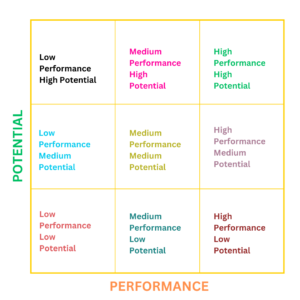
    The 9-box grid is a talent management platform matrix used to evaluate employees based on two critical dimensions: their current performance and their potential for future growth. The grid segments employees into nine categories, offering a holistic view of where talent stands and how it can be developed or managed for organizational success. It’s a popular feature in many Talent Management Software solutions.

    Framework of the 9 Box Grid

    At its core, the 9-box model talent management approach uses a simple 3×3 matrix:

    • X-Axis: Represents employee performance (Low, Moderate, High)
    • Y-Axis: Represents employee potential (Low, Moderate, High)

    Each intersection in the matrix forms a unique box, resulting in nine possible categories for employee placement, making it easier to visualize through an online talent management system.

    Components of the 9-Box Grid

    Talent Management Software

    X Axis and Y Axis: Performance and Potential

    Performance (X Axis):

    • Measures how well an employee meets or exceeds job requirements and targets.
    • Typically categorized as Low, Moderate, or High, based on objective criteria such as effectiveness, quality, efficiency, and quantity of work.

    Potential (Y Axis):

    • Assesses an employee’s ability to grow into more complex roles or leadership positions.
    • Evaluated as Low, Moderate, or High, considering factors like learning agility, leadership skills, adaptability, and motivation for advancement

    Benefits of the 9-Box Grid in Talent Management

    • Clarity and Simplicity: Offers a straightforward, visual method to assess the talent landscape using the 9-box grid talent management approach..
    • Succession Planning: Identifies future leaders and critical talent gaps for targeted development.
    • Objective Decision-Making: Reduces subjectivity by combining performance data with leadership assessments.
    • Targeted Development: Enables tailored action plans—such as coaching, training, or performance improvement—for each employee segment.
    • Strategic Resource Allocation: Helps direct investments in development and promotions to where they will have the greatest impact.
    • Enhanced Engagement: Fosters career growth and engagement by providing clear pathways for advancement—integrated in the best talent management platform systems. 

    How to Create the 9-Box Model

    1. Define Criteria for Performance and Potential

    • Establish clear, objective benchmarks for what constitutes low, moderate, and high performance and potential.
    • Use performance appraisals, KPIs, and leadership assessments to gather data.

    2. Build the Grid

    • Draw a 3×3 matrix with performance on the X-axis and potential on the Y-axis, each divided into three levels—easily done within most online talent management systems..

    3. Assess and Place Employees

    • Evaluate each employee’s performance and potential using the defined criteria.
    • Place employees in the appropriate box based on their assessments.

    4. Develop Action Plans

    • For each category, outline specific development or management strategies (e.g., leadership training for high-potential employees, performance improvement plans for low performers). These steps are typically managed through a comprehensive talent management platform.

    5. Review and Calibrate

    • Conduct regular talent reviews with leadership to ensure consistency and fairness.
    • Use the 9-box grid dynamically, updating placements as employees grow or as business needs change with the help of Talent Management Software. 

    Conclusion

    The 9-box grid is a powerful, practical framework for unlocking the full potential of your workforce. By providing a structured approach to evaluating performance and potential, it enables organizations to make data-driven decisions, nurture future leaders, and build a resilient talent pipeline using an online talent management system. When implemented thoughtfully—with clear criteria, regular reviews, and actionable development plans—the 9-box model talent management approach transforms talent management from a reactive process into a strategic advantage.


    FAQs on Leveraging the 9 Box Grid for Talent Management

    1. What is the 9 Box Grid and how does it work?
    The 9 Box Grid is a talent management tool that maps employees across nine categories based on their performance (X-axis) and potential (Y-axis), helping organizations visualize and assess their workforce for development and succession planning.

    2. How does the 9 Box Grid benefit talent management?
    It enables objective talent reviews, identifies high-potential employees for leadership roles, highlights development needs, and supports strategic resource allocation for maximum organizational impact.

    3. What are the steps to create a 9 Box Grid in my organization?
    Define performance and potential criteria, gather relevant employee data, plot individuals on the grid, analyze talent trends, and develop targeted action plans for each category.

    4. Who should be the focus of development in the 9 Box Grid?
    Employees in the top right box (high performance, high potential) are typically prioritized for leadership development, while those in other boxes may require tailored coaching or improvement plans.

  • Transforming Leadership and Team Engagement with 360-Degree Feedback

    Transforming Leadership and Team Engagement with 360-Degree Feedback

    A rapidly growing technology services company faced challenges with leadership effectiveness and declining employee engagement. Despite strong technical expertise, managers struggled with people management, and teams reported a lack of clear communication and collaboration. The company’s HR leadership sought a solution that would provide actionable insights for both individual and organizational growth through a 360 degree feedback system and an effective 360 degree evaluation tool.

    Objectives

    • Enhance self-awareness and leadership skills among managers using 360 degree performance feedback
    • Foster a culture of open communication and continuous feedback
    • Improve employee engagement and team collaboration
    • Support targeted development and succession planning

    Approach

    The company partnered with Phi EDGE to implement a customized 360 degree feedback system. The process was designed to gather confidential feedback from multiple sources—peers, direct reports, supervisors, and in some cases, clients. The feedback focused on core leadership competencies, communication, collaboration, and alignment with company values. A combination of 360 Assessment Software in India and coaching methodology was applied for maximum impact.

    Key Steps Included

    • Stakeholder Alignment: Workshops were conducted to educate leaders and employees about the objectives and benefits of the 360-degree feedback system.
    • Tailored Questionnaires: Feedback forms were customized for different roles and levels, ensuring relevance and clarity.
    • Confidential Process: Anonymity was maintained to encourage honest and constructive feedback.
    • Coaching & Development Plans: Each participant received a detailed report and one-on-one coaching to interpret results and create personalized development plans. This was seamlessly integrated into the company’s existing HRMS software in India.

    Results

    • Increased Self-Awareness: Managers gained a clearer understanding of their leadership strengths and areas needing improvement. Many discovered blind spots, especially around communication and delegation.
    • Enhanced Team Collaboration: Teams reported improved openness and willingness to share feedback, leading to more effective collaboration and problem-solving, facilitated by 360 Assessment Software in India.
    • Boosted Engagement: Employee engagement scores rose by 18% within a year, attributed to greater recognition, trust, and involvement in the 360 degree performance feedback process.
    • Leadership Growth: Several managers who demonstrated significant improvement in their 360 Appraisal Software feedback scores were promoted to higher leadership roles, supporting the company’s succession pipeline.
    • Sustained Culture of Feedback: The organization embedded 360-degree feedback into its annual performance and development cycle, reinforcing a culture of continuous improvement.

    Conclusion

    Implementing a 360 degree feedback system with Phi EDGE empowered the company to transform its leadership culture and boost engagement across teams. By leveraging diverse perspectives and structured development support through 360 Assessment Software in India, the organization built a stronger, more agile workforce ready to meet future challenges. The seamless integration with HRMS software in India ensures that this culture of feedback and growth is sustained over time.