Author: admin

  • Top 10 HRMS Software in India for 2026: Features & Guide

    Top 10 HRMS Software in India for 2026: Features & Guide

    Choosing the right HRMS in India (Human Resource Management System) can transform your HR operations, boost employee engagement, and drive business growth. Here’s a comprehensive guide to the top 10 HRMS software in India, with detailed features and benefits to help you make an informed decision.

    What is HR Software?

    Human Resource Management System (HRMS) software is a digital platform designed to streamline and automate HR processes such as employee information management, payroll, attendance, recruitment, performance management, and compliance. It centralizes employee data, automates workflows, and enhances HR team productivity by reducing manual administrative tasks. Modern HR management software India often include self-service portals, analytics, and mobile access, making them essential for fast-growing organizations to ensure data security, compliance, and operational efficiency.

    Benefits of HR


    1. Phi EDGE HRMS

    Phi EDGE HRMS leads the list as a next-generation, all-in-one HRMS payroll software in India designed for Indian businesses of all sizes.

    hrms payroll software in india

    Key Features:

    • Real-Time Performance Monitoring & KPI Tracking
    • Customizable Dashboards and Automated Alerts
    • Predictive Analytics and Historical Data Analysis
    • Workflow Automation and Collaboration Tools
    • Integration with Third-Party Tools (payroll, attendance, etc.)
    • Talent Management Solution with Real time reports
    • Employee Self-Service (ESS), Goal Setting, and 360° Feedback
    • Cloud-Based, Scalable, and Secure Deployment

    Why Choose Phi EDGE HRMS?

    Phi EDGE HRMS empowers organizations to streamline HR processes, enhance employee engagement, and make data-driven decisions. Its robust integration capabilities, real-time analytics, and user-friendly interface make it ideal for businesses aiming to build a resilient and high-performing workforce. It stands out among the best HRMS software in India for its advanced features.

    2. PeopleStrong

    PeopleStrong is an AI-driven HRMS built for large enterprises needing end-to-end automation.

    Key Features:

    • Unified platform for hiring, onboarding, payroll, and performance reviews
    • AI-powered talent coach for productivity and engagement
    • AI-led daily mood checks, feedback loops, and engagement campaigns
    • Seamless integration with 100+ external tools
    • Mobile-first experience

    Why Choose PeopleStrong?

    It automates the entire employee lifecycle, provides actionable insights, and uses AI to boost engagement and productivity—ideal for enterprises seeking innovation and scale.

     3. Workday

    Workday offers a unified platform for HR and finance with deep analytics and AI integration.

    Key Features:

    • Combined HR and financial workflows
    • Real-time workforce analytics and reporting
    • Workday Illuminate™ AI engine for task automation
    • Scalable for large and growing enterprises

    Why Choose Workday?
    Perfect for organizations wanting a single source of truth for both people and finance management, with robust AI capabilities for smarter decisions.

    4. Keka HR

    Keka HR is designed for modern businesses focusing on employee experience and automation.

    Key Features:

    • Employee engagement tools (feedback, surveys)
    • Real-time HR dashboards and analytics
    • Streamlined payroll, attendance, and leave management
    • Automated onboarding and background verification

    Why Choose Keka HR?
    Its employee-centric design and intuitive interface make it a top choice for companies prioritizing engagement and efficiency.

    5. Zoho People

    Zoho People is a user-friendly HRMS suitable for SMEs and large enterprises.

    Key Features:

    • Attendance and leave management
    • HR workflow automation and customizable templates
    • Seamless integration with Zoho suite and other third-party apps
    • Employee self-service portal

    Why Choose Zoho People?
    Its integration with Zoho apps and intuitive interface make it a flexible, scalable option for businesses of all sizes.

    6. Darwinbox

    Darwinbox is a cloud-based HRMS known for scalability and advanced analytics.

    Key Features:

    • End-to-end HR solutions (onboarding, attendance, performance)
    • Employee engagement and advanced analytics
    • Customizable workflows and automation
    • Mobile-first, multi-location support

    Why Choose Darwinbox?
    Ideal for growing businesses and enterprises with complex, multi-location needs and a focus on analytics-driven HR.

    7. GreytHR

    GreytHR is a cloud-based solution tailored for SMEs with strong compliance features.

    Key Features:

    • Automated payroll and statutory compliance
    • Attendance and leave management
    • Employee document management
    • 150+ ready-to-use reports
    • Mobile self-service for employees

    Why Choose GreytHR?
    It excels in compliance, ease of use, and is cost-effective for small and medium businesses.

    8. Zimyo

    Zimyo is a rapidly growing HRMS, popular with Indian SMEs and startups.

    Key Features:

    • Core HR, payroll, and compliance automation
    • Employee engagement and performance management
    • Onboarding, attendance, and leave tracking
    • Intuitive dashboard and analytics
    • Employee self-service and mobile app.

    Why Choose Zimyo?

    It’s ideal for SMEs looking for simplicity, compliance, and integration with other business tools.

    9. Freshteam (by Freshworks)

    Freshteam is widely used for its modern interface and recruitment features.

    Key Features:

    • Recruitment management and applicant tracking
    • Employee onboarding and document management
    • Core HR, time-off, and attendance tracking
    • Employee directory and self-service portal
    • Integration with Freshworks suite and other tools

    Why Choose Freshworks?
    Its powerful automation and customization make it suitable for organizations wanting to streamline HR and business processes together.

    10. ZingHR

    ZingHR is a cloud-based HRMS focused on digital transformation and agility.

    Key Features:

    • Recruitment, onboarding, and performance management
    • Payroll and compliance automation
    • Employee engagement and learning modules
    • Mobile-first design

    Why Choose ZingHR?
    It’s a strong choice for businesses seeking digital HR transformation and rapid deployment.

    How to Choose the Right HRMS for Your Business

    • Assess Your Needs: Identify key pain points—payroll, compliance, engagement, analytics, etc.
    • Scalability: Choose a platform that grows with your business.
    • Integration: Ensure compatibility with existing tools (payroll, accounting, etc.).
    • User Experience: Opt for intuitive, mobile-friendly solutions with strong support.
    • Compliance: Prioritize platforms with robust statutory compliance for Indian regulations.
    • Automation & Analytics: Look for automation capabilities and actionable insights to drive business decisions.

    Conclusion

    The right HRMS in India can revolutionize your HR function, drive productivity, and help you retain top talent. Evaluate your business needs and leverage this guide to select the best HRMS software in India for 2025. Phi EDGE HRMS stands out for its comprehensive features, but each solution on this list offers unique strengths for different business requirements.

    FAQ’s

          1. What is HRMS software and why is it important for businesses?
           HRMS software automates core HR tasks like payroll, attendance, and performance management, helping businesses save time, ensure            compliance, and improve HR efficiency

    1. How do I choose the best HRMS for my company?
      Identify your key HR needs, check for features like automation, analytics, and compliance, and select a scalable solution that integrates well with your existing systems
    2. Are HRMS solutions suitable for both small and large businesses?
      Yes, most HRMS platforms offer scalable modules and flexible pricing, making them suitable for startups, SMEs, and large enterprises alike
    3. What are the essential features to look for in an HRMS?
      Look for payroll, attendance, leave management, employee self-service, performance tracking, compliance tools, and mobile access
    4. Is employee data secure on cloud-based HRMS platforms?
      Leading HRMS providers use robust security measures like encryption and access controls to keep employee data safe and compliant with regulations.

  • Why 360-Degree Feedback Isn’t Optional Anymore: Benefits You Can’t Ignore

    Why 360-Degree Feedback Isn’t Optional Anymore: Benefits You Can’t Ignore

    Why 360-Degree feedback Is Important

    360-degree feedback has become an essential tool for organizations aiming to thrive in today’s competitive and fast-evolving workplace. This approach, often delivered through a 360 degree feedback system or advanced 360 Appraisal Software, offers a well-rounded evaluation of employee working styles and performance by gathering insights from multiple sources such as peers, managers, subordinates, and sometimes even clients.

    Such diverse perspectives ensure a more accurate and fair assessment, reducing the risk of bias that often accompanies traditional reviews. Beyond evaluation, 360 degree performance feedback fosters a culture of openness and transparency by encouraging honest communication and mutual trust across all levels of the organization.

    It also empowers leaders and HR professionals to make better-informed decisions regarding employee development, promotions, and role assignments. By identifying both emerging leaders and areas where employees may need additional support, organizations can tailor development plans that align individual growth with broader business goals.

    This alignment drives overall organizational performance and success. Moreover, the continuous nature of the 360 degree feedback system promotes ongoing personal and professional improvement, motivating employees to enhance their skills and contributions.

    It also strengthens engagement and trust by recognizing efforts from multiple viewpoints, encouraging accountability and ownership of one’s performance. Finally, by improving understanding among team members about each other’s strengths and challenges, 360 degree evaluation tool enhances collaboration and team dynamics, creating a more cohesive and productive work environment.

    Benefits of Implementing 360-Degree Feedback

    1. Increases Self-Awareness

    Receiving feedback from a variety of sources, including peers, managers, subordinates, and sometimes clients—provides employees with a comprehensive understanding of how their actions and behaviors are perceived across the organization. This holistic insight helps individuals uncover blind spots they might not recognize on their own, enabling them to see both their strengths and areas needing improvement. Enhanced self-awareness is the foundation for meaningful personal growth and improved interpersonal relationships at work.

    360-degree feedback—an essential feature of a modern employee feedback system—offers input from peers, managers, subordinates, and even clients. This multi-source approach helps employees gain a full-circle view of how their behavior and performance are perceived across all levels. As part of a well-integrated performance management system, this insight fosters deeper self-awareness, which is crucial for personal development and building stronger professional relationships.

    2. Delivers Objective, Well-Rounded Evaluation

    Traditional performance reviews often rely on a single perspective, which can be subjective or incomplete. In contrast, 360-degree feedback collects input from multiple stakeholders, offering a balanced and multi-faceted evaluation. This diversity of viewpoints reduces the influence of individual biases and provides a more accurate representation of an employee’s performance, skills, and behaviors, leading to fairer assessments and better-informed HR decisions.

    Traditional performance reviews often rely on a single perspective, which can be subjective or incomplete. In contrast, 360-degree feedback collects input from multiple stakeholders, offering a balanced and multi-faceted evaluation. This diversity of viewpoints reduces the influence of individual biases and provides a more accurate representation of an employee’s performance, skills, and behaviors. Such insights can be easily managed and tracked through a cloud-based performance management software in India, leading to fairer assessments and better-informed HR decisions.

    3. Reduces Workplace Bias

    Bias—whether conscious or unconscious—can distort performance evaluations and undermine fairness. By incorporating feedback from a broad range of people who interact with the employee in different contexts, 360-degree feedback dilutes the effect of any one person’s bias. This inclusive approach fosters a more equitable work environment where employees are judged on merit and consistent behaviors rather than favoritism or isolated opinions.

    4. Emphasizes Employee Development

    360 Appraisal Software is not just about evaluation—it’s a powerful tool for growth. Constructive feedback from multiple sources highlights specific skills and competencies that employees can develop. This enables personalized learning plans tailored to individual needs, helping employees build capabilities that align with their career goals and the organization’s objectives. The process encourages a mindset of continuous improvement and lifelong learning, a key objective of HRMS software in India.

    5. Boosts Teamwork and Collaboration

    When employees understand how their behavior affects colleagues and team dynamics, they become more mindful of their interactions. 360-degree feedback promotes awareness of interpersonal skills such as communication, cooperation, and conflict resolution. This awareness encourages employees to work more collaboratively, take accountability for their role within the team, and contribute positively to a supportive and productive work environment.

    6. Enhances Transparency and Trust

    A transparent feedback process where everyone participates and understands the criteria builds trust between employees and management. When feedback is open, consistent, and fair, employees feel valued and respected. This openness breaks down barriers, reduces misunderstandings, and fosters a culture where honest communication is the norm, ultimately strengthening organizational cohesion.

    7. Improves Employee Engagement and Morale

    Feeling recognized and heard by multiple colleagues boosts employees’ sense of belonging and motivation. When employees know their contributions are acknowledged from different perspectives, it enhances their engagement and job satisfaction. Higher engagement leads to improved morale, reduced turnover, and a more committed workforce management.

    8. Strengthens Leadership Development

    360-degree feedback is particularly effective for identifying leadership potential and development needs. By gathering insights about leadership behaviors and competencies from various stakeholders, organizations can spot high-potential employees and tailor leadership development programs accordingly. This supports effective succession planning and ensures a strong pipeline of future leaders.

    9. Drives Accountability and Productivity

    When employees receive feedback from a wide range of sources, they become more aware that their performance is being observed broadly. This heightened visibility encourages greater accountability and ownership of their work. Knowing that their actions affect multiple colleagues motivates employees to maintain high standards, which often translates into increased productivity and better overall results—a process greatly streamlined by HRMS software.

    10. Supports Organizational Agility

    In a rapidly changing business environment, organizations must be agile and responsive. Continuous 360-degree feedback helps identify skill gaps and development opportunities in real-time, allowing companies to quickly adapt their talent strategies. This ongoing feedback loop ensures that employees’ skills remain aligned with evolving organizational needs, supporting sustained growth and competitive advantage. Such agility is a core advantage of using top HRMS systems.

    How can 360-degree feedback be tailored to different job roles and levels within an organization

    A 360 degree feedback system can be highly effective when tailored to different job roles and organizational levels, ensuring that the feedback is relevant, actionable, and aligned with the unique responsibilities of each position. Here’s how organizations can customize the process:

    • Role-Specific Competencies and Behaviors:
      The feedback framework should identify and assess competencies that are most relevant to each role. For example, leadership and strategic thinking are critical for senior managers, while teamwork and communication may be more important for individual contributors. HR and department managers can collaborate to define these role-specific competencies and create behavioral indicators that reflect the expectations for each position.
    • Customizing Questionnaires:
      Feedback forms and questions should be adapted to match the job level and function. For instance, a questionnaire for a frontline employee may focus on customer service and collaboration, while one for executives might emphasize vision, influence, and decision-making. This ensures that feedback is meaningful and directly tied to job performance, especially when collected via 360 Appraisal Software. 
    • Different Feedback Sources:
      The sources of feedback can be adjusted based on the role. Senior leaders might receive input from board members, direct reports, and peers across departments, while entry-level staff may be reviewed by supervisors and colleagues within their immediate team. 
    • Integration with Development Programs:
      For high-potential employees or new leaders, 360 Assessment Software in India can be integrated with leadership development or training programs. This helps target growth areas specific to their career stage and prepares them for future responsibilities. 
    • Support for Low Performers and High Potentials:
      Tailoring feedback for underperforming employees can help address specific developmental needs, while high-potential talent can use targeted feedback to accelerate their growth and readiness for advancement. 
    • Framework Flexibility:
      Organizations should build a flexible feedback framework that can be adapted as business needs or job roles evolve. HRMS tools and regular reviews of the feedback process can help ensure that the system stays relevant and effective over time.

    By customizing a 360-degree feedback system to fit various roles and levels, organizations maximize its impact—making feedback more relevant, actionable, and supportive of both individual and organizational goals.

    Conclusion

    360 degree feedback system is no longer optional for organizations striving for excellence, transparency, and growth. By embracing this approach with modern tools like 360 Assessment Software in India and 360 degree evaluation tool, you unlock your team’s full potential and build a culture where feedback drives success at every level.


  • The Benefits of Using a HR software to Optimize Organization performance

    The Benefits of Using a HR software to Optimize Organization performance

    In today’s dynamic business landscape, organizations are under constant pressure to attract talent, improve productivity, and remain competitive. The best HRMS software in India has emerged as a critical tool to help organizations achieve these goals efficiently.

    How HR software optimizes organizational performance, a statistical data

    • 57% of HR Professionals Work Beyond Capacity: Over half of HR departments are understaffed, and 57% of HR professionals report working beyond normal capacity. HRMS payroll software and automation tools relieve this burden, allowing HR teams to focus on strategic tasks rather than repetitive administrative work.

    • HR people Spend Up to 57% of Their Time on Administrative Tasks: Automating these tasks enables HR professionals to dedicate more time to initiatives that directly impact business growth.

    • Almost 9 out of 10 Companies Report AI in HR Saves Time and Increases Productivity: For nearly 90% of organizations, automating HR functions via HR management software India has resulted in significant time savings and productivity improvements.

    • 65% of HR Leaders Say Automation Has a Positive Impact: A majority of HR leaders report that HR tools have increased efficiency and productivity in HR management tasks.

    • 80% of Organizations Will Integrate HRMS by 2025: The adoption of HRMS in HR is accelerating, with 80% of organizations expected to have AI-powered HR functions by 2025.

    • 44% of Talent Managers Use Cloud HR Solutions to Boost Efficiency: Cloud-based HRMS in India is a popular choice for increasing operational efficiency and productivity..

    • HR Software Market Growth: The global HR software market is projected to grow from $50 billion in 2024 to $54.64 billion in 2025, driven by automation, cloud adoption, and system integration.
    • Underutilization Remains an Issue: Despite these benefits, nearly 60% of employers still underutilize their HRIS, indicating significant potential for further optimization through the support of a reliable HRMS company.

    Further, any people analytics—may it be in areas of evaluating performance, identifying training needs basis gaps, planning careers and succession planning or studying attrition analysis—needs data at your fingertips. All such data is available real-time in a good HRMS in India.

    What is an HRIS?

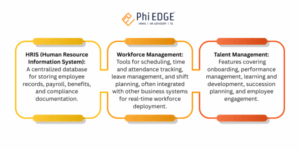
    HRIS is a digital solution designed to streamline and automate HR-related processes, such as employee data management, payroll, leave, attendance, employee life cycle management, etc., and other people-related processes and development. It increases administrative efficiency, secures sensitive employee information, and empowers HR teams to focus on strategic initiatives rather than repetitive tasks.

    Whereas an HRMS is one step ahead as it further helps in managing employee performance, learning and development needs, planning careers, managing rewards and recognitions etc.—thus enabling HR and management to take data-driven decisions using the top 10 HRMS software in India.

    What Does HR Software Include?

    Why is HR Software Important for Organizations?

    Top HRMS software in India empowers employees, reduces administrative burden, centralizes data, and provides actionable insights through analytics. It enables organizations to manage their workforce more effectively, improve employee satisfaction, and make data-driven decisions that align HR strategies with business goals.

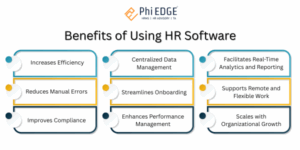
    Benefits of Using HR Software

    1. Increases Efficiency

    HR software automates time-consuming administrative tasks such as payroll processing, attendance tracking, leave management, and benefits administration. By digitizing these repetitive activities, HR professionals can redirect their efforts toward strategic projects like talent development, organizational culture, and workforce planning. This efficiency not only saves time but also reduces operational costs and improves overall productivity across the HR department. Companies looking for the top HRMS software in India prioritize this benefit.

    2. Reduces Manual Errors

    Manual data entry is prone to mistakes, which can lead to costly payroll errors, incorrect tax filings, and compliance issues. HR software automates calculations and data transfers, minimizing the risk of human error. Built-in validation checks and automated workflows ensure that information is accurate and consistent, which is crucial for maintaining employee trust and avoiding legal complications. 

    3. Improves Compliance

    Labor laws and regulatory requirements are constantly evolving, making compliance a complex challenge. HR software, especially from the top 10 HRMS software in India, is regularly updated to reflect the latest legal changes, helping organizations stay compliant with tax laws, labor regulations, and industry standards. The software also maintains detailed audit trails and generates compliance reports automatically, reducing the risk of penalties and ensuring that your organization is always prepared for audits. 

    4. Centralized Data Management

    HR software consolidates all employee information-such as personal details, performance records, payroll data, and benefits-into a single, secure database. This centralization eliminates data silos, making it easy for authorized personnel to access up-to-date information quickly. Enhanced data security features, such as encryption and role-based access, protect sensitive employee data and ensure privacy compliance. 

    5. Streamlines Onboarding

    Phi EDGE Employee Life Cycle Management (ELCM) module transforms the onboarding experience by automating and standardizing every step of the process. From the moment a candidate accepts an offer, the ELCM system initiates seamless workflows that guide both HR teams and new hires through document submission, policy acknowledgments, and mandatory training schedules. This automation eliminates manual paperwork, reduces administrative errors, and ensures that all compliance requirements are met from day one. 

    6. Enhances Performance Management

    HR software provides robust tools for setting individual and team goals, tracking progress, scheduling performance reviews, and collecting 360-degree feedback. Automated reminders and performance analytics help managers identify high performers, address skill gaps, and implement targeted development plans. HR management software approach fosters continuous improvement and supports a culture of accountability and growth. 

    7. Facilitates Real-Time Analytics and Reporting

    Advanced HR software offers powerful analytics dashboards and customizable reports that provide real-time insights into key HR metrics-such as employee turnover, absenteeism, and engagement levels. These insights enable HR leaders to make informed decisions, forecast workforce needs, and measure the impact of HR initiatives on organizational performance. Data-driven decision-making leads to better outcomes and a more agile organization.

    8. Boosts Employee Engagement and Self-Service

    Self-service portals in HRMS tools empower employees to manage their own HR tasks, such as updating personal information, submitting leave requests, viewing pays lips, and accessing company policies. This autonomy increases transparency, reduces HR’s administrative workload, and enhances employee satisfaction. Many HRMS software in India also include engagement tools like surveys, feedback channels, and recognition programs to further boost morale. 

    9. Supports Remote and Flexible Work

    Cloud-based HR solutions make it easy for employees and managers to access HR functions from anywhere, at any time, using any device. This flexibility is essential for supporting remote work, hybrid teams, and geographically dispersed workforces. Features like digital time tracking, virtual onboarding, and online collaboration tools ensure business continuity and maintain productivity regardless of location.

    10. Scales with Organizational Growth

    Modern HR management software is designed to be scalable, meaning it can accommodate your organization’s growth-whether you’re adding new employees, expanding to new locations, or restructuring departments. The software can easily adapt to changing business needs without requiring major upgrades or disruptions, ensuring that your HR processes remain efficient and effective as your organization evolves.


    By leveraging these benefits, organizations can transform their HR departments from administrative centers into strategic partners that drive business success.

    How to Choose the Right HR Software

    Selecting the best HRMS software involves:

    • Assessing Organizational Needs: Identify the HR processes that require automation and improvement.
    • Evaluating Features: Ensure the software includes essential modules like HRIS, workforce management, and talent management.
    • Scalability: Choose a solution that can grow with your organization’s size and complexity.
    • Integration Capabilities: Ensure seamless integration with existing business systems (ERP, payroll, CRM) for unified data flow.
    • Analytics and Reporting: Prioritize platforms with robust analytics to support data-driven HR strategies.
    • User Experience: Opt for intuitive interfaces and mobile access to boost adoption and usability.

    Execution: Beyond Software – Adapting for Strategic Alignment

    The most effective HRMS software go beyond software implementation. They offer expert guidance to align HR strategies with broader business goals, ensuring that technology adoption translates into measurable organizational performance improvements. Partnering with vendors that provide onboarding support, training, and ongoing consultation can maximize the value of your HR investment.

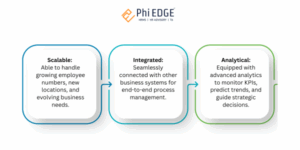
    Modern HR Software Must Be

    Conclusion

    Best HRMS software in India is no longer a luxury but a necessity for organizations aiming to optimize performance, retain talent, and drive growth. By automating routine tasks, centralizing data, and providing actionable insights, HR management software empowers organizations to align their workforce strategies with business objectives-delivering measurable improvements in efficiency, compliance, and employee satisfaction. As the workplace continues to evolve, investing in scalable, integrated, and analytics-driven HRMS tools is key to staying ahead in the competitive landscape. However an organisation should transit from an HRIS to an HRMS as an HRMS helps in talent management and development and is more strategic in nature.

  • Digital Transformation Journey of a Leading TPA in India

    Digital Transformation Journey of a Leading TPA in India

    In this case study, we explore how Phi EDGE HRMS Software in India enabled a leading Third-Party Administrator (TPA) to digitalize its entire HR function, driving transformation and engagement across a pan-India workforce.

    Background of HRMS Software Implementation in India

    A prominent TPA has headquartered in Pune, with over 1,000 employees and a pan-India presence, faced the challenge of engaging a distributed workforce and modernizing its HR operations. Traditionally reliant on manual, paper-based processes, the company recognized the need to transform digitally to enhance employee engagement, streamline HR functions, and remain competitive in a rapidly evolving industry.

    Leadership thought

    “To achieve ambitious business growth, the HR leadership recognized that digital transformation was essential. The vision was clear: HR should be a strategic pillar, not just for operational vertical”

    Challenges

    • Manual Processes: HR operations, including payroll, attendance, and performance management, were largely manual, leading to inefficiencies and errors.
    • Employee Engagement: With a workforce spread across India, maintaining high engagement levels and consistent communication was difficult.
    • Scalability: Manual systems limited the company’s ability to scale HR processes as the organization grew.

    Digital Transformation Initiative

    To address these challenges, the company partnered with Phi EDGE  Human Resource Management System in India to embark on a comprehensive digitalization journey. The transformation strategy focused on:

    1. Centralized HRMS Software Implementation

    • Unified Platform: Phi EDGE HRMS provided a single, cloud-based platform for all HR functions, including payroll, attendance, leave management, performance Management, and employee records
    • Automation: Routine tasks such as payroll processing, attendance tracking, and compliance reporting were automated, reducing manual workload and errors
    • Real-Time Insights: Intuitive dashboards and analytics enabled HR leaders to monitor key metrics, identify trends, and make data-driven decisions

    2. Enhancing Employee Engagement

    • Self-Service Portals: Employees could access their information, submit requests, and track progress independently, increasing transparency and empowerment
    • Performance Management: The platform enabled continuous feedback, 360-degree reviews, and recognition programs, fostering a culture of meritocracy and engagement
    • Learning & Development: Digital modules for training and upskilling were introduced, supporting employee growth and satisfaction

     3. Supporting Pan-India Operations

    • Standardized Processes: HR policies and workflows were standardized across all branches, ensuring consistency and compliance nationwide.

    4. Change Management and Training

    • Employee Training: Comprehensive training sessions and digital tutorials were rolled out to ensure smooth adoption of the new system
    • Continuous Support: A dedicated helpdesk and quick response system addressed employee queries, minimizing resistance to change.

    Results

    • Operational Efficiency: Automation led to a significant reduction in manual errors and turnaround times for HR processes, freeing HR teams to focus on strategic initiatives
    • Improved Engagement: Employee satisfaction scores improved due to transparent processes, timely recognition, and easier access to HR services
    • Scalability: The company seamlessly scaled HR operations to accommodate growth, onboarding new employees efficiently across India.
    • Data-Driven Decisions: Real-time analytics empowered leadership to make informed decisions regarding workforce planning and talent management.

    Conclusion

    The digital transformation journey, powered by Phi EDGE HRMS in India, enabled company to modernize its HR operations, engage employees more effectively across India, and build a scalable, future-ready workforce. By embracing digital tools and fostering a culture of continuous improvement, the company positioned itself as a leader in employee experience and operational excellence.

  • Digital Onboarding of Employees: – A Comprehensive Guide

    Digital Onboarding of Employees: – A Comprehensive Guide

    In today’s rapidly changing workplace, digital onboarding is essential for organizations aiming to efficiently welcome, integrate, and empower new employees-whether remote, hybrid, or on-site. Leveraging advanced HRMS software in India, companies can automate and elevate the onboarding experience to new heights.

    What is Digital Onboarding?

    Digital onboarding is the process of integrating new employees using digital tools and platforms. Unlike traditional onboarding, which relies on face-to-face meetings and paperwork, digital onboarding utilizes HRIS software in India to manage everything virtually-from documentation to training and engagement. This approach ensures seamless, engaging, and consistent experience for new hires, regardless of their location, and helps them become productive from day one.

    Difference Between Regular Onboarding and Digital Onboarding


    Digital onboarding, powered by the Best HRMS software  in India, saves time and resources while enhancing flexibility and access to information.

    Step-by-Step Guide to an Effective Digital Onboarding Process

    Pre-boarding

    • Send a warm welcome email and outline the first week.
    • Introducing the team and sharing company culture resources.
    • Provide access to essential tools and software.
    • Share digital handbooks and training materials.
    • Encourage online completion of documentation.

    Know Your Company

    • Deliver interactive training on policies and processes.
    • Facilitate virtual workshops and e-learning modules.

    Ongoing Support

    • Assign initial projects to apply new skills.
    • Schedule regular check-ins for progress and feedback.
    • Provide continuous resources for skill development.
    • Maintain communication via virtual check-ins.

    Advantages of Onboarding Through top HRMS System

    Implementing digital onboarding via Human Resource Management System in India or a human resource management system India offers

    • Efficiency & Speed: Automates repetitive tasks, reducing manual effort.
    • Consistency: Delivers a uniform onboarding experience.
    • Accessibility: Materials are available anytime, anywhere.
    • Engagement: Interactive content and virtual meetups boost motivation.
    • Tracking & Analytics: Real-time insights into progress and completion.
    • Personalization: Custom journeys based on role and department.
    • Reduced Paperwork: Supports sustainability with minimal physical documentation

    Automate Onboarding with Phi EDGE HRMS

    Phi EDGE HRMS is a leading HR Management software in India that streamlines digital onboarding with:

    • Preboarding Automation: Personalized emails, secure document submission, and early access to systems.
    • Customizable Workflows: Role-specific checklists, automated reminders, and integration with payroll and compliance.
    • Interactive Training: Live sessions, e-learning modules, and virtual introductions.
    • Employee Self-Service Portal: Profile updates, onboarding progress, and direct HR communication.
    • Real-Time Analytics: Monitor task completion, document status, and feedback for continuous improvement

    Conclusion

    Embracing digital onboarding through top HRMS systems in India and cloud-based performance management software in India is no longer optional-it’s a necessity. It empowers organizations to efficiently welcome new hires, foster engagement, and accelerate productivity, while building a strong employer brand that attracts top talent.

    Embracing digital onboarding not only improves retention rates and reduces early attrition but also fosters a positive employer brand that attracts top talent. Start your digital onboarding journey today and transform how your organization welcomes its newest members!

    If you want to explore how digital onboarding can be tailored perfectly to your organization’s needs, feel free to reach out or explore Phi EDGE HRMS solutions that automate and elevate your onboarding experience.


    FAQs

          1.How HRMS Software supports digital onboarding?
              HRMS software in India automats  the entire onboarding journey and ensuring new hires are engaged and productive from day one.

    1. How do top HRMS systems in India improve the onboarding experience?
      Top HRIS systems in India automate administrative tasks, track onboarding progress, and provide real-time analytics, making the process faster, more consistent, and data-driven
    2. Why should companies choose cloud-based HR Software for onboarding?
      Cloud-based HR software offers flexibility, mobile access, and seamless integration with other tools, ensuring new hires can access onboarding resources anytime, anywhere.
    3. What are the key benefits of using HRMS software in India for onboarding?
      HRMS software in India streamlines onboarding by automating documentation, training, and compliance, while enhancing engagement and reducing paperwork.
    4. How does digital onboarding enhance employee retention and engagement?
      Digital onboarding provides a structured, interactive, and personalized experience, helping new employees feel connected and valued, which leads to higher retention and long-term engagement


  • Payroll Software: Why It’s a Game-Changer for Business

    Payroll Software: Why It’s a Game-Changer for Business

    Payroll is often perceived as a “nice-to-have” solution, especially for small and mid-sized companies. It is a must-have for businesses of every scale. Managing payroll manually is not only time-consuming but also a risk of —errors, compliance issues, and resources. As Businesses grow, so do the complexities of payroll, making manual processes more complex to manage. Modern payroll software which integrates with HRMS software in India addresses these challenges head-on, transforming payroll from a tedious administrative burden into a strategic asset that enhances business efficiency and employee satisfaction.

    The Payroll Processing Challenges Businesses Face

    Manual payroll processing exposes organizations to several critical challenges:

    • Manual Processing: Calculating Salaries, deductions, and taxes by hand or with spreadsheets is prone to human error, leading to costly mistakes and delayed payments
    • Risk of Compliance: Labor laws and tax regulations change frequently. Keeping up manually increases the risk of non-compliance, which can result in penalties and legal issues
    • Lack of Payroll Resources:  Businesses often lack dedicated payroll staff, making it difficult to manage payroll efficiently and accurately.

    These issues not only impact on the trust and satisfaction of the employee but also impact on the efficiency of your business.

    Understanding Payroll Software in India

    What is Payroll?
    Payroll is the process of calculating and distributing employee compensation, including salaries, wages, bonuses, deductions, and tax withholdings.

    Why is Payroll Important?
    Accurate and timely payroll is essential for

    • Ensuring employee satisfaction and trust
    • Maintaining compliance with tax and labor laws
    • Providing clear financial records for business planning and audits

    Payroll errors or delays can damage morale, attract regulatory scrutiny, and a company’s reputation.

    SaaS Payroll Feature


    How Payroll Software Enhances Internal Business Operations

      Best Indian Payroll Software revolutionizes business operations in several ways:

    • Automation: Automates repetitive tasks like salary calculations, tax deductions, and payslip generation, eliminating manual errors and speeding up the process
    • Compliance: Keeps up to date with the latest tax laws and labor regulations, reducing the risk of non-compliance and penalties
    • Scalability: Easily adapts to business growth, handling increased employee numbers and complex pay structures without additional staff
    • Cost Effectiveness: Reduces the need for dedicated payroll personnel, minimizes errors that could lead to costly penalties, and streamlines processes to save time and money.

    Key Features of an Effective Payroll System that integrates with top HRIS system 

    An effective payroll   management system should offer:

    Conclusion

     Payroll HRMS Software is no longer a luxury but a necessity for modern businesses. It streamlines payroll processing, ensures compliance, improves accuracy, and enhances employee experience while saving time and reducing costs. By automating and securing one of the most critical business functions, payroll software HR empowers organizations focus on growth and strategic initiatives, making it a true game-changer for businesses of any size

    Phi EDGE offers a comprehensive HRMS having Payroll Management System module that empowers businesses to streamline every aspect of payroll processing. With Phi EDGE, organizations benefit from automated salary calculations, tax deductions, and statutory compliance tailored specifically for Indian regulations, such as PF and ESI. The system seamlessly integrates with HRMS, Performance Management System Solution—including attendance, leave management, and employee records—ensuring data consistency and reducing manual intervention. Built-in compliance checks minimize errors and guarantee timely, accurate salary disbursements, while real-time dashboards and detailed reporting provide transparency. By leveraging Phi EDGE Human Resource Payroll Software in India, businesses can enhance operational efficiency, maintain employee trust, and focus more on strategic growth rather than administrative hassles.
    Phi EDGE HRMS, equipped with more than 22 integrated modules, empowers organizations to streamline all HR functions—from payroll and performance management to learning and development, and employee engagement. 

    By providing a unified platform, Phi EDGE enables businesses to automate HR processes, gain real-time insights, and make data-driven decisions that enhance workforce productivity. This comprehensive HRMS software in India not only simplifies HR operations but also helps organizations strategically align their HR initiatives with broader business goals, fostering sustainable growth and competitive advantage.

  • How to Foster Accountability at Work: Actionable Strategies

    How to Foster Accountability at Work: Actionable Strategies

    Accountability is a cornerstone of successful business operations, referring to the responsibility and ownership individuals and organizations assume for their actions, decisions, and outcomes. Establishing a culture of accountability in the workplace is crucial for driving business success, enhancing productivity, and improving overall business results. In this article, we will explore the importance of accountability, its benefits, and actionable strategies for fostering it in your organization.

    What is Accountability?

    Accountability involves taking ownership of tasks, results, and responsibilities. It is about being answerable for one’s actions and their consequences, ensuring that individuals and teams are motivated, focused, and empowered to achieve their goals. In a business context, accountability manifests through clear communication, setting realistic expectations, tracking progress, acknowledging mistakes, and learning from failures.

    Importance of Establishing Accountability in the Workplace

    Establishing accountability in the workplace is vital for several reasons:

    •  Higher Workplace Morale
      When employees feel responsible for their actions, they are more likely to perform tasks well and efficiently, leading to greater job satisfaction and morale.
    •  Clearer Communication
      Accountability fosters open and transparent communication, ensuring that priorities are clear, and everyone is aligned with organizational goals.
    • Higher Engagement
       Employees who feel accountable are more engaged, as they understand their role in collective success and actively work towards achieving it.
    • More Effective Execution
      Accountability ensures that tasks are executed efficiently, with each team member taking responsibility for their part.
    • Lower Employee Turnover
       A culture of accountability leads to greater employee satisfaction, resulting in lower turnover rates.

      Benefits of the Culture of Accountability

      culture of accountibility

    Steps for Fostering Accountability at the Workplace

    Building a culture of accountability is not impossible, however it does require a proactive approach. Some effective strategies for building accountability in the workplace include

    To foster accountability effectively, consider the following steps

    Setting Clear Goals and Expectations is foundational. This involves clearly defining what needs to be achieved and by when. Utilizing performance management systems in India can help set and track these goals, ensuring everyone is aligned and working towards the same objectives. This clarity motivates employees and helps them understand their role in achieving organizational success.

    Encouraging Open Communication is essential for fostering accountability. By creating an environment where team members feel comfortable sharing ideas and concerns. Regular team meetings/Connects encourage open communication where employees can openly discuss their progress, share ideas and address and roadblocks they may face. This also fosters a sense of collaboration and open accountability. 

    Reviews and Feedback are crucial for maintaining accountability. Implementing regular check-ins using cloud-based performance management software in India allows for timely feedback, helping identify areas for improvement and ensuring continuous growth. This process not only enhances individual performance but also aligns team efforts with organizational goals.

    Rewarding and Recognizing employees who demonstrate accountability is a powerful motivator. Acknowledging and rewarding those who take ownership of their work encourages others to follow suit and reinforces positive behaviors. This can be done through public recognition, bonuses, or promotions, all of which reinforce a culture of accountability.

    Providing Growth and Development Opportunities is another key strategy. Offering training and opportunities for advancement using HRMS software in India encourages employees to strive for excellence and stay engaged. This not only fosters accountability but also contributes to employee retention and satisfaction.

    Building Trust within the team is vital for accountability. Strong working relationships among team members enhance collaboration and mutual accountability. Trust encourages open communication, shared responsibility, and a collective commitment to achieving goals.

    Leading by Example is perhaps the most important strategy. Leaders must demonstrate accountability themselves, setting the tone for the entire organization. When leaders take responsibility for their actions and outcomes, it inspires others to do the same, creating a culture of accountability at every level of the organization.

    Conclusion: The Impact of a Culture of Accountability on Business

    A culture of accountability is indispensable for achieving business success. By implementing these strategies, organizations can enhance productivity, engagement, and financial performance. Utilizing talent management software in India and top HRIS systems in India can further support these efforts by streamlining processes and providing tools for effective management. Ultimately, fostering accountability is an investment in the long-term sustainability and success of any organization.

    FAQ’s

     1. What is Accountability in the Workplace?

    • Accountability refers to the responsibility employees take for their actions and outcomes. It involves being answerable for fulfilling commitments and delivering results. HRIS software in India can support this by tracking performance and setting clear expectations.

    2. How Can I Measure Accountability?

    • Measuring accountability involves defining accountable behavior and tracking results. Tools like cloud-based performance management software in India help monitor progress and provide real-time feedback. This ensures employees are held accountable for their work.

    3. What Role Does Leadership Play?

    • Leadership plays a crucial role by setting the tone for accountability. Leaders must lead by example and communicate clearly. Talent management software in India can help align leadership goals with organizational objectives.

    4. How Can HRMS Software Support Accountability?

    • HRMS Software in India supports accountability by providing tools for setting clear goals and tracking performance. It also facilitates regular feedback, ensuring employees understand their responsibilities and are held accountable.

    5. How to Encourage Accountability in Remote Teams?

    • Encouraging accountability in remote teams involves setting clear expectations and using tools like performance management systems in India. Regular virtual check-ins and feedback help keep remote teams engaged and accountable.
  • HR Automation Tools: Transforming Workforce Management in India

    HR Automation Tools: Transforming Workforce Management in India

    In today’s fast-paced business environment, organizations are under constant pressure to adapt, innovate, and deliver exceptional employee experiences. Human Resources (HR) teams are at the heart of this transformation, but many still rely on outdated systems that hinder growth. HR workflow automation in India is rapidly emerging as the solution, revolutionizing workforce management and empowering businesses to thrive in the digital age.

    Introduction: The HR Challenge in a Rapidly Evolving World

    Traditional HR processes—manual payroll, paper-based onboarding, and fragmented performance reviews—are no longer sufficient. Businesses need agile, scalable solutions to manage talent, ensure performance, and drive engagement.

    The Problem: Outdated Systems in a Modern Landscape

    Many organizations in India still depend on spreadsheets or Pen and Paper. These outdated tools lead to:

    • Inefficient workflows and time-consuming manual tasks
    • Increased risk of errors in payroll, attendance, compliance and Monitoring performances
    • Poor employees experience due to slow processes
    • Difficulty scaling HR operations as the business grows

    Such challenges can reduce productivity and make it harder to retain top talent.

    What is HR Automation?

    HR automation (Human Resource Automation) refers to the use of technology—such as HRIS software, cloud-based performance management systems, and employee engagement tools—to automate repetitive HR tasks. This includes everything from onboarding to payroll, leave management, and performance reviews.

    Leading talent management software in India now integrates these functions, providing a seamless, data-driven approach to workforce management.


    Benefits of HR Automation Software in India

    Implementing automated HR system in India delivers a host of advantages:

    • H3: Enhanced Efficiency & Productivity: Automates routine tasks like payroll, attendance, and onboarding, freeing HR teams to focus on strategic initiatives 
    • H3: Improved Accuracy: Reduces human error in data entry and calculations, ensuring reliable records and compliance
    • H3: Cost Savings: Lowers operational costs by minimizing manual work and streamlining processes.
    • H3: Better Employee Experience: Empowers employees with self-service portals for leave requests, pay slips, and personal data management, boosting satisfaction and engagement
    • H3: Data-Driven Insights: Provides real-time analytics for informed decision-making on hiring, retention, and performance.
    • H3: Scalability: Supports business growth by handling increased HR workloads without proportional increases in headcount.
    • H3: Compliance & Security: Ensures adherence to labor laws and data protection standards with automated compliance checks and secure data management

    Why You Should Consider automated Human Resource System for Your Business

    Adopting HR automation is no longer optional, it’s a strategic move for businesses to stay competitive. 

    • H3: Stay Ahead of the Curve: With 69% of Indian companies already automating routine HR tasks, automation is now the industry standard.
    • H3: Unlock Strategic Value: Automation allows HR teams to shift from administrative work to high-impact activities like talent development and workforce planning.
    • H3: Attract and Retain Talent: Modern HRMS software in India enhances the employee journey, making your organization more attractive to top talent.
    • H3: Future-Proof Your Operations: As business needs evolve, cloud-based performance management software in India ensures your HR processes remain agile and scalable.

    How to Successfully Implement automated HR platform for Your Business

    Successful HR automation software involves more than just choosing the right software. 

    Define Clear Objectives:

    Identify the HR challenges you want to solve—be it payroll accuracy, faster onboarding, or improved performance management.

    Choose the Right Technology:

    Evaluate top HRIS systems in India that align with your business needs, such as cloud-based, mobile-friendly, and scalable solutions.

    Prioritize Data Security:

    Ensure your chosen HR automation tools offer robust security and access controls mechanism.

    Train Your Team:

    Provide comprehensive training to HR staff and employees to maximize adoption and minimize resistance.

    Monitor and Optimize:

    Set measurable KPIs, track progress, and continuously refine your automation strategy for ongoing improvement.

    Conclusion: The Future of automated HR management

    HR automation is transforming workforce management across India, enabling organizations to operate more efficiently, make smarter decisions, and deliver superior employee experiences. As technology continues to advance, the integration of AI, analytics, and cloud-based HRMS software will further empower HR teams to drive business success. The future belongs to organizations that embrace automation—not just as a tool, but as a Phi EDGE for growth and innovation.

    Frequently Asked Questions (FAQs)

     1. What is HR automation?
    HR automation is the use of technology to automate repetitive HR tasks such as payroll, attendance, recruitment, and performance management, reducing manual effort and increasing efficiency..

     2. How does Human Resource automation help businesses?
    It streamlines HR operations, reduces errors, saves costs, improves compliance, and enables data-driven decision-making, allowing businesses to focus on strategic growth.

     3. How are HR workflow automation teams benefited by automation?
    HR teams can shift their focus from administrative tasks to strategic initiatives like talent management, employee engagement, and workforce planning, enhancing their impact on business outcomes.

    4. What is the technology prospect of HR automation in India?
    India is witnessing a rapid HR tech boom, with 69% of companies automating HR tasks and increasing adoption for talent management and analytics. The future is bright, with more businesses investing in advanced HRIS software and cloud-based solutions.

    5. What includes in the top HRIS systems in India?
    Leading HRIS software in India includes solutions that offer integrated modules for payroll, performance management, and employee self-service, supporting both SMEs and large enterprises. 


  • Talent Management Software in India: A Way Forward to Help Enterprises Retain Top Talent

    Talent Management Software in India: A Way Forward to Help Enterprises Retain Top Talent

    In today’s competitive business landscape, retaining top talent is more critical than ever. Talent Management Software in India has emerged as a powerful solution for enterprises looking to streamline their HR processes and ensure long-term employee engagement. This blog explores the features, benefits, and organizational impact of HRMS Software in India, highlighting how they contribute to business growth.

    hr talent management software

    What is a Talent Management Solution?

    A Talent Management Solution (HR Talent Management Software) is an integrated software platform designed to manage the entire employee lifecycle, from onboarding to performance management, learning, development, and succession planning. It aligns human resource management system(HRMS) India with organizational goals, ensuring that businesses attract, retain, and develop the best talent while optimizing workforce productivity.

    Key Features of Best Talent Management Software in India

    Top HRMS systems in India include several core features that address critical aspects of human capital management. Below are the primary features explained in detail:

    Onboarding Tools- 

    HRMS software in India offers onboarding modules that ensure new hires integrate smoothly into the organization by automating documentation, induction, probation, and confirmation. These tools help employees feel welcomed and productive from day one, minimizing the adjustment period and boosting early engagement.

    Performance Management-

    A performance management system in India allows businesses to monitor employee productivity through goal-setting, feedback mechanisms, and regular evaluations. Features like 360-degree reviews and goal tracking provide actionable insights into individual and team performance, helping managers identify strengths and areas for improvement.

    Learning and Development-

    A learning management system within HRMS Software in India offers training modules and career development plans tailored to employees’ needs. This feature supports skill enhancement, leadership development, and succession planning by providing continuous learning opportunities aligned with business goals.

    Compensation Management-

    HRMS software in India manages variable pay, bonuses, stock options, and other rewards effectively. It ensures fair compensation practices while enabling HR teams to design competitive packages that attract and retain top talent.

    Succession Planning-

    HRMS Software in India supports succession planning by identifying high-potential employees for leadership roles, ensuring continuity in critical positions. This feature helps organizations prepare for future workforce needs by cultivating internal talent pipelines.

    Analytics and Reporting-

    Top HRMS systems in India offer advanced analytics tools that provide insights into workforce trends such as turnover rates, employee engagement levels, and hiring effectiveness. These reports enable data-driven decision-making to improve HR strategies and overall business outcomes.

    Cloud-Based Performance Management Software in India-

    Modern cloud-based performance management software in India includes mobile apps that allow employees and HR managers to access information on the go. This flexibility enhances communication across teams while improving operational efficiency.

    How Does Talent Management Software in India Improve Overall Productivity?

    A Talent Management System in India significantly enhances a company’s overall productivity by optimizing HR processes, improving employee engagement, and aligning workforce goals with business objectives. Contact us for Talent Management Software. Key benefits include:

    Talent management software

    Talent Management Solution: Impact on Productivity

    A human resource management system India transforms HR processes into a strategic lever for business success. By automating workflows, enhancing collaboration, providing actionable insights, and fostering employee engagement, HRMS Software in India maximizes efficiency across the organization. As a result:

    • Companies experience higher productivity levels.
    • Employees feel empowered to achieve their goals.
    • HR teams can focus on innovation rather than administrative tasks.

    Investing in a robust HRMS software in India is not just about managing employees; it’s about building a resilient organization ready to thrive in an increasingly competitive market.

    Benefits of HR Talent Management Software

    • Efficiency: Automates repetitive HR processes and saves valuable time.

    • Employee Engagement: Enhances communication, recognition, and growth opportunities.

    • Transparency: Provides clarity on performance, goals, and career progression.

    • Retention: Supports employee satisfaction, reducing attrition rates.

    • Strategic Decisions: Data-driven insights help HR leaders make smarter workforce decisions.

      Why Businesses Need Best HR Talent Management Software

      Whether you’re a startup scaling quickly or an enterprise managing global teams, HR Talent Management Software provides the structure and agility required to manage people effectively. It helps businesses attract top talent, retain key employees, and ensure that the right people are in the right roles at the right time.


    How Phi EDGE Empowers Organizations

    Phi EDGE HRMS Software in India empowers organizations to retain top talent by offering a comprehensive platform that seamlessly integrates with existing systems, simplifying HR processes, and enhancing workforce management. Its robust features, such as performance management, learning and development, and employee engagement tools, ensure that employees feel valued, motivated, and aligned with organizational goals.

    The solution’s ability to integrate effortlessly with payroll, attendance tracking, and other HR systems eliminates redundancies and ensures a unified workflow. By providing real-time analytics and actionable insights, Phi EDGE HRMS Software in India helps businesses make informed decisions to address workforce challenges proactively. This integration not only streamlines operations but also fosters a culture of growth and employee retention, making it a vital tool for organizations aiming to build a resilient and high-performing workforce.

    Conclusion

    A Talent Management Software in India is no longer a luxury but a necessity for businesses that want to attract, develop, and retain top talent. By leveraging advanced HR technology, enterprises can create an environment where employees thrive, productivity soars, and business success becomes inevitable. Investing in a comprehensive HRMS Software in India, like Phi EDGE HRMS, ensures your organization stays ahead in the competitive talent landscape. Contact us now for Talent management software.

    Talent management software


    FAQs on HR Talent Management Software

    Q1. What is the main purpose of HR Talent Management Software?
    A1. Its primary goal is to optimize the employee lifecycle—from hiring and onboarding to performance, development, and succession—while aligning workforce capabilities with organizational goals.

    Q2. Can small businesses benefit from Best Talent Management Software?
    A2. Yes. Modern solutions are scalable, making them suitable for startups, SMEs, and large enterprises.

    Q3. How does it improve employee engagement?
    A3. By offering transparent performance reviews, growth opportunities, and recognition programs, employees feel valued and motivated.

    Q4. Is HR Talent Management Software the same as HRMS?
    A4. No. HRMS primarily handles administrative tasks like payroll and attendance, while Talent Management Software focuses on strategic growth and workforce development.

    Q5. Does it integrate with other HR systems?
    A5. Yes, most platforms integrate seamlessly with payroll, attendance, and HRMS systems for a unified experience.

  • How Phi EDGE HRMS Helped our Retail client to streamline Its HR Processes??

    How Phi EDGE HRMS Helped our Retail client to streamline Its HR Processes??

    In this case study, we explore how our HR management system, Phi EDGE HRMS, has transformed the HR processes of our retail client, a leading transport vehicle in the automobile sector. This client has established his presence in western India with reputation for excellence in customer service and operational efficiency.

    In this case study, we explore how our HR management software India, Phi EDGE HRMS, has transformed the HR processes of our retail client, a leading transport vehicle in the automobile sector. This client has established his presence in western India with a reputation for excellence in customer service and operational efficiency.

    • Headcount-500+
    • Industry-Retail
    • Region-Multiple outlet in Western India

    The HR team Dream

    To become tech, enable organization.

    Being a well-known in the western Maharashtra- it was important for them to have consistent customer experience, and this seamless tech experience had to extend also to the people serving the customer—the employees.

    The Challenge

    Our client faced several challenges in managing their HR processes effectively. As they expanded their operations and workforce, the need for a streamlined HR system became increasingly apparent. The existing manual processes were time-consuming and prone to errors, which hindered the overall productivity of the organization. The client required a solution that could enhance their HR capabilities while aligning with their commitment to providing exceptional service.

    Key HR Challenges Faced by Our Client

    1. Time-Consuming Manual Processes: Manual HR tasks caused delays and reduced team efficiency.
    2. Disconnected Systems: Unintegrated systems led to data silos and redundant efforts.
    3. Unstructured Organization: Lack of clarity in roles and processes created confusion and inefficiencies.
    4. Lack of People Analytics: Absence of data-driven insights limited effective decision-making.
    5. Poor Collaboration and Communication: Ineffective communication hindered teamwork and slowed progress.

    These challenges highlighted the need for a streamlined and integrated HRMS solution in India for Client.

    Why did the client choose Phi EDGE HRMS??

    Streamlined HR Processes-

    Phi EDGE HRMS (Human Resource Management System)  automated and integrated key HR functions, eliminating time-consuming manual processes and enabling the team to focus on strategic initiatives

    1. Seamless System Integration-

      Its robust HRMS and HRIS systems ensured smooth integration with existing workflows, reducing inefficiencies caused by disconnected systems

    2. Data-Driven Insights-

      The platform offered advanced analytics and real-time reporting, empowering the client to make informed decisions based on accurate employee data

    3. Enhanced Collaboration-

      Phi EDGE HRMS improved communication and teamwork by providing tools for task management and structured organizational design

      How Phi EDGE helps businesses to streamline HR Processes??

     How Phi EDGE Helps Businesses Streamline HR Processes??

    1. Automation of Key Functions-

      Phi EDGE HRMS automates critical HR processes like payroll, leave management, and performance tracking, reducing manual efforts and saving time for the HR team.

    2. Integration Across Systems-

      Its robust HRIS integrates seamlessly with existing workflows, eliminating inefficiencies caused by disconnected systems and ensuring smooth operations

    3. Real-Time Data Insights-

      With advanced analytics and dashboards, Phi EDGE provides actionable insights into employee performance, engagement levels, and attrition trends, enabling data-driven decisions

    4. Enhanced Employee Experience-

      Self-service tools for employees simplify tasks like attendance tracking and feedback submission, fostering engagement and satisfaction

    5. Improved Collaboration and Structure-

      Phi EDGE offers modules for organizational design, task management, and competency tracking, promoting better communication and alignment within teams.

    HR Team Dream Come true-

    What HR team has to say about Phi EDGE

    “We believe Phi EDGE HRMS is transformative for our organization. Its ability to enhance collaboration, improve communication, and provide actionable insights empowers us to deliver greater business value. These foundational pillars enable us to build a stronger organization and achieve our goals effectively”

    Bring the transformation to your organization with phi EDGE HRMS

    Book your Demo Now