Author: admin

  • Best HR Software in India 2026: Features, Benefits, Comparison & Buying Guide | Phi EDGE

    Best HR Software in India 2026: Features, Benefits, Comparison & Buying Guide | Phi EDGE

    Managing employees manually is becoming increasingly difficult as businesses grow. Payroll mistakes, attendance discrepancies, leave tracking, compliance management, and performance monitoring can consume valuable HR time. Modern organizations need a centralized, intelligent solution that simplifies workforce management while improving employee experience.

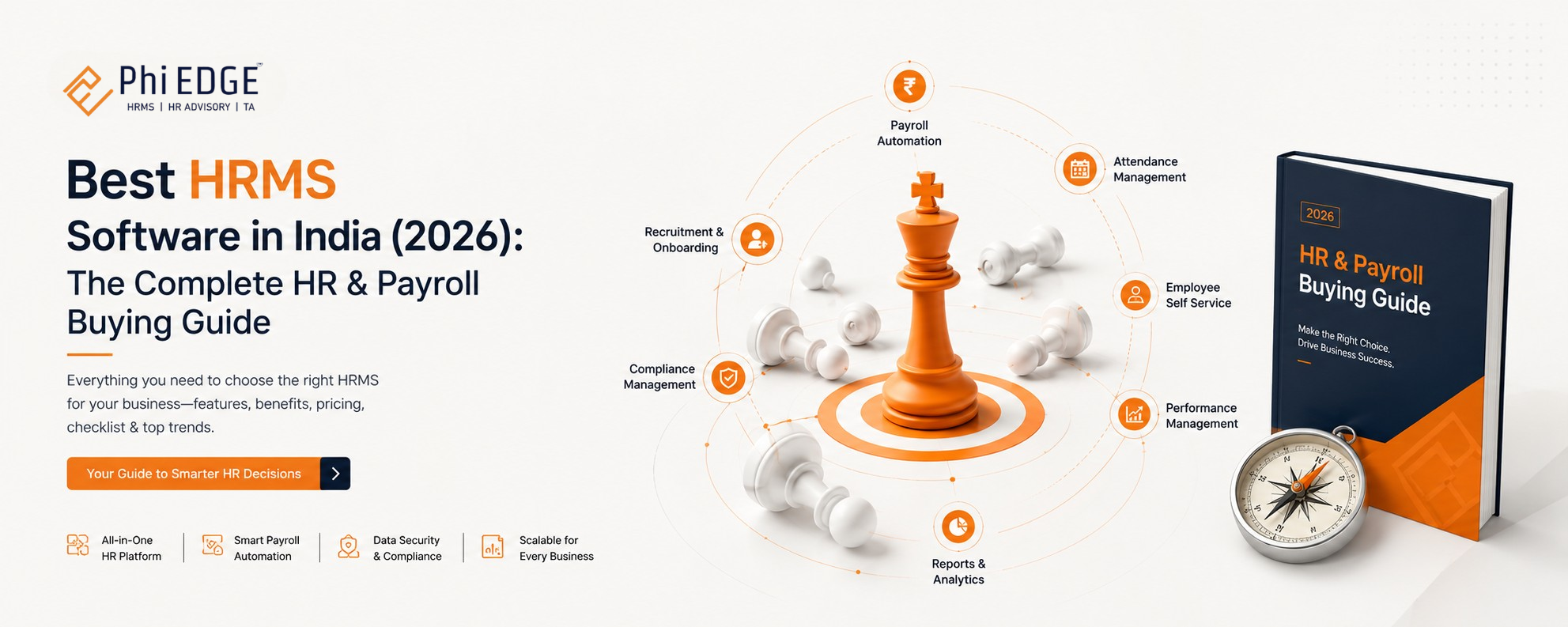
    This comprehensive guide explains how to choose the best HR software in India in 2026, compares essential features, highlights real business use cases, and shows why Phi EDGE HRMS is trusted by organizations seeking scalable, secure, and automation-driven HR management.

    Quick Answer

    If you’re looking for the best HR software in India in 2026, choose a solution that combines payroll, attendance, leave management, recruitment, employee self-service, compliance, analytics, and AI-powered automation in a single platform. Phi EDGE HRMS provides these capabilities with a user-friendly interface suitable for startups, SMEs, and large enterprises.

    Table of Contents

    • What is HR Software?
    • Why Businesses Need HR Software in 2026
    • Key Features
    • Benefits
    • Real Business Examples
    • HR Software Comparison
    • How to Choose the Right HRMS
    • Why Choose Phi EDGE
    • Frequently Asked Questions
    • Client Reviews
    • Final Thoughts

    What is HR Software?

    HR software is a digital platform that automates human resource operations, including employee records, payroll, attendance, leave management, recruitment, onboarding, performance tracking, compliance, and reporting.

    Instead of using spreadsheets and disconnected systems, organizations manage their workforce from one secure dashboard.

    Why HR Software is Essential in 2026

    Today’s workplaces demand flexibility, automation, and real-time visibility. Businesses are adopting cloud-based HR platforms to improve efficiency and ensure compliance with evolving labor regulations.

    Modern HR software helps organizations:

    • Reduce manual administrative work
    • Improve payroll accuracy
    • Automate attendance and leave approvals
    • Simplify statutory compliance
    • Enhance employee engagement
    • Generate actionable HR insights
    • Support hybrid and remote teams

    Top Features Every HR Software Should Include

    Employee Information Management

    Maintain centralized employee records, contracts, documents, and organizational hierarchy in one place.

    Payroll Automation

    Automatically calculate salaries, deductions, bonuses, reimbursements, taxes, and statutory contributions with minimal manual effort.

    Attendance Management

    Track attendance using biometric devices, mobile apps, GPS, facial recognition, or web-based check-ins.

    Leave Management

    Employees can apply for leave online while managers approve requests instantly. Leave balances update automatically.

    Recruitment & Onboarding

    Streamline hiring by managing job postings, applications, interview scheduling, document collection, and onboarding tasks.

    Employee Self-Service Portal

    Enable employees to access payslips, tax documents, leave balances, attendance history, and personal information without HR assistance.

    Performance Management

    Set goals, conduct appraisals, gather feedback, and monitor employee performance throughout the year.

    Compliance Management

    Stay compliant with labor laws by automating statutory calculations, documentation, and reporting requirements.

    Analytics & Reports

    Generate reports on workforce trends, payroll expenses, attendance, attrition, and performance to support informed decision-making.

    Benefits of Using HR Software

    Increased Productivity

    Automation reduces repetitive HR tasks, allowing teams to focus on strategic initiatives.

    Improved Accuracy

    Automated calculations minimize payroll and attendance errors.

    Better Employee Experience

    Employees gain easy access to HR services through self-service portals.

    Cost Savings

    Reduced paperwork and manual processing lower administrative costs.

    Enhanced Data Security

    Role-based access and cloud security protect sensitive employee information.

    Scalable Operations

    As businesses grow, HR software adapts to increasing workforce requirements without significant process changes.

    Real Business Examples

    Example 1: Manufacturing Company

    A manufacturing firm with 500 employees automated attendance, shift scheduling, and payroll processing. Payroll preparation time decreased from five days to a few hours.

    Example 2: IT Company

    A software company introduced employee self-service and digital leave approvals, reducing HR support requests and improving employee satisfaction.

    Example 3: Retail Business

    A retail chain centralized HR operations across multiple branches, enabling real-time attendance monitoring and standardized payroll processing.

    HR Software Comparison

    Feature Traditional HR Modern HR Software Phi EDGE HRMS
    Payroll Manual Automated ✔
    Attendance Spreadsheet Real-Time ✔
    Leave Paper Forms Online ✔
    Employee Portal No Yes ✔
    Recruitment Manual Digital ✔
    Reports Limited Advanced ✔
    Compliance Manual Automated ✔
    Cloud Access No Yes ✔

    Buying Guide: How to Choose the Best HR Software

    Evaluate Business Size

    Choose software that supports your current workforce and future expansion.

    Prioritize Automation

    Look for automated payroll, attendance, and compliance features to reduce manual work.

    Check Integration Options

    Ensure compatibility with biometric devices, accounting systems, ERP platforms, and other business tools.

    Review User Experience

    An intuitive interface encourages employee adoption and reduces training time.

    Assess Customer Support

    Reliable implementation assistance and ongoing technical support are essential.

    Consider Data Security

    Verify encryption, access controls, backups, and compliance with data protection standards.

    Why Choose Phi EDGE HRMS?

    Phi EDGE HRMS is designed to simplify HR management for organizations across industries.

    Key Advantages

    • Cloud-based HRMS platform
    • End-to-end payroll automation
    • Attendance and leave management
    • Employee self-service portal
    • Recruitment and onboarding tools
    • Performance management
    • Compliance support
    • Advanced dashboards and analytics
    • Scalable architecture
    • Secure data management

    Frequently Asked Questions

    Which is the best HR software in India for 2026?

    Businesses should look for software offering payroll, attendance, leave management, recruitment, compliance, analytics, and employee self-service in one platform. Phi EDGE HRMS is a strong option for organizations seeking an integrated solution.

    Is HR software suitable for small businesses?

    Yes. Cloud-based HR software helps startups and SMEs automate essential HR processes without significant infrastructure costs.

    Can HR software manage payroll?

    Yes. Modern HR software automates salary calculations, deductions, reimbursements, tax processing, and payslip generation.

    Is employee data secure?

    Reputable HR platforms implement encryption, role-based permissions, and secure cloud infrastructure to protect employee information.

    Does HR software support remote work?

    Yes. Employees can mark attendance, apply for leave, access documents, and communicate with HR from any location.

    Client Testimonials

    ⭐⭐⭐⭐⭐ Manufacturing HR Manager

    “Payroll processing became significantly faster, and attendance management is now completely automated. The platform has simplified our HR operations.”

    ⭐⭐⭐⭐⭐ IT Company HR Lead

    “The employee self-service portal reduced routine HR queries and improved overall efficiency. Our team appreciates the ease of use.”

    ⭐⭐⭐⭐⭐ Retail Operations Manager

    “Managing multiple branches was challenging before implementing HR software. We now have centralized visibility into attendance, payroll, and workforce performance.”

    Expert Advice

    When selecting HR software, focus on long-term value rather than just initial cost. Consider scalability, automation capabilities, compliance support, ease of use, integration options, security, and vendor support. A comprehensive HRMS should adapt as your organization grows while helping HR teams become more strategic.

    Conclusion

    The right HR software can transform workforce management by automating repetitive tasks, improving accuracy, strengthening compliance, and enhancing employee experience. As organizations continue to embrace digital transformation in 2026, investing in a robust HRMS becomes a strategic advantage.

    Whether you’re a startup, SME, or enterprise, choosing a scalable platform with payroll, attendance, recruitment, performance management, and analytics can streamline operations and support sustainable business growth. Phi EDGE HRMS offers an integrated approach designed to meet these evolving HR needs.

  • top-10-best-hrms-software-in-india-2026-features-benefits-comparison-buying-guide

    top-10-best-hrms-software-in-india-2026-features-benefits-comparison-buying-guide

    Managing employees efficiently has become one of the biggest priorities for businesses in 2026. Whether you’re a startup with 20 employees or a large enterprise managing thousands of people, choosing the right Human Resource Management System (HRMS) can improve productivity, automate repetitive HR tasks, and provide a better employee experience.

    From attendance tracking and payroll automation to performance management and employee self-service, modern HRMS platforms simplify HR operations while helping organizations stay compliant with Indian labor laws.

    In this comprehensive guide, we’ll compare the Top 10 HRMS Software in India, discuss their features, benefits, real-world use cases, and explain why Phi EDGE HRMS is becoming the preferred choice for businesses looking for a scalable and AI-powered HR solution.

    AI-Based HRMS

    Quick Answer 

    If you’re looking for the best HRMS software in India, consider solutions that offer payroll automation, attendance management, leave tracking, employee self-service, recruitment, performance management, and detailed analytics. Phi EDGE HRMS combines these capabilities in one secure and user-friendly platform, making it suitable for startups, SMEs, and enterprise organisations seeking to streamline HR operations and improve workforce productivity.

    Table of Contents

    1. What is HRMS Software?
    2. Why Businesses Need HRMS in 2026
    3. Top 10 Best HRMS Software in India
    4. HRMS Comparison Table
    5. Key Features to Look For
    6. Benefits of HRMS Software
    7. Real Business Examples
    8. Buying Guide
    9. Why Choose Phi EDGE HRMS
    10. Frequently Asked Questions

    What is HRMS Software?

    Human Resource Management System (HRMS) software is a digital platform that helps businesses automate and manage HR activities from a single dashboard.

    Instead of handling employee records, attendance, payroll, leave requests, recruitment, and performance reviews manually, HR professionals can use HRMS software to streamline these processes, reduce administrative workload, and improve accuracy.

    Modern HRMS platforms also support cloud access, mobile applications, AI-powered analytics, and self-service portals, enabling employees and managers to complete HR tasks anytime and from anywhere.

    HRMS typically includes:

    • Employee Information Management
    • Attendance & Shift Management
    • Leave Management
    • Payroll Processing
    • Recruitment & Onboarding
    • Performance Management
    • Expense Reimbursement
    • Employee Self-Service
    • HR Analytics & Reports
    • Compliance Management

    Why Businesses Need HRMS Software in 2026

    The workplace has evolved significantly, with hybrid work models, remote teams, and increasing compliance requirements making manual HR management inefficient.

    Businesses today need software that not only automates HR tasks but also provides real-time workforce insights and improves employee engagement.

    AI-Based HRMS

    Some of the biggest reasons organizations invest in HRMS software include:

    Reduce Manual Work

    Automating attendance, payroll, leave approvals, and employee records saves HR teams significant time and minimizes human errors.

    Improve Employee Experience

    Employees can access payslips, apply for leave, update personal information, and track attendance through self-service portals without depending on HR personnel.

    Better Decision Making

    Interactive dashboards and analytics help HR managers monitor workforce performance, employee turnover, hiring trends, and attendance patterns.

    Stay Compliant

    HRMS software helps organizations maintain compliance with payroll regulations, statutory deductions, and labor laws while reducing the risk of penalties.

    Increase Productivity

    With repetitive administrative tasks automated, HR teams can focus on strategic initiatives such as employee development, retention, and organizational growth.

    Top 10 Best HRMS Software in India (2026)

    Rank HRMS Software Best For Key Strength
    1 Phi EDGE HRMS SMEs & Enterprises AI-powered HR automation, payroll, attendance, employee self-service
    2 Keka HR Growing Businesses User-friendly interface and payroll automation
    3 greytHR Small & Medium Businesses Payroll and compliance management
    4 Zoho People Businesses using Zoho ecosystem Employee management and workflows
    5 Darwinbox Large Enterprises Enterprise HR transformation
    6 BambooHR Global Organizations Employee lifecycle management
    7 SAP SuccessFactors Enterprises Comprehensive HR suite
    8 Oracle HCM Cloud Large Corporations Global workforce management
    9 factoHR Mid-sized Businesses Attendance and payroll solutions
    10 Zimyo HRMS Startups & SMEs Performance and employee engagement Why Phi EDGE HRMS Stands Out

    Selecting an HRMS is not just about automating payroll or attendance—it is about choosing a platform that grows with your business. Phi EDGE HRMS is designed to help organizations simplify HR operations while providing a seamless experience for both HR teams and employees.

    Unified HR Platform

    Phi EDGE HRMS brings essential HR functions together in one centralized platform, reducing the need for multiple software solutions.

    Automation-First Approach

    Routine processes such as attendance tracking, payroll calculations, leave approvals, and employee record management are automated, allowing HR professionals to focus on strategic initiatives.

    Easy-to-Use Interface

    The platform is built with usability in mind, making it simple for HR teams, managers, and employees to navigate and complete tasks efficiently.

    Scalable for Business Growth

    Whether your organization has 20 employees or 2,000, Phi EDGE HRMS is designed to scale alongside your workforce and operational requirements.

    Secure Cloud Access

    Cloud-based infrastructure enables secure access to HR data from any location while supporting modern hybrid and remote work environments.


    Key Features to Look for in HRMS Software

    Choosing the right HRMS software goes beyond comparing prices. A modern HR solution should automate routine tasks, improve employee experience, and provide actionable insights that help businesses make informed decisions. Below are the essential features every organization should evaluate before investing in an HRMS.

    Employee Information Management

    A centralized employee database stores all workforce information securely in one place.

    Benefits

    • Digital employee records
    • Quick document access
    • Secure information storage
    • Easy profile updates
    • Reduced paperwork

    Example:
    When a new employee joins, HR can upload documents, assign departments, create employee IDs, and complete onboarding digitally instead of maintaining physical files.

    Attendance & Time Tracking

    Attendance management records employee working hours, shifts, overtime, and remote work schedules automatically.

    Features

    • Biometric Integration
    • Face Recognition
    • GPS Attendance
    • Mobile Check-in
    • Shift Management
    • Overtime Tracking

    Business Benefit

    Managers receive real-time attendance reports while payroll calculations become more accurate.

    Payroll Automation

    Payroll processing is one of the most critical HR functions. A reliable HRMS automates salary calculations while reducing manual effort.

    Payroll Features

    • Salary Processing
    • Tax Calculations
    • PF & ESI Management
    • Bonus Processing
    • Reimbursements
    • Payslip Generation
    • Bank Transfer Reports

    Example

    Instead of calculating salaries manually for 500 employees every month, payroll can be processed in just a few clicks with automated compliance support.

    Leave Management

    Employees can request leave online while managers approve or reject requests instantly.

    Leave Types

    • Casual Leave
    • Sick Leave
    • Earned Leave
    • Maternity Leave
    • Paternity Leave
    • Work From Home
    • Compensatory Off

    Benefits

    • Faster approvals
    • Transparent leave balances
    • Reduced administrative workload
    • Accurate payroll integration

    Employee Self-Service Portal (ESS)

    Modern employees expect access to HR services without relying on the HR department for every request.

    The Employee Self-Service Portal allows employees to:

    • Download Payslips
    • Apply for Leave
    • Check Attendance
    • Update Personal Details
    • Submit Reimbursement Claims
    • Access Company Policies
    • Download Tax Documents

    Real Example

    Instead of emailing HR for salary slips every month, employees can securely download them anytime.

    Recruitment & Applicant Tracking

    Recruitment modules help HR teams manage the complete hiring process.

    Features

    • Job Posting
    • Resume Database
    • Candidate Tracking
    • Interview Scheduling
    • Offer Letter Generation
    • Joining Documentation

    Business Benefit

    Hiring cycles become faster while improving collaboration between recruiters and hiring managers.

    Performance Management

    Employee performance tracking enables organizations to build a culture of continuous improvement.

    Features

    • Goal Setting
    • KPI Tracking
    • Appraisal Cycles
    • 360° Feedback
    • Performance Reviews
    • Promotion Tracking

    Example

    Sales managers can review quarterly targets, monitor achievements, and provide structured feedback within one platform.

    HR Analytics & Reporting

    Data-driven HR decisions help organisations improve workforce planning and productivity.

    Reports Include

    • Attendance Reports
    • Salary Reports
    • Department-wise Headcount
    • Attrition Analysis
    • Leave Trends
    • Recruitment Reports
    • Performance Dashboards

    Business Value

    Interactive dashboards allow leadership teams to identify trends and make informed decisions.

    Benefits of Using HRMS Software

    A well-implemented HRMS provides value across every stage of the employee lifecycle.

     Saves Time

    Routine administrative tasks such as attendance tracking, payroll processing, and leave approvals are automated, enabling HR teams to focus on strategic initiatives.

    Improves Accuracy

    Automation reduces manual errors in salary calculations, attendance records, and employee data management.

    Enhances Employee Experience

    Self-service features enable employees to access information quickly, enhancing transparency and reducing their dependency on HR staff.

    Supports Compliance

    Modern HRMS platforms enable organisations to manage statutory requirements, maintain accurate records, and streamline audit readiness.

    Enables Better Decision-Making

    Real-time reports and dashboards provide insights into workforce performance, absenteeism, hiring, and employee retention.

    Real-World Business Examples

    Example 1: Manufacturing Company

    A manufacturing company with multiple shifts implemented an HRMS to automate attendance through biometric integration. Payroll processing time was significantly reduced, and overtime calculations became more accurate.

    Example 2: IT Services Firm

    An IT company adopted an employee self-service portal, allowing staff to manage leave requests, download payslips, and update personal information independently. HR teams experienced fewer routine support requests and faster response times.

    Example 3: Retail Chain

    A retail organization managing employees across multiple locations used centralized HRMS reporting to monitor attendance, staffing levels, and payroll. This improved operational visibility and supported better workforce planning.

    HRMS Software Comparison

    Feature Phi EDGE HRMS Keka HR greytHR Zoho People Darwinbox
    Employee Database ✔ ✔ ✔ ✔ ✔
    Attendance Management ✔ ✔ ✔ ✔ ✔
    Payroll Automation ✔ ✔ ✔ Limited ✔
    Leave Management ✔ ✔ ✔ ✔ ✔
    Employee Self-Service ✔ ✔ ✔ ✔ ✔
    Recruitment Module ✔ ✔ Limited ✔ ✔
    Performance Management ✔ ✔ Limited ✔ ✔
    HR Analytics ✔ ✔ ✔ ✔ ✔
    Mobile Access ✔ ✔ ✔ ✔ ✔
    Cloud-Based Platform ✔ ✔ ✔ ✔ ✔

    Note: Feature availability may vary by plan and product version. Verify current offerings with each software provider before making a purchase decision.

    Why Phi EDGE HRMS Is a Smart Choice

    Organisations today require an HR platform that combines automation, usability, and scalability. Phi EDGE HRMS is designed to streamline core HR operations while supporting business growth.

    Comprehensive HR Management

    Manage attendance, payroll, leave, employee records, performance, and reporting through a unified platform.

    Automation for Everyday Tasks

    Reduce repetitive administrative work with workflows that simplify approvals, calculations, and record management.

    Cloud-Based Accessibility

    Enable secure access for HR teams and employees across office, remote, and hybrid work environments.

    User-Friendly Experience

    An intuitive interface encourages adoption across HR teams, managers, and employees, minimizing training requirements.

    Scalable Architecture

    Whether your business is expanding from 50 to 5,000 employees, the platform is designed to grow with your organization.

    Complete Buying Guide: How to Choose the Best HRMS Software in India

    Selecting the right HRMS software is a long-term investment that impacts employee productivity, HR efficiency, and overall business growth. Instead of choosing software based only on price, businesses should evaluate functionality, scalability, security, support, and ease of implementation.

    Below are the key factors every organization should consider before investing in an HRMS solution.

    Understand Your Business Requirements

    Every organization has unique HR processes. Before comparing HRMS solutions, identify your current challenges and future goals.

    Questions to Ask

    • How many employees do you have?
    • Do you manage multiple office locations?
    • Is your workforce remote, hybrid, or on-site?
    • Do you need payroll automation?
    • Do you require recruitment management?
    • Will employees use a mobile application?
    • Are you planning to scale in the next 3–5 years?

    Clearly defining your requirements helps narrow down the most suitable solution.

    Choose an All-in-One HR Platform

    Managing separate tools for attendance, payroll, recruitment, and performance can increase costs and reduce efficiency.

    A unified HRMS should include:

    • Employee Database
    • Attendance Management
    • Payroll
    • Leave Management
    • Recruitment
    • Performance Management
    • Employee Self-Service
    • Reports & Analytics
    • Compliance Management

    Having all HR functions in one platform improves data accuracy and streamlines operations.

    Prioritise Ease of Use

    A powerful HRMS is only valuable if employees and HR teams can use it efficiently.

    Look for:

    • Clean dashboard
    • Simple navigation
    • Mobile-friendly interface
    • Fast onboarding
    • Minimal training requirements

    User-friendly software encourages adoption across the organization.

    Ensure Scalability

    Your HRMS should support your business as it grows.

    Choose software that can accommodate:

    • More employees
    • Additional office locations
    • New departments
    • Expanded HR workflows
    • Future feature upgrades

    A scalable solution minimizes the need for costly software migrations.

    Evaluate Security and Data Privacy

    HRMS platforms store sensitive employee information. Security should be a top priority.

    Key security features include:

    • Role-based access control
    • Secure cloud hosting
    • Data encryption
    • Automated backups
    • Audit logs
    • Multi-factor authentication (if available)

    Strong security practices help protect employee records and maintain business trust.

    Industry Use Cases

    Modern HRMS software supports organizations across a wide range of industries.

    Information Technology (IT)

    IT companies often manage distributed teams and hybrid work environments.

    An HRMS helps with:

    • Attendance tracking
    • Performance reviews
    • Recruitment
    • Employee engagement
    • Payroll automation

    Manufacturing

    Manufacturing businesses benefit from:

    • Shift scheduling
    • Overtime management
    • Biometric attendance
    • Compliance reporting
    • Workforce planning

    Healthcare

    Hospitals and healthcare providers can use HRMS to manage:

    • Shift rotations
    • Doctor and staff attendance
    • Leave approvals
    • Credential tracking
    • Payroll

    Retail

    Retail organizations with multiple stores can streamline:

    • Staff scheduling
    • Attendance monitoring
    • Payroll
    • Branch-wise reporting
    • Employee transfers

    Education

    Schools, colleges, and universities can simplify:

    • Faculty attendance
    • Leave management
    • Payroll
    • Employee records
    • Performance evaluations

    Expert Advice Before Buying HRMS Software

    After evaluating HR technology for businesses of different sizes, here are several practical recommendations.

    Don’t Choose Based Only on Price

    The lowest-cost solution may lack the features, support, or scalability your business needs. Consider the long-term value rather than the initial subscription fee.

    Request a Product Demo

    A live demonstration allows you to evaluate the user interface, workflows, reporting capabilities, and ease of use before making a decision.

    Test Customer Support

    Reliable implementation and ongoing support are essential. Ask about onboarding assistance, response times, and training resources.

    Check Integration Capabilities

    Ensure the HRMS can integrate with tools your business already uses, such as payroll systems, biometric devices, accounting software, or productivity platforms.

    Review Reporting Features

    Business leaders need accurate reports for workforce planning and decision-making. Look for customizable dashboards and exportable reports.

    Why Businesses Choose Phi EDGE HRMS

    Organizations across industries need an HR solution that simplifies operations while adapting to changing workforce needs. Phi EDGE HRMS is built to support efficient HR management through automation, centralized data, and intuitive workflows.

    Centralized Employee Management

    Maintain employee records, documents, attendance, leave, payroll, and performance data in one secure platform.

    Automated HR Processes

    Reduce repetitive manual work by automating routine HR activities, allowing teams to focus on strategic initiatives and employee development.

    Cloud-Based Accessibility

    Access HR information securely from anywhere, making it easier to support remote, hybrid, and multi-location teams.

    Actionable Insights

    Interactive dashboards and reports provide visibility into attendance trends, workforce utilization, payroll summaries, and other key HR metrics.Built for Growing Businesses

    Whether you’re a startup or a large enterprise, Phi EDGE HRMS is designed to adapt as your workforce and operational requirements expand.

    Future Trends in HRMS (2026 and Beyond)

    The HR technology landscape continues to evolve. Businesses evaluating HRMS platforms should consider solutions that are prepared for future workplace requirements.

    AI-Assisted HR Workflows

    Artificial intelligence is increasingly being used to support HR teams with tasks such as resume screening, workforce analytics, and employee support. These capabilities should complement—not replace—human decision-making.

    Mobile-First Employee Experience

    Employees expect to manage attendance, leave requests, approvals, and documents directly from mobile devices.

    Predictive Workforce Analytics

    Organizations are using analytics to identify workforce trends, improve planning, and make informed hiring and retention decisions.

    Enhanced Employee Self-Service

    Modern HRMS platforms continue to expand self-service features, reducing administrative workload and improving employee satisfaction.

    Stronger Security and Compliance

    As businesses manage more digital employee data, robust security controls and compliance features are becoming increasingly important.


    Frequently Asked Questions 

    1. What is HRMS software?

    HRMS (Human Resource Management System) is software that helps businesses manage employee information, attendance, payroll, leave, recruitment, performance, and compliance through a centralized digital platform.

    2. Which is the best HRMS software in India?

    The ideal HRMS depends on your business size and operational needs. Compare features such as payroll automation, attendance management, employee self-service, reporting, integrations, scalability, and customer support before making a decision. Phi EDGE HRMS is designed to meet the needs of startups, SMEs, and growing enterprises with an all-in-one HR solution.

    3. Can HRMS automate payroll?

    Yes. Most modern HRMS platforms automate salary calculations, statutory deductions, payslip generation, reimbursements, and payroll reporting, reducing manual effort and improving accuracy.

    4. Is HRMS suitable for small businesses?

    Absolutely. Small businesses benefit from HRMS by reducing administrative work, improving attendance tracking, simplifying payroll, and enhancing employee experience without requiring a large HR team.

    5. Does HRMS support remote and hybrid work?

    Yes. Cloud-based HRMS solutions allow employees and managers to access attendance, leave, payroll, and self-service features securely from any location.

    6. What features should I look for in HRMS software?

    Look for features such as:

    • Employee Database
    • Attendance Management
    • Payroll Automation
    • Leave Management
    • Employee Self-Service
    • Recruitment Management
    • Performance Management
    • HR Analytics
    • Compliance Management
    • Mobile Accessibility

    7. Is employee data secure in HRMS?

    Reputable HRMS platforms use security measures such as encrypted data storage, role-based access, secure cloud infrastructure, and regular backups to protect employee information.

    8. Can HRMS integrate with biometric devices?

    Yes. Many HRMS solutions integrate with biometric attendance systems, enabling automatic attendance synchronization and reducing manual data entry.

    9. How long does HRMS implementation take?

    Implementation timelines vary based on company size, data migration, and required integrations. A structured onboarding process helps ensure a smooth transition.

    10. Why should businesses choose Phi EDGE HRMS?

    Phi EDGE HRMS offers a centralized platform for attendance, payroll, leave management, employee records, recruitment, performance management, and analytics. It is built to help organizations simplify HR operations, improve efficiency, and support business growth.

    Final Verdict

    Choosing the right HRMS software is about more than replacing spreadsheets—it is about creating efficient, scalable HR processes that support employees and business growth.

    Organizations should evaluate software based on:

    • Business requirements
    • Ease of use
    • Scalability
    • Security
    • Reporting capabilities
    • Integration options
    • Customer support

    An HRMS that aligns with your operational needs can improve productivity, reduce administrative effort, and provide better workforce visibility.

    Why Consider Phi EDGE HRMS?

    If you’re looking for a comprehensive HRMS platform that combines core HR functions into one solution, Phi EDGE HRMS is designed to help organizations manage attendance, payroll, leave, employee records, performance, and reporting through a secure, cloud-based platform.

    Whether you’re a startup, SME, or enterprise, a well-planned HRMS implementation can simplify HR operations and enhance the employee experience.

    Ready to Modernize Your HR Operations?

    Take the next step toward efficient workforce management.

    Book a personalized demo of Phi EDGE HRMS to explore how the platform can support your organization’s HR needs.

    You Can Explore

    • HRMS Software
    • Payroll Management
    • Attendance Management
    • Leave Management
    • Employee Self-Service
    • Performance Management
    • Recruitment Solutions
    • Contact the Phi EDGE Team

    Author Bio

    Reviewed by: Phi EDGE HR Technology Team

    The Phi EDGE editorial team specializes in HR technology, workforce management, payroll automation, and digital transformation. Our content is created to help business owners, HR professionals, and decision-makers choose practical HR solutions based on industry best practices and real business needs.

    Conclusion

    As organizations continue to embrace digital transformation, adopting the right HRMS is no longer optional—it’s a strategic investment. By selecting a solution that fits your business goals, supports your workforce, and adapts as you grow, you can streamline HR operations and improve employee satisfaction.

    This guide compared leading HRMS platforms, highlighted essential features, and provided practical advice to help you make an informed decision. With a focus on usability, automation, and scalability, Phi EDGE HRMS is well-positioned to support businesses looking to modernize their HR processes in 2026 and beyond.

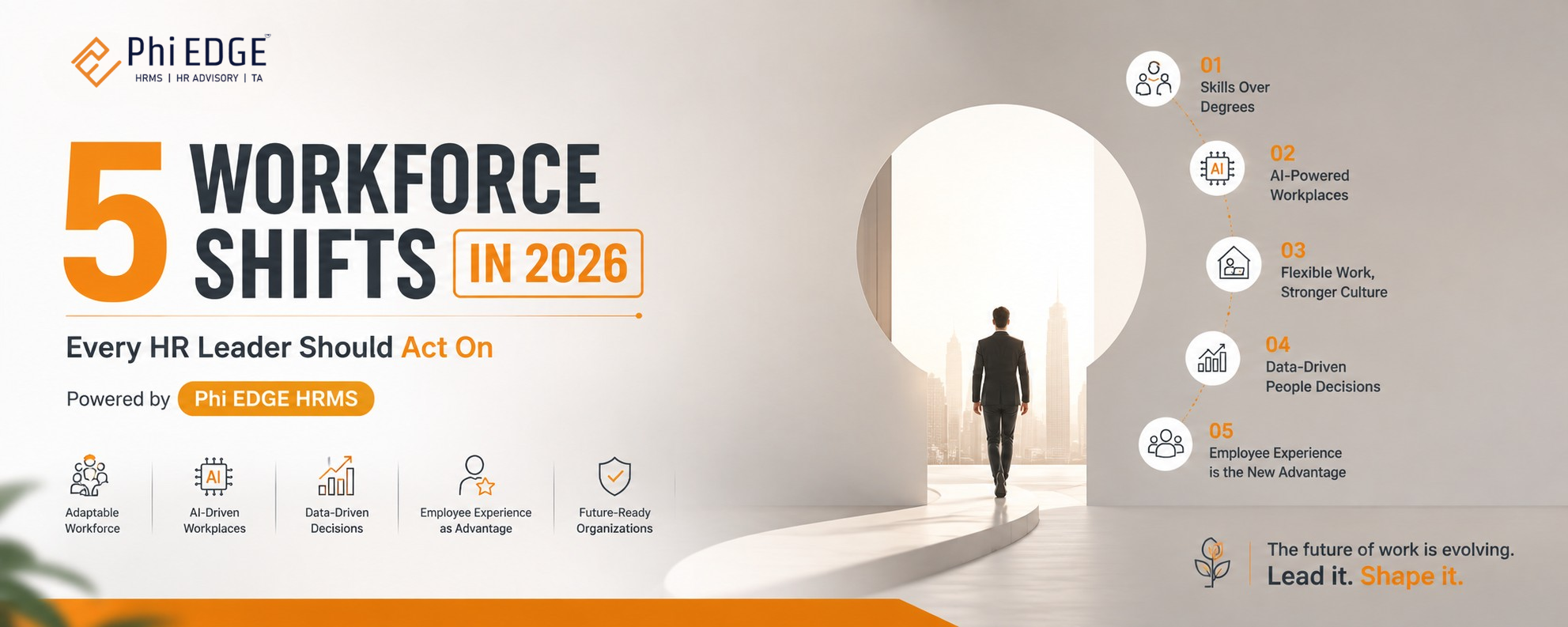
  • 5 Workforce Shifts in 2026 Every HR Leader Should Act On Powered by Phi EDGE HRMS

    5 Workforce Shifts in 2026 Every HR Leader Should Act On Powered by Phi EDGE HRMS

    The workplace of 2026 doesn’t look like the one HR leaders planned for even two years ago. Hybrid work has matured into something more complex, employees expect transparency and growth in equal measure, and AI has moved from “nice to have” to the backbone of everyday HR operations.

    For HR leaders, the question isn’t whether to adapt — it’s how fast and with what tools. 5 Workforce Shifts in 2026 Every HR Leader Should Act On Powered by Phi EDGE HRMS Below are five workforce shifts defining 2026 and how a modern, AI-powered HRMS like Phi EDGE helps you act on each one before it becomes a problem.

    1. Skills Are Replacing Job Titles — Build a Real Competency Model Framework

    Job descriptions are losing relevance. Companies are hiring, promoting, and rewarding based on demonstrated skills rather than static titles. This means HR teams need a structured competency model framework that maps the exact skills required for each role, tracks employee proficiency against that map, and flags gaps before they become performance issues.

    Without this framework, promotions feel arbitrary, training budgets get wasted on the wrong programs, and succession planning becomes guesswork. With Phi EDGE, HR leaders can build role-specific competency frameworks natively inside the platform, linking skills directly to appraisals, learning paths, and career progression — so every development conversation is backed by data, not opinion.

    Action item: Audit your current job architecture. If competencies aren’t formally mapped and tracked, 2026 is the year to fix that.

    1. Feedback Has to Be Continuous, Not Annual

    The once-a-year review is dead weight in 2026. Employees expect real-time, multi-source feedback that reflects how they actually work with peers, managers, and cross-functional teams. This is why 360-degree feedback software has become a core HR tech investment rather than an optional add-on.

    Good 360 feedback software does more than collect ratings — it aggregates feedback from managers, peers, direct reports, and even clients, then turns it into clear development insights. Phi EDGE’s built-in 360-feedback module lets HR teams launch feedback cycles in minutes, customize question sets by role or competency, and generate individual growth reports automatically — closing the loop between feedback and action.

    Action item: If your feedback process still runs once a year through spreadsheets or forms, it’s time to move to continuous, software-driven feedback loops.

    1. Leave and Attendance Management Needs to Be Smart, Not Manual

    Hybrid and distributed teams have made manual leave tracking unsustainable. HR leaders are under pressure to reduce administrative overhead while still maintaining accuracy, compliance, and visibility across locations. That’s where AI leave management software comes in — automating approvals, flagging patterns (like recurring Monday leaves or burnout risk), and syncing seamlessly with payroll.

    Phi EDGE combines leave and attendance tracking with AI-driven insights, so managers get real-time visibility into team availability, and HR gets predictive analytics on absenteeism trends — before they affect productivity or morale.

    Action item: Move away from manual leave approvals and spreadsheet-based attendance logs. AI-based automation isn’t a luxury anymore; it’s table stakes for a distributed workforce.

    1. AI Is Now Expected Across the Entire HR Stack

    By 2026, employees and HR teams alike expect AI to be embedded everywhere — from resume screening to performance insights to chatbot-driven employee support. Standalone tools that don’t talk to each other are becoming a liability. This is driving demand for unified AI HR software platforms that bring recruitment, performance, payroll, and engagement together under one intelligent system.

    As an HRMS company in India built for scale, Phi EDGE integrates AI across the entire employee lifecycle — smart candidate matching, predictive attrition alerts, automated payroll reconciliation, and conversational support for employee queries — all within a single dashboard, rather than a patchwork of disconnected tools.

    Action item: Evaluate whether your current HR stack is genuinely AI-enabled or just marketed that way. Look for platforms where AI improves decision-making, not just automates data entry.

    1. Payroll and Talent Management Can No Longer Sit in Silos

    In 2026, employees expect payroll accuracy and career growth conversations to feel connected, not like they belong to two different departments. HR leaders are increasingly evaluating HR & payroll management software, as well as talent management software, together, because disconnected systems create errors, delays, and a disjointed employee experience.

    Among the best HRMS tools available today, those that win the trust of HR leaders are those that unify payroll, compliance, performance, and talent development on a single platform. Phi EDGE was built on exactly this principle — payroll runs are linked to attendance and leave data automatically, while talent management modules use the same employee data to power appraisals, succession planning, and internal mobility.

    Action item: If your payroll and talent systems don’t share data in real time, you’re likely creating friction — and risk — that a unified HRMS can eliminate.

    The Conclusion

    2026 isn’t asking HR leaders to do more with less — it’s asking them to do it smarter. Competency-based growth, continuous feedback, AI-driven leave and attendance, unified AI HR software, and integrated payroll and talent management aren’t separate initiatives anymore. They’re pieces of the same connected HR strategy.

    Phi EDGE HRMS was built to bring all five of these shifts together in one platform — helping HR leaders move from reactive administra

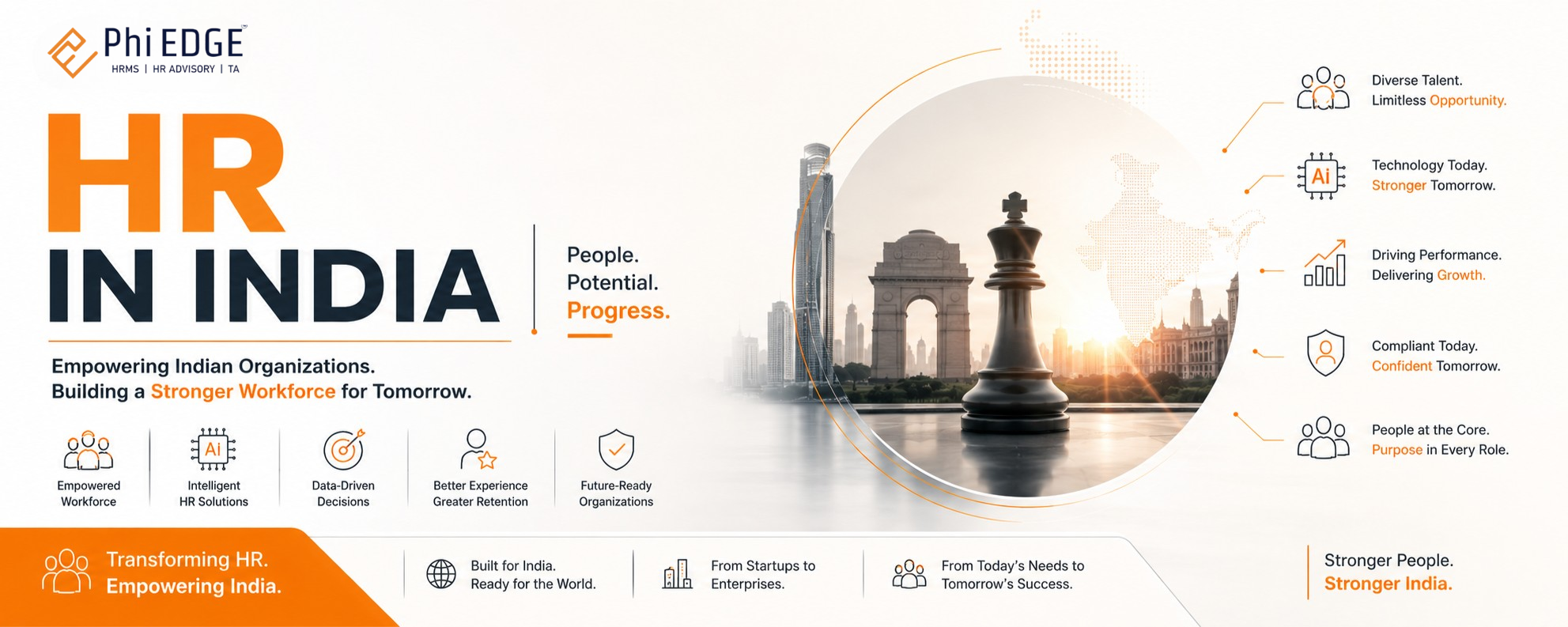
  • The Future of HR in India: AI, Automation & Smart Decision-Making with Phi EDGE HRMS

    The Future of HR in India: AI, Automation & Smart Decision-Making with Phi EDGE HRMS

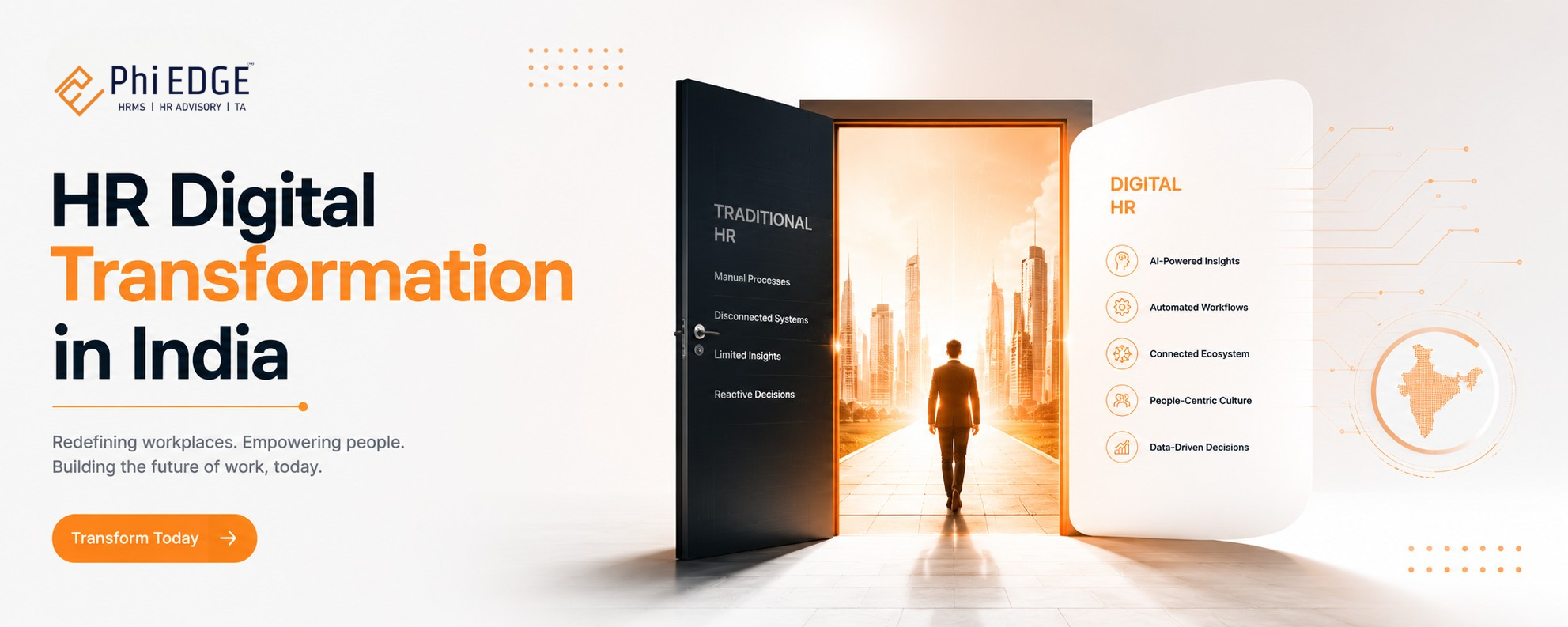
    India’s workplaces are changing faster than ever. Hybrid work, a young and mobile workforce, rising compliance complexity, and growing employee expectations have pushed HR teams to rethink how they operate. The Future of HR in India: AI, Automation & Smart Decision-Making with Phi EDGE HRMS. The days of spreadsheets, manual approvals, and disconnected HR processes are fading. In their place, a new generation of intelligent, automated, and data-driven HR platforms is taking shape — and Phi EDGE HRMS is leading that shift.

    This blog explores how AI and automation are reshaping HR in India, and how Phi EDGE HRMS is helping organizations move from routine administration to smart, strategic decision-making.

    Why HR in India Needs to Evolve

    India’s workforce is one of the youngest and most digitally native in the world. Employees today expect the same seamless, app-like experience from their HR systems that they get from consumer apps. At the same time, HR leaders are under pressure to:

    • Reduce time spent on repetitive administrative tasks
    • Ensure accurate, real-time compliance with labour laws across states
    • Improve employee retention in a competitive talent market
    • Make faster, data-backed workforce decisions
    • Scale HR operations without scaling headcount

    Traditional HRMS platforms simply weren’t built to handle this level of complexity and speed. This is exactly the gap that modern, AI-powered platforms like Phi EDGE HRMS are designed to close.

    The Role of AI and Automation in Modern HR

    Artificial intelligence isn’t replacing HR teams — it’s freeing them from repetitive work so they can focus on people, strategy, and culture. Here’s how AI and automation are transforming core HR functions in India today.

    1. Smarter Leave Management with AI

    Leave management has traditionally been one of the most manual and error-prone parts of HR — chasing approvals, tracking balances, and manually checking policy compliance. An AI leave management software changes this completely.

    With Phi EDGE HRMS, leave applications, approvals, and balance tracking are automated end-to-end. The system can intelligently flag unusual leave patterns, predict staffing gaps during peak leave periods, auto-apply state-specific leave policies, and route approvals instantly — reducing HR’s manual workload while giving employees a faster, frustration-free experience.

    1. AI HR Software for Smarter Decision-Making

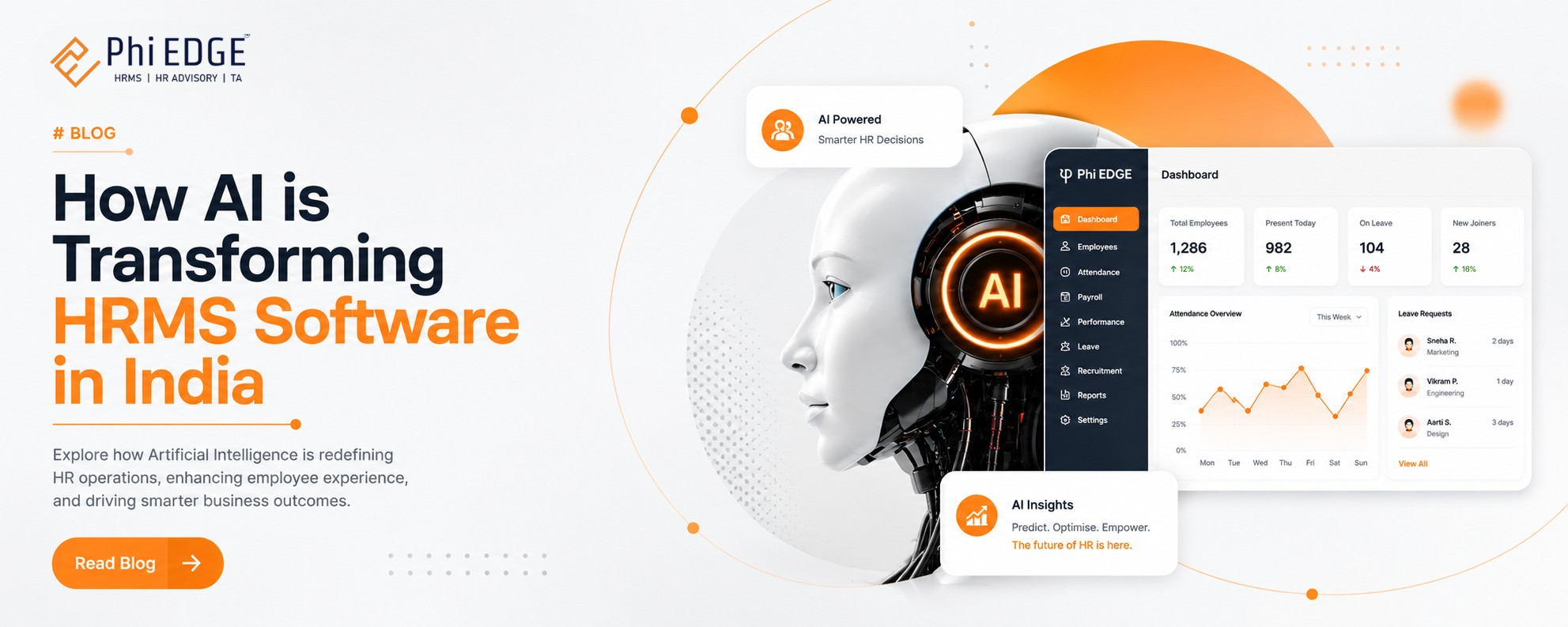
    Modern HR leaders don’t just need data — they need insights they can act on. This is where AI HR software becomes a game-changer. Instead of pulling reports manually and analyzing them after the fact, Phi EDGE HRMS uses AI to surface patterns in attrition risk, performance trends, hiring bottlenecks, and workforce costs in real time.

    This allows HR teams to move from reactive firefighting to proactive, strategic decision-making — identifying flight-risk employees before they resign, spotting skill gaps before they impact projects, and optimizing workforce planning based on real data rather than guesswork.

    1. Boosting Engagement with AI Employee Engagement Software

    Employee engagement is no longer measured through an annual survey. Today’s workforce expects continuous listening and real-time action. An AI employee engagement software like the one built into Phi EDGE HRMS uses sentiment analysis, pulse surveys, and behavioural data to understand how employees are really feeling — not just once a year, but continuously.

    This enables HR teams to identify disengagement early, personalize recognition and rewards, tailor engagement initiatives to specific teams or departments, and correlate engagement trends with productivity and retention.

    How Phi EDGE HRMS Brings It All Together

    Phi EDGE HRMS isn’t a collection of separate tools bolted together — it’s a unified, AI-powered platform built specifically for the realities of Indian businesses. Key capabilities include:

    • End-to-end automation across on boarding, attendance, payroll, and exits
    • AI-driven leave management that reduces manual approvals and policy errors
    • Real-time analytics dashboards for smarter, faster HR decisions
    • Continuous engagement tracking powered by AI sentiment insights
    • Built-in compliance with Indian labour laws, updated automatically
    • Self-service employee experience via mobile and web

    By combining automation with intelligence, Phi EDGE HRMS helps HR teams shift their time and energy from paperwork to people.

    The Road Ahead

    The future of HR in India will be defined by organizations that use AI not to replace human judgment, but to enhance it. Platforms that combine an AI leave management software, an AI hr software, and an AI employee engagement software into one connected system will have a clear advantage — faster decisions, better employee experiences, and HR teams that can finally focus on strategy instead of admin.

    Phi EDGE HRMS is built for exactly this future — helping Indian businesses of every size run smarter, more human-centric HR operations powered by AI.

    Ready to see the difference AI-powered HR can make? Explore how Phi EDGE HRMS can transform your HR operations today.


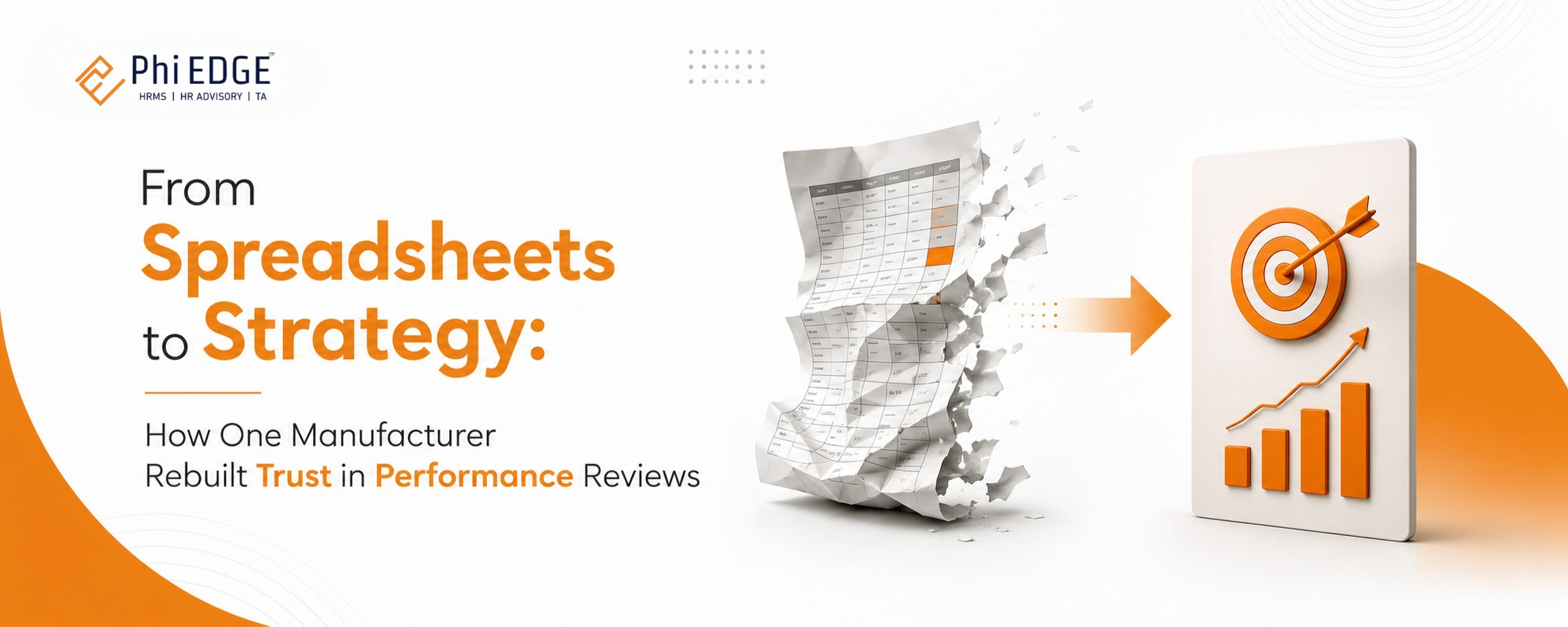
  • From Spreadsheets to Strategy: How One Manufacturer Rebuilt Trust in Performance Reviews

    From Spreadsheets to Strategy: How One Manufacturer Rebuilt Trust in Performance Reviews

    A leading manufacturing company, running operations across multiple plants, had reached a breaking point with its performance management process. Appraisals were entirely spreadsheet and email-driven — a system that consumed weeks of HR’s time, gave employees no real-time insight into their own performance, and left increment decisions feeling arbitrary rather than earned. What should have been a moment of recognition and growth had instead become a source of frustration across the organization.

    The Core Challenges

    The existing appraisal process was breaking down at every level:

    • Employees had no visibility into their goals, KPIs, or where they stood until the appraisal letter finally arrived.
    • HR spent nearly three weeks each cycle manually consolidating appraisal data from scattered spreadsheets and emails.
    • Reviews were routinely delayed, and in many cases skipped altogether.
    • Increment decisions lacked transparency, leaving employees uncertain about how outcomes were determined.
    • HR spent additional weeks chasing managers just to get appraisals completed.

    The result: a performance process that ran once a year, satisfied no one, and added administrative burden without adding insight.

    PhiEDGE’s Transformational Approach

    PhiEDGE partnered with the company to rebuild performance management as a continuous, transparent, and data-driven process:

    • Structured KPI and Goal Management: Role-specific KPIs were created and mapped through a Goal and KPI Management framework with multi-level approval workflows — ensuring every goal was clear, relevant, and formally aligned before the review cycle began.
    • Continuous Performance Tracking: Instead of a single annual snapshot, performance was tracked in real time throughout the year, giving both employees and managers ongoing visibility into progress.
    • Self, Manager, and 360-Degree Assessments: Self-assessments and manager reviews created a genuine two-way dialogue, while 360-degree feedback brought in peer and cross-functional perspectives for a more complete, less biased view of managerial styles and performance.
    • Competency-Based Performance Management: Evaluations went beyond targets to assess the underlying skills and behaviours driving performance, making development needs visible rather than assumed.
    • Digital PMS Replacing Spreadsheets: PhiEDGE’s Performance Management System replaced manual trackers entirely — with automated data consolidation, real-time dashboards, and standardized workflows across every department and plant.

    Impact

    • Appraisal accuracy improved by 35%, driven by competency-based, KPI-linked evaluations that replaced subjective, once-a-year judgments.
    • Attrition dropped by 20% as employees gained visibility into their growth path and confidence in a fair, transparent appraisal process.
    • Employees gained full transparency into goals, KPIs, and appraisal progress — tracked in real time instead of revealed once a year.
    • HR eliminated weeks of manual data consolidation and follow-up chasing, replacing it with automated, real-time reporting.
    • Real-time dashboards gave HR and leadership instant visibility into review completion, pending approvals, and rating distribution.
    • The appraisal process became standardized across departments, replacing inconsistent, plant-by-plant practices.
    • Leadership gained an organization-wide view of performance trends, making it easier to identify high performers, future successors, and employees needing development support.
    • Increment and talent decisions became grounded in consistent, documented performance data rather than manager memory or informal judgment.

    “What used to take HR three weeks of chasing spreadsheets now happens in real time. Our employees finally have visibility into their own performance, and our managers have the data to back every decision they make.” — HR Leadership, Manufacturing Client

    Through an integrated approach — combining KPI-driven goal management, continuous tracking, competency-based reviews, and 360-degree feedback — PhiEDGE turned a slow, opaque, once-a-year process into a continuous, transparent performance culture. This wasn’t just a system upgrade; it was a shift toward a more engaged, accountable, and data-driven organization.

  • Performance Management System

    Performance Management System

    Performance Management System: Complete Guide to Performance Management Process in HRMS (2026)

    Table of Contents

    1. What is a Performance Management System?
    2. Quick Answer (AI Overview)
    3. Why Every Business Needs a Performance Management System
    4. Key Components of the Performance Management Process
    5. How Performance Management Works in HRMS
    6. Benefits of a Performance Management System
    7. Features to Look For
    8. Industry Use Cases
    9. Before vs After Examples
    10. Case Study
    11. Latest Statistics
    12. Comparison of Leading Performance Management Software
    13. Common Mistakes
    14. Best Practices
    15. FAQs

    What is a performance management system?

    A Performance Management System (PMS) is a structured HR process that helps organizations set employee goals, track progress, provide continuous feedback, conduct performance appraisals, and align individual achievements with business objectives.

    Unlike traditional annual appraisals, modern performance management focuses on ongoing communication, measurable goals, employee development, and data-driven decision-making.

    A cloud-based Performance Management System in HRMS centralizes every stage of the employee performance lifecycle—from goal setting and KPI tracking to 360-degree feedback, manager reviews, competency assessments, and performance analytics.

    Whether you are a startup, SME, or enterprise, implementing a digital performance management solution helps improve productivity, employee engagement, accountability, and retention while reducing manual HR effort.

    What is a Performance Management System?

    A Performance Management System is HR software that enables organizations to plan, monitor, evaluate, and improve employee performance through continuous feedback, goal tracking, performance reviews, competency assessments, and analytics.

    In Simple Terms

    It helps HR managers and business leaders answer questions such as:

    • Are employees achieving their goals?
    • Which teams need coaching?
    • Who deserves promotion?
    • Which employees require additional training?
    • How can overall productivity be improved?

    Modern HRMS platforms automate these activities through dashboards, reminders, performance scorecards, and real-time reports.

    Why is Performance Management Important?

    An effective performance management process helps organizations:

    • Align employee goals with company objectives.
    • Increase productivity through measurable KPIs.
    • Improve employee engagement with regular feedback.
    • Simplify performance appraisal cycles.
    • Identify future leaders and high performers.
    • Support fair compensation and promotion decisions.
    • Build a culture of continuous improvement.

    Organizations that replace annual reviews with continuous performance management often experience stronger employee engagement, better manager-employee communication, and faster achievement of business goals.

    Why Every Business Needs a Performance Management System in 2026

    The workplace has evolved significantly. Hybrid work, distributed teams, AI-assisted workflows, and changing employee expectations require organizations to move beyond spreadsheets and manual appraisal forms.

    A modern Performance Management System in HRMS enables businesses to:

    • Set SMART goals and OKRs for every employee.
    • Track KPI progress in real time.
    • Automate appraisal workflows.
    • Capture continuous feedback from managers and peers.
    • Conduct 360-degree performance reviews.
    • Monitor competency and skill development.
    • Generate performance insights using dashboards and analytics.
    • Connect performance outcomes with learning and career growth.

    Instead of evaluating employees once a year, organizations can continuously monitor progress, identify challenges early, and provide timely coaching.

    This approach improves transparency, accountability, and employee satisfaction while helping HR teams make faster, data-driven decisions.

    Why Choose PhiEDGE Performance Management System?

    PhiEDGE HRMS offers an intelligent, scalable, and user-friendly performance management solution designed for modern businesses.

    With PhiEDGE, organizations can:

    • Automate the complete performance management process.
    • Create customizable appraisal cycles.
    • Define KPIs, KRAs, and OKRs.
    • Collect continuous feedback.
    • Enable 360-degree performance reviews.
    • Monitor employee goals through intuitive dashboards.
    • Generate AI-powered performance insights.
    • Reduce manual HR workload.
    • Improve employee engagement and retention.
    • Scale seamlessly as the organization grows.

    Whether you manage 50 employees or 5,000, PhiEDGE helps transform performance reviews into an ongoing process that supports business growth and employee success.


    Performance Management Process: How It Works in an HRMS

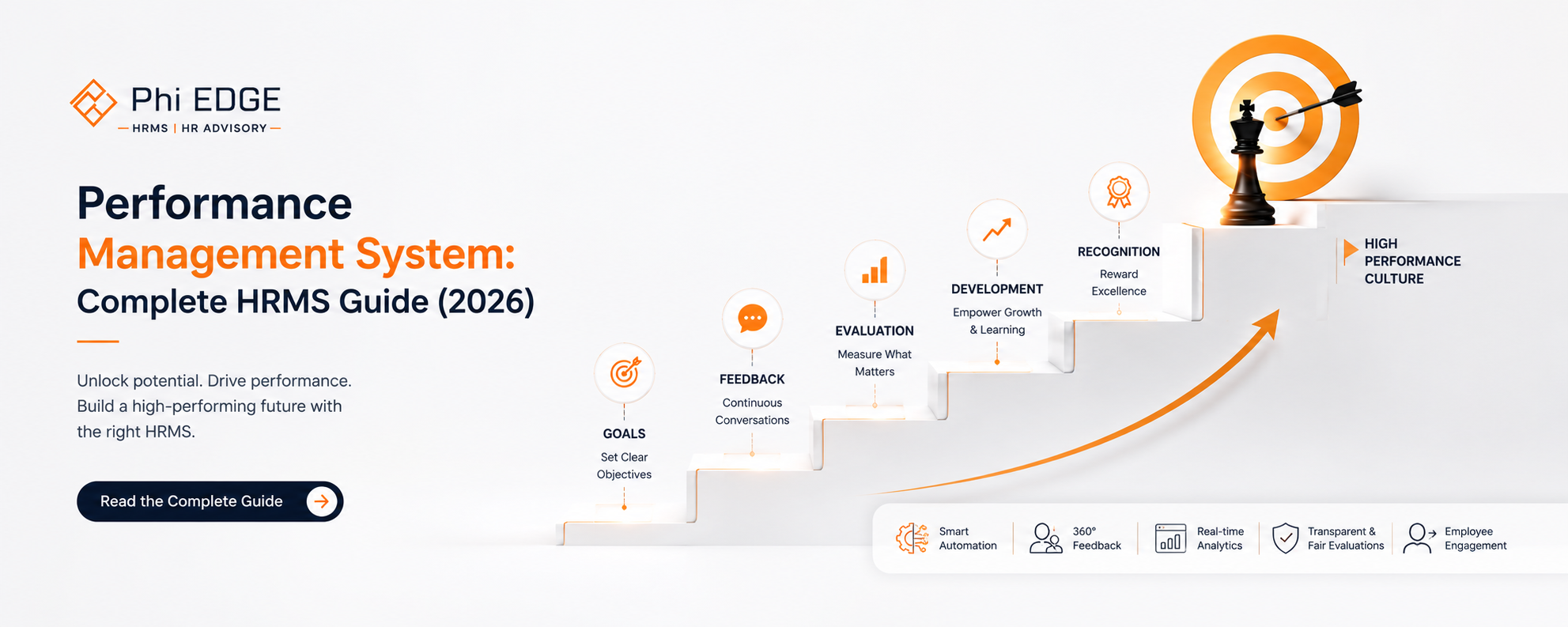
    A successful performance management process is more than conducting annual appraisals. It is a continuous cycle that helps organizations align employee goals with business objectives, provide regular feedback, measure performance, and support employee development.

    A modern Performance Management System in HRMS automates this entire process, making it transparent, data-driven, and efficient.

    What is the Performance Management Process?

    The performance management process is a structured framework used by organizations to plan, monitor, evaluate, and improve employee performance throughout the year.

    Instead of relying on yearly reviews, organizations use continuous performance management to encourage regular communication between managers and employees. This approach helps employees stay aligned with business priorities while giving managers real-time visibility into performance.

    The Six Stages of the Performance Management Process

    1. Goal Setting

    Every performance cycle begins with clearly defined goals.

    Organizations typically use:

    • SMART Goals
    • KPIs (Key Performance Indicators)
    • KRAs (Key Result Areas)
    • OKRs (Objectives and Key Results)

    For example:

    Sales Executive

    • Increase quarterly revenue by 20%
    • Generate 100 qualified leads every month

    HR Manager

    • Reduce hiring time by 25%
    • Improve employee retention by 15%

    Clear goals ensure employees understand expectations from day one.

    2. Continuous Performance Tracking

    Managers should monitor progress throughout the year instead of waiting for annual reviews.

    An HRMS enables organizations to:

    • Track completed tasks
    • Measure KPI achievement
    • View project milestones
    • Identify performance gaps
    • Monitor productivity trends

    Real-time dashboards help managers make proactive decisions rather than reactive ones.

    3. Continuous Feedback

    One of the biggest shifts in modern HR is moving from annual feedback to continuous feedback.

    Employees receive:

    • Weekly check-ins
    • Monthly reviews
    • Peer recognition
    • Manager feedback
    • Coaching sessions

    Continuous feedback helps employees improve immediately rather than discovering issues months later.

    4. Performance Appraisal

    The performance appraisal system evaluates employee achievements against predefined goals and competencies.

    Organizations may conduct:

    • Quarterly appraisals
    • Half-yearly reviews
    • Annual performance reviews
    • Project-based evaluations

    Appraisals usually include:

    • Goal achievement
    • Behavioral competencies
    • Technical skills
    • Leadership capabilities
    • Attendance
    • Productivity metrics
    • Overall performance rating

    An HRMS automates workflows, approvals, reminders, and appraisal documentation, reducing manual effort and ensuring consistency.

    5. Employee Development

    Performance management is not only about evaluation—it is also about growth.

    After identifying strengths and improvement areas, organizations create personalized development plans.

    These may include:

    • Training programs
    • Certifications
    • Leadership development
    • Mentorship
    • Upskilling initiatives
    • Career progression plans

    This stage helps employees build new skills while preparing future leaders within the organization.

    6. Rewards and Recognition

    Outstanding performance should be acknowledged.

    Organizations can link performance ratings to:

    • Salary increments
    • Bonuses
    • Promotions
    • Awards
    • Incentives
    • Employee recognition programs

    Recognizing achievements motivates employees and strengthens engagement.

    How a Performance Management System Works in HRMS

    A Performance Management System in HRMS digitizes and automates every stage of the performance lifecycle.

    Step 1: Define Organizational Goals

    HR leaders establish company-wide objectives and align departmental goals.

    Example:

    Business Goal
    Increase annual revenue by 30%.

    Marketing Goal:
    Generate 5,000 qualified leads.

    Sales Goal:
    Improve conversion rate by 15%.

    Customer Success Goal:
    Increase customer retention to 95%.

    Step 2: Assign Individual Goals

    Managers assign measurable goals to employees based on their roles.

    Each employee receives:

    • KPIs
    • KRAs
    • Deadlines
    • Weightage
    • Success metrics

    The HRMS tracks progress automatically throughout the review cycle.

    Step 3: Monitor Progress

    Employees update task completion while managers monitor dashboards showing:

    • Goal completion percentage
    • KPI achievement
    • Delayed tasks
    • Performance trends
    • Department-wise performance

    Automated reminders keep everyone on track.

    Step 4: Collect Feedback

    The system gathers feedback from:

    • Reporting managers
    • Team members
    • Cross-functional colleagues
    • Employees (self-assessment)

    This creates a balanced and transparent evaluation process.

    Step 5: Conduct Performance Reviews

    Managers review:

    • Goal completion
    • Behavioral competencies
    • Skill development
    • Productivity
    • Attendance
    • Project contributions

    The HRMS generates performance reports that simplify decision-making.

    Step 6: Generate Analytics

    HR leaders access dashboards showing:

    • High-performing employees
    • Employees needing support
    • Department performance
    • Promotion readiness
    • Skill gaps
    • Attrition risks

    These insights enable data-driven workforce planning.

    What is a Performance Appraisal System?

    A Performance Appraisal System is a structured method for assessing employee performance against predefined goals, competencies, and organizational expectations.

    While the terms are often used interchangeably, they are not identical.

    • Performance Management System: A continuous process focused on planning, monitoring, coaching, evaluating, and developing employees throughout the year.
    • Performance Appraisal System: A specific evaluation stage within the broader performance management process, typically conducted quarterly, half-yearly, or annually.

    A modern HRMS integrates appraisals into the overall performance cycle, ensuring reviews are based on real-time data rather than memory or manual records.

    Traditional Appraisals vs Modern Performance Management

    Traditional Performance Appraisal Modern Performance Management
    Annual review Continuous process
    Paper forms or spreadsheets Cloud-based HRMS
    Manager-only feedback 360-degree feedback
    Focus on past performance Focus on continuous improvement
    Limited visibility Real-time dashboards
    Manual calculations Automated scoring and analytics
    Generic development plans Personalized learning paths

    Organizations adopting modern performance management benefit from more frequent feedback, greater transparency, and better alignment between employee efforts and business goals.

    Example Workflow

    Imagine a software company implementing a Performance Management System:

    1. HR defines company objectives.
    2. Department heads create team goals.
    3. Managers assign KPIs to each employee.
    4. Employees update progress weekly.
    5. Managers provide monthly feedback.
    6. Peers contribute 360-degree feedback.
    7. The HRMS calculates performance scores.
    8. HR reviews analytics to identify high performers and skill gaps.
    9. Training and development plans are assigned.
    10. Promotions, rewards, and succession planning are based on performance data.

    This automated workflow reduces administrative effort, improves fairness, and helps organizations make informed talent decisions.


    Benefits of a Performance Management System

    A modern Performance Management System (PMS) is more than an appraisal tool. It is a strategic HR solution that helps organizations improve employee performance, align business goals, and build a culture of continuous learning. By integrating a Performance Management System in HRMS, businesses can automate reviews, track employee progress, and make data-driven decisions.

    Below are the key benefits organizations can expect in 2026.

    Top Benefits of a Performance Management System

    1. Aligns Employee Goals with Business Objectives

    One of the biggest advantages of a performance management system is goal alignment.

    Every employee understands:

    • Their responsibilities
    • Individual KPIs
    • Department goals
    • Company objectives

    When employees know how their work contributes to organizational success, productivity and accountability naturally improve.

    Example

    Company Goal:
    Increase annual revenue by 25%.

    Marketing Goal:
    Generate 20,000 qualified leads.

    Sales Goal:
    Increase conversion rate to 18%.

    Individual Goal:
    Close 30 qualified deals every month.

    This structured alignment ensures every employee works toward the same strategic vision.

    2. Improves Employee Productivity

    Employees perform better when expectations are clear.

    A performance management process provides:

    • Measurable goals
    • Regular feedback
    • Progress tracking
    • Performance dashboards

    Instead of waiting for annual reviews, employees receive continuous guidance, enabling them to improve throughout the year.

    3. Enables Continuous Feedback

    Traditional annual appraisals often come too late to address performance issues.

    Modern HRMS platforms support:

    • Weekly check-ins
    • Monthly one-on-one meetings
    • Instant recognition
    • Coaching conversations
    • Continuous feedback

    Employees gain timely insights, helping them improve performance before small issues become larger challenges.

    4. Supports Fair Performance Appraisals

    Manual evaluations can be subjective.

    A digital performance appraisal system uses measurable data such as:

    • KPI achievement
    • Goal completion
    • Attendance
    • Project delivery
    • Competency ratings
    • Manager feedback
    • Peer reviews

    This creates a more transparent and objective appraisal process.

    5. Identifies High Performers

    A Performance Management System helps HR identify employees who consistently exceed expectations.

    High-performing employees can be considered for:

    • Promotions
    • Leadership development
    • Succession planning
    • Incentive programs
    • Special projects

    Recognizing top talent also boosts employee motivation and retention.

    6. Detects Skill Gaps

    Performance reviews highlight areas where employees need additional support.

    Organizations can then create personalized development plans, including:

    • Technical training
    • Leadership workshops
    • Soft-skill development
    • Certifications
    • Mentoring programs

    Closing skill gaps strengthens workforce capabilities and prepares employees for future roles.

    7. Increases Employee Engagement

    Employees are more engaged when they receive:

    • Recognition
    • Constructive feedback
    • Career growth opportunities
    • Transparent evaluations

    A strong performance management process encourages regular communication between managers and employees, fostering trust and collaboration.

    8. Simplifies HR Operations

    Manual appraisal cycles involve spreadsheets, emails, reminders, and paperwork.

    An integrated HRMS automates:

    • Goal creation
    • Review scheduling
    • Feedback collection
    • Approval workflows
    • Performance scoring
    • Report generation

    Automation saves HR teams significant administrative time.

    9. Supports Better Business Decisions

    Performance analytics help leaders answer questions such as:

    • Which departments perform best?
    • Which employees are ready for promotion?
    • Where are the biggest skill gaps?
    • Which teams require additional support?

    These insights enable informed decisions rather than relying on assumptions.

    10. Improves Employee Retention

    Employees are more likely to stay with organizations that:

    • Provide regular feedback
    • Recognize achievements
    • Invest in learning
    • Offer career progression
    • Maintain fair evaluation processes

    A transparent Performance Management System contributes to a positive employee experience and reduces voluntary turnover.

    Key Features of a Modern Performance Management System

    Choosing the right Performance Management System in HRMS requires evaluating features that support both employees and HR teams.

    Goal & OKR Management

    Create and monitor:

    • SMART Goals
    • KPIs
    • KRAs
    • OKRs

    Goals can be assigned at organizational, departmental, team, and individual levels.

    Continuous Feedback

    Enable employees and managers to exchange feedback regularly through structured check-ins, comments, and coaching sessions.

    360-Degree Feedback

    Collect feedback from multiple sources, including:

    • Managers
    • Peers
    • Direct reports
    • Cross-functional teams
    • Self-assessments

    This provides a well-rounded view of employee performance.

    Performance Appraisals

    Automate quarterly, half-yearly, or annual review cycles with customizable appraisal templates, rating scales, and approval workflows.

    Competency Management

    Evaluate employees on competencies such as:

    • Communication
    • Leadership
    • Problem-solving
    • Teamwork
    • Technical expertise
    • Customer focus

    Competency tracking helps identify strengths and development areas.

    Dashboards & Analytics

    HR leaders can monitor:

    • Goal completion rates
    • Department performance
    • Employee ratings
    • High-potential talent
    • Training needs
    • Performance trends

    Interactive dashboards make workforce planning easier.

    Automated Notifications

    The system automatically reminds users about:

    • Pending reviews
    • Goal deadlines
    • Feedback requests
    • Appraisal schedules
    • Manager approvals

    Automation ensures no important activity is missed.

    Learning & Development Integration

    Connect performance outcomes with learning recommendations.

    For example:

    • Employees with communication gaps receive communication training.
    • High-potential employees are enrolled in leadership programs.
    • Technical skill gaps trigger relevant certification courses.

    This creates a continuous learning culture.

    Mobile Accessibility

    Modern employees expect access from anywhere.

    A cloud-based HRMS allows users to:

    • Update goals
    • Submit self-assessments
    • Complete reviews
    • View dashboards
    • Provide feedback

    from desktop, tablet, or mobile devices.

    Industry Use Cases in 2026

    IT & Software Companies

    Challenges:

    • Managing hybrid teams
    • Tracking project delivery
    • Measuring productivity

    Performance Management Solution:

    • Sprint goals
    • OKRs
    • Continuous feedback
    • Skill tracking

    Manufacturing

    Challenges:

    • Production targets
    • Quality compliance
    • Workforce efficiency

    Solution:

    • KPI dashboards
    • Productivity monitoring
    • Supervisor reviews

    Healthcare

    Challenges:

    • Compliance
    • Patient care quality
    • Clinical performance

    Solution:

    • Competency assessments
    • Certification tracking
    • Department scorecards

    Retail

    Challenges:

    • Sales performance
    • Customer satisfaction
    • Attendance

    Solution:

    • Sales KPIs
    • Store performance dashboards
    • Incentive management

    Banking & Financial Services (BFSI)

    Challenges:

    • Regulatory compliance
    • Sales targets
    • Customer service

    Solution:

    • KPI tracking
    • Risk-based performance metrics
    • Balanced scorecards

    Education

    Challenges:

    • Faculty performance
    • Student outcomes
    • Administrative efficiency

    Solution:

    • Academic KPIs
    • Faculty evaluations
    • Continuous improvement plans

    Startups

    Challenges:

    • Fast growth
    • Lean HR teams
    • Changing priorities

    Solution:

    • Agile goal setting
    • OKRs
    • Automated performance reviews
    • Real-time feedback

    Before vs After: Performance Management System

    Before Implementing a PMS After Implementing a PMS
    Annual paper-based reviews Continuous digital performance tracking
    Manual spreadsheets Automated HRMS workflows
    Delayed feedback Real-time feedback and coaching
    Subjective ratings Data-driven evaluations
    Limited visibility Live dashboards and analytics
    Inconsistent goals Aligned KPIs and OKRs
    Separate appraisal records Centralized employee performance history
    Reactive HR decisions Predictive workforce insights

    Case Study: Improving Performance with PhiEDGE HRMS

    Industry: Mid-sized IT Services Company

    Employees: 450

    Challenges

    • Annual appraisal process took nearly six weeks.
    • Managers used multiple spreadsheets for reviews.
    • Employees received feedback only once a year.
    • Promotions lacked standardized evaluation criteria.

    Solution

    The company implemented the PhiEDGE Performance Management System with:

    • KPI-based goal setting
    • Quarterly appraisal cycles
    • 360-degree feedback
    • Automated review workflows
    • Real-time performance dashboards
    • Employee self-assessments

    Results After 12 Months

    • Appraisal cycle completion time reduced by 65%.
    • Goal completion visibility improved across all departments.
    • Managers conducted regular monthly feedback sessions.
    • HR reduced administrative effort through workflow automation.
    • Employees reported greater transparency in the performance review process.
    • Leadership gained better insights into succession planning and employee development.

    This example illustrates how a digital performance management system in an HRMS can streamline HR operations while supporting employee growth and organizational performance.


    Latest Performance Management Statistics (2025–2026)

    Using recent HR and workplace research helps organizations understand why investing in a modern Performance Management System is a business necessity rather than just an HR initiative.

    Key Statistics

    Statistic Why It Matters
    Global employee engagement declined to 20% in 2025, the lowest level since 2020. Organizations need better coaching, feedback, and performance management.
    Only 23% of employees strongly agree they have a clear understanding of what exceptional performance looks like in their role. Clear goals and continuous feedback are critical for improving performance.
    Employee engagement decline is estimated to cost the global economy around $10 trillion in lost productivity annually. Poor performance management directly affects business growth.
    Among employees using AI at work, 65% report that AI has had a positive impact on their individual productivity. AI-powered HRMS platforms can improve productivity when combined with effective management practices.

    Sources: Gallup State of the Global Workplace 2026, Gallup Workplace Research.

    Why These Statistics Matter

    These findings highlight several important trends:

    • Annual performance reviews alone are no longer sufficient.
    • Employees perform better when expectations are clearly defined.
    • Continuous coaching has become more valuable than once-a-year evaluations.
    • Organizations need real-time visibility into employee goals, KPIs, and development.
    • AI enhances performance management when paired with effective leadership rather than replacing managers.

    Performance Management Software Comparison

    Feature PhiEDGE HRMS HROne Keka Darwinbox Zoho People
    Goal & KPI Management ✅ ✅ ✅ ✅ ✅
    OKR Management ✅ ✅ ✅ ✅ Limited
    Continuous Feedback ✅ ✅ ✅ ✅ ✅
    360° Feedback ✅ ✅ ✅ ✅ Limited
    Performance Appraisal ✅ ✅ ✅ ✅ ✅
    Competency Assessment ✅ ✅ ✅ ✅ Partial
    AI Performance Insights ✅ Limited Partial ✅ Limited
    Performance Analytics Dashboard ✅ ✅ ✅ ✅ ✅
    Learning & Development Integration ✅ ✅ ✅ ✅ Partial
    Custom Review Cycles ✅ ✅ ✅ ✅ ✅
    Mobile Accessibility ✅ ✅ ✅ ✅ ✅
    Suitable for SMEs & Enterprises ✅ ✅ ✅ ✅ ✅

    Why PhiEDGE stands out

    • End-to-end HRMS platform
    • Automated appraisal workflows
    • Goal, KPI, KRA, and OKR management
    • AI-powered insights and analytics
    • Easy-to-use dashboards
    • Scalable for growing businesses
    • Customizable workflows for different industries

    Common Mistakes Organizations Make

    Even with the right software, poor implementation can limit results.

    1. Conducting Only Annual Reviews

    Many organizations still evaluate employees once a year.

    Problem

    • Feedback arrives too late.
    • Employees cannot improve in real time.

    Best approach

    Use monthly check-ins and quarterly reviews.

    2. Setting Unclear Goals

    Goals like “Improve performance” are difficult to measure.

    Instead, define measurable objectives such as:

    • Increase sales by 15%
    • Reduce customer response time to under 2 hours
    • Achieve 95% project delivery on time

    3. Ignoring Continuous Feedback

    Performance discussions should not happen only during appraisal season.

    Managers should provide:

    • Coaching
    • Recognition
    • Constructive feedback
    • Career guidance

    throughout the year.

    4. Measuring Only Results

    High-performing employees also demonstrate collaboration, communication, innovation, and leadership.

    An effective performance appraisal system evaluates both outcomes and behaviors.

    5. Using Manual Spreadsheets

    Manual processes often lead to:

    • Missing reviews
    • Data inconsistencies
    • Delayed approvals
    • Reporting errors

    A cloud-based HRMS automates these tasks and provides a single source of truth.

    6. Treating Performance Reviews as a Formality

    Performance management should support employee growth—not simply assign ratings.

    Employees expect actionable feedback, development plans, and opportunities to improve.

    7. Failing to Train Managers

    Even the best software cannot replace skilled managers.

    Managers should be trained to:

    • Set SMART goals
    • Deliver constructive feedback
    • Conduct objective evaluations
    • Coach employees effectively

    Best Practices for Performance Management in 2026

    Organizations achieving strong performance outcomes typically follow these practices.

    Set SMART Goals

    Every objective should be:

    • Specific
    • Measurable
    • Achievable
    • Relevant
    • Time-bound

    Align Individual Goals with Business Strategy

    Employees should clearly understand how their work contributes to company objectives.

    Alignment improves accountability and collaboration.

    Schedule Regular Check-ins

    Recommended review cadence:

    • Weekly team check-ins
    • Monthly manager one-on-ones
    • Quarterly performance reviews
    • Annual development planning

    Regular conversations prevent surprises during formal appraisals.

    Use Data Instead of Assumptions

    Leverage HRMS dashboards to evaluate:

    • KPI achievement
    • Goal completion
    • Attendance
    • Productivity
    • Competency development

    Objective data supports fair and transparent decisions.

    Encourage Two-Way Feedback

    Performance management should be collaborative.

    Employees should have opportunities to:

    • Share challenges
    • Request support
    • Provide upward feedback
    • Discuss career aspirations

    Recognize Achievements Frequently

    Recognition motivates employees and reinforces desired behaviors.

    Celebrate:

    • Goal completion
    • Innovation
    • Teamwork
    • Customer success
    • Leadership

    Recognition does not always need to be monetary; timely appreciation also has a positive impact.

    Link Performance with Learning

    Performance reviews should lead to action.

    Examples include:

    • Technical certifications
    • Leadership development
    • Mentorship programs
    • Cross-functional projects
    • Personalized learning paths

    This transforms the performance management process into a continuous cycle of growth.

    Key Takeaways

    An effective performance management system is not just an appraisal tool—it is a strategic platform that helps organizations improve productivity, strengthen employee engagement, and make informed talent decisions.

    Businesses that combine continuous feedback, measurable goals, manager coaching, and data-driven insights are better positioned to build high-performing teams and adapt to the evolving workplace.


    Frequently Asked Questions (FAQs)

    1. What is a Performance Management System?

    A Performance Management System (PMS) is an HR solution that helps organizations set employee goals, monitor progress, provide continuous feedback, conduct performance appraisals, and improve productivity. It aligns employee performance with business objectives through a structured and measurable process.

    2. What is the Performance Management Process?

    The performance management process is a continuous cycle of goal setting, performance tracking, regular feedback, employee development, performance appraisal, and recognition. It ensures employees remain aligned with organizational goals while supporting continuous improvement.

    3. What is the difference between Performance Management and Performance Appraisal?

    A Performance Management System is a continuous process that focuses on planning, monitoring, coaching, and improving employee performance throughout the year. A Performance Appraisal System is one stage of that process where employee performance is formally evaluated against predefined goals and competencies.

    4. Why is a Performance Management System important?

    A modern Performance Management System helps organizations improve employee productivity, increase engagement, identify skill gaps, support fair appraisals, strengthen leadership development, and make data-driven HR decisions.

    5. What are the key components of a Performance Management System?

    Most systems include:

    • Goal and KPI management
    • OKR tracking
    • Continuous feedback
    • Performance reviews
    • 360-degree feedback
    • Competency assessments
    • Performance analytics
    • Employee development planning
    • Rewards and recognition

    6. How does a Performance Management System work in an HRMS?

    An HRMS-based Performance Management System automates goal setting, KPI tracking, appraisal workflows, feedback collection, performance scoring, analytics, and reporting. Managers and employees can monitor progress in real time through centralized dashboards.

    7. What are the benefits of using a Performance Management System?

    Key benefits include:

    • Higher employee productivity
    • Better goal alignment
    • Transparent performance evaluations
    • Continuous feedback
    • Improved employee engagement
    • Faster appraisal cycles
    • Better talent development
    • Data-driven workforce planning

    8. What is the role of KPIs in Performance Management?

    Key Performance Indicators (KPIs) are measurable metrics used to evaluate employee performance. They help managers monitor progress, assess goal achievement, and make objective performance decisions.

    9. What is the difference between KPIs, KRAs, and OKRs?

    • KPIs (Key Performance Indicators): Measure performance using specific metrics.
    • KRAs (Key Result Areas): Define the core responsibilities of a role.
    • OKRs (Objectives and Key Results): Combine ambitious objectives with measurable outcomes to track progress.

    Together, these frameworks create a balanced and measurable performance management process.

    10. What is 360-degree feedback?

    360-degree feedback is a review method where employees receive performance feedback from multiple sources, including managers, peers, direct reports, cross-functional colleagues, and self-assessments. This provides a more comprehensive evaluation than manager-only reviews.

    11. How often should performance reviews be conducted?

    Many organizations now use continuous performance management with monthly check-ins, quarterly reviews, and annual development discussions. Regular feedback helps employees improve faster than relying solely on annual appraisals.

    12. Can small businesses benefit from a Performance Management System?

    Yes. Small and medium-sized businesses can improve employee productivity, streamline appraisals, reduce manual HR work, and prepare for growth by implementing a scalable Performance Management System within their HRMS.

    13. Which industries use Performance Management Systems?

    Performance Management Systems are widely used across:

    • Information Technology (IT)
    • Manufacturing
    • Healthcare
    • Retail
    • Banking and Financial Services (BFSI)
    • Education
    • Logistics
    • Hospitality
    • Professional Services
    • Startups

    Any organization that manages employee performance can benefit from a structured system.

    14. How does AI improve Performance Management?

    AI-powered Performance Management Systems can:

    • Recommend performance insights
    • Detect skill gaps
    • Identify high-potential employees
    • Predict training needs
    • Automate reporting
    • Support workforce planning through analytics

    AI enhances decision-making while allowing managers to focus on coaching and employee development.

    15. What should you look for in a Performance Management System?

    When selecting a solution, consider features such as:

    • Goal management
    • KPI and OKR tracking
    • Continuous feedback
    • 360-degree reviews
    • Performance analytics
    • Mobile accessibility
    • Workflow automation
    • HRMS integration
    • Customizable appraisal cycles
    • Reporting dashboards

    16. How does a Performance Management System improve employee engagement?

    Employees become more engaged when they receive clear goals, regular feedback, recognition, and career development opportunities. Continuous communication builds trust and helps employees understand how their work contributes to organizational success.

    17. What challenges can a Performance Management System solve?

    A digital system helps address common HR challenges, including:

    • Manual appraisal processes
    • Inconsistent evaluations
    • Lack of goal visibility
    • Delayed feedback
    • Limited performance insights
    • Poor documentation
    • Difficulty identifying high performers
    • Weak succession planning

    18. How is a cloud-based Performance Management System better than spreadsheets?

    Unlike spreadsheets, a cloud-based HRMS offers real-time dashboards, automated reminders, secure data storage, approval workflows, analytics, and centralized employee records. This reduces administrative effort and improves accuracy.

    19. How does Performance Management support business growth?

    By aligning employee objectives with business strategy, organizations can improve productivity, develop future leaders, strengthen collaboration, reduce turnover, and make informed talent decisions that contribute to long-term growth.

    20. Why choose PhiEDGE Performance Management System?

    PhiEDGE provides an integrated Performance Management System in HRMS that helps organizations automate appraisals, manage KPIs and OKRs, collect continuous feedback, enable 360-degree reviews, generate performance analytics, and support employee development through an intuitive, scalable platform suitable for growing businesses.
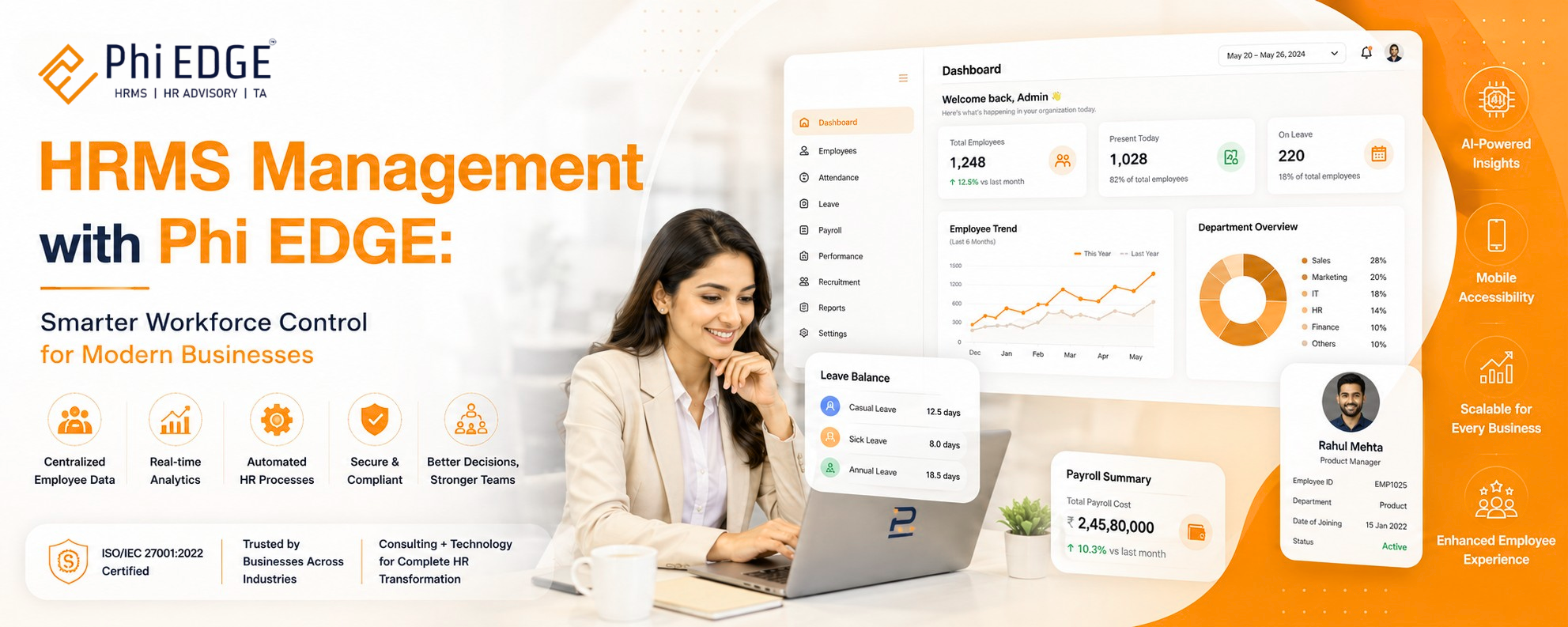
  • Best HRMS Software in India 2026: The Complete HR & Payroll Buying Guide

    Best HRMS Software in India 2026: The Complete HR & Payroll Buying Guide

    If you are comparing HRMS software in India right now, you are probably doing it for one of three reasons: payroll errors are creating trust problems, attendance and leave are still tracked on spreadsheets, or your company just crossed a headcount where “we’ll manage it manually” stopped being true. This guide walks through what the best HRMS platforms in India actually do differently in 2026, what a fair comparison looks like, and how to avoid the mistakes that turn an HRMS rollout into six months of frustration.

    Table of Contents

    1. Quick Answer
    2. How HRMS Software Works
    3. Why HRMS Matters More in 2026
    4. Benefits of a Modern HRMS
    5. Core Features to Look For
    6. Before vs After: What Changes
    7. Case Study: A Pune Manufacturing Rollout
    8. HRMS Market Statistics (India, 2026)
    9. Comparison: Phi EDGE vs Other HRMS Platforms
    10. Common Mistakes When Choosing HRMS
    11. Best Practices for HRMS Selection & Rollout
    12. FAQs

    Quick Answer

    The best HRMS software in India for 2026 combines core HR, payroll, and attendance in one system, automates PF/ESI/TDS compliance, and gives HR leaders real-time dashboards instead of month-end spreadsheet reconciliation. Best HRMS Software in India 2026: The Complete HR & Payroll Buying. For manufacturing and mid-market companies, an HRMS system that pairs software with HR advisory support (not just a login) tends to outperform pure self-serve tools, because policy design and configuration matter as much as the platform itself. Phi EDGE, built in Pune, positions itself in this “consulting + technology” category alongside larger national HRMS players.

    How HRMS Software Works

    An HRMS (Human Resource Management System) works by pulling every stage of the employee lifecycle into one connected database instead of scattered files:

    1. Employee data capture — Onboarding forms, documents, and records feed a single master profile.
    2. Attendance and leave — Biometric, geo-tagged, or mobile punches sync automatically into payroll inputs.
    3. Payroll processing — Salary structures, statutory deductions (PF, ESI, TDS, professional tax), and payslips are generated from that same synced data.
    4. Performance and growth — Goals, KPIs, 360° feedback, and increments link back to the same employee record.
    5. Analytics — Dashboards surface attrition risk, headcount cost, and compliance status without manual pivot tables.

    The core idea is to have one source of truth that feeds every HR process, so nobody re-enters the same employee data five times across five different tools.

    Why HRMS Matters More in 2026

    Why has payroll compliance got harder? India’s labour codes continue to tighten timelines — full and final settlements, statutory filings, and multi-state PF/ESI obligations all carry real penalty risk, and manual tracking across locations is where errors often creep in.

    Why is manufacturing HR different this year? Field and shop-floor workforces need geo-fenced attendance, role-based punch rules, and daily-wage payroll accuracy that generic HR tools weren’t built for—this is the segment where Phi EDGE’s manufacturing client base (rubber, auto components, polymers) feels the gap most.

    Why are HR teams asking for analytics, not just records? Boards now expect attrition, cost-per-hire, and engagement data on demand, not once a quarter — so an HRMS that only stores records and doesn’t report on them is already behind.

    Why does SME adoption keep rising? Cloud-based, modular HRMS pricing has made enterprise-grade HR tooling affordable for smaller teams, which is a major reason smaller companies (under 1,000 employees) now make up the largest share of India’s HR tech market.


    Benefits of a Modern HRMS

    • Time back for HR — Automating attendance-to-payroll flow removes the week-long manual reconciliation many teams still do every month.
    • Fewer payroll errors — Automated PF/ESI/TDS calculations reduce the manual mistakes that damage employee trust.
    • Faster decisions — Real-time dashboards replace static, backwards-looking spreadsheets.
    • Compliance confidence — Statutory filings and exit timelines are tracked systematically, not remembered.
    • Better retention signal — Attrition, tenure band, and engagement data surface risk before resignations, not after.
    • Consistency across locations — One policy engine instead of different spreadsheets per plant or branch.

    Core Features to Look For

    Feature area What it should do
    Core HR/employee database Single record per employee, org structure, documents
    Payroll software Auto PF, ESI, TDS, professional tax, multi-state compliance
    Attendance & leave Biometric, mobile, geo-fenced punch; auto leave accrual
    Performance management Goal-setting, KRA/KPI tracking, 360° feedback
    Employee self-service Payslips, leave requests, document access without HR tickets
    Analytics & reporting Attrition, headcount cost, manager-level breakdowns
    Configurability Different rules for field staff vs office staff (equity, not uniform policy)
    Integrations Biometric devices, accounting/ERP, background verification


    Before vs After Examples

    Process Before HRMS (manual/Excel) After a proper HRMS
    Monthly attendance-to-payroll 2–3 people spend days chasing punches across sheets Auto-synced; payroll run in hours
    Attrition tracking Reviewed only after resignation letters arrive Manager/tenure-level risk visible on a dashboard
    Payslip accuracy Manual formulas, frequent correction requests System-calculated PF/ESI/TDS, fewer disputes
    Policy consistency Different rules by plant/branch, tracked informally One configurable policy engine, applied consistently
    Exit processing Full-and-final dues delayed past statutory windows Time-boxed workflow inside the compliance deadline


    Case Study: A Pune Manufacturing Rollout

    Illustrative example based on the type of mid-market manufacturing implementation Phi EDGE commonly runs — presented as a composite scenario, not a single named client’s confidential figures.

    A ~350-employee auto-component manufacturer near Pune ran attendance on biometric machines that didn’t talk to payroll, and performance reviews happened once a year on paper forms. HR spent roughly a week each month reconciling attendance before payroll could even start, and two plants had quietly drifted onto different leave policies.

    After moving core HR, attendance, payroll, and performance into a single HRMS with role-based configuration (dual punch for shop floor, single punch for office staff), the same team cut its monthly payroll-prep time from days to under one working day, standardised leave policy across both plants, and got a live view of appraisal-cycle completion instead of chasing paper forms in March. The bigger shift was cultural: HR moved from “chasing data” to reviewing a dashboard and acting on it.


    Statistics (with Sources)

    • India’s HRMS market was valued at roughly USD 0.87 billion in 2025 and is projected to reach USD 2.27 billion by 2031, growing at a 17.34% CAGR — one of the fastest-growing HR tech markets globally.
    • The broader India HR technology market was valued at USD 1,208.26 million in 2025, projected to reach USD 2,329.11 million by 2034 (7.56% CAGR); recruitment tools hold the largest application share at 25%.
    • Companies under 1,000 employees represent 41% of India’s HR tech market in 2025 — the largest single segment — driven by affordable, modular cloud HRMS pricing.
    • India’s HR analytics market alone is projected to grow from USD 161.5 million (2025) to USD 553.9 million by 2033, a 16.8% CAGR, reflecting rising demand for attrition and workforce analytics.
    • North India holds the largest regional share (30%) of the HR tech market, while South India (notably Bengaluru) remains a major hub for HRMS product development; West India — where Pune sits — is one of the four core regional markets tracked by industry researchers.

    Comparison Table (Competitor Landscape)

    Platform Positioning Strongest for Consulting layer
    Phi EDGE HRMS + HR Advisory + Talent Acquisition, Pune-based Manufacturing & mid-market companies wanting software and HR strategy support Yes — advisory, culture, and PMS design bundled in
    HROne Large-scale cloud HCM suite Enterprises wanting AI agents, a broad module marketplace Limited — primarily self-serve software
    Keka Modern UI-first HRMS Startups and tech companies are prioritising employee experience Limited
    Zoho People Part of the Zoho suite Companies already using other Zoho products Limited
    greytHR SMB payroll-first HRMS Small businesses needing a straightforward statutory payroll Limited

    Note: feature sets and pricing change frequently — verify current specifics directly with each vendor before a purchase decision. This table reflects general market positioning, not a live feature audit.


    Common Mistakes When Choosing HRMS

    1. Buying software to fix a culture problem. An HRMS makes existing policy consistent — it doesn’t invent policy, values, or manager accountability.
    2. Ignoring role-based configuration. Applying one attendance or leave rule to both office and field staff creates fraud gaps and frustration.
    3. Skipping the implementation timeline conversation. Real HR process redesign takes months, not the “go live in 2 weeks” pitch.
    4. Choosing on price alone. The cheapest per-employee rate often means the thinnest compliance and support layer – expensive later during an audit.
    5. Not checking multi-state compliance depth. If you operate in more than one state, PF/ESI/professional tax rules differ — confirm the platform actually handles this, not just claims to.
    6. No named internal owner. Even the best HRMS underperforms if no one is accountable for acting on the dashboards it produces.

    Best Practices

    • Map your current process before evaluating vendors — you can’t compare tools against a workflow you haven’t written down.
    • Involve payroll, IT, and floor/plant managers early, not just HR — attendance and payroll touch all three.
    • Pilot on one location or department before a company-wide rollout.
    • Ask vendors for reference clients in your industry and size band, not generic case studies.
    • Budget time for change management — training and adoption typically need as much attention as the software configuration.
    • Revisit configuration annually — labour codes, statutory rates, and your own org structure change; policies encoded in software should keep pace.

    Frequently Asked Questions

    1. What is the best HRMS software in India for manufacturing companies? The best fit is usually a platform that combines core HR, payroll, and attendance with configurable, role-based rules for shop-floor vs office staff, plus a consulting layer for policy design – which is where Phi EDGE positions itself for manufacturing clients.
    2. What does HRMS stand for? HRMS stands for Human Resource Management System — software that manages the employee lifecycle from hiring through exit, including payroll, attendance, and performance.
    3. What is the difference between HRMS and HRIS? HRIS typically focuses on storing and managing core employee data (records, payroll, and compliance). HRMS includes all of that plus broader functionality like performance management, learning, and engagement tools.
    4. How much does HRMS software cost in India? Pricing is usually per-employee-per-month and varies by module count, company size, and whether implementation/consulting support is bundled in — get a quote based on your actual headcount and required modules rather than a published “starting price.”
    5. Is HRMS software worth it for a small business? Yes, for most businesses past roughly 30–50 employees, since manual payroll and attendance tracking starts breaking down around that size — modular, cloud-based pricing has made HRMS accessible for smaller teams too.
    6. What features should every HRMS have in 2026? Core HR, statutory payroll (PF/ESI/TDS), attendance/leave, performance management, employee self-service, and analytics dashboards are the baseline; AI-assisted features are increasingly common but not yet universal.
    7. Can HRMS software reduce employee attrition? HRMS software surfaces the data (tenure, manager, engagement scores) that helps predict and act on attrition risk earlier — but it doesn’t fix attrition on its own; the underlying management and culture work still has to happen.
    8. How long does HRMS implementation typically take? Basic core HR and payroll setup can go live in weeks, but full process redesign, data migration, and change management across a mid-size company typically takes a few months.
    9. What is the best HRMS software in Pune? Pune has several manufacturing and IT-services companies with multi-plant or field operations, so an HRMS with strong attendance geo-fencing and role-based payroll — combined with local HR advisory support — tends to fit best; Phi EDGE is headquartered in Pune and built around this segment.
    10. Does HRMS handle statutory compliance automatically? A good HRMS automates PF, ESI, TDS, and professional tax calculations and keeps filings on schedule, but compliance ownership still sits with the company — the software reduces manual error, it doesn’t replace legal accountability.
    11. What is the difference between HRMS and payroll software? Payroll software focuses narrowly on salary processing and statutory deductions. HRMS is broader, including payroll as one module alongside attendance, performance, and employee records.
    12. How do I choose between HRMS vendors? Compare them against your mapped current process; ask for same-industry references, check multi-state compliance depth, and evaluate the implementation/support model — not just the feature list or price sheet.
    13. Can HRMS integrate with biometric attendance devices? Most modern HRMS platforms support biometric, RFID, and mobile geo-tagged attendance integration; confirm compatibility with your existing hardware before switching platforms.
    14. Is cloud-based HRMS safe for employee data in India? Reputable HRMS vendors carry data-security certifications (such as ISO/IEC 27001) and role-based access controls; verify a vendor’s specific certifications and hosting practices before onboarding sensitive payroll data.
    15. What HRMS features matter most for field or blue-collar teams? Geo-fenced and offline-capable attendance, role-based punch rules, and accurate daily-wage payroll matter most, since generic office-first HR tools often miss these needs.
    16. Does Phi EDGE offer HR consulting alongside HRMS software? Yes—Phi EDGE operates across three verticals: HRMS software, HR advisory, and talent acquisition, positioning it as a combined consulting-plus-technology provider rather than software-only.
    17. What industries does Phi EDGE’s HRMS typically serve? Phi EDGE’s client base includes manufacturing, automotive components, polymers/rubber, and mid-market industrial companies, largely across Maharashtra and pan-India.
    18. How is HRMS evolving in 2026 compared to earlier years? 2026-era HRMS platforms lean more heavily on AI-assisted analytics, predictive attrition flags, and mobile-first employee self-service, compared to the record-keeping-first systems common a few years ago.
    19. What is the typical ROI timeline for HRMS software? Most companies see time-savings (reduced manual payroll/attendance work) within the first quarter, with harder ROI metrics like reduced attrition or compliance-error costs becoming visible over two to four quarters.
    20. Should a company build its own HR tracking system instead of buying HRMS software? Generally, no for most mid-market companies, since the ongoing maintenance, compliance updates, and security burden of a custom-built system usually outweighs the cost of an established HRMS vendor, unless HR needs are extremely non-standard.


     Author & Reviewed By

    Written by: Phi EDGE HR Advisory Desk — HRMS implementation and HR consulting team, Phi EDGE (Pune)

    Reviewed by: Rahul, Lead HR Consultant, Phi EDGE — 15+ years advising manufacturing and mid-market Indian companies on HRIS rollouts and compliance

    Published: July 2026 | Last updated: July 2026

  • HR Digital Transformation in India

    HR Digital Transformation in India

    1. Executive Summary

    India stands at a defining inflection point in workforce management. As organizations scale, compete for scarce talent, and navigate an increasingly complex regulatory environment, the traditional approach to HR — built on spreadsheets, manual processes, and fragmented tools — is no longer sufficient.

    This white paper examines why HR digital transformation has moved from a departmental initiative to a board-level priority, and what it means in practice for Indian businesses across industries and sizes.


    Key themes explored in this paper:

    • The urgency of HR digital transformation in post-pandemic India
    • Why traditional HR processes are a business liability in 2025
    • What leaders across industries are doing differently
    • Key outcomes: cost reduction, talent retention, compliance accuracy, and productivity


    2. The State of HR in India Today

    Despite rapid economic growth, HR Digital Transformation in India HR function maturity in Indian organizations has lagged behind business ambitions. The gap between leadership expectation and HR capability has never been wider.

    • 70% of mid-size Indian companies still rely on manual or semi-digital HR processes
    • Rising workforce complexity — multi-location, hybrid, contractual, and gig workers
    • Growing compliance burden — PF, ESI, gratuity, and frequent labour law amendments
    • HR teams spending 60%+ of their time on administrative tasks versus strategic work
    • Talent war intensifying — attrition rates hitting all-time highs across sectors


    3. What Is HR Digital Transformation?

    HR digital transformation is not simply about purchasing new software. It is a fundamental shift in how people, processes, and technology work together to drive business outcomes.


    Three Pillars of HR Transformation

    • Automation — eliminating repetitive, manual work to free HR bandwidth
    • Analytics — turning people data into strategic decisions
    • Employee Experience — creating digital-native journeys from hire to retire


    It is also important to distinguish between related but distinct concepts:

    • Digitization — converting paper to digital formats
    • Digitalization — using digital tools to improve existing processes
    • Digital Transformation — rethinking how the organization operates at its core


    An HRMS (Human Resource Management System) is the technological foundation upon which any meaningful HR transformation strategy must be built.


    4. Why C-Suite Must Own This Agenda

    HR digital transformation cannot succeed as a departmental project. It requires executive sponsorship, strategic vision, and cross-functional commitment from the very top.

    • HR transformation is a business transformation — not an HR department initiative
    • Direct impact on revenue, productivity, and employer brand
    • Cost of inaction — attrition costs, compliance penalties, and low engagement scores
    • Board-level metric: Human Capital ROI is now a financial imperative
    • CEOs and CFOs are increasingly measured on talent retention and workforce productivity


    5. Key Drivers Pushing Indian Businesses to Transform

    • Regulatory Pressure — frequent labour law changes demand real-time compliance capability
    • Remote and Hybrid Workforce — need for digital-first, location-agnostic people management
    • Gen Z Workforce Entry — employees expecting seamless, mobile-first HR experiences
    • Data-Driven Decision Making — leadership demanding real-time people analytics
    • Global Competition — MNCs raising the bar on employee experience in Indian markets


    6. Core Areas of HR Digital Transformation

    A comprehensive HR transformation covers the full employee lifecycle. Key functional areas include:

    • Recruitment and Onboarding Automation
    • Attendance, Leave, and Payroll Management
    • Performance Management and KRA/KPI Tracking
    • Learning and Development (L&D) Platforms
    • Employee Self-Service Portals
    • Predictive Attrition and Workforce Analytics
    • Compliance and Statutory Reporting
    • HR Helpdesk and Chatbot Integration


    7. The Role of People Analytics

    Data is now the most underutilised asset in most HR functions. People analytics bridges the gap between HR intuition and business intelligence.

    • Moving from gut-feel hiring to data-backed talent decisions
    • Predictive Attrition Analysis — identifying flight risks before they resign
    • Workforce planning using real-time dashboards and trend modeling
    • Linking HR metrics directly to business KPIs
    • Empowering both HR heads and C-suite with a single source of people intelligence


    8. Challenges Indian Businesses Face in Transformation

    Recognizing the need for transformation is one thing. Executing it successfully is another. The most common barriers include:

    • Resistance to Change — employee and middle management adoption challenges
    • Data Silos — disconnected systems across HR, Finance, and Operations
    • Budget Constraints — perception that enterprise HR technology is unaffordable
    • Customization Needs — India-specific payroll, compliance, and regional diversity
    • Vendor Selection Confusion — too many tools, unclear ROI, and opaque pricing
    • Implementation Risk — fear of operational disruption during deployment


    9. How to Choose the Right HRMS

    Selecting an HRMS is one of the most consequential technology decisions an Indian organization will make. Key evaluation criteria:

    • Build vs Buy vs SaaS — what model fits Indian mid-market business realities
    • India-specific compliance coverage — PF, ESI, gratuity, TDS, new labour codes
    • Scalability — can it grow from 50 to 5,000 employees without re-implementation
    • Integration capability — ERP, Finance, CRM, and third-party tool compatibility
    • Mobile-first access for field and distributed teams
    • Vendor credibility — implementation depth, post-sales support, and domain expertise


    10. The PhiEDGE Approach to HR Digital Transformation

    PhiEDGE is built differently. Where most HR technology vendors start with software and add HR context later, PhiEDGE starts with deep HR expertise — and builds technology around it.

    • Built by HR practitioners — not just technology developers
    • Three verticals working in sync: HR Advisory, Talent Acquisition, and HRMS
    • India-first platform — designed for local compliance, culture, and workforce complexity
    • Modular and scalable — fits startups, SMEs, and large enterprises equally
    • Predictive Attrition Analysis, Payroll Automation, and Performance Tracking in one platform
    • Real implementation support — not just a software license


    11. ROI of HR Digital Transformation

    The return on investment from a well-implemented HRMS is measurable, significant, and fast-acting:

    • 40-60% reduction in HR administrative workload post-automation
    • 25-35% improvement in employee retention with predictive analytics tools
    • Near-zero errors in statutory compliance with automated regulatory updates
    • Faster hiring cycles reducing time-to-productivity across roles
    • 3x higher employee satisfaction scores in digital-first HR companies
    • CFO perspective: HR tech shifting from a cost centre to a profit enabler


    12. Implementation Roadmap

    Successful HR transformation follows a structured, phased approach. PhiEDGE recommends a 90-day quick-start model for mid-size organizations:


    Phase 1 — HR Audit: Process mapping, pain point identification, compliance gap analysis

    Phase 2 — Technology Selection: Vendor evaluation, customization scoping, data migration planning

    Phase 3 — Pilot Deployment: Core module rollout, change management, user training

    Phase 4 — Full Rollout: Enterprise-wide deployment, integrations, go-live support

    Phase 5 — Analytics & Scale: Dashboard activation, predictive tools, ongoing optimization


    13. Case for Action — Key Statistics

    • India’s HR tech market is projected to reach USD 2.4 Billion by 2027
    • Companies with advanced HR analytics are 2.5x more likely to outperform peers
    • Cost of replacing one employee equals 6 to 9 months of their salary
    • Businesses with automated payroll report 80% fewer compliance errors
    • Digital-first HR companies report 3x higher employee satisfaction scores


    14. Conclusion and Call to Action

    HR digital transformation is no longer a future aspiration — it is a present competitive necessity. Every month of delay compounds the cost: in attrition, in compliance risk, in lost productivity, and in competitive disadvantage.

    The organizations that will lead India’s next decade of growth are those investing today in the systems, data, and people infrastructure that make great work possible.

    PhiEDGE offers a proven, India-built pathway to full HR digital transformation — combining deep domain expertise with a scalable HRMS platform and end-to-end implementation support.


    Next Step: Schedule a free HR Digital Readiness Assessment with the PhiEDGE team and discover exactly where your organization stands — and where it needs to go.


    15. About PhiEDGE

    PhiEDGE is a Pune-based HR Technology company helping Indian businesses transform their people management through a powerful combination of advisory expertise and cutting-edge technology.

    • Three verticals: HR Advisory |  Talent Acquisition Management  |  HRMS
    • India-first HRMS platform — built for local compliance and workforce diversity
    • Trusted by HR leaders and business owners across industries
    • End-to-end support: from strategy and implementation to ongoing optimization


    www.phiedge.com

    Systems  •  Scale  •  Performance

    Built by HR expertise. Not just tech.

  • How AI is Transforming HRMS Software in India

    How AI is Transforming HRMS Software in India

    The Future of Human Resource Management is Here

    The workplace is evolving faster than ever, and Human Resource Management Systems (HRMS) are at the center of this transformation. As organizations across India embrace digitalization, Artificial Intelligence (AI) is redefining how businesses manage their workforce, automate processes, and make strategic people decisions.

    At Phi EDGE, we believe that AI-powered HRMS is not just a technological advancement—it is a strategic tool that enables organizations to build smarter, more agile, and employee-centric workplaces.

    Understanding AI-Powered HRMS

    Traditional HRMS solutions primarily focus on automating administrative tasks such as attendance tracking, payroll processing, leave management, and employee record maintenance. HRMS Software in India. While these functions remain essential, modern AI-powered HRMS platforms go several steps further.

    By leveraging machine learning, predictive analytics, and intelligent automation, AI-driven HRMS systems can:

    • Analyze workforce trends
    • Predict employee attrition
    • Automate repetitive HR tasks
    • Improve recruitment efficiency
    • Personalize employee experiences
    • Support data-driven decision-making

    The result is a more efficient HR function that contributes directly to organizational growth.

    Why AI Adoption in HR is Growing in India

    Indian businesses are increasingly recognizing the need for smarter workforce management solutions. With hybrid work models, changing employee expectations, and growing compliance requirements, HR teams require tools that can deliver speed, accuracy, and actionable insights.

    AI helps organizations address these challenges by reducing manual effort and enabling HR professionals to focus on strategic initiatives such as talent development, employee engagement, and workforce planning.

    Key Ways AI is Transforming HRMS Software

    1. Smarter Recruitment and Talent Acquisition

    Hiring the right talent remains one of the biggest challenges for organizations. AI-powered HRMS systems can significantly streamline the recruitment process.

    AI can:

    • Screen thousands of resumes within minutes
    • Match candidate profiles with job requirements
    • Rank applicants based on suitability
    • Reduce hiring bias through data-driven evaluation
    • Improve candidate experience through automated communication

    This allows recruiters to focus their time on engaging with high-potential candidates rather than managing administrative tasks.

    1. Predictive Employee Attrition Analysis

    Employee turnover can be costly for organizations. Modern AI-powered HRMS platforms use predictive analytics to identify patterns that indicate potential attrition risks.

    By analyzing factors such as:

    • Employee engagement levels
    • Performance trends
    • Attendance records
    • Internal mobility
    • Compensation data

    AI can help HR leaders proactively address concerns before valuable employees decide to leave.

    1. Intelligent Performance Management

    Traditional annual performance reviews are gradually being replaced by continuous performance management systems.

    AI-enabled HRMS solutions can:

    • Track employee performance in real time
    • Identify skill gaps
    • Recommend development programs
    • Provide objective performance insights
    • Support fair and transparent appraisals

    This creates a culture of continuous improvement and accountability.

    1. Enhanced Employee Experience

    Today’s employees expect personalized workplace experiences similar to the digital experiences they receive as consumers.

    AI-powered HRMS platforms enhance employee engagement through:

    • Personalized learning recommendations
    • AI-driven employee self-service portals
    • Instant query resolution through chatbots
    • Automated onboarding journeys
    • Customized career development pathways

    These capabilities improve employee satisfaction while reducing HR workload.

    1. Automated Payroll and Compliance Management

    Payroll accuracy and regulatory compliance are critical for every organization.

    AI-enabled HRMS systems help by:

    • Automating payroll calculations
    • Identifying anomalies and errors
    • Managing statutory compliance requirements
    • Generating compliance reports
    • Reducing administrative overhead

    This minimizes human errors and ensures organizations remain compliant with changing regulations.

    1. Data-Driven Workforce Planning

    One of the most valuable contributions of AI is its ability to convert workforce data into actionable insights.

    HR leaders can use AI-powered analytics to:

    • Forecast future hiring needs
    • Identify workforce productivity trends
    • Measure employee engagement
    • Monitor organizational performance
    • Make informed strategic decisions

    This transforms HR from an operational function into a strategic business partner.

    Benefits of AI-Powered HRMS for Indian Businesses

    Improved Efficiency

    Automation significantly reduces manual processes, allowing HR teams to focus on high-value initiatives.

    Better Decision-Making

    AI-generated insights support evidence-based workforce planning and management.

    Enhanced Employee Engagement

    Personalized employee experiences contribute to higher satisfaction and retention rates.

    Reduced Operational Costs

    Automated workflows help reduce administrative expenses and improve productivity.

    Increased Scalability

    As businesses grow, AI-powered HRMS platforms can easily accommodate expanding workforce requirements.

    Challenges Organizations Should Consider

    While AI offers significant advantages, successful implementation requires careful planning.

    Organizations should focus on:

    • Data quality and accuracy
    • Employee privacy and security
    • Ethical AI usage
    • Change management and adoption
    • Continuous system optimization

    The right technology partner can help businesses navigate these challenges effectively.

    The Future of AI in HRMS

    The next generation of HRMS solutions will become increasingly intelligent and predictive. Emerging capabilities such as conversational AI, advanced workforce analytics, skills intelligence, and predictive talent management will further transform how organizations manage people.

    As AI continues to evolve, HR professionals will spend less time on administrative work and more time driving employee growth, organizational culture, and business success.

    How Phi EDGE is Leading the Transformation

    At Phi EDGE, we understand that every organization has unique workforce challenges. Our AI-powered HRMS solutions are designed to simplify HR operations, improve employee experiences, and provide actionable insights that support business growth.

    From recruitment and performance management to payroll and workforce analytics, Phi EDGE helps organizations build future-ready HR ecosystems that drive efficiency, engagement, and measurable results.

    Conclusion

    Artificial intelligence is no longer a future concept—it is actively transforming HRMS software across India. Businesses that embrace AI-powered HR solutions today will be better positioned to attract talent, improve employee experiences, enhance productivity, and achieve sustainable growth.

    As organizations continue their digital transformation journey, AI-driven HRMS will become an essential component of modern workforce management.

    Ready to transform your HR operations with AI-powered HRMS?

    Connect with Phi EDGE and discover how intelligent HR technology can help your organisation unlock its full workforce potential.


  • HR Lifecycle Management Services

    HR Lifecycle Management Services

    HR Lifecycle Management Services: The Foundation of a Successful Workforce Strategy

    Employees are the backbone of every organization. However, managing employees effectively requires much more than recruitment and payroll processing. Organizations must create a structured journey that supports employees from their first interaction with the company to their final day of employment.

    This journey is known as the Employee Lifecycle.

    In today’s competitive business environment, companies that invest in HR Lifecycle Management Services experience higher employee satisfaction, improved productivity, stronger retention, and better compliance.

    As organizations adopt digital transformation initiatives, integrated HRMS platforms like Phi EDGE HRMS are helping businesses automate and optimize every stage of the employee lifecycle.

    This comprehensive guide explains what HR lifecycle management services are, their benefits, real-world applications, comparisons, buying considerations, expert recommendations, and how Phi EDGE HRMS helps businesses create a high-performing workforce in 2026.

    What Are HR Lifecycle Management Services?

    HR Lifecycle Management Services refer to the processes, tools, and technologies used to manage every stage of an employee’s relationship with an organization.

    The lifecycle typically includes:

    Recruitment

    Attracting and hiring the right talent.

    Onboarding

    Helping new employees become productive quickly.

    Training and Development

    Building employee skills and capabilities.

    Performance Management

    Monitoring and improving employee performance.

    Employee Engagement

    Enhancing workplace satisfaction and motivation.

    Career Development

    Supporting employee growth and leadership development.

    Retention

    Reducing employee turnover.

    Offboarding

    Managing employee exits professionally and compliantly.

    A structured lifecycle management approach ensures employees receive consistent support throughout their journey.

    Why HR Lifecycle Management Matters in 2026

    Modern workplaces are evolving rapidly.

    Organisations deal with issues like:

    • Hybrid workplaces
    • Lack of talent
    • Higher standards for employees


    Diversity in the workforce

    • Initiatives for digital transformation
    • In the absence of an effective lifecycle management plan, companies frequently face:
    • High rates of attrition
    • Low levels of engagement among employees
    • Unsatisfactory onboarding experiences
    • Inconsistent assessments of performance
    • Inefficiencies in administration

    Organisations can overcome these obstacles and increase worker productivity with the use of HR lifecycle management services.


    The Seven Stages of HR Lifecycle Management

    Talent Acquisition and Recruitment

    Recruitment is the first interaction between an organisation and a potential employee.

    Effective recruitment strategies help businesses:

    • Attract qualified candidates
    • Reduce hiring costs
    • Improve candidate experience
    • Shorten hiring timelines

    Example

    A technology company receiving hundreds of applications every month can use automated recruitment workflows to identify the best candidates faster.

    Employee Onboarding

    The onboarding process significantly influences employee retention.

    Research consistently shows that employees who experience structured onboarding adapt more quickly and remain with organizations longer.

    Effective onboarding includes:

    Documentation Management

    Digital collection and verification of employee documents.

    Policy Training

    Introduction to company policies and workplace expectations.

    Team Integration

    Helping employees understand organizational culture and workflows.

    Learning and Development

    Employee skills require continuous improvement.

    Organizations that invest in learning and development benefit from:

    • Higher productivity
    • Better innovation
    • Increased employee satisfaction

    Training programs may include:

    • Technical skills
    • Leadership development
    • Compliance training
    • Industry certifications

    Performance Management

    Performance management ensures employees remain aligned with organizational goals.

    Modern performance management focuses on:

    Goal Setting

    Clear expectations and measurable objectives.

    Continuous Feedback

    Regular communication between managers and employees.

    Performance Reviews

    Data-driven evaluation processes.

    Organizations that provide ongoing feedback typically achieve stronger workforce performance.

    Employee Engagement

    Engaged employees contribute more effectively to business success.

    HR Lifecycle Management Services help organizations measure and improve:

    • Employee satisfaction
    • Workplace culture
    • Team collaboration
    • Recognition programs

    Highly engaged employees are generally more productive and less likely to leave.

    Retention and Career Growth

    Retaining top talent is often more cost-effective than hiring replacements.

    Organizations can improve retention by providing:

    • Career progression opportunities
    • Leadership development programs
    • Internal mobility options
    • Personalized growth plans

    Employees who see long-term opportunities are more likely to remain committed to the organization.

    Offboarding and Exit Management

    A structured offboarding process protects organizational knowledge and maintains professional relationships.

    Effective offboarding includes:

    • Exit interviews
    • Asset recovery
    • Final settlements
    • Documentation completion
    • Knowledge transfer

    A positive exit experience can strengthen employer branding and future recruitment efforts.

    Key Benefits of HR Lifecycle Management Services

    Improved Employee Experience

    Employees receive a consistent and structured experience throughout their journey.

    This increases satisfaction and engagement.

    Increased Productivity

    Automated workflows reduce administrative delays and help employees focus on meaningful work.

    Better Employee Retention

    Organizations can identify and address issues before employees decide to leave.

    Enhanced Compliance

    Lifecycle management helps maintain:

    • Employee records
    • Policy acknowledgments
    • Audit trails
    • Regulatory compliance

    Data-Driven Workforce Decisions

    Organizations gain valuable insights into:

    • Employee performance
    • Attrition trends
    • Recruitment effectiveness
    • Workforce planning

    These insights improve decision-making.

    Real-World Example of HR Lifecycle Management Success

    Consider a manufacturing company with 1,200 employees across multiple locations.

    Before Lifecycle Management Implementation

    The company faced:

    • High employee turnover
    • Delayed onboarding
    • Inconsistent performance reviews
    • Manual HR processes
    • Limited workforce visibility

    After Adopting HR Lifecycle Management Services

    The organization achieved:

    • Faster onboarding
    • Better employee engagement
    • Improved retention
    • Enhanced compliance
    • Stronger workforce productivity

    Management gained complete visibility into the employee journey from hiring to exit.

    HR Lifecycle Management Services vs Traditional HR Management

    Traditional HR Management

    Traditional HR systems typically focus on:

    • Employee records
    • Payroll
    • Attendance

    Limitations

    • Fragmented processes
    • Limited automation
    • Minimal employee engagement support
    • Weak reporting capabilities

    HR Lifecycle Management Services

    Lifecycle-focused solutions provide:

    • End-to-end employee management
    • Automated workflows
    • Employee self-service
    • Performance tracking
    • Workforce analytics

    This creates a more connected and efficient employee experience.

    How to Choose the Right HR Lifecycle Management Solution

    Selecting the right solution requires evaluating several important factors.

    Scalability

    The system should support future business growth.

    Ease of Use

    Employees and HR teams should be able to use the platform easily.

    Automation Features

    Look for automation in:

    • Recruitment workflows
    • Onboarding processes
    • Performance reviews
    • Leave approvals
    • Exit management

    Integration Capabilities

    The platform should integrate with:

    • Payroll systems
    • Attendance management
    • ERP software
    • Learning management systems

    Reporting and Analytics

    Advanced reporting helps organizations make informed workforce decisions.

    Why Phi EDGE HRMS Is a Preferred HR Lifecycle Management Solution in 2026

    Many organizations struggle with disconnected HR tools and manual processes.

    Phi EDGE HRMS provides a unified platform that manages every stage of the employee lifecycle efficiently.

    End-to-End Employee Lifecycle Management

    Phi EDGE HRMS supports:

    Recruitment Management

    Simplified hiring workflows and candidate tracking.

    Digital Onboarding

    Faster employee integration and documentation management.

    Attendance and Leave Management

    Accurate workforce tracking and policy compliance.

    Performance Management

    Goal setting, feedback, and employee evaluations.

    Employee Engagement

    Tools designed to improve workplace satisfaction.

    Offboarding Management

    Structured exit processes and documentation workflows.

    Smart HR Automation

    Manual HR tasks consume significant time and resources.

    Phi EDGE automates:

    • Employee workflows
    • Approval processes
    • Notifications
    • Documentation tracking

    This improves efficiency while reducing administrative burden.

    Employee Self-Service Portal

    Employees can:

    • Apply for leave
    • Access documents
    • Update personal information
    • View attendance records

    This enhances transparency and employee satisfaction.

    Advanced Workforce Analytics

    Organizations gain visibility into:

    • Employee productivity
    • Retention trends
    • Performance metrics
    • Workforce planning

    These insights support strategic HR decision-making.

    Compliance and Security

    Phi EDGE HRMS helps businesses maintain:

    • Secure employee records
    • Regulatory compliance
    • Audit-ready documentation
    • Standardized HR processes

    Common Mistakes Organizations Make in Lifecycle Management

    Focusing Only on Recruitment

    Hiring is important, but employee success depends on the entire lifecycle.

    Neglecting Employee Development

    Lack of growth opportunities often leads to turnover.

    Conducting Annual Performance Reviews Only

    Continuous feedback is more effective than yearly evaluations.

    Ignoring Employee Engagement

    Engagement directly impacts productivity and retention.

    Using Multiple Disconnected Systems

    Fragmented tools create inefficiencies and inconsistent employee experiences.

    Integrated platforms provide a better solution.

    Future Trends in HR Lifecycle Management Services

    Artificial Intelligence in HR

    AI will help organizations predict turnover risks and identify development opportunities.

    Personalized Employee Experiences

    Future HR systems will deliver customized career paths and learning recommendations.

    Predictive Workforce Planning

    Advanced analytics will improve hiring and succession planning decisions.

    Hybrid Workforce Support

    Lifecycle management solutions will continue evolving to support remote and distributed teams.

    Expert Advice: Building a Strong Employee Lifecycle Strategy

    Organizations should focus on:

    Employee-Centric Processes

    Design workflows around employee needs rather than administrative convenience.

    Continuous Communication

    Encourage regular feedback and transparent communication.

    Technology-Driven Automation

    Reduce manual tasks through intelligent HRMS solutions.

    Data-Based Decision Making

    Use workforce analytics to improve employee experiences and business outcomes.

    Conclusion

    For companies looking for long-term success and workforce excellence, HR Lifecycle Management Services are now a must.

    Stronger employee experiences and improved business outcomes are produced by companies that successfully handle hiring, onboarding, development, performance, engagement, retention, and offboarding.

    Organisations may automate HR procedures, boost employee engagement, increase compliance, and make more informed workforce decisions by putting in place a complete system like Phi EDGE HRMS.

    A planned employee lifecycle strategy will continue to be a vital component of productivity, retention, and organisational success as companies continue to adjust to the nature of work in 2026.


    FAQ Section

    What are HR Lifecycle Management Services?

    HR Lifecycle Management Services help organizations manage employee journeys from recruitment to offboarding through structured processes and technology.

    Why is HR Lifecycle Management important?

    It improves employee experience, productivity, retention, compliance, and workforce visibility.

    How does Phi EDGE HRMS support employee lifecycle management?

    Phi EDGE HRMS provides recruitment, onboarding, attendance, payroll, performance management, employee engagement, analytics, and offboarding tools in a single platform.

    Which industries benefit from HR Lifecycle Management Services?

    Manufacturing, IT, healthcare, education, retail, logistics, professional services, and enterprises of all sizes can benefit.

    What is the biggest advantage of lifecycle management software?

    It creates a connected employee experience while improving efficiency, retention, and workforce performance.