+91 8956049164
  contact@phiedge.co.in


Maternity Leave Policy in India
Maternity Leave Policy in India: A Complete Guide by Phi EDGE
At Phi EDGE, we believe people are the foundation of every successful business. And when it comes to workforce policies, nothing is more important than creating a supportive environment for employees during major life events. One such area is maternity leave policy in India, a benefit that empowers working mothers, ensures compliance with labor laws, and strengthens employer-employee trust.
Through our three verticals—HRMS, HR Advisory, and Talent Acquisition—Phi EDGE has helped organizations across industries like Manufacturing, Financial Services, Real Estate, Hospitality, Construction, Academics, and IT to create inclusive workplaces. A critical part of this effort is helping businesses implement maternity leave effectively with modern HRMS systems and clear policies.
What is the Maternity Leave Policy in India?
The Maternity Benefit Act of 1961, amended in 2017, governs maternity leave in India. It applies to establishments with 10 or more employees, ensuring working women receive paid leave and additional benefits during maternity. Under this act:
● Women are entitled to 26 weeks of paid maternity leave for the first two children.
● For the third child onwards, they are eligible for 12 weeks of paid leave.
● Women adopting a child below three months or commissioning mothers (through surrogacy) are entitled to 12 weeks of leave.
● The act mandates work-from-home flexibility after maternity leave if the role allows.
● Employers must provide crèche facilities in establishments with 50 or more employees.
These provisions ensure women can balance health, family, and career without sacrificing financial security.
Why Maternity Leave Matters for Employers
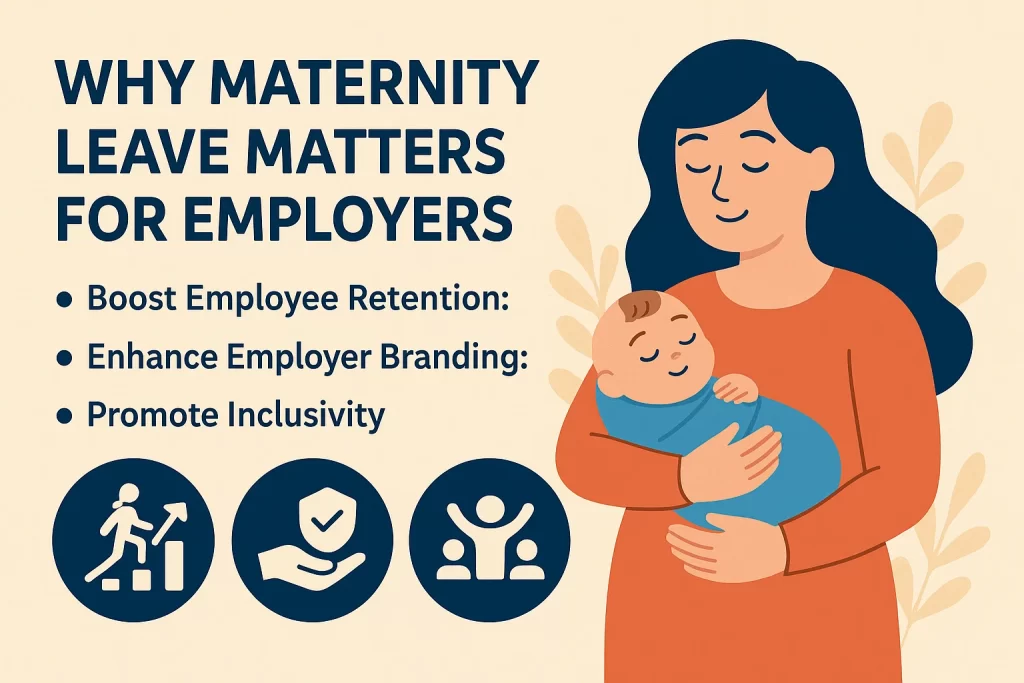
Some organizations still see maternity leave as a compliance requirement rather than an opportunity. In reality, supportive maternity policies:
● Boost Employee Retention: Women are more likely to return to work if they feel valued.
● Enhance Employer Branding: Companies with strong maternity support attract top female talent.
● Promote Inclusivity: Maternity benefits reflect a people-first culture.
● Ensure Compliance: Following the law protects organizations from penalties.
At Phi EDGE, we encourage businesses to integrate maternity leave policies directly into their HRMS management systems for accuracy, fairness, and transparency.
Challenges Businesses Face in Managing Maternity Leave
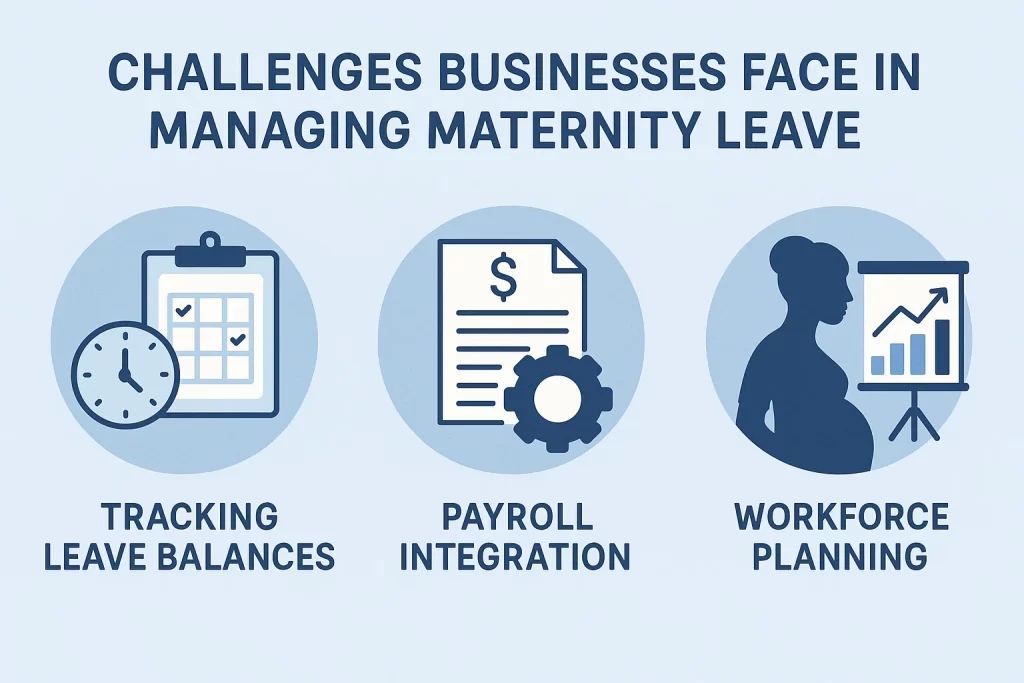
1. Tracking Leave Balances
Without an automated HRMS system, tracking extended leave can get complicated.
2. Payroll Integration
Ensuring correct salary calculations during maternity leave requires seamless HRMS payroll integration.
3. Workforce Planning
Managers often struggle to redistribute workloads during extended leave.
4. Compliance Gaps
Lack of awareness about statutory maternity benefits can result in legal risks.
How HRMS Software in India Simplifies Maternity Leave
Modern HRMS software in India, like that offered by Phi EDGE, ensures maternity leave management is effortless and compliant.
Key Features:
● Automated Leave Tracking: Employees apply online, managers approve, and balances are updated in real time.
● Payroll Accuracy: Paid leave calculations sync directly with payroll modules.
● Custom Policy Configuration: Businesses can configure leave policies as per Indian law.
● Self-Service Portals: Employees can check eligibility, balances, and status without HR intervention.
● Analytics for Planning: HR teams can anticipate absences and plan workforce requirements accordingly.
Benefits of Using HRMS for Maternity Leave Policy
1. Transparency: Employees understand their entitlements clearly.
2. Efficiency: Reduces manual paperwork and back-and-forth queries.
3. Fairness: Policies are applied consistently across the workforce.
4. Compliance: Keeps organizations aligned with Indian maternity laws.
5. Employee Confidence: Builds trust by ensuring benefits are delivered without delays.
Why Choose Phi EDGE HRMS for Maternity Leave Management?
● Indian Business Ready: Designed for local compliance requirements.
● Industry-Specific Customization: From manufacturing units to IT firms, we adapt policies to your needs.
● Advisory + Tech Support: Unlike vendors who only sell software, Phi EDGE also provides HR advisory to set the right policies.
● End-to-End Integration: From leave requests to payroll, everything is connected in one HRMS system.
FAQs on Maternity Leave Policy in India
Women are entitled to 26 weeks of paid leave for the first two children, and 12 weeks for the third child onwards.
Yes, as long as the establishment employs 10 or more people and the employee meets eligibility criteria.
Yes, organizations may allow women to combine maternity leave with earned or sick leave, depending on company policy.
Yes, if the organization employs 50 or more people.
HRMS systems automate leave tracking, payroll calculations, and ensure compliance, reducing manual errors.
Organizations may offer extended leave as a benefit, but the statutory paid leave is capped at 26 weeks.
With HRMS management, policies are automated and applied uniformly, ensuring all employees are treated fairly.
Conclusion
The maternity leave policy in India is not just a legal obligation—it’s a statement of care and inclusivity. By supporting working mothers with paid leave, flexible work options, and crèche facilities, organizations foster loyalty, productivity, and long-term growth.
At Phi EDGE, we go beyond compliance by offering HRMS software in India that automates maternity leave management, integrates with payroll, and ensures a smooth experience for employees and employers alike. Whether you’re a startup or a large enterprise, our HRMS systems help you build a workplace where people and policies align.
Ready to implement a future-ready maternity leave policy? Connect with Phi EDGE today and discover how our HRMS management solutions can transform your HR processes.