Author: admin

  • AI Interview Software for 500+ Employee Companies | Phi EDGE Hiring Solution

    AI Interview Software for 500+ Employee Companies | Phi EDGE Hiring Solution

    Introduction: The Hiring Challenge for Large Enterprises

    Posting jobs and shortlisting resumes is no longer the only part of hiring at scale. AI interview software recruitment becomes a complicated process with several divisions, a large number of applicants, and the requirement for regular review for businesses with 500 or more employees.

    Manual screening, unstructured interviews, and human bias are examples of traditional hiring practices that frequently result in delays, inefficiencies, and bad hiring choices.

    Here, the entire hiring process is revolutionized with Phi EDGE AI Interview Software.

    What is Phi EDGE AI Interview Software?

    Phi EDGE AI Interview Software is a cutting-edge, AI-driven hiring solution made to help medium-sized and large businesses hire more efficiently.

    It helps businesses hire more quickly and intelligently by automating candidate screening, conducting AI-based interviews, analyzing replies, and providing actionable insights.

    Why 500+ Employee Companies Need AI Interview Software

    1. High-Volume Hiring Made Easy

    • Thousands of applications are frequently received by large organisations for a single position. It takes a lot of time and is ineffective to manually screen these resumes.
    • Phi EDGE AI: Automatically filters applicants
    • Ranks candidates according to their suitability for the position
    • cuts screening time by as much as 80%.

    2. Standardised Interview Process

    • It can be challenging to remain consistent during interviews in large teams.
    • Every applicant is assessed using the same standards when employing AI interview software.
    • Bias is greatly diminished.
    • Data is becoming more important when making hiring decisions. 

    3. Faster Time-to-Hire

    Delays in hiring can cost companies both time and money.

    Phi EDGE helps by:

    • Automating initial interview rounds
    • Providing instant candidate analysis
    • Reducing dependency on manual scheduling

    4. Improved Candidate Experience

    Candidates expect fast and smooth hiring processes.

    Phi EDGE ensures:

    • 24/7 interview availability
    • No waiting for HR availability
    • Instant feedback and updates

    Key Features of Phi EDGE AI Interview Software

    1. AI-Powered Video Interviews

    Candidates can take interviews anytime, anywhere. The AI analyses:

    • Communication skills
    • Confidence level
    • Technical knowledge

    2. Smart Resume Screening

    The software scans resumes and identifies the best candidates based on:

    • Skills
    • Experience
    • Job relevance

    3. Automated Candidate Ranking

    Phi EDGE uses AI algorithms to rank candidates based on performance, helping HR teams focus only on top talent.

    4. Real-Time Analytics & Reports

    Get detailed insights like:

    • Candidate scorecards
    • Performance comparison
    • Hiring trends

    5. Integration with HRMS & ATS

    Phi EDGE easily integrates with existing HR systems, making it ideal for enterprise-level operations.

    Benefits of Using Phi EDGE for Large Enterprises

    1. Cost Reduction

    Hiring costs reduce significantly due to:

    • Less manual work
    • Fewer interview rounds
    • Better hiring accuracy

    2. Scalability

    Whether you’re hiring 50 or 5000 candidates, Phi EDGE can handle large volumes effortlessly.

    3. Better Hiring Decisions

    AI-driven insights help HR teams make smarter, unbiased decisions.

    4. Increased Productivity

    HR teams can focus on strategic tasks instead of repetitive screening processes.

    How Phi EDGE Works (Step-by-Step)

    Step 1: Job Role Setup

    Define job requirements, skills, and experience.

    Step 2: AI Screening

    The system filters and shortlists candidates automatically.

    Step 3: AI Interview

    Candidates complete AI-based video interviews.

    Step 4: Evaluation

    AI analyzes responses and generates scores.

    Step 5: Final Selection

    HR teams review top candidates and make final decisions.

    Use Cases Across Industries

    IT & Software Companies

    Handle bulk hiring for developers and engineers efficiently.

    Manufacturing Firms

    Quickly hire skilled labor and technical staff.

    BFSI Sector

    Ensure compliance and standardized hiring processes.

    E-commerce & Startups

    Scale hiring during rapid growth phases.


    Why Choose Phi EDGE Over Traditional Hiring?

    Traditional Hiring Phi EDGE AI Hiring
    Manual screening Automated screening
    Time-consuming interviews Instant AI interviews
    Human bias Data-driven decisions
    Limited scalability Highly scalable
    High cost Cost-effective


    Benefits for Employer Branding

    Using advanced AI hiring tools like Phi EDGE also improves employer branding by:

    • Showcasing innovation
    • Attracting tech-savvy candidates
    • Enhancing company reputation

    Future of Recruitment with AI

    AI is not replacing HR—it is empowering HR teams.

    With tools like Phi EDGE:

    • Hiring becomes faster
    • Decisions become smarter
    • Organisations become more competitive

    Large enterprises that adopt AI early gain a strong competitive advantage in talent acquisition.

    Conclusion

    Hiring is a strategic business process for organizations with more than 500 workers, not just an HR job.

    Organisations benefit from Phi EDGE AI Interview Software.

    Conserve time


    • Cut expenses
    • Boost the calibre of hiring
    • Easily scale hiring

    Adopting AI-powered hiring is now necessary if you want to stay ahead in the cutthroat economy of today. 


    FAQ (Frequently Asked Questions)

    1. What is AI interview software?

    AI interview software uses artificial intelligence to automate candidate screening, interviews, and evaluation.

    2. Is Phi EDGE suitable for large companies?

    Yes, Phi EDGE is specifically designed for companies with 500 or more employees and supports high-volume hiring.

    3. Can AI replace human recruiters?

    No, AI assists recruiters by automating repetitive tasks, allowing them to focus on strategic decisions.

    4. How accurate is AI candidate evaluation?

    AI uses data-driven algorithms, making evaluations more consistent and less biased than manual processes.

    5. Is the software easy to integrate?

    Yes, Phi EDGE integrates seamlessly with HRMS and ATS systems.

    6. Does it improve hiring speed?

    Yes, it significantly reduces time-to-hire by automating screening and interview processes.

    7. Can candidates take interviews remotely?

    Yes, candidates can complete AI interviews at any time and from anywhere.

    8. Is it cost-effective?

    Absolutely. It reduces hiring costs by minimizing manual efforts and improving hiring accuracy.

  • AI HRMS Software in India – Smart Workforce Management with Phi EDGE

    AI HRMS Software in India – Smart Workforce Management with Phi EDGE

    Businesses seek effective solutions to manage staff, automate HR processes, and enhance worker productivity in today’s fast-paced corporate world. Conventional HR systems often employ labour-intensive and time-consuming manual procedures.

    HR management has evolved into a more intelligent and data-driven approach as artificial intelligence has advanced. AI HRMS software is currently being utilised by modern businesses to streamline payroll, workforce analytics, employee performance management, and hiring processes.

    Phi EDGE, an AI-powered HRMS platform designed to help companies automate HR processes and improve decision-making, is one such cutting-edge option. Phi EDGE offers a comprehensive HR management ecosystem for contemporary businesses, featuring potent features such as AI Interview, AI Requirements, and AI KPI Generator. 


    What is AI HRMS software?

    A digital platform called AI HRMS Software (Artificial Intelligence Human Resource Management System) uses advanced analytics and artificial intelligence to automate HR procedures.

    AI HRMS technologies, in contrast to traditional HR systems, evaluate employee data, automate tedious tasks, and offer predictive insights for improved HR decision-making.


    AI HRMS software typically includes features such as:

    • Recruitment management

    • Employee performance tracking

    • Payroll and attendance management

    • Automated KPI generation

    • Workforce analytics and reporting

    By integrating artificial intelligence, companies can manage their HR operations more efficiently, faster, and smarter.

    Why Businesses in India are Adopting AI HRMS Software

    In India, the demand for AI-based HR solutions is growing rapidly. Businesses are implementing AI HRMS systems to boost productivity and cut expenses.

    Increasing Workforce Complexity

    Large teams are managed across several sites by modern businesses. AI HRMS software facilitates efficient monitoring of worker productivity and performance.

    Automation of HR Processes

    Manual HR chores, including data entry, performance monitoring, and employee appraisal, are eliminated by AI solutions.

    Better Hiring Decisions

    HR departments can quickly identify top applicants with the aid of AI-powered recruitment tools.

    Data-Driven HR Strategy

    AI HRMS systems provide detailed analytics that help organizations make informed HR decisions.

    Key Features of Phi EDGE AI HRMS Software

    The Phi EDGE AI HRMS platform offers advanced tools designed to streamline HR operations and enhance workforce management.

    AI Interview – Automated Candidate Screening

    One of the most difficult tasks for HR departments is selecting the best applicant. Phi EDGE’s AI Interview function utilises artificial intelligence to evaluate candidates and streamline the interview process.

    How AI Interviews Work

    • Conducts automated video or chat-based interviews

    • Analyses candidate responses using AI algorithms

    • Generates interview reports and performance scores

    • Helps HR teams shortlist the best candidates

    Benefits of AI Interview

    • Faster hiring process

    • Reduced manual interview workload

    • Objective candidate evaluation

    • Improved recruitment accuracy

    This feature helps organizations identify qualified candidates efficiently.

    AI Requirement – Smart Workforce Planning

    The AI Requirement tool in Phi EDGE helps organizations predict hiring needs and plan workforce expansion.

    How AI Requirements Work

    The system analyses company growth, department workloads, and project requirements to determine hiring needs.

    It can:

    • Predict upcoming hiring requirements

    • Suggest suitable job roles

    • Generate automated job descriptions

    • Align recruitment with business goals

    Benefits of AI Requirement

    • Improves recruitment planning

    • Reduces hiring delays

    • Helps HR teams allocate resources efficiently

    This feature ensures businesses always have the right talent available.

    AI KPI Generator – Automated Performance Metrics

    KPIs, or key performance indicators, are crucial for assessing worker productivity. However, it can be difficult to create KPIs for each job role manually.

    Based on the roles and responsibilities of employees, Phi EDGE’s AI KPI Generator automatically generates quantifiable performance measurements.

    How the AI KPI Generator Works

    The system analyzes job descriptions, employee responsibilities, and company objectives to generate KPIs such as

    • Sales targets

    • Productivity goals

    • Customer satisfaction metrics

    • Project completion timelines

    Benefits of AI KPI Generator

    • Saves time for HR teams

    • Creates clear performance benchmarks

    • Aligns employee goals with business objectives

    • Improves performance evaluation accuracy

    This feature makes employee performance tracking more efficient and transparent.

    How AI HRMS Software Improves HR Operations

    AI-powered HRMS platforms, such as Phi EDGE, help organizations manage employees more effectively by automating key HR processes.

    Recruitment Automation

    AI tools assist HR teams in screening candidates, conducting interviews, and selecting the best talent efficiently.

    Employee Performance Management

    Managers can keep an eye on worker productivity with the aid of performance analytics and automated KPI tracking.

    Real-Time HR Analytics

    AI-powered dashboards provide insights into employee performance, attendance, and engagement.

    Improved Employee Experience

    Employees benefit from transparent evaluation processes, clear performance goals, and continuous feedback.

    Benefits of AI HRMS Software for Indian Businesses

    Organisations implementing AI HRMS software experience significant improvements in HR efficiency and workforce management.

    Increased Productivity

    Automation reduces administrative workload, allowing HR teams to focus on strategic tasks.

    Faster Hiring Process

    AI recruitment tools help identify qualified candidates quickly.

    Data-Driven Decision Making

    AI analytics provide valuable insights into employee performance and organisational productivity.

    Enhanced Employee Engagement

    Transparent appraisal systems improve employee motivation and satisfaction.

    Scalable HR Management

    AI HRMS platforms can support businesses of all sizes, from startups to large enterprises.

    Future of AI HRMS Software in India

    India’s HR technology landscape is rapidly evolving due to the advent of artificial intelligence. AI-powered HRMS platforms will be crucial for workforce management as businesses continue to digitise HR activities.

    Businesses that use AI HR solutions now will have a competitive edge in HR automation, employee efficiency, and talent acquisition.

    By offering cutting-edge technologies that streamline HR administration and boost corporate productivity, platforms like Phi EDGE are spearheading this change.


    Conclusion

    The way businesses manage their employees is being completely transformed by AI HRMS software. AI-powered HR tools help companies increase productivity and efficiency by automating recruiting, performance monitoring, and employee assessment.

    A potent solution for contemporary HR administration, the AI HRMS software with Phi EDGE delivers sophisticated capabilities, including AI Interview, AI Requirements, and AI KPI Generator.

    Organizations can enhance employee performance, streamline HR processes, and foster a more productive workforce by leveraging AI-driven HR technologies.

    FAQ 

    What is AI HRMS software?

    AI HRMS software is a human resource management system that automates HR procedures like hiring, monitoring employee performance, and workforce analytics.

    What makes Phi EDGE AI HRMS software unique?

    Phi EDGE offers sophisticated AI capabilities that automate hiring and performance management, including AI Interview, AI Requirements, and AI KPI Generator.

    How does AI HRMS software improve recruitment?

    AI recruitment tools analyse candidate data, conduct automated interviews, and help HR teams select the best candidates quickly.

    What is an AI KPI Generator?

    Based on staff responsibilities and company goals, an AI KPI generator automatically generates performance measurements.

    Why are AI HRMS platforms important for businesses in India?

    AI HRMS systems enhance HR productivity, automate administrative tasks, provide analytics insights, and help businesses effectively manage large workforces.

    Can AI HRMS software improve employee performance?

    Indeed, AI HRMS systems monitor employee objectives, generate performance indicators, and provide insights that support workers in enhancing productivity.

    Is Phi EDGE suitable for startups and small businesses?

    Yes, Phi EDGE is scalable and suitable for startups, SMEs, and large enterprises looking to automate HR management.

  • Best HR Software for Startups | HR Management Systems – Phi EDGE

    Best HR Software for Startups | HR Management Systems – Phi EDGE

    Best HR Software for Startups: Complete Guide to HR Management Software & HR Management Systems


    One of the most difficult tasks for new and expanding companies is managing human resources. HR procedures may often grow complicated and time-consuming, ranging from hiring and onboarding to payroll and compliance.


    The best HR software for startups is essential in this situation. Businesses can increase productivity, reduce errors, and automate processes by utilizing sophisticated HR management systems and modern HR management software.


    In this article, we will explore how HR software works, why startups need it, and how Phi EDGE provides a comprehensive HR solution.


    What is HR management software?


    A digital platform called HR management software is made to handle employee-related duties like


    • Hiring and onboarding


    • Monitoring attendance


    • Processing payroll


    • Management of Leave


    • Monitoring performance


    • Management of compliance


    Modern HR management solutions consolidate all HR data into a single, protected dashboard, in contrast to manual spreadsheets.


    This translates to better decision-making, less paperwork, and time savings for companies.


    Why Startups Need the Best HR Software


    Startups function in hectic settings. Manual HR management can raise compliance concerns and impede growth.

    Here are some reasons why it’s crucial for companies to invest in the best HR software:

    1. Time Efficiency

    Each month, hours are spent manually recording attendance and processing paychecks. Salary, deduction, and tax computations are processed instantaneously using automated HR management software.

    2. Compliance Accuracy

    Labour rules, PF, ESI, TDS, and other restrictions must be followed by startups. Accurate and timely compliance is guaranteed by a dependable HR management system.

    3. Better Employee Experience

    Self-service portals allow employees to:

    • Download payslips
    • Apply for leave
    • Track attendance
    • Update personal details

    This improves transparency and satisfaction.

    4. Scalable Growth

    Manual methods break down as firms expand from 10 to more than 100 staff. HR management systems hosted on the cloud grow with you.

    Key Features of the Best HR Software for Startups

    Startups should consider these crucial characteristics while selecting HR management software:

    1. Payroll Automation

    Accurate salary calculations
    Auto-generated payslips
    Tax & compliance management

    2. Attendance & Leave Management

    Biometric integration
    Shift management
    Leave approval workflow

    3. Recruitment & Onboarding

    Applicant tracking system (ATS)
    Digital document management
    Smooth onboarding workflow

    4. Performance Management

    Goal tracking
    Appraisal management
    Feedback system

    5. Real-Time Analytics

    Reports on payroll costs
    Attendance trends
    Employee performance insights

    The right HR management system should combine all these features in one platform.

    How HR Management Systems Improve Business Productivity

    Payroll tools are only one aspect of contemporary HR management systems. They have a direct effect on the expansion of businesses.

    Centralised Data Management

    Errors and data duplication are decreased when all employee data is safely kept on a single dashboard.

    Automated Workflows

    Automated approvals for leave, reimbursements, and onboarding reduce administrative workload.

    Better Decision Making

    Real-time HR analytics help founders make informed decisions about hiring, budgeting, and workforce planning.

    Reduced Operational Costs

    By eliminating manual errors and paperwork, startups save money on HR operations.

    Why Phi EDGE is the Best HR Software for Startups

    Phi EDGE is a powerful, cloud-based HR management software designed specifically for startups and growing businesses.

    Here’s why businesses choose Phi EDGE:

    1. All-in-One HR Management System

    Phi EDGE integrates:

    • Payroll processing
    • Attendance management
    • Leave tracking
    • Compliance management
    • Employee self-service

    Everything in one intuitive dashboard.

    2. Startup-Friendly Pricing

    Budget matters for startups. Phi EDGE offers scalable pricing that grows with your team.

    3. Easy Implementation

    Quick setup and onboarding ensure your HR system is live without technical complications.

    4. Compliance Ready

    PF, ESI, tax calculations, and statutory compliance are automated to reduce risk.

    5. Cloud-Based & Secure

    Access your HR management system anytime, anywhere, with advanced data security.

    HR Management Software vs Traditional HR Processes

    Many startups still rely on Excel sheets or manual tracking. Let’s compare:

    H4: Manual HR System

    • Time-consuming
    • Error-prone payroll
    • No real-time reports
    • Difficult compliance tracking

    H4: Modern HR Management Software

    • Automated payroll
    • Instant reporting
    • Centralized database
    • Compliance alerts
    • Scalable system

    Clearly, adopting the best HR software for startups gives a competitive advantage.

    How to Choose the Right HR Management System

    Before selecting HR software, consider:

    Business Size

    Choose software that supports your current team and future growth.

    Customisation Options

    Every startup has unique processes. Ensure the system allows flexibility.

    Integration Capability

    The HR management system should integrate with accounting, biometric devices, and other tools.

    Customer Support

    Reliable support is essential during implementation and scaling.

    The Future of HR Management Systems

    The future of HR management software is driven by:

     Artificial Intelligence

    AI-driven recruitment and performance analysis.

     Automation

    Fully automated workflows reduce human intervention.

    Data Analytics

    Predictive analytics for workforce planning.

    Startups adopting modern HR management systems early gain a strategic edge.

    Final Thoughts

    Selecting the finest HR software for startups is now essential rather than discretionary. Advanced HR management systems and effective HR management software boost employee satisfaction, increase compliance, and streamline operations.

    Phi EDGE offers a strong, dependable, and user-friendly solution for startups seeking to streamline payroll, automate HR operations, and scale with confidence.


    FAQ

    1. What is HR management software?

    Employee data, payroll, attendance, leave, and performance tracking are all automated by HR management software.

    2. Why is HR software important for startups?

    With fewer HR employees, the top HR software for startups facilitates effective hiring, payroll compliance, and employee data management.

    3. What features should HR management systems include?

    Payroll automation, attendance monitoring, leave administration, employee self-service, and compliance reporting are among the essential functions.

    4. Is payroll included in HRMS software?

    Indeed, integrated payroll processing is a feature of contemporary HR management systems like Phi EDGE.

    5. Is Phi EDGE cloud-based?

    Yes, Phi EDGE is a safe cloud-based program for managing human resources.

    6. Can small businesses use HRMS?

    Indeed, it is intended for SMEs and startups.

    7. Does HRMS help in statutory compliance?

    Indeed, it automates compliance with TDS, PT, PF, and ESI.

    8. Is HRMS secure?

    Yes, it uses an encrypted cloud infrastructure.

    9. How much does HR software cost?

    Pricing depends on employee count and modules selected.

    10. How can I get a demo of Phi EDGE?

    You can book a free demo directly from the website.


  • AI-Driven Employee Engagement Tools with Phi EDGE: Transforming the Future of Workplace Experience

    AI-Driven Employee Engagement Tools with Phi EDGE: Transforming the Future of Workplace Experience

    AI-Driven Employee Engagement Tools with Phi EDGE

    Employee involvement in the rapidly changing workplace of today involves more than simply surveys and feedback forms. To maintain employee motivation, productivity, and connection, organizations want real-time insights, customization, and data-driven decision-making. This is where Phi EDGE AI-powered employee engagement products are useful.

    With the use of artificial intelligence (AI) and sophisticated analytics, Phi EDGE assists HR departments and company executives in comprehending employee behavior, anticipating disengagement, and creating a more cohesive and productive workforce.

    What Is Employee Engagement, and Why Does It Matter?

    The term “emotional commitment and involvement” describes how an individual feels about their company and its objectives. In addition to working for a paycheck, engaged workers take initiative, share ideas, and support the company’s ideals.

    Why Employee Engagement Is Critical

    • Higher productivity and performance

    • Lower employee turnover

    • Improved workplace morale

    • Stronger employer branding

    • Better customer satisfaction

    Because they are reactive rather than proactive, traditional engagement techniques frequently don’t work. Phi EDGE and other AI-powered technologies address this issue by continuously evaluating data and providing useful insights.

    Introduction to Phi EDGE AI-Driven Engagement Platform

    Phi EDGE is a cutting-edge AI-powered platform for employee engagement and experience. By integrating sentiment analysis, predictive intelligence, and behavioural data,

    AI-Driven Employee Engagement Tools

    it surpasses static surveys.

    Key Capabilities of Phi EDGE

    • AI-powered sentiment analysis

    • Predictive employee attrition alerts

    • Personalized engagement journeys

    • Real-time feedback mechanisms

    • Actionable dashboards for HR leaders

    Organisations can use Phi EDGE to foresee issues before they happen and act quickly to increase engagement.

    How AI Enhances Employee Engagement with Phi EDGE

    Employee engagement is transformed from guesswork to precision by artificial intelligence. Phi EDGE improves the employee experience by utilising AI in a variety of ways.

    1. Real-Time Sentiment Analysis

    Phi EDGE analyses employee feedback, chats, surveys, and internal communications to understand emotions and sentiment in real time.

    Benefits:

    • Detects disengagement early

    • Identifies stress or burnout signals

    • Helps HR respond proactively

    2. Predictive Engagement Insights

    Instead of asking, “Why did employees leave?” Phi EDGE answers, “Who is likely to disengage next?”

    AI models help predict:

    • Attrition risk

    • Declining performance

    • Team-level engagement drops

    This allows leaders to take preventive action.

    3. Personalised Employee Experience

    Every employee is different. Phi EDGE uses AI to deliver personalized nudges, learning suggestions, and recognition prompts based on individual preferences and behaviour.

    Types of Employee Engagement Supported by Phi EDGE

    Understanding engagement types helps organisations design better strategies. Phi EDGE supports multiple employee engagement dimensions through AI-driven insights.

    1. Emotional Engagement

    Emotional engagement reflects how connected employees feel to their work and organization.

    How Phi EDGE Supports Emotional Engagement

    • Sentiment tracking through AI

    • Pulse surveys with smart insights

    • Recognition and appreciation triggers

    When employees feel valued, emotional engagement naturally increases.

    2. Cognitive Engagement

    Cognitive engagement is about how focused and mentally invested employees are in their roles.

    The Role of AI in Cognitive Engagement

    • Identifies workload imbalance

    • Tracks learning and skill development

    • Suggests upskilling opportunities

    Phi EDGE ensures employees remain mentally stimulated and aligned with their roles.

    3. Behavioral Engagement

    Behavioural engagement measures how employees act—attendance, participation, collaboration, and performance.

    Behavioral Insights with Phi EDGE

    • Tracks collaboration patterns

    • Measures participation in initiatives

    • Flags disengaged behaviour early

    AI helps convert behavioural data into actionable engagement strategies.

    4. Social Engagement

    Relationships, cooperation, and belonging are the main goals of social engagement.

    • Using AI to Increase Social Engagement
    • identifies employees who are separated
    • promotes teamwork
    • proposes peer recognition

    Phi EDGE encourages a cohesive and welcoming work environment.

    5. Professional Growth Engagement

    Employees stay engaged when they see opportunities for growth.

    Career Engagement with Phi EDGE

    • AI-driven career path insights

    • Personalized learning recommendations

    • Performance-based growth suggestions

    This ensures employees feel future-ready and valued.

    Key Benefits of Using Phi EDGE for Employee Engagement

    Organisations adopting the Phi EDGE experience measurable improvements.

    Business Benefits

    • Reduced employee attrition

    • Improved productivity

    • Data-driven HR decisions

    • Stronger leadership visibility

    Employee Benefits

    • Better work-life balance

    • Personalized experiences

    • Continuous feedback culture

    • Increased trust and transparency

    Phi EDGE vs Traditional Employee Engagement Tools

    Traditional Tools Phi EDGE AI-Driven Tools
    Annual surveys Real-time insights
    Manual analysis AI-powered analytics
    Reactive actions Predictive engagement
    One-size-fits-all Personalized experiences

    Phi EDGE clearly stands out by offering intelligence, automation, and personalisation.

    Use Cases of Phi EDGE Across Industries

     Corporate & Enterprises

    • Engagement analytics for large teams

    • Leadership performance insights

    Startups & SMEs

    • Cost-effective engagement tracking

    • Scalable AI solutions

    Remote & Hybrid Workforces

    • Virtual engagement monitoring

    • Burnout detection

    Future of Employee Engagement with AI and Phi EDGE

    Employee engagement will be shaped by AI-driven, ongoing, and human-centred solutions in the future. Phi EDGE and similar platforms will develop to provide:

    • sophisticated AI emotion
    • Sentiment analysis of audio and video
    • More thorough predictive workforce planning

    Early AI adoption will give organizations a competitive edge in terms of performance and talent retention.

    Conclusion

    Phi EDGE AI-powered employee engagement solutions revolutionize how businesses interact with and comprehend their workers. Phi EDGE assists companies in creating a driven, devoted, and productive workforce by fusing real-time analytics, predictive intelligence, and customised engagement tactics.

    Phi EDGE enables companies to provide meaningful experiences

    that genuinely engage people in a world where workers expect more than just a job.

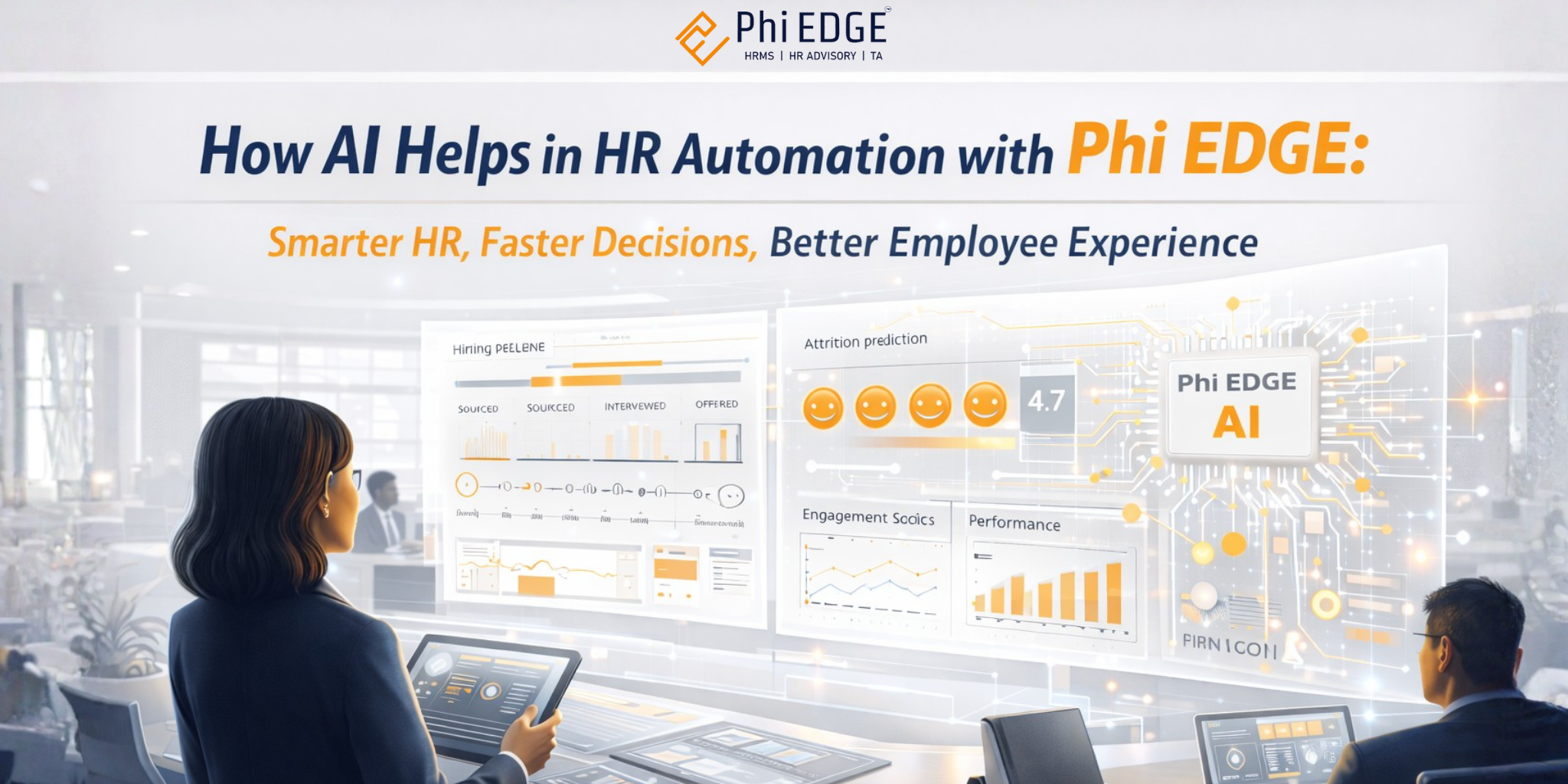
  • How AI Helps in HR Automation with Phi EDGE

    How AI Helps in HR Automation with Phi EDGE

    AI HR Automation Software

    Paperwork and manual procedures are no longer the only aspects of human resources. HR departments are expected to be strategic, data-driven, and employee-focused in the cutthroat business world of today.

    How AI Helps in HR Automation with Phi EDGE

    This change is made feasible by Phi EDGE AI-driven HR automation.

    HR professionals can concentrate on what really matters: people, by using Phi EDGE artificial intelligence (AI), machine learning, and advanced analytics to automate tedious HR tasks, improve decision-making, and increase employee engagement.


    Understanding HR Automation and Its Importance

    The use of technology to oversee and automate standard HR procedures, including hiring, onboarding, payroll, and performance monitoring, and AI HR automation software.

    and employee engagement is known as HR automation.

    Why HR Automation Is Essential Today

    • Reduces manual workload and errors
    • Improves operational efficiency
    • Enhances employee experience
    • Enables faster and smarter decisions
    • Ensures compliance and consistency

    Conventional human resource systems frequently lack intelligence. By integrating AI into each phase of the HR lifecycle, Phi EDGE closes this gap.

    Introduction to Phi EDGE—An AI-Powered HR Automation Platform

    Phi EDGE is a cutting-edge AI-powered HR automation and analytics platform made to help businesses of all kinds. It integrates engagement intelligence, automation, and predictive analytics into a single, cohesive system.

    Core Features of Phi EDGE

    • AI-based recruitment automation
    • Intelligent onboarding workflows
    • Real-time employee engagement tracking
    • Performance and productivity analytics
    • Predictive attrition and retention models

    HR is changed by Phi EDGE from a support role to a strategic business enabler.

    How AI Powers HR Automation with Phi EDGE

    HR automation may now move beyond task execution and into insight-driven action thanks to artificial intelligence.

    1. AI in Recruitment and Talent Acquisition

    One of the HR tasks that takes the most time is recruitment. Phi EDGE optimises and automates hiring with AI.

    Recruitment Automation with Phi EDGE

    • Resume screening using AI algorithms
    • Skill matching and candidate ranking
    • Bias reduction in candidate selection
    • Predictive hiring success analysis

    This ensures faster hiring with better quality talent.

    2. Intelligent Employee Onboarding

    Initial impressions count. Phi EDGE AI-driven onboarding makes sure recruits are productive and feel at home right away.

    Onboarding Benefits

    • Automated document collection
    • Personalised onboarding journeys
    • AI chatbots for employee queries
    • Early engagement and feedback tracking

    This reduces early attrition and improves new hire satisfaction.

    3. Automated Employee Engagement Management

    The level of employee engagement is always fluctuating. Phi EDGE tracks and enhances engagement levels in real time using AI.

    Engagement Automation Features

    • AI-powered pulse surveys
    • Sentiment analysis from feedback
    • Personalized engagement nudges
    • Manager alerts for disengagement

    Types of Employee Engagement Enabled by Phi EDGE

    AI-powered HR automation ensures a comprehensive strategy by supporting various forms of employee engagement.

    1. Emotional Engagement

    Emotional engagement reflects how employees feel about their workplace.

    The Role of AI in Emotional Engagement

    • Sentiment analysis from feedback
    • Recognition and appreciation automation
    • Early burnout detection

    Phi EDGE ensures employees feel heard, valued, and supported.

    2. Cognitive Engagement

    Cognitive engagement measures how mentally invested employees are in their work.

    Cognitive Engagement Through AI

    • Workload analysis
    • Skill-gap identification
    • Learning and development recommendations

    AI keeps employees focused, challenged, and aligned.

    3. Behavioral Engagement

    Behavioural engagement reflects employee actions and participation.

    Behavioural Insights with Phi EDGE

    • Attendance and productivity tracking
    • Collaboration pattern analysis
    • Engagement trend monitoring

    AI converts behaviour into actionable HR insights.

    4. Social Engagement

    Social engagement is about relationships and belonging.

    Social Engagement Automation

    • Team interaction analysis
    • Peer recognition suggestions
    • Inclusion and diversity insights

    Phi EDGE promotes a collaborative and inclusive culture.

    5. Career and Growth Engagement

    Employees remain engaged when they see career progression.

    Career Engagement with Phi EDGE

    • AI-driven career path mapping
    • Personalized learning journeys
    • Performance-based development plans

    This builds long-term employee loyalty.

    AI in Performance Management with Phi EDGE

    Conventional performance appraisals are infrequent and frequently prejudiced. Phi EDGE uses AI to improve and automate performance management.

    Important Features of Performance Automation

    • Constant monitoring of performance
    • Data-driven, objective assessments
    • Aligning goals and tracking OKRs
    • AI-driven insights into feedback

    Performance management becomes more equitable and transparent as a result.

    Predictive Analytics and Attrition Management

    One of Phi EDGE strongest advantages is predictive HR analytics.

    How AI Predicts Attrition

    • Analyzes engagement trends
    • Identifies performance drops
    • Detects behavioral changes

    HR teams can take proactive retention actions before employees disengage or leave.

    Business Benefits of AI-Driven HR Automation with Phi EDGE

    For Organizations

    • Lower HR operational costs
    • Improved workforce productivity
    • Data-driven workforce planning
    • Reduced employee turnover

    For Employees

    • Faster HR responses
    • Personalized experiences
    • Transparent growth opportunities
    • Improved work-life balance


    Phi EDGE vs Traditional HR Systems

    Traditional HR Systems Phi EDGE AI-Driven HR
    Manual processes Automated workflows
    Reactive HR actions Predictive insights
    Limited engagement data Real-time engagement analytics
    One-size-fits-all Personalized experiences

    Phi EDGEclearly delivers smarter HR automation.


    The Future of HR Automation with AI and Phi EDGE

    Intelligent, predictive, and employee-focused solutions are the way of the future for human resources. Phi EDGE keeps developing with:

    • Advanced machine learning models
    • Deeper workforce intelligence
    • Enhanced personalization

    Organisations adopting AI-powered HR automation today will lead the workforce of tomorrow.

    Conclusion

    AI-driven HR automation with Phi EDGE is transforming how organizations manage people, performance, and engagement. By automating repetitive tasks and delivering actionable insights, Phi EDGE empowers HR teams to focus on strategy, culture, and employee success.

    In an era where talent is the greatest asset, Phi EDGE helps businesses build a connected, engaged, and future-ready workforce.


  • Why Indian Companies Are Adopting AI HRMS in 2026 – Powered by Phi EDGE HRMS

    Why Indian Companies Are Adopting AI HRMS in 2026 – Powered by Phi EDGE HRMS

    Daily Work Management for Modern Teams
    Employee Performance Daily Work Management

    The HR Revolution in India Has Begun

    The corporate environment in India is evolving more quickly than before. Organizations of all sizes, from startups and MSMEs to huge corporations, are dealing with complicated workforce issues, such as remote teams, hiring competitiveness, payroll accuracy, compliance pressure, and employee retention.

    One thing is certain in 2026: Conventional HR systems are insufficient.

    This is why Indian companies are adopting  AI HRMS in 2026 (Human Resource Management Systems). AI HRMS is not just a trend—it’s becoming a business necessity.

    Platforms like Phi EDGE HRMS are leading this transformation by combining artificial intelligence, automation, analytics, and compliance into one powerful HR ecosystem.

    What Is AI HRMS?

    AI HRMS is an advanced Human Resource Management System that leverages Artificial Intelligence (AI) and Machine Learning (ML) to go far beyond traditional HR software.

    Instead of just storing employee data or processing payroll, an AI-powered HRMS learns from data, identifies patterns, and makes intelligent recommendations to improve HR decision-making.

    It automates repetitive and time-consuming tasks such as resume screening, attendance tracking, payroll processing, and compliance reporting, allowing HR teams to focus on more strategic work.

    At the same time, AI HRMS continuously analyzes employee data to deliver real-time insights on workforce productivity, engagement levels, attrition risks, and hiring effectiveness.

    By using predictive analytics, AI HRMS can forecast employee turnover, suggest personalized learning and development plans, flag potential compliance issues before they occur, and even enhance employee experiences through AI chatbots and smart self-service portals.

    In short, AI HRMS transforms HR from a reactive, administrative function into a proactive, data-driven strategic partner for the organization.


    Unlike Traditional HRMS, This Explains Why Indian Companies Are Adopting AI HRMS in 2026

    • Learn from employee data
    • Predict trends
    • Reduce errors
    • Improve decision-making
    • Save time and operational cost

    Phi EDGE HRMS is a modern AI-powered HRMS designed specifically for Indian businesses, keeping local payroll rules, compliance, and workforce needs in mind.

    Why 2026 Is the Turning Point for AI HRMS in India

    1. Rapid Growth of Indian Startups & SMEs

    India has millions of startups and SMEs scaling fast. With growth comes complexity:

    • More employees
    • More payroll cycles
    • More compliance requirements
    • More hiring pressure
    • Manual HR processes simply cannot scale.

    AI HRMS like Phi EDGE helps companies grow without increasing HR workload, by automating repetitive tasks and centralizing operations.

    1. Rising Payroll & Compliance Complexity in India

    Indian payroll is one of the most complex in the world:

    • PF
    • ESI
    • TDS
    • Professional Tax
    • Labour laws
    • State-wise regulations

    Errors lead to penalties, employee dissatisfaction, and legal risks.

    Phi EDGE HRMS uses AI-driven payroll automation to:

    • Calculate salaries accurately
    • Auto-apply statutory deductions
    • Generate compliant reports
    • Reduce human errors

    This is a major reason why Indian companies are adopting AI HRMS in 2026.

    1. Hiring Has Become Data-Driven

    Recruitment in 2026 is no longer about gut feeling.

    • Indian companies now need:
    • Faster hiring
    • Better talent matching
    • Lower cost-per-hire

    AI HRMS helps by:

    • Automatically screening resumes
    • Matching skills with job roles
    • Reducing hiring bias
    • Shortlisting best-fit candidates

    With Phi EDGE’s AI recruitment features, HR teams save time and hire smarter.

    Key Reasons why Indian Companies are adopting AI hrms in 2026 and they prefer Phi EDGE for that.

    1. Automation Saves Time & Cost

    HR teams spend hours on:

    • Attendance tracking
    • Leave approvals
    • Payroll processing
    • Manual reports

    AI HRMS automates these workflows.

    With Phi EDGE HRMS, companies report:

    • Up to 60% reduction in HR manual work
    • Faster payroll processing
    • Lower dependency on spreadsheets

    This allows HR professionals to focus on people, not paperwork.

    1. Remote & Hybrid Work Culture Needs Smart HR Tools

    Post-pandemic, remote and hybrid work is permanent.

    Indian companies now require:

    • Online attendance
    • Remote payroll access
    • Employee self-service portals
    • Performance tracking
    • AI HRMS supports modern workforce needs seamlessly.

    Phi EDGE HRMS offers cloud-based access, enabling HR teams and employees to manage everything from anywhere.

    1. AI-Powered Employee Performance Management

    In 2026, performance is measured continuously, not annually.

    AI HRMS helps track:

    • Productivity trends
    • Performance patterns
    • Skill gaps
    • Training needs
    • Phi EDGE HRMS uses AI analytics to provide:
    • Real-time performance insights
    • Data-backed appraisal support
    • Smarter workforce planning

    This helps management make better, unbiased decisions.

    1. Employee Experience Is Now a Priority

    Employees today expect:

    Transparency

    Fast responses

    Easy access to HR services

    AI HRMS improves employee experience through:

    • Self-service dashboards
    • Instant leave requests
    • Payroll visibility
    • Automated notifications

    Phi EDGE HRMS creates a smooth, modern HR experience, improving employee satisfaction and retention.

    Why Indian HR Leaders Trust Phi EDGE HRMS

    1. Built for Indian Businesses

    Many global HR tools fail in India due to compliance mismatch.

    Phi EDGE HRMS is designed for India, considering:

    • Indian payroll structure
    • Statutory compliance
    • Local HR practices

    This makes it highly reliable for Indian companies in 2026.

    1. AI + Human Expertise Combined

    Phi EDGE HRMS is built by HR experts, for HR professionals.

    The system doesn’t just automate—it guides HR teams with:

    • Smart alerts
    • Actionable insights
    • Predictive recommendations

    This combination of AI intelligence and human HR understanding sets Phi EDGE apart.

    1. Data Security & Compliance Assurance

    Data privacy is a major concern in 2026.

    Indian companies prefer AI HRMS platforms that ensure:

    Secure employee data

    Role-based access

    Compliance with data protection standards

    Phi EDGE HRMS follows robust security practices, ensuring sensitive HR data remains protected.

    Real Business Impact of AI HRMS in 2026

    Indian companies are adopting AI HRMS in 2026 because traditional HR systems can no longer keep up with the speed, scale, and complexity of modern workplaces. As businesses expand across cities, states, and remote setups, AI HRMS in 2026 enables faster, data-backed decision-making by turning raw employee data into real-time, actionable insights. Instead of relying on manual reports and delayed analysis, leadership teams use AI HRMS in 2026 to predict hiring needs, identify performance gaps, and plan workforce growth with confidence.

    Another major reason why Indian companies are adopting AI HRMS in 2026 is cost efficiency.

    By automating repetitive HR tasks such as payroll processing, attendance management, compliance tracking, and resume screening, AI HRMS in 2026 significantly reduces administrative workload and HR operational costs. This allows HR teams to shift focus from paperwork to strategic initiatives like talent development and employee engagement. In a highly competitive job market, AI HRMS in 2026 also helps companies improve employee experience through personalized learning paths, AI chatbots, and proactive engagement strategies that reduce attrition.

    Compliance is a critical challenge in India, and this is another key reason why Indian companies are adopting AI HRMS in 2026.

    With constantly evolving labor laws and statutory requirements, AI HRMS in 2026 ensures better compliance control by automatically updating regulations, flagging risks, and maintaining accurate records. Most importantly, as organizations scale, AI HRMS in 2026 provides the flexibility and scalability needed to manage growing workforces without increasing complexity.

    In 2026, Indian businesses recognize that AI HRMS in 2026 is no longer optional it is a strategic necessity and a long term investment in sustainable growth.


    By 2026 and beyond:


    AI will predict employee attrition

    HR analytics will guide leadership decisions

    Automation will replace manual HR tasks

    Companies that delay AI HRMS adoption risk falling behind.

    Phi EDGE HRMS is helping Indian businesses future-proof their HR operations today.

    Conclusion: Why Phi EDGE HRMS Is the Right Choice in 2026

    Why Indian companies are adopting AI HRMS in 2026 because they need:

    • Speed
    • Accuracy
    • Compliance
    • Scalability
    • Better employee experience

    When discussing why Indian companies are adopting AI HRMS in 2026, one thing becomes increasingly clear: the shift is no longer optional. Why Indian companies are adopting AI HRMS in 2026 is directly linked to rising operational pressure, workforce scalability challenges, and the need for faster, smarter HR decision-making. From startups to large enterprises, why Indian companies are adopting AI HRMS in 2026 is because traditional HR systems fail to keep up with compliance demands, payroll accuracy, and real-time workforce insights. This growing reliance on intelligent HR platforms clearly highlights why Indian companies are adopting AI HRMS in 2026 as a core business strategy rather than a technology upgrade.

    The repeated question of why Indian companies are adopting AI HRMS in 2026 has a simple answer—efficiency, accuracy, and future readiness. Why Indian companies are adopting AI HRMS in 2026 is driven by the need to automate HR operations, reduce costs, improve employee experience, and maintain compliance at scale. As competition intensifies, why Indian companies are adopting AI HRMS in 2026 becomes even more critical for businesses that want to stay ahead. This is exactly why Indian companies are adopting AI HRMS in 2026 with platforms like Phi EDGE HRMS, which combine AI intelligence, automation, and compliance into a single, scalable HR ecosystem built for India’s evolving workforce.

    Phi EDGE HRMS delivers all of this in one intelligent platform.

    Whether you are a startup, SME, or enterprise, Phi EDGE HRMS empowers your HR team to work smarter, faster, and more strategically clearly demonstrating why Indian companies are adopting AI HRMS in 2026.

    Why Indian Companies Are Adopting AI HRMS in 2026
  • HR Appraisal System with Phi EDGE: Smarter Performance Reviews for Modern Organizations

    HR Appraisal System with Phi EDGE: Smarter Performance Reviews for Modern Organizations

    HR Appraisal System with Phi EDGE – Redefining Performance Management

    The most valuable resource for any company in the cutthroat and rapidly changing economic world of today is its workforce. However, one of the most difficult issues HR professionals deal with is managing employee performance in a fair, open, and consistent manner.

    The HR Appraisal System with Phi EDGE is essential in this situation.

    Phi EDGE provides a cutting-edge, digital, and user-friendly HR evaluation system to assist businesses in assessing performance, identifying talent, and promoting ongoing development. Phi EDGE emphasises real-time performance tracking, structured feedback, and data-driven decisions, in contrast to typical appraisal systems that rely on paperwork and yearly reviews.

     What Is an HR Appraisal System?

    Organizations utilize a standardized procedure called an HR appraisal system to evaluate employee performance over a predetermined time frame. It assesses elements like

    • Productivity and quality of work
    • Competencies and abilities
    • Reaching the goal
    • Conduct and mindset
    • contribution to the group and company

    A contemporary appraisal system guides, inspires, and develops workers in addition to passing judgement on them.

    Why Traditional Appraisal Systems No Longer Work

    Many organisations still follow outdated appraisal methods. These systems often create dissatisfaction instead of motivation.

    Common Problems with Traditional Appraisals

    • Annual reviews with no continuous feedback
    • Manual paperwork and Excel sheets
    • Biased or unclear evaluations
    • No data-backed insights
    • Poor employee engagement

    These issues lead to low morale, lack of clarity, and high attrition.

    The HR Appraisal System with Phi EDGE solves these problems with a transparent, automated, and employee-centric approach.

     Introduction to Phi EDGE HR Appraisal System

    Phi EDGE has designed its HR Appraisal System to meet the needs of modern organizations, startups, and growing enterprises.

    The system focuses on:

    • Fair performance evaluation
    • Continuous feedback culture
    • Clear goal alignment
    • Employee development
    • Managerial transparency

    It ensures that appraisals are not stressful events but productive conversations that help employees grow.

    Key Features of HR Appraisal System with Phi EDGE 

    Goal-Based Performance Evaluation

    KPIs and predetermined targets that are in line with organizational objectives are used to evaluate employees. This makes the appraisal process more transparent and equitable.

     Continuous Feedback System

    Managers and staff can improve performance in real time by exchanging comments on a frequent basis rather than waiting for annual reports.

    Customizable Appraisal Cycles

    Phi EDGE allows monthly, quarterly, or annual appraisal cycles depending on company policy.

    360-Degree Feedback

    Managers, peers, and even subordinates provide feedback to employees, guaranteeing impartial and fair assessments.

    Performance Rating & Scoring

    Standardised rating systems make performance measurement consistent and transparent.

    Automated Workflows

    From appraisal initiation to final approval, everything is automated – saving HR time and reducing errors.

     Reports & Analytics Dashboard

    HR departments have access to real-time data on talent gaps, departmental growth, and employee performance.

    Benefits of Using HR Appraisal System with Phi EDGE 

     Improved Transparency

    Clear objectives, ratings, and feedback lessen prejudice and foster management-employee trust.

     Higher Employee Engagement

    Regular feedback and recognition keep employees motivated and engaged.

     Better Talent Retention

    Employees who feel valued and fairly evaluated are more likely to stay with the organisation.

    Data-Driven HR Decisions

    Promotions, increments, and training decisions are based on real performance data, not assumptions.

    Time & Cost Efficiency

    Automation reduces manual work, saving HR teams time and operational costs.

    How Phi EDGE Enhances Employee Experience

    User experience is at the heart of the Phi EDGE HR Appraisal System.

    Simple & Intuitive Interface

    Employees and managers can easily navigate the system without technical training.

     Self-Appraisal Feature

    Employees can assess their own performance, encouraging self-awareness and accountability.

    Clear Feedback Records

    All feedback is documented and accessible, helping employees track their growth over time.

     Recognition & Rewards Alignment

    High performers are easily identified and rewarded, boosting morale.

    Use Cases of HR Appraisal System with Phi EDGE 

     Startups & Growing Businesses

    Helps build structured HR processes from an early stage.

     SMEs & Enterprises

    Manages large employee data with consistency and compliance.

     Remote & Hybrid Teams

    Ensures performance visibility even when teams work remotely.

    Best Practices for Effective Appraisals Using Phi EDGE 

     Set Clear & Measurable Goals

    Goals should be specific, realistic, and aligned with business objectives.

    Encourage Open Communication

    Two-way feedback builds trust and improves outcomes.

    Review Performance Regularly

    Frequent check-ins prevent surprises during appraisals.

    Use Data for Growth Planning

    Identify skill gaps and plan training programmes accordingly.

    Challenges in HR Appraisals & How Phi EDGE Solves Them

    Bias in Evaluations

    360-degree feedback and standardised ratings reduce subjectivity.

    Low Employee Participation

    User-friendly design and transparency increase engagement.

    Administrative Burden

    Automation eliminates repetitive HR tasks.

    H2: Future of HR Appraisal Systems with Phi EDGE 

    HR evaluations will be ongoing, data-driven, and employee-focused in the future. Phi EDGE is heading in the direction of:

    • Performance insights powered by AI
    • Using predictive analytics to develop talent
    • Individualized plans for growth
    • Increased HRMS tool integration

    These developments will increase the significance and growth-orientedness of evaluations.

    Conclusion—Why Choose HR Appraisal System with Phi EDGE 

    Performance management becomes a strategic company advantage through the HR Appraisal System with Phi EDGE.

    Phi EDGE assists businesses in creating inspired teams, keeping top people, and achieving long-term growth by fusing automation, transparency, and employee-centric design.

    HR Appraisal System
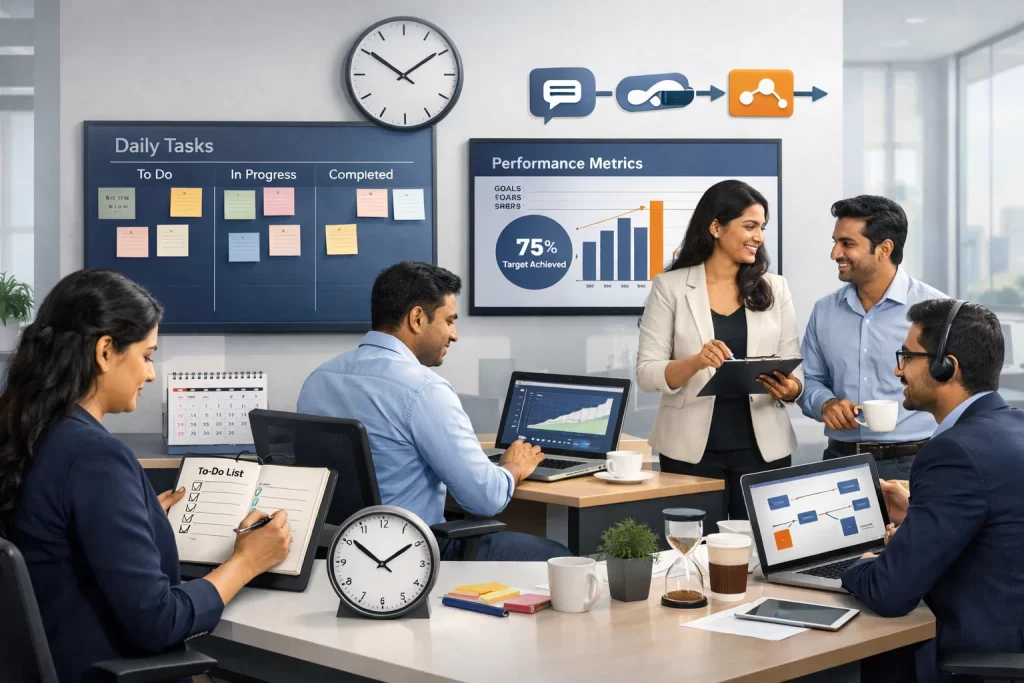
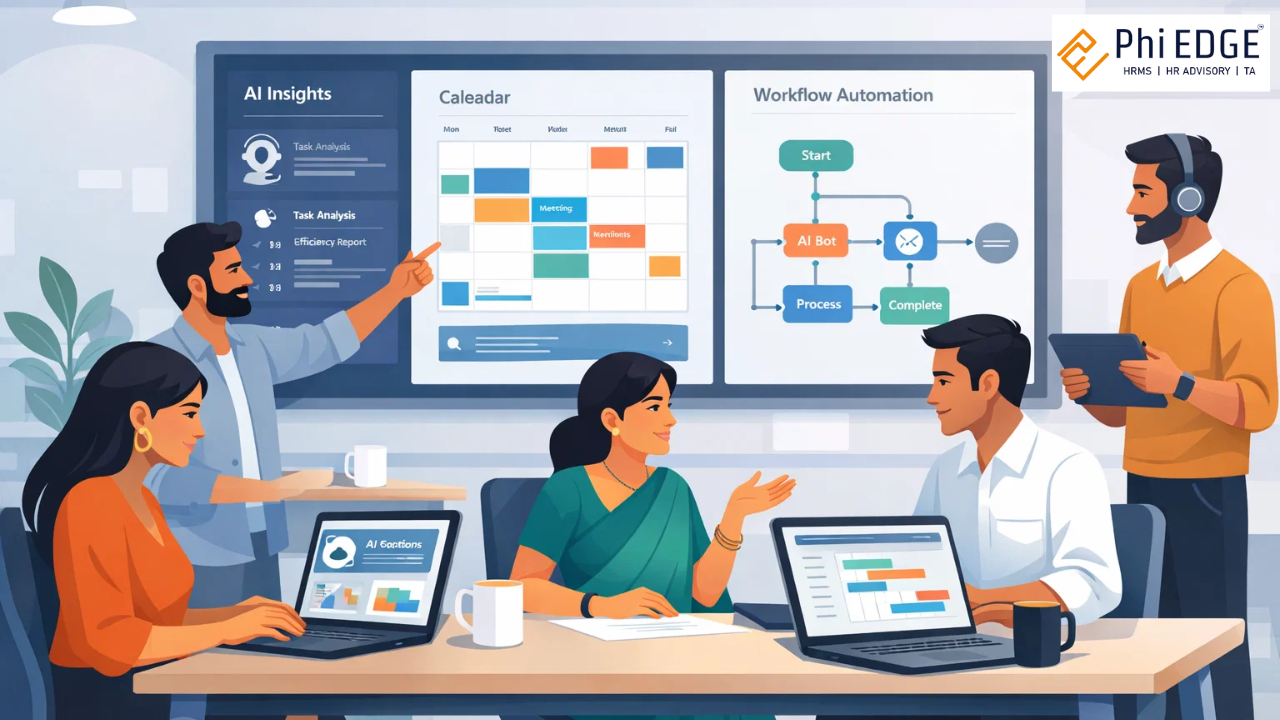
  • How AI is Simplifying Daily Work Management for Modern Teams

    How AI is Simplifying Daily Work Management for Modern Teams

    How AI is Simplifying Daily Work Management for Modern Teams

    In today’s fast-changing work environment, managing daily tasks and routines has become more complex than ever before. With hybrid workforces, cross-functional teams, remote employees, and high expectations for productivity and flexibility, traditional methods of tracking work just don’t cut it anymore. As organizations strive to remain agile and competitive, how work happens on a daily basis—how tasks are assigned, tracked, completed, and reported—has become critical to success.

    At Phi EDGE, we understand this evolution deeply. Through our three business verticals—HRMS, HR Advisory, and Talent Acquisition—we have seen firsthand how organizations across industries such as Manufacturing, Financial Services, Real Estate, Hospitality, Construction, Academics, and Information Technology struggle with daily work management. The solution to these ongoing challenges lies in applying intelligent systems that simplify, automate, and enhance the way daily work gets done.

    This is where AI-powered tools come into play. In this blog, we will explore how AI is simplifying daily work management for modern teams, and how the daily task management app from Phi EDGE helps transform chaos into clarity, enabling teams to focus on what truly matters—impactful work.

    The Daily Work Management Challenge

    Work used to be linear and predictable. A team of people worked in the same office space, with clearly defined roles, processes, and expectations. Daily tasks were often routine, and managing them didn’t require much technological support. But those days are over.

    Modern work is dynamic, collaborative, and often distributed. Teams work across locations, time zones, and platforms. Employees switch between projects, clients, and tasks multiple times a day. Yet, many organizations still rely on outdated methods for tracking work spreadsheets, emails, scattered notes, or even paper checklists. These methods are not only inefficient but also error-prone, time-consuming, and difficult to scale.

    This is where daily work management becomes a strategic concern. If you cannot manage day-to-day tasks efficiently, how do you expect to deliver on larger objectives? How can you ensure accountability, visibility, and follow-through when tasks are constantly shifting? How do you reduce bottlenecks and make sure nobody is overwhelmed while others are idle?

    The answer: embrace intelligent systems that make daily work visible, manageable, and measurable.

    What Is Daily Work Management?

    At its core, daily work management refers to the process of planning, assigning, tracking, and completing daily work tasks. It includes everything from minor individual to-dos to major project deliverables that contribute to broader organizational goals. Daily work management is about making sure that in the face of shifting priorities, people know what work they are responsible for, how their tasks align with bigger goals, and how to complete their tasks efficiently.

    A modern daily task management app is the digital solution that brings structure and transparency to this process. It allows teams to break work down into small, manageable pieces, assign responsibility, set timelines, and track completion in real time. But not all task management tools are created equal. When powered by artificial intelligence, they become smarter, more intuitive, and far more effective.

    How AI Is Transforming Daily Work Management

    Daily Work Management for Modern Teams

    Artificial Intelligence (AI) is no longer a futuristic concept. It’s being embedded into everyday tools, fundamentally transforming how work gets done, especially when it comes to managing daily tasks and team workflows.

    Here’s how AI is making daily work management smarter, faster, and more intuitive:

    1. Intelligent Task Prioritization
    One of the biggest challenges employees face every day is deciding what to work on first. When tasks pile up, urgency and importance become subjective. AI changes this by dynamically analyzing task context, deadlines, dependencies, and workload patterns to recommend optimal task order.

    Imagine starting your day with a personalized task list sorted by relevance and urgency, instead of an arbitrary checkbox list. That’s the power of an AI-enhanced daily task management app like the one offered by Phi EDGE. The system learns from your behavior, your team’s workflow, and project timelines to help you focus on what matters most.

    2. Automated Scheduling and Assignment
    In many organizations, task assignment is still manual. Team leads spend hours deciding who should handle what work, often without full visibility into overall workload or real-time availability. AI eliminates this guesswork.

    AI analyzes employee capacity, skill sets, past performance, and current workload to suggest the best people for each task. It also automates routine scheduling—telling a team member when to start, when a task is due, and how it fits with their other commitments. Daily work becomes balanced rather than chaotic, increasing both efficiency and employee satisfaction.

    3. Real-Time Progress Monitoring and Alerts
    Without real-time insights, managers often find out about delays only after deadlines have passed. AI changes this by constantly tracking progress, identifying bottlenecks, and sending proactive alerts if something is at risk.

    For example, if a crucial task remains incomplete past its expected timeline, the system can notify the responsible team member or alert the manager. This reduces surprises and encourages accountability without the need for constant check-ins or micromanagement.

    4. Predictive Task Completion Insights
    One of the most exciting capabilities of AI in daily work management is prediction. Rather than just reporting the past, AI can suggest what is likely to happen in the future based on historical data and current trends.

    This means AI can help predict:
    ● Which tasks might be delayed
    ● Which team members might be overloaded
    ● When a project is likely to fall behind schedule
    ● When to bring additional resources in

    These insights help teams course-correct early and avoid last-minute rushes or missed deliverables.

    Phi EDGE’s AI-Powered Daily Task Management App: What Makes It Unique

    At Phi EDGE, our AI-enhanced daily task management app is not just another checklist tool. It is a smart work management companion designed for modern teams that need real-time coordination, visibility, and adaptability.

    Here’s how Phi EDGE is redefining daily work management:
    Seamless Integration with HRMS Ecosystem
    The Phi EDGE daily task management app integrates smoothly with broader HRMS functions—including attendance, performance metrics, leave management, and employee engagement. This integrated approach means daily tasks don’t exist in isolation. Your workflows are connected to real performance metrics, employee availability, and organizational goals.

    For example, when leave information is updated in the HRMS Software, task assignments automatically adjust to accommodate team availability. This removes the need for manual updates and helps teams plan better.

    AI-Enhanced Workflows for Every Role
    Whether someone is a frontline employee, team lead, project manager, or HR professional, AI adapts the task experience to fit their role. Employees get intuitive suggestions on what to work on next. Managers get predictive insights into workload balancing. HR leaders get a consolidated view of productivity trends across teams.

    This role-based AI support encourages smarter decision-making and helps teams stay aligned with priorities every day.

    Smart Notifications and Reminders
    Forget manual follow-ups. With AI-driven task management, reminders are sent only when needed and are optimized for impact. The system learns patterns about when people are most responsive and sends reminders that are contextual rather than disruptive.

    A team member might receive a gentle reminder about a crucial task early in the day, while a manager might receive a summary of overdue assignments with suggested redistribution options.

    Natural Language Task Creation
    For many users, the biggest hurdle in adopting digital task tools is time and effort spent creating tasks. AI simplifies this with natural language processing. You can just type, “Finish monthly sales report by 4 PM today” and the system automatically extracts the task details, assigns priorities, and sets reminders.

    This intuitive feature makes daily work management more accessible, even for non-technical team members.

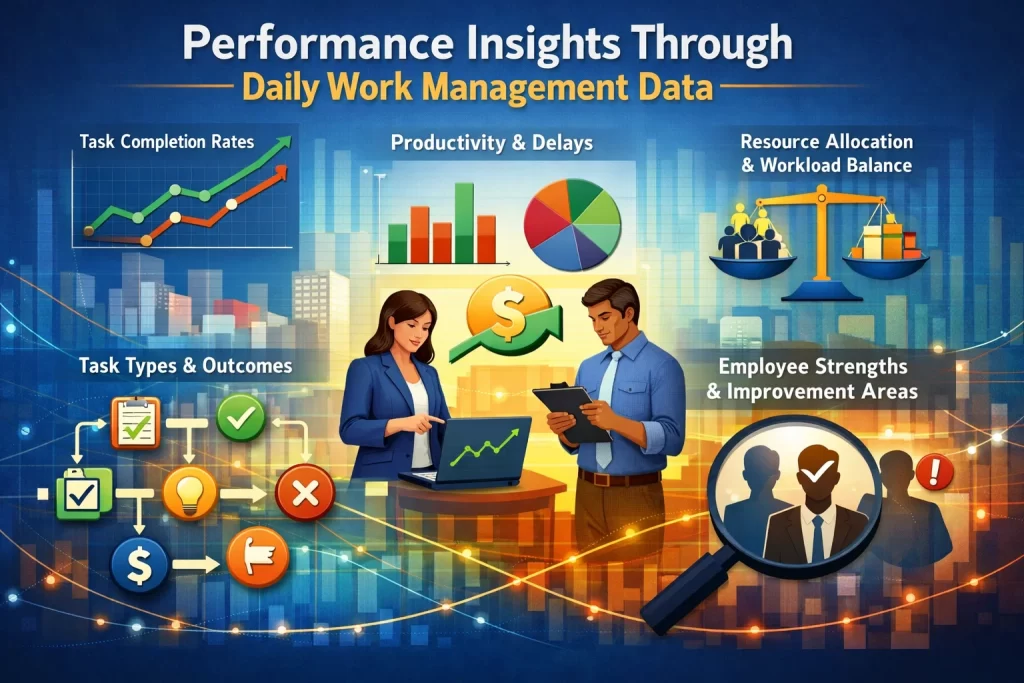
    Insightful Dashboards and AI Reports
    AI-driven reporting presents data in a way that’s easy to interpret and act upon. Instead of flat numbers, managers and leaders receive insights like:

    ● Which tasks consistently get delayed?
    ● Which team members are exceeding expectations?
    ● How is task distribution affecting performance?
    ● What patterns are emerging across departments?

    These insights allow HR leaders to address workflow issues before they affect morale or
    productivity.

    How AI Daily Task Management Improves Collaboration

    Daily Work Management for Modern Teams

    Modern work is collaborative. Tasks depend on inputs from multiple stakeholders, and a delay in one part can ripple across the entire workflow. AI improves collaboration by:

    ● Identifying dependencies between tasks
    ● Highlighting resource conflicts before they create delays
    ● Suggesting cross-functional task ownership
    ● Supporting transparent communication channels within the task itself

    Instead of scattered emails or chat threads, conversations about a task stay embedded within the task view. This keeps work context intact and minimizes miscommunication.

    Real Impact on Employee Experience and Engagement

    An efficient daily work management system does more than help teams complete tasks—it improves how employees experience their work.

    When daily tasks are clear, well-prioritized, and manageable, employees feel less overwhelmed and better aligned with their goals. They gain clarity about what success looks like each day, which boosts confidence and performance.

    AI also plays a role in identifying disengagement patterns. If an employee frequently misses task deadlines or shows lower activity levels, the system can flag this trend for HR or managers to follow up—before it becomes a serious issue.

    This proactive approach to engagement sets Phi EDGE’s AI-powered daily work management apart from static tools that only tell you what happened in the past.

    Bridging the Gap Between Tasks and Organizational Strategy

    Daily work is not just about task completion. It’s about how those tasks contribute to larger organizational objectives. AI bridges this gap by linking individual task performance to team outcomes and corporate goals.

    When teams use the daily task management app from Phi EDGE, every task is connected to measurable outputs. Leaders can trace how daily activities influence quarterly goals, project milestones, client satisfaction, and revenue.

    This visibility strengthens accountability, encourages purposeful work, and aligns individual efforts with organizational success.

    Overcoming Common Challenges with AI Daily Work Management

    Many organizations struggle with:
    ● Lack of visibility into daily work
    ● Inconsistent tracking across teams
    ● Difficulty balancing workloads
    ● Miscommunication around responsibilities
    ● Delayed reporting and insights

    With AI-driven systems, these challenges are addressed holistically. AI acts as the silent orchestrator—capturing patterns, simplifying workflows, removing friction, and delivering insights that help teams operate smoothly

    Frequently Asked Questions (FAQs)

    Q1. What is daily work management?
    Daily work management refers to the processes and tools that help individuals and teams organize, track, prioritize, and complete work tasks assigned each day. It ensures work is structured, visible, and accountable.

    Q2. How does AI improve daily task management?
    AI improves daily task management by automating priorities, optimizing schedules, predicting bottlenecks, providing real-time insights, and offering intelligent recommendations—making teams more efficient and agile.

    Q3. What is a daily task management app?
    A daily task management app is a software tool that helps users create, assign, track, and complete tasks. When powered by AI, it goes further by learning patterns, suggesting improvements, and enhancing collaboration.

    Q4. Why do modern teams need AI-powered task management?
    Modern teams face complexity, distributed work, dynamic priorities, and frequent changes. AI-powered tools ensure tasks are aligned with goals, tracked accurately, and adjusted intelligently based on real-time data.

    Q5. Can an AI daily task management system integrate with HRMS?
    Yes. AI daily task management systems, like the one from Phi EDGE, can integrate with HRMS platforms, linking daily work with attendance, performance, payroll, and talent objectives.

    Q6. Is the technology easy for non-technical employees to use?
    Absolutely. AI daily task management apps are designed to be intuitive, with natural language inputs, smart suggestions, and easy dashboards for all users.

    Q7. Does AI replace managers or teams?
    No. AI supports managers and teams by reducing administrative burden and providing insights—enabling humans to focus on strategic and creative work.

    Q8. How soon can an organization adopt AI daily work management?
    With cloud-based platforms like Phi EDGE’s solution, adoption can be rapid—often in weeks, not months—depending on the size and needs of the team.

    Conclusion: Work Smarter, Not Harder with AI Daily Work Management

    In a world where the nature of work changes every day, organizations can no longer rely on outdated, manual approaches to manage tasks. With remote teams, hybrid workflows, quick pivots, and high expectations for productivity, daily work requires clarity, efficiency, and real-time visibility.

    AI is leveling the playing field by transforming how daily work gets done. It provides structure where there was chaos, intelligence where there was guesswork, and empowerment where there was confusion.

    With its advanced AI-powered daily task management app, Phi EDGE is helping organizations make daily work more predictable, measurable, and aligned with strategy. From driving collaboration to improving employee engagement, AI is the engine that makes daily work management smarter.

    Whether you are a small team just getting started or a large organization scaling fast, investing in AI-enabled daily work management is no longer optional—it’s essential.

    With Phi EDGE, you’re not just managing daily tasks—you’re transforming how work gets done.

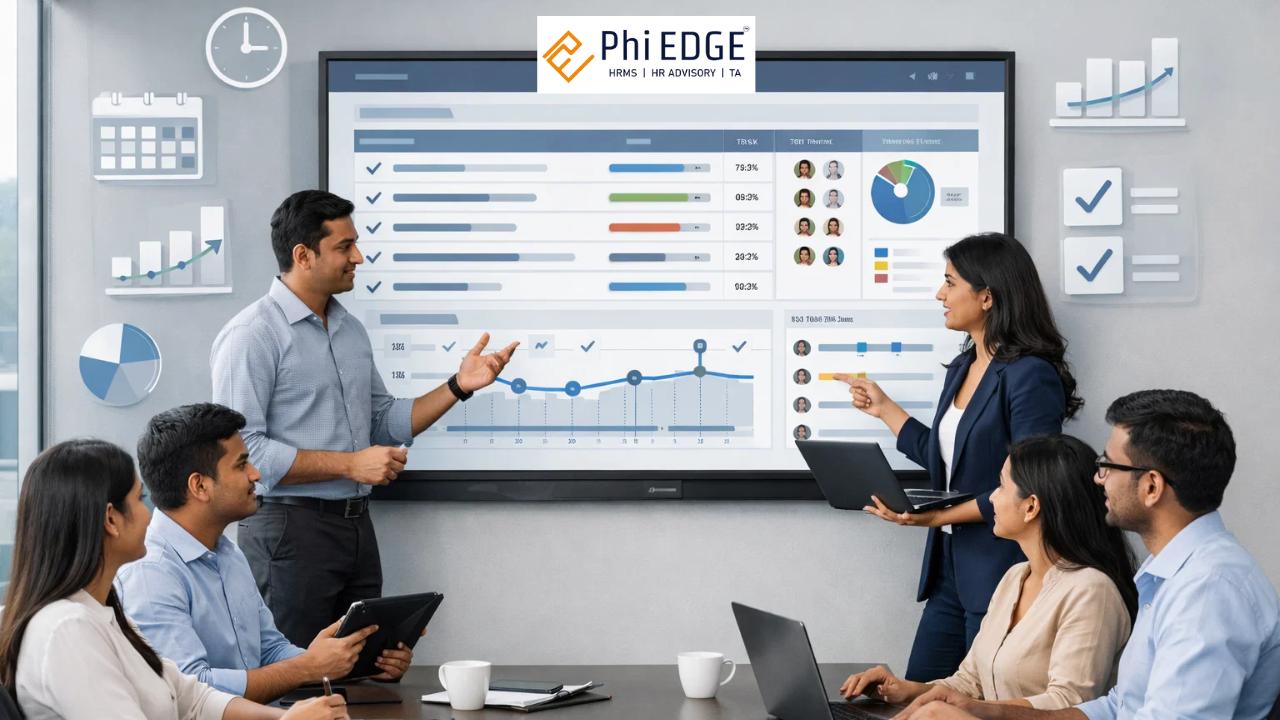
  • How a Daily Work Management System Improves Team Accountability

    How a Daily Work Management System Improves Team Accountability

    How a Daily Work Management System
    Improves Team Accountability

    In today’s fast-paced business world, every minute counts. Workloads are growing, teams are becoming increasingly diverse, and deadlines are tighter than ever. Amidst this complexity, ensuring that daily tasks are completed on time with transparency, consistency, and accountability has become a strategic priority. This need is particularly pressing for organizations navigating hybrid work environments, remote teams, and cross-functional collaboration.

    At Phi EDGE, we understand these challenges deeply. Our expertise spans three essential business verticals—HRMS, HR Advisory, and Talent Acquisition—and over the years, our services have expanded from traditional HR consulting to cutting-edge HRMS software and HRIS talent management solutions. Today, we support companies across industries such as Manufacturing, Financial Services, Real Estate, Hospitality, Construction, Academics, and IT. Across all these sectors, one truth stands clear: A robust Daily Work Management System can dramatically improve team accountability and overall organizational performance.

    In this blog, we’ll explore how modern teams are transforming accountability through a Daily Work Management System, the role of a daily task management app, and how Phi EDGE’s solutions empower teams to stay aligned, responsible, and productive every single day.

    The Challenge: Why Team Accountability Matters More
    Than Ever

    Accountability in the workplace isn’t just about responsibility—it’s about clarity, ownership, and consistency. When teams know what they are responsible for, understand how their daily tasks contribute to broader goals, and are held answerable for outcomes, organizations flourish.

    However, many companies still rely on outdated systems: spreadsheets, scattered messages, or manual to-do lists. While these may work in limited contexts, they fail at scale. Teams lose track of who is doing what, managers struggle to monitor progress, and miscommunication becomes a drain on both time and morale.

    Imagine a hybrid team where one person works from the office, another from home, and yet another is frequently on client sites. Without a proper Daily Work Management System, how do you ensure that work assignments are transparent and progress is measurable? How do you hold each team member accountable for their contributions? This is where a modern system, supported by intelligent software, bridges the gap.

    What Is a Daily Work Management System?

    A Daily Work Management System is a structured digital framework designed to help teams plan, execute, track, and manage their day-to-day tasks. Unlike static lists or manual notes, this system provides real-time visibility into who is working on what, how progress is being made, and what outcomes are expected.

    At the heart of such a system is a daily task management app—a tool that brings tasks to life with timelines, priorities, ownership, deadlines, and collaborative capabilities. This isn’t just a list of chores; it is a living, actionable representation of team workflows, shared priorities, and organizational objectives.

    By deploying a structured Daily Work Management System, organizations can achieve:
    ● Clear assignment of tasks and responsibilities.
    ● Enhanced transparency in task workflows.
    ● Real-time tracking and updates.
    ● Improved collaboration across teams.
    ● Data-backed performance reviews.
    ● Reduced miscommunication and redundancies.

    Why Traditional Task Management Falls Short
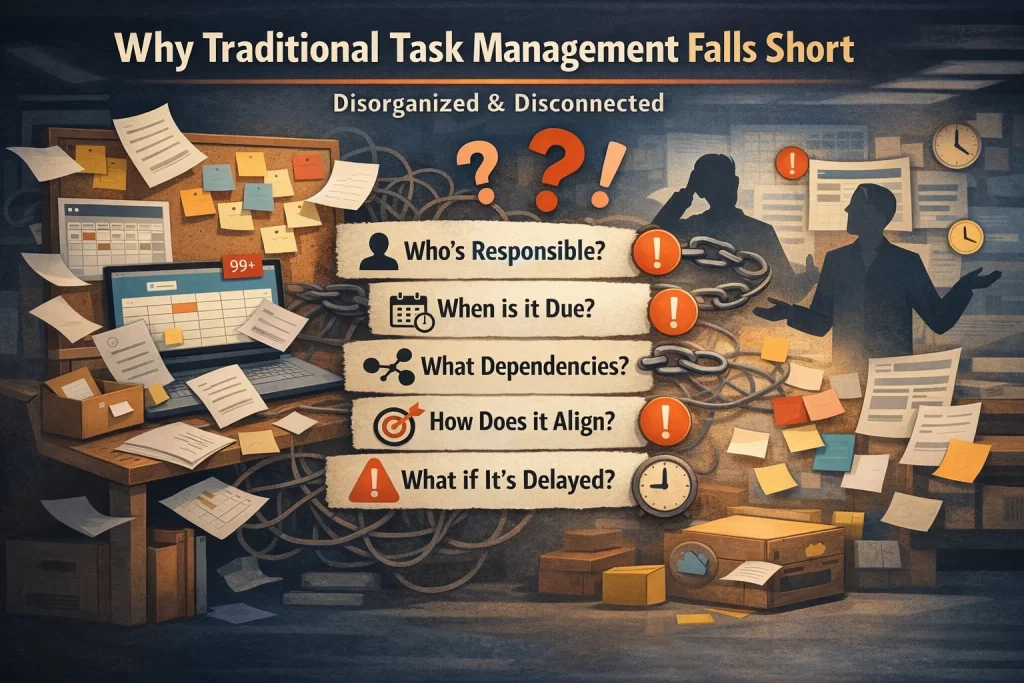
    Traditional task systems—notes, spreadsheets, email threads—are static and disconnected. They may work for personal reminders or small groups, but as teams grow, these methods become chaotic. A lack of centralized visibility means tasks are easily forgotten, misprioritized, or duplicated.

    Moreover, these systems do not support real accountability. They fail to answer critical questions like:
    ● Who is responsible for a specific task?
    ● When is it due?
    ● What dependencies does it have?
    ● How does it align with broader organizational goals?
    ● What happens if it is delayed?

    Without answers to these questions, accountability remains aspirational rather than actionable.

    That’s where a Daily Work Management System shines. This system provides structure, clarity, and data so that accountability is no longer a concept—it’s a measurable outcome.

    How a Daily Task Management App Empowers Teams
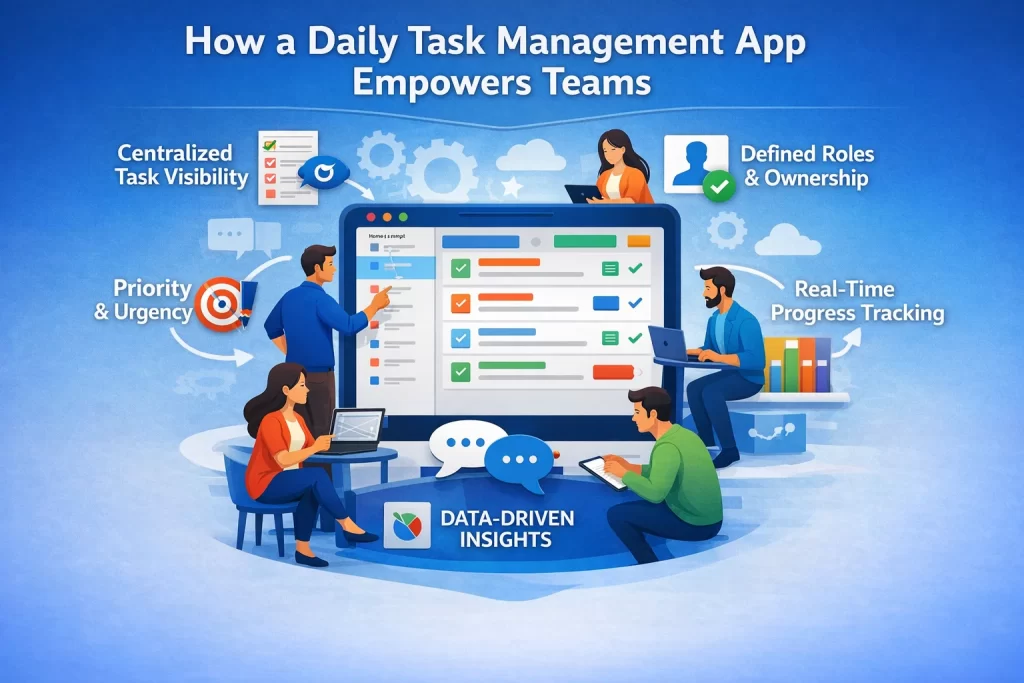
    A daily task management app is the practical implementation of a Daily Work Management System. It becomes the digital workspace where employees and teams interact with their daily responsibilities.

    Here’s how it elevates team accountability:
    Centralized Task Visibility
    When all tasks are housed in a single app accessible to every relevant team member, there is no ambiguity. Every person knows exactly what they are responsible for, and managers can see the big picture at a glance. This transparency drives ownership and reduces confusion.

    Defined Roles Increase Ownership
    Task ownership is clearly assigned. When employees know that a task is explicitly theirs, with a deadline and context, they naturally take it more seriously. The daily task management app embeds this accountability into daily workflows.

    Prioritization Clarifies Urgency
    Not all tasks are equal. A smart Daily Work Management System allows teams to prioritize work. Employees are guided to focus on what matters most, rather than reacting to random requests or distractions.

    Real-Time Updates Encourage Progress Tracking
    Static task lists become outdated quickly. A daily system updates in real time as tasks are completed, paused, or reassigned. Managers can immediately see progress, identify blockers, and take corrective action before small issues escalate.

    Collaboration Happens Within Context
    Instead of siloed messages or disconnected conversations, communication happens within the task itself. This means questions, feedback, changes in scope, and updates are all recorded in context—promoting responsible collaboration.

    Data Supports Feedback and Performance Reviews
    When you have a system that tracks completion, timelines, and task outcomes, managers no longer rely on memory or subjective impressions during reviews. Accountability becomes measurable, which supports fairer, more accurate evaluations.

    Real Accountability Through Data and Insight

    Accountability isn’t punishment. Accountability is clarity. When teams use a Daily Work Management System, they gain access to data that tells a story:

    ● Who completed what tasks and when?
    ● Which tasks were delayed—and why?
    ● Who regularly delivers on time?
    ● Who might be overloaded or underutilized?
    ● How do individual contributions align with team outcomes?

    These insights form the foundation of responsible management. At Phi EDGE, we ensure that our daily work management features integrate seamlessly with HRMS Software data. This means task insights become part of broader HR analytics, supporting performance reviews, team planning, and skills development.

    The Behavioral Impact of a Daily Work Management System

    A structured system changes behavior. When employees know what is expected of them and see that their contributions are visible, accountability becomes part of the culture—not just a requirement.

    Employees begin to:
    ● Plan their days more intentionally.
    ● Communicate proactively when issues arise.
    ● Reprioritize based on impact—not urgency alone.
    ● Support peers by sharing updates and context.

    Managers begin to:
    ● Coach instead of just direct.
    ● Spot risks earlier.
    ● Support teams with actionable data.
    ● Celebrate wins with evidence, not guesswork.

    This cultural change is one of the most powerful outcomes of adopting a Daily Work Management System.

    How Phi EDGE Daily Work Management System Fits
    Into HRMS

    Efficient daily work management should not operate in isolation. It must integrate with broader HR functions: performance reviews, employee engagement, attendance tracking, and talent management. This is precisely what makes the Daily Work Management System offered by Phi EDGE so impactful.

    Phi EDGE HRMS ecosystem combines daily task management with HR data streams. This unified approach allows organizations to:
    ● Track how daily work contributes to quarterly goals.
    ● Link task performance with skill development paths.
    ● Tie completion data into performance appraisal cycles.
    ● Monitor workload distribution across teams.
    ● Adjust staffing and resourcing dynamically.

    By embedding a daily work management system within HRMS, Phi EDGE bridges operational execution with strategic human resource planning.

    AI-Driven Enhancements for Daily Work Management

    Incorporating artificial intelligence elevates daily task management even further. AI can:

    ● Suggest task priorities based on past trends.
    ● Predict bottlenecks before they occur.
    ● Identify workload imbalances across teams.
    ● Recommend optimal resource allocation.
    ● Provide sentiment analysis around task completion patterns.

    These intelligent capabilities add predictive and proactive elements to a Daily Work Management System—turning reactive teams into forward-thinking, adaptive high performers

    Measuring Accountability: What Success Looks Like

    Accountability is measurable. With the right system in place, organizations can track:

    ● Task completion rates
    ● Timeliness of delivery
    ● Manager vs. employee estimates of effort
    ● Rework frequency
    ● Bottleneck patterns
    ● Resource capacity utilization

    These metrics feed directly into performance analytics, giving HR leaders concrete evidence of where improvements are happening—and where they are needed.

    Overcoming Resistance to Daily Work Management Tools

    It’s natural for employees or managers to resist new systems. Common concerns include:
    ● “This feels like micromanagement.”
    ● “I already know my tasks.”
    ● “It’s just another tool to learn.”

    However, when implemented thoughtfully, a daily task management app is the opposite of micromanagement. It empowers individuals with clarity and reduces the anxiety of unclear expectations. Clear assignment, timelines, and visibility mean people can manage their own work with confidence.

    Phi EDGE emphasizes onboarding, clear communication, and user training as part of every deployment. When teams see immediate value—less confusion, fewer meetings, smoother workflows—they adopt the system naturally.

    Case Example: Accountability in Action

    Imagine a team working on a product launch. Without a daily management system, tasks are scattered across emails, chats, and sticky notes. Deadlines slip because dependencies are hidden. Managers are unsure who is responsible for critical steps.

    With a Daily Work Management System from Phi EDGE, every task is logged with clear ownership, deadlines, dependencies, and relationships to key goals. The team receives daily reminders, progress dashboards show real-time status, and managers can intervene earlier when trends show delays.

    Instead of reacting to problems after they occur, the team collaborates proactively and decisions are backed by data—not guesswork.

    Why Every Organization Should Invest in Daily Work
    Management

    A Daily Work Management System is no longer a convenience—it’s a competitive advantage. In an era where teams are distributed, tasks are interdependent, and speed matters, organizations that master daily execution outperform their peers.

    With such a system, organizations experience:
    ● Better clarity across teams
    ● Higher individual ownership
    ● Fewer miscommunications
    ● Faster decision-making
    ● Stronger performance outcomes
    ● Better alignment with organizational goals

    And because Phi EDGE solution is integrated into a comprehensive HRMS platform, the benefits extend beyond daily tasks into performance management, employee engagement, training, and retention.

    Frequently Asked Questions (FAQs)

    Q1. What is a Daily Work Management System?
    A Daily Work Management System is a digital framework that helps teams organize, track, and complete daily tasks with clarity and accountability, often through a daily task management app.

    Q2. How does daily work management improve accountability?
    It provides visibility into who is responsible for what, when tasks are due, and how progress is tracked. This clarity builds ownership and encourages consistent follow-through.

    Q3. What is a daily task management app used for?
    A daily task management app helps users log tasks, set priorities, assign responsibilities, track progress, and communicate within the task context.

    Q4. Can this system integrate with HRMS Software?
    Yes. When embedded within broader HRMS Software, a Daily Work Management System aligns daily activities with performance tracking, attendance, and strategic planning.

    Q5. Is this suitable for remote or hybrid teams?
    Absolutely. Visibility and real-time updates make daily work management particularly valuable for remote and hybrid workforce models.

    Q6. How quickly can an organization implement such a system?
    With cloud-based platforms like Phi EDGE, deployment and adoption can begin within weeks, depending on scale and customization.

    Q7. Does this replace performance evaluations?
    No. It enhances performance evaluations by providing real data on task execution, timelines, and outcomes—feeding directly into appraisal cycles.

    Q8. Does AI play a role in daily work management?
    Yes, AI can enhance sequencing, prioritization, prediction of bottlenecks, and intelligent resource allocation, making daily workflows smarter and more adaptive.

    Conclusion: Accountability Is Not Optional—It’s Strategic

    In the modern workplace, accountability is one of the strongest predictors of performance, employee satisfaction, and business results. Without clear visibility into daily tasks, team commitments become fragmented, outcomes become unpredictable, and opportunities for improvement are missed.

    A Daily Work Management System powered by a capable daily task management app, integrated within a broader HRMS ecosystem, creates an environment where accountability is natural, data is authoritative, and teams can thrive together.

    At Phi EDGE, we help organizations unlock these advantages by combining intelligent technology, HR insight, and practical implementation strategies that elevate daily work into strategic performance.

    When individuals know what is expected of them and teams are empowered to manage their work collaboratively and transparently, everyone benefits—employees, managers, and organizations alike.

    With Phi EDGE, accountability becomes part of your team’s DNA—not just a goal on paper.
  • How Daily Work Management Impacts Employee Performance

    How Daily Work Management Impacts Employee Performance

    How Daily Work Management Impacts Employee Performance

    In today’s dynamic workplace, success isn’t determined by isolated goals or long-term projects alone. It’s shaped by what happens every single day—how tasks are assigned, executed, tracked, and completed. Whether your organization operates in Manufacturing, Financial Services, Real Estate, Hospitality, Construction, Academics, or Information Technology, the cornerstone of sustainable performance lies in consistent, efficient daily execution.

    At Phi EDGE, we understand this reality deeply. With our experience across HRMS, HR Advisory, and Talent Acquisition, we have witnessed that organizations with strong daily discipline outperform those relying on reactive workflows and disconnected task tracking. In this blog, we will explore how Daily work management impacts employee performance, enhances engagement, fosters accountability, and fuels organizational success. We’ll also explain why adopting a Daily Work Management System and a daily task management app is no longer optional but a strategic imperative.

    What Is Daily Work Management?

    Before diving into its impact, it’s important to define what we mean by daily work management. At its core, daily work management is the process of planning, assigning, monitoring, and completing daily tasks in a structured, transparent way. It helps employees understand what tasks are expected of them each day, what goals they need to achieve, and how their activities align with broader team and organizational strategies.

    A daily task management app is a digital tool that enables teams and individuals to log, update, and track tasks in real time. Combined with a Daily Work Management System, these tools ensure that work doesn’t just happen— it happens with clarity, purpose, and measurable outcomes.

    Why Daily Work Management Matters More Than Ever

    Workplaces have evolved rapidly. Remote and hybrid work models, fluid team structures, project-based assignments, and fluctuating priorities have made traditional time tracking and task delegation systems inadequate. In the absence of a cohesive daily work framework, teams often struggle with miscommunication, overlapping responsibilities, forgotten tasks, and uneven workloads—all of which impact employee performance and organizational productivity.

    Daily work management provides the scaffolding that turns individual tasks into meaningful progress. It creates a rhythm through which work becomes predictable, measurable, and aligned with outcomes that matter.

    The Direct Link Between Daily Work Management and Employee Performance

    Employee Performance Daily Work Management

    1. Provides Clarity and Focus
    One of the biggest contributors to low performance is lack of clarity. When employees aren’t sure what they should be working on, distraction and ambiguity fill the gap. A Daily Work Management System brings discipline to every workday by clearly defining what needs to be done and when.

    With a clear daily task list in a daily task management app, employees spend less time wondering “what’s next” and more time executing with purpose. This clarity enhances focus, reduces procrastination, and aligns individual effort with team goals.

    2. Encourages Accountability and Ownership
    Performance isn’t just about completing tasks—it’s about taking ownership. When daily work is assigned, tracked, and visible, employees naturally feel a stronger sense of responsibility. A Daily Work Management System records who is accountable for which task and by when, eliminating ambiguity.

    At Phi EDGE, we’ve seen how this visibility transforms team behavior. Employees don’t just do the work—they own it. This sense of ownership boosts performance, encourages initiative, and builds trust in team dynamics.

    3. Drives Better Time Utilization
    Many organizations believe productivity is synonymous with effort. But productivity isn’t about the number of hours worked; it’s about what gets done in those hours. Daily work management helps break down tasks into manageable chunks, allowing employees to allocate time effectively and avoid burnout.

    A daily task management app helps teams visualize their workload, prioritize tasks, and manage their time accordingly. When employees know what’s on their plate for the day, and they have the tools to structure their workload, performance naturally improves.

    4. Enhances Collaboration and Communication
    Work rarely happens in isolation. Team projects depend on multiple contributors, and delays from one person can stall the entire workflow. Daily work management systems enhance collaboration by enabling transparency and shared understanding.

    In a Daily Work Management System, tasks are not hidden in inboxes or lost in chat threads. They are visible, assignable, and trackable. This ensures that dependencies are clear, team members can coordinate effectively, and communication flows through a unified platform rather than chaotic channels.

    5. Reduces Stress and Cognitive Overload
    A disorganized workday results in employees juggling too many priorities at once. This cognitive overload drains energy and negatively impacts performance. Daily work management brings structure, helping employees break down large goals into actionable steps.

    When work is organized in a daily task management app, employees can systematically approach their tasks without feeling overwhelmed. This not only enhances productivity but also reduces stress—leading to better performance, higher job satisfaction, and lower burnout rates.

    How Daily Work Management Influences Employee Engagement

    Employee engagement and performance are two sides of the same coin. Engaged employees tend to be more productive, deliver higher quality work, and contribute actively to organizational success. Daily work management directly influences engagement in several ways:

    It offers immediate feedback loops: Instead of waiting for weekly or monthly check-ins, employees get real-time updates on progress, delays, or changes to tasks. This immediacy keeps them engaged in their work.

    It provides a sense of achievement: Seeing tasks completed, progress logged, and goals achieved in a daily system gives employees a sense of accomplishment. These small wins compound over time, boosting confidence and motivation.

    It aligns individual tasks with bigger goals: When employees see how their daily work contributes to broader objectives, they feel more connected to the organizational mission. This alignment is a powerful driver of engagement.

    It fosters collaboration: Engaged teams collaborate more effectively. A daily work management framework promotes teamwork by creating shared visibility, reducing silos, and encouraging supportive coordination.

    Performance Insights Through Daily Work Management Data

    Employee Performance Daily Work Management

    One of the most significant advantages of implementing a structured Daily Work Management System is the rich data it generates. Unlike manual methods that rely on memory or periodic reporting, a digital system records actions in real time. This data can reveal:

    ● Trends in task completion rates
    ● Patterns of productivity and delays
    ● Resource allocation and workload balance
    ● Correlations between task types and outcomes
    ● Employee strengths and areas for improvement

    At Phi EDGE, we integrate daily work management data with broader HRMS analytics, enabling organizations to monitor performance not just at a task level but across roles, departments, and projects.

    This level of insight is invaluable. It helps HR leaders forecast staffing needs, refine training programs, and personalize support for individual employees—all based on real performance data rather than intuition.

    Eliminating Redundancy with Intelligent Task Management

    Inefficiency often hides in repetition. In traditional work environments, similar tasks are recreated multiple times, updates are sent again and again through separate threads, and clarifications are repeatedly sought. This redundancy eats into performance.

    A daily task management app reduces redundancy by centralizing tasks, updates, files, and communications. Instead of sifting through emails, employees can refer to a single interface for everything related to their work. This simplicity directly translates into better performance—time saved on coordination becomes time spent on execution.

    Adaptive Workflows for Hybrid and Remote Teams

    The modern work landscape includes remote, hybrid, and distributed teams. While this flexibility improves work-life balance and talent access, it also introduces challenges in coordination and accountability.

    Daily work management systems were built for such complexities. For remote teams, access to a Daily Work Management System means that physical distance does not equate to informational distance. Team members know what colleagues are working on, what is blocked, and who needs help—all without scheduling additional meetings.

    At Phi EDGE, we have enabled multiple organizations to bridge the gap between remote rhythm and real-time productivity by offering integrated daily work management features within our HRMS suite. This ensures that regardless of location, employees remain connected to their tasks, teams, and performance expectations.

    The Role of a Daily Task Management App in Employee Development

    Performance is not only about completing today’s tasks—it’s about growing tomorrow’s capabilities. A rich daily work management framework supports employee development by helping individuals track recurring patterns, understand their own work habits, and recognize skill gaps. With data from a daily task management app, employees can:

    ● Understand which tasks consume most of their time
    ● Identify areas where they excel
    ● Recognize where additional training may help
    ● Set personal improvements based on evidence

    This reflective aspect transforms task management from a monitoring tool into a personal development companion.

    Integrating Daily Work Management with HRMS for Maximum Impact

    A standalone daily task tool can offer clarity, but its real power emerges when integrated with broader HRMS functions—attendance, performance appraisal, leave management, payroll, and learning systems.

    At Phi EDGE, our integrated HRMS platform connects daily work management data with talent management workflows. This means:

    ● Performance reviews are informed by daily task completion data
    ● Workload patterns influence compensation discussions
    ● Training recommendations are based on task execution gaps
    ● Employee engagement analysis incorporates task engagement patterns

    This seamless integration elevates both performance evaluation and employee experience, making HR more strategic and evidence-based.

    Overcoming Common Challenges with Daily Work Management Systems

    Many organizations hesitate to adopt formal task systems due to concerns about complexity or resistance from users. However, modern Daily Work Management Systems are intuitive, easy to adopt, and often require minimal training.

    Challenges such as:
    ● Resistance to change
    ● Fear of micromanagement
    ● Perception of complexity

    are easily overcome when the system is introduced as a supportive tool rather than a surveillance mechanism. A well-implemented daily task management app becomes a partner in productivity, not a watchdog.

    Phi EDGE’s approach includes guided onboarding, role-based setups, and personalized configurations that make daily work tools feel natural and empowering to every team member.

    Tracking the Performance Impact: What Success Looks Like

    When organizations implement Daily Work Management Systems effectively, the impact becomes visible quickly. Some measurable outcomes include:

    ● Clearer assignment of responsibility
    ● Higher task completion consistency
    ● Reduced delays and bottlenecks
    ● Improved employee morale
    ● Enhanced collaboration
    ● Increased visibility into team performance
    ● Faster onboarding for new team members

    These gains contribute to both individual performance and broader organizational effectiveness.

    Frequently Asked Questions (FAQs)

    Q1. What is daily work management?
    A: Daily work management is the structured process of planning, assigning, tracking, and completing daily tasks using digital tools like a daily task management app or integrated system.

    Q2. How does a daily task management app improve employee performance?
    A: It provides clarity, accountability, transparency, and real-time tracking, enabling employees to focus on productivity and alignment with organizational objectives.

    Q3. What is a Daily Work Management System?
    A: This is a broader digital framework that manages daily tasks, workflows, priorities, and performance, often integrated within an HRMS Software.

    Q4. Can daily work management support hybrid and remote teams?
    A: Yes. It offers visibility and coordination irrespective of physical location, making it ideal for hybrid or remote work environments.

    Q5. Does integrating daily work management with HRMS improve performance evaluations?
    A: Absolutely. When integrated, daily tasks inform performance discussions with real data, making assessments fairer and more accurate.

    Q6. Can daily task data help employee development?
    A: Yes. It helps individuals identify patterns, strengths, and areas for improvement, supporting personal growth.

    Q7. Is adopting a Daily Work Management System difficult?
    A: Modern systems are designed to be intuitive. With guided onboarding and role-specific setups, teams can adopt them quickly.

    Conclusion: The Link Between Daily Work and Peak Performance

    Employee performance is influenced by many factors—skills, motivation, leadership, and culture. Yet, one of the most direct levers for performance lies in how daily tasks are managed.

    A well-implemented Daily Work Management System provides clarity, accountability, and insight. It transforms daily responsibilities from a chaotic checklist into a strategic engine that drives productivity, collaboration, and engagement. When teams know what to do, understand how their work fits into larger goals, and have tools that support execution, performance naturally improves.

    At Phi EDGE, we believe that daily work management is more than just ticking boxes—it’s about creating predictable, measurable, and meaningful contributions every single day. When daily execution aligns with strategy, performance isn’t just measured—it is maximized.

    Whether your organization is headquartered in Mumbai, Bangalore, Delhi, or anywhere in India, adopting an intelligent daily work management approach isn’t just smart—it’s essential for sustainable success in the modern business world.

    With Phi EDGE, daily work becomes daily performance—visible, measurable, and impactful.