Category: Blog

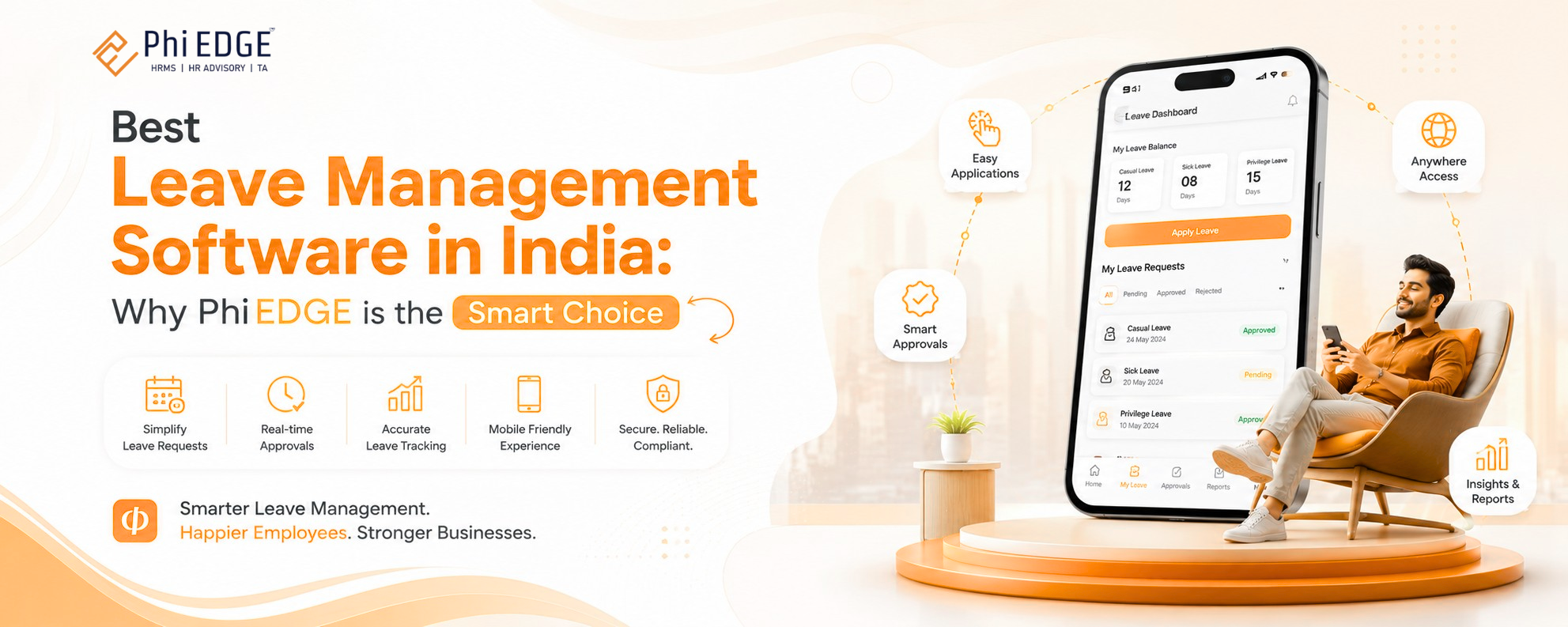
  • Best Leave Management Software in India | Smart HRMS Solution 2026

    Best Leave Management Software in India | Smart HRMS Solution 2026

    Managing employee leave sounds simple until HR teams must deal with multiple leave types, shifting holiday calendars, state-level compliance requirements, payroll dependencies, and last-minute approvals. In India, where organizations often operate across locations, shifts, and workforce categories, leave management can quickly become a manual bottleneck if the right system is not in place.

    A strong leave management solution does more than record absences. It helps HR teams automate policies, give employees self-service access, improve approval speed, maintain accurate records, and connect leave data with attendance and payroll workflows. Phi EDGE positions itself as a practical and scalable answer to this need through its broader cloud-based HRMS platform built for Indian businesses.

    Why leave management matters more than ever

    Modern Indian workplaces are more distributed, mobile, and compliance-sensitive than ever before. Organizations now need systems that can handle casual leave, sick leave, earned leave, comp-off, loss of pay, maternity leave, and company-specific policy rules without creating confusion for employees or extra administrative work for HR teams.

    When leave tracking is still managed through spreadsheets, email approvals, or disconnected tools, common problems start to appear : delayed approvals, inaccurate balances, payroll mismatches, and poor visibility for managers. These gaps affect employee experience as well as operational planning, especially in sectors with large teams or shift-based workforces.

    That is why businesses increasingly prefer leave management software that is integrated with attendance, payroll, and employee self-service features. A connected platform allows HR leaders to move from reactive administration to structured workforce planning.

    What businesses should look for

    The best leave management software in India should be flexible enough to reflect real company policy while remaining easy for employees and managers to use. Core capabilities usually include configurable leave policies, approval workflows, holiday calendars, carry-forward rules, real-time balances, reporting, and mobile access.

    For growing businesses, integration matters just as much as features. Leave data should flow cleanly into attendance and payroll processes, while HR teams should be able to generate reports that help identify absenteeism trends, policy misuse, or seasonal staffing patterns.

    Security is also a key evaluation factor. Employee leave records contain sensitive HR information, so buyers should consider vendors that demonstrate strong data governance and secure cloud practices.

    Why Phi EDGE stands out

    Phi EDGE presents itself as more than a single-function leave tracker. Its website positions the company as an HRMS software provider supported by HR advisory and talent acquisition capabilities, which gives the platform a broader people-management context than many narrow tools in the market.

    Within its HRMS offering, Phi EDGE highlights modules for attendance, payroll, performance management, and employee lifecycle processes. That matters because leave management works best when it is not isolated; it becomes more useful when it is connected to the rest of the HR stack.

    The company also emphasises that its software is designed by HR professionals, which is an important positioning point for Indian businesses that want tools aligned with practical HR workflows rather than generic software logic. Its messaging consistently focuses on usability, visibility, and decision support for managers and HR teams.

    Features that make Phi EDGE a smart choice

    One of Phi EDGE strongest advantages is policy flexibility. Indian companies rarely operate with a single universal leave rule, and Phi EDGE broader HRMS messaging suggests support for structured, configurable workflows that can adapt to business-specific requirements.

    Another major strength is integration. Because Phi EDGE offers attendance, payroll, appraisal, and performance modules within the same ecosystem, applying for leave directly from your phone is quick and easy, leave records can support more accurate downstream HR operations instead of sitting in a separate system.

    The platform also promotes real-time dashboards and analytics-led decision-making. For HR leaders, this means leave management can move beyond record-keeping toward trend visibility, workforce planning, and faster intervention when absence patterns begin affecting productivity.

    Phi EDGE further strengthens trust through its ISO/IEC 27001:2022 certification, which signals a formal commitment to information security practices. For organizations evaluating HR technology vendors, this is a meaningful differentiator because data protection is no longer optional.

    Fit for Indian businesses

    One reason Phi EDGE appears well suited to Indian organizations is its positioning around local business realities. Its website and content are focused on Indian HR use cases, Indian employers, and the needs of sectors such as manufacturing, IT, and other structured workforce environments.

    This local relevance matters because leave management in India is rarely one-size-fits-all. Companies often need region-specific holiday structures, custom approval layers, and processes that work equally well for office staff, field teams, and shift employees.

    Phi EDGE combination of HRMS software and HR consulting also suggests that the company can support organizations that are not only buying a tool but also refining the underlying policy and process framework. That makes the value proposition stronger for mid-sized firms and growing enterprises that need guidance as much as software.

    A practical business case

    For many companies, the biggest benefit of good leave management software is not just convenience but operational clarity. Managers get visibility into team availability, employees get faster responses and transparent balances, and HR gets cleaner records for payroll and audits.

    Phi EDGE’s positioning around integrated HR workflows makes that business case easier to justify. Instead of purchasing separate tools for leave, attendance, appraisals, and performance tracking, companies can evaluate a more unified HR ecosystem.

    That can be especially valuable for growing organizations that want to avoid fragmented systems early. A unified platform reduces duplication, lowers administrative friction, and makes employee data more useful across the business.

    Final thoughts

    Choosing the best leave management software in India is ultimately about finding a platform that combines flexibility, compliance support, ease of use, and integration. Based on its product positioning, feature breadth, India-focused messaging, and security credentials, Phi EDGE makes a strong case as a smart choice for organizations looking to modernize leave management as part of a larger HR transformation.

    For businesses that want more than a basic leave tracker, Phi EDGE stands out as a platform built to connect leave management with the wider goals of efficiency, visibility, and better workforce decisions.

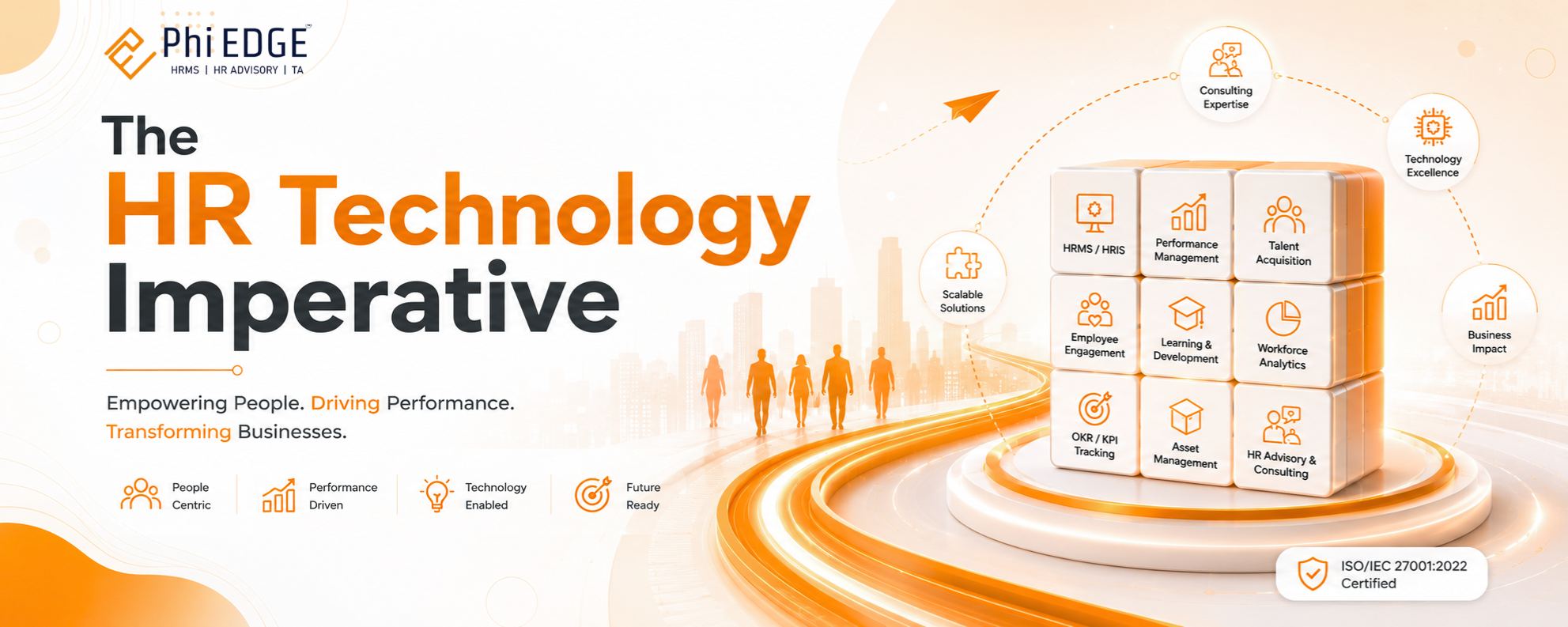
  • The HR Technology Imperative with Phi EDGE HRMS | Smarter Workforce Management

    The HR Technology Imperative with Phi EDGE HRMS | Smarter Workforce Management

    About This White Paper

    This paper is written for CHROs, HR Directors, CEOs, and business leaders at Indian enterprises navigating the move from manual or fragmented HR processes to integrated, technology-enabled people management. It draws on Phi EDGE’s seven-plus years of advisory and implementation experience across 30 or more organisations in manufacturing, auto-components, industrial engineering, and related sectors.


    Executive Summary

    India’s workforce is at an inflection point. As organisations grow from 100 to 1,000 employees and beyond, the systems that once managed people — spreadsheets, standalone payroll tools, informal performance conversations — begin to collapse under their own weight. The cost of this collapse is not just operational inconvenience. It shows up in salary errors, compliance penalties, attrition spikes, productivity gaps, and leadership blind spots that compound silently over years.

    This white paper presents the case for integrated HR technology as a strategic imperative, not a back-office upgrade. It examines the specific failure modes of legacy HR systems in Indian enterprises, outlines the capabilities that modern platforms must deliver, and explores how Phi EDGE’s consulting-plus-software model is helping organisations across India move from reactive HR to predictive, performance-driven people management.

    The central argument is simple: organisations that invest in coherent HR systems today are building an operational advantage that compounds over time. Those that delay are accumulating a hidden liability—in attrition costs, compliance risk, and the opportunity cost of HR teams that spend their time on administration rather than strategy.

    1. The State of HR in Indian Enterprises: A Diagnostic

    To understand why the moment for HR technology Imperative is now, it is worth diagnosing the current state of people management in Indian enterprises — particularly in mid-to-large organisations that have scaled rapidly but whose HR infrastructure has not kept pace.

    1.1  The Spreadsheet Trap

    The majority of Indian organisations with fewer than 1,000 employees still manage core HR processes — leave tracking, attendance reconciliation, performance appraisals, and payroll inputs — on spreadsheets. This is not a judgment. It is a rational response to cost and complexity at early stages of growth. But the spreadsheet trap becomes costly as organisations scale.

    Consider the compounding effect: a 300-person organisation processes roughly 300 monthly attendance records, 300 payroll inputs, and 300 leave balances. Every error in any of these — a missed leave entry, an incorrect carry-forward, a wrong loss-of-pay calculation — creates a downstream correction cycle that consumes HR bandwidth and erodes employee trust. At 600 employees, the same error rate doubles in absolute terms while HR headcount rarely doubles alongside it.

    In Phi EDGE’s advisory engagements, organisations transitioning from manual HR processes to integrated HRMS typically report a 40 to 60 percent reduction in HR team time spent on routine administration within six months of go-live. This time is not eliminated — it is redirected to employee engagement, talent development, and strategic workforce planning.

    1.2  The Compliance Blind Spot

    India’s labour law framework is among the most complex in the world. The Factories Act, Shops and Establishments Act, Maternity Benefit Act, Payment of Gratuity Act, ESIC provisions, and state-specific variations create a compliance matrix that requires active management, not periodic review. For most organisations managing HR manually, compliance is reactive: they respond to audits, correct after penalties, and rely on institutional memory that walks out the door when key staff leave.

    The risk is asymmetric. A single compliance failure — unpaid gratuity, incorrect PF deductions, miscalculated maternity entitlements — can result in penalties, legal exposure, and reputational damage that far outweighs the cost of the system that would have prevented it.

    1.3  The Visibility Problem

    Perhaps the most consequential failure of legacy HR systems is the visibility problem: leaders and managers cannot see what is actually happening with their people in real time. Who is at flight risk? Which department has declining performance? Where is leave abuse concentrated? Which roles are perpetually understaffed because attrition is not visible until it happens?

    Without data, leadership defaults to anecdote and instinct. With data — even imperfect data — decisions improve measurably. HR technology does not replace managerial judgment. It gives that judgment a foundation.

    1.4  The Employee Experience Gap

    The expectations of the Indian workforce have shifted permanently. Employees who interact with consumer apps for banking, food delivery, and travel expect the same self-service experience from their employer for leave applications, salary slips, and performance feedback. When HR processes require physical forms, email chains, or waiting three days for a leave approval, it communicates — subtly but persistently — that the organisation does not respect employees’ time.

    This is not merely an engagement issue. In a tight labour market, particularly for skilled roles in manufacturing and engineering, the quality of the employee experience is a retention factor that organisations cannot afford to ignore.

    2. What Modern HR Technology Must Do

    The market is full of HR software. Not all of it is equal, and not all of it is designed for the Indian context. Based on Phi EDGE’s experience, the following capabilities are non-negotiable for organisations seeking to build a sustainable HR technology foundation.

    2.1  Integrated Data Architecture

    The most important capability is one that is invisible to end users: integration. Leave data must flow directly into payroll. Attendance records must connect to performance analytics. Attrition signals must surface in the same dashboard as recruitment data. When HR data lives in separate systems, the reconciliation burden falls on HR teams — and the insights that would improve decisions never materialise.

    True integration means a single source of truth for employee data, not a collection of loosely connected applications with periodic data exports between them.

    2.2  Indian Compliance by Design

    Generic HRMS platforms built for global markets often require significant configuration — and ongoing maintenance — to handle Indian labour law requirements. The Maternity Benefit Act’s 26-week entitlement, ESIC deduction thresholds, and state-specific shop and establishment rules must be pre-configured and regularly updated as regulations evolve. Organisations should evaluate HR platforms not on their international compliance credentials, but on the depth of their Indian compliance architecture.

    2.3  Configurable Policy Engine

    No two Indian organisations have identical HR policies, and no HR platform should expect them to. Leave type definitions, accrual logic, carry-forward caps, encashment eligibility, probation period rules, shift definitions, and holiday calendars vary by industry, geography, grade, and organisational philosophy. A platform that requires organisations to adapt their policies to its templates imposes hidden costs that accumulate over years.

    2.4  Mobile-First and WhatsApp-Ready

    In Indian enterprises — particularly manufacturing, logistics, and industrial organisations — a significant proportion of the workforce is not desk-bound. For these employees, a desktop HRMS is inaccessible. Mobile-first design is table stakes. WhatsApp integration goes further: it meets employees and managers on the channel they already use, enabling leave applications, approvals, payslip access, and notifications without requiring any additional app download or login.

    2.5  Real-Time Analytics and Manager Dashboards

    The shift from reactive to proactive HR requires data visibility at the manager level, not just in HR reports. When a manager can see, in real time, which team members are on leave this week, who has had three consecutive below-target performance ratings, and which employees have not taken any leave in six months — a potential burnout signal — the quality of management decisions improves measurably.

    2.6  Advisory and Implementation Support

    Technology implementation without organisational change management fails more often than it succeeds. The HR systems that deliver lasting value are those where the vendor brings domain expertise — understanding of HR practice, Indian regulatory context, and change management — alongside the software. This is the distinction between an HRMS vendor and an HR partner.

    3. The Phi EDGE Approach: For HR, By HR

    Phi EDGE was founded on a premise that remains relatively rare in the Indian HRMS market: that the people who build HR technology should have lived the practice of HR, not just observed it from the outside. This origin shapes every product and advisory decision the company makes.

    The company operates across three interconnected verticals: an AI-powered HRMS platform with 19 integrated modules; an HR Advisory practice covering culture transformation, OKR design, competency frameworks, DEI, and compensation strategy; and a Talent Acquisition practice focused on senior and executive hiring. The combination is not coincidental — it reflects the belief that technology and human expertise must work together for organisations to realise meaningful improvement.

    3.1  Platform Architecture: 19 Modules, One Data Layer

    The Phi EDGE HRMS is structured around a unified employee data model, where every module draws from and contributes to the same underlying record. This architecture eliminates the reconciliation burden that plagues organisations using multiple disconnected tools. The 19 modules span the full employee lifecycle:

    • Leave and Attendance Management — biometric sync, mobile punch-in, WhatsApp approvals, and customisable policy configuration
    • Payroll Management — automated salary calculations, loss-of-pay processing, encashment, and statutory compliance
    • Performance Management — OKR-based goal setting, KPI tracking, and continuous feedback workflows
    • 360-Degree Feedback — multi-rater assessments, gap analysis, and individual development planning
    • 9-Box Talent Grid — succession planning, high-potential identification, and talent placement strategy
    • Learning and Development — training calendars, skill gap mapping, and training effectiveness tracking
    • Competency Mapping — role-specific competency frameworks and structured assessment workflows
    • Attrition Analytics — early warning signals, retention dashboards, and flight risk scoring
    • Manpower Planning — headcount forecasting, resource allocation, and gap analysis
    • HR MIS and Analytics — real-time dashboards, custom reports, and board-ready visualisations


    3.2  The Consulting-Plus-Software Model

    A core differentiation of Phi EDGE is the inclusion of HR advisory expertise as part of the client relationship — not as a premium add-on. When an organisation onboards onto the Phi EDGE platform, the implementation team includes HR consultants who understand policy design, Indian labour law, change management, and HR best practice — not just software configuration specialists.

    This matters because the majority of HRMS implementation failures are not technical failures. They are organisational ones: policies that were never clearly defined, processes that were never properly documented, or adoption that stalled because employees and managers were not equipped to use the system. Phi EDGE’s approach addresses these risks by design.

    3.3  Free Customisations: A Structural Commitment

    Most HRMS vendors charge for customisations — policy-specific configurations, reporting adjustments, and workflow modifications. Over time, these charges accumulate and create friction between the organisation’s evolving needs and the platform’s capabilities. Phi EDGE’s commitment to free customisations reflects the belief that a long-term client relationship is more valuable than short-term configuration revenue.

    This policy also has a practical effect: organisations are not incentivised to constrain their HR policies to fit the software. They can design the right HR framework first, and configure the platform to match — not the other way around.

    3.4  Security and Certification

    Employee data is among the most sensitive information an organisation holds — salary details, performance records, health information, personal identification. Phi EDGE’s ISO/IEC 27001:2022 certification provides clients with independently verified assurance that data is protected to international standards. For organisations evaluating HRMS platforms, security certification should be a baseline requirement. In the Indian market, it remains a meaningful point of distinction.

    4. The Business Case for HR Technology Investment

    For organisations evaluating HRMS investment, the business case must go beyond feature comparison. The ROI drivers fall into three categories: cost reduction, risk mitigation, and value creation.

    4.1  Cost Reduction

    • HR team time reallocation: a 40 to 60 percent reduction in administrative burden, redirected to strategic work
    • Payroll processing efficiency: a 50 to 70 percent reduction in month-end processing time through automation
    • Attrition cost reduction: each avoided voluntary resignation saves 50 to 150 percent of the role’s annual salary, accounting for recruitment, onboarding, and productivity ramp costs
    • Error correction costs: elimination of salary correction cycles, overpayment recoveries, and manual audit preparation


    4.2  Risk Mitigation

    • Compliance penalties: automated statutory calculations eliminate the most common source of labour law violations
    • Audit readiness: time-stamped, immutable records for every HR transaction reduce audit preparation time and risk
    • Data security: ISO/IEC 27001:2022 certification reduces the risk of data breaches and associated consequences
    • Institutional knowledge retention: process documentation and system configuration reduce dependence on individual knowledge holders


    4.3  Value Creation

    • Performance visibility: real-time KPI and OKR tracking enables faster intervention and course correction
    • Talent development: integrated learning and development, competency, and 9-Box frameworks enable systematic capability building
    • Leadership pipeline: succession planning data reduces the risk of critical role vacancies and supports internal mobility
    • Employee experience: self-service, WhatsApp integration, and transparent processes improve engagement and employer brand


    5. Client Outcomes: Evidence from the Field

    Phi EDGE’s client base spans manufacturing conglomerates, auto-component manufacturers, industrial engineering firms, and diversified enterprise groups. The following outcome patterns are drawn from the company’s portfolio of 30 or more active enterprise clients across India.

    5.1  Attrition Reduction Through Early Warning Systems

    One of the most tangible ROI drivers of integrated HR technology is attrition reduction. When leave patterns, performance trends, and engagement signals are visible in a unified dashboard, HR and line managers can identify at-risk employees weeks or months before they resign — rather than learning about flight risk at the exit interview.

    An industrial manufacturing client with over 400 employees reduced annualised attrition by approximately 18 percent within 14 months of implementing Phi EDGE’s integrated leave, performance, and attrition analytics modules. The primary driver was early identification of at-risk employees based on combined leave pattern and performance trend signals, enabling targeted retention conversations before resignation decisions were finalised.

    5.2  Payroll Accuracy and Month-End Efficiency

    For organisations processing payroll for hundreds of employees, month-end is consistently one of HR’s highest-pressure periods. The integration of leave, attendance, and payroll in Phi EDGE eliminates the manual reconciliation step that consumes HR bandwidth and introduces errors.

    A Pune-based auto-components manufacturer processing payroll for 650 employees reported reducing month-end payroll processing time by approximately 65 percent following Phi EDGE implementation. The primary driver was elimination of the leave-to-payroll reconciliation step, with secondary savings from automated loss-of-pay calculation and removal of manual error-correction cycles.

    5.3  Culture Transformation and Recognition

    HR technology is often positioned as an operational efficiency tool. Phi EDGE’s client outcomes demonstrate that it can also be a culture-building platform when the right data enables the right conversations. Orbittal Electromech’s journey to Great Place to Work recognition was supported by the people data and transparency that Phi EDGE’s HRMS made possible, enabling HR to move from reactive administration to proactive employee experience design.

    5.4  Long-Term Partnership

    The most compelling evidence of platform value is client retention over time. ADM Group’s Founder and CEO has described a seven-year relationship with Phi EDGE encompassing culture transformation, HRMS implementation, HR advisory engagements, and ongoing performance system refinement. This duration reflects the compounding value of a platform-plus-advisory relationship: as the organisation evolves, the HR system evolves with it — without the disruption and cost of platform migration.

    6. Implementation Framework: What Success Looks Like

    The difference between HRMS implementations that deliver sustained value and those that stall at partial adoption is rarely about the technology. It is almost always about the implementation approach.

    Phase 1: Discovery and Policy Mapping — Weeks 1 to 4

    Before any system is configured, the organisation’s HR policies must be documented, rationalised, and where necessary redesigned. Phi EDGE’s HR advisory team conducts a structured audit of existing policies, identifies gaps and inconsistencies, and works with the client to define the policy framework that will govern the system configuration. This step is skipped by most HRMS vendors and is the primary reason implementations fail.

    Phase 2: System Configuration and Testing — Weeks 3 to 8

    With policy documentation in place, system configuration is a structured, repeatable process rather than an open-ended discovery exercise. Phi EDGE’s implementation team configures each module against documented policy requirements, conducts parallel testing against existing processes, and validates outputs before go-live.

    Phase 3: Go-Live and Change Management — Weeks 7 to 12

    Go-live is a change management event, not just a technical deployment. Phi EDGE’s implementation approach includes manager training, employee communications, and a structured support model during the first payroll cycle and leave period. The goal is not just system adoption — it is confident adoption, where managers and employees understand why the new process is better and how to use it effectively.

    Phase 4: Optimisation and Evolution — Ongoing

    The relationship does not end at go-live. As organisations evolve — adding locations, changing policies, scaling headcount, or responding to regulatory changes — the platform evolves with them. Phi EDGE’s free customisations policy and in-house advisory team ensure that this evolution is managed as a continuous, low-friction process rather than a series of costly change requests.

    7. Strategic Implications

    The organisations that will lead their industries in the next decade are not necessarily those with the most capital or the most aggressive growth strategies. They are the organisations that can deploy their human capital most effectively — identifying talent early, developing capability systematically, retaining key contributors, and building cultures that attract the people they need.

    HR technology is the infrastructure that makes this possible at scale. Without it, people management remains artisanal — dependent on the quality of individual managers, constrained by the bandwidth of the HR team, and invisible to leadership until problems surface as crises.

    The question is not whether to invest in HR technology. For organisations with 200 or more employees, that question has been answered by the cumulative cost of not investing — in attrition, compliance risk, and the strategic opportunity cost of HR teams that administer rather than advise. The real question is how to invest wisely: choosing a platform built for the Indian context, with the advisory depth to support implementation and the flexibility to evolve as the organisation grows.

    8. Conclusion and Recommendations

    The case for integrated HR technology in Indian enterprises is clear and urgent. The compounding costs of manual processes, compliance risk, and leadership blindness are not abstract — they show up in attrition reports, payroll error cycles, and the quiet departure of key talent.

    For organisations evaluating their HR technology strategy, Phi EDGE offers the following recommendations:

    1. Start with policy, not software. Document and rationalise your HR policies before configuring any system. The system should serve your policy framework, not define it.
    2. Demand integration, not just functionality. A platform that excels at one module but does not connect to payroll and performance creates a new class of reconciliation problems.
    3. Evaluate the advisory depth, not just the feature list. The platforms that deliver sustained value are those where the vendor brings HR expertise alongside technology.
    4. Insist on Indian compliance specificity. Generic global platforms require significant configuration to handle Indian labour law. That cost is often invisible in the procurement stage but significant in production.
    5. Think in decades, not deployment timelines. The right HR platform is one your organisation grows into, not one you grow out of. Evaluate flexibility, customisation commitment, and the vendor’s advisory capacity for the long term.


    Phi EDGE’s combination of a 19-module integrated platform, in-house HR advisory, free customisations, WhatsApp-native integration, and ISO/IEC 27001:2022 certification represents a considered response to all five of these principles. We believe the evidence from our client portfolio demonstrates that the platform-plus-advisory model consistently outperforms software-only alternatives when measured over a meaningful time horizon.

    We invite you to test this claim directly. Book a free consultation with the Phi EDGE team. We will audit your current HR processes, identify the gaps that are costing you the most, and show you exactly how our platform maps to your organisation’s specific context — with no obligation and no generic demo.


    Schedule a consultation: www.phiedge.co.in/contact

    Email: contact@phiedge.co.in  |  Phone: +91-8956049164

    About Phi EDGE

    Phi EDGE HR Tech Pvt. Ltd. is an ISO/IEC 27001:2022 certified HR technology and advisory company headquartered in Baner, Pune. Founded on the principle of For HR, By HR, the company serves enterprise clients across India with an integrated suite of HRMS software, HR advisory services, and talent acquisition solutions.

    The Phi EDGE HRMS platform comprises 19 integrated modules covering the full employee lifecycle — from recruitment and onboarding through performance management, learning and development, succession planning, and attrition analytics. The company’s HR advisory practice has supported culture transformation, OKR implementation, competency framework design, DEI strategy, and compensation restructuring at organisations ranging from family-owned manufacturers to publicly listed industrial groups.

    Client organisations include JSW Steel, ADM Group, Mega Rubber Technologies, Orbittal Electromech, Mubea, Advik Group, and Ognibene India, among others.


    Disclaimer

    This white paper is published for informational purposes by Phi EDGE HR Tech Pvt. Ltd. Client outcomes described are based on reported experience from Phi EDGE’s engagements. This document does not constitute legal or compliance advice. Copyright 2026 Phi EDGE HR Tech Pvt. Ltd. All rights reserved.


    Published by Phi EDGE HR Tech Pvt. Ltd.

    Baner, Pune, Maharashtra, India  |  April 2026  |  Edition 1.0
  • Attendance Management Software with Phi EDGE: Smart Tracking for Modern Workforces

    Attendance Management Software with Phi EDGE: Smart Tracking for Modern Workforces

    Attendance Management Software with Phi EDGE: Transforming Workforce Tracking with Smart Automation

    One of the most important facets of HR operations is effectively managing employee attendance. Manual attendance monitoring using spreadsheets or registers frequently results in mistakes, wasted effort, and compliance problems in expanding businesses.

    Attendance Management Software with Phi EDGE provides a contemporary, automated solution in this situation. It assists companies in managing employee leave, keeping track of working hours, and immediately integrating attendance with HR and payroll systems.

    Businesses are moving toward digital attendance solutions that provide real-time tracking and improved personnel management in response to the growing need for accuracy and transparency.


    What is Attendance Management Software?

    A system that keeps track of employee working hours, shifts, breaks, and leaves is called attendance management software. It delivers real-time information regarding worker availability and productivity while doing away with manual processes.

    There is more to modern attendance systems than just basic tracking. They include functions like GPS tracking, automatic reporting, mobile check-ins, and biometric integration. 

    Why Traditional Attendance Systems Fail

    Businesses have a number of difficulties when using manual attendance systems, particularly as they grow. 

    Common Problems in Manual Attendance Tracking

    Human Errors in Data Entry

    Manual entries often result in incorrect records, leading to payroll discrepancies.

    Time-Consuming Processes

    HR teams spend hours managing attendance data, calculating working hours, and verifying leave records.

    Lack of Transparency

    Employees may not have clear visibility into their attendance records, leading to confusion and disputes.

    Difficulty in Managing Remote Teams

    With hybrid and remote work becoming common, traditional systems fail to track attendance accurately.

    How Phi EDGE Solves Attendance Challenges

    Attendance Management Software with Phi EDGE simplifies workforce tracking with advanced features and automation.

    Real-Time Attendance Tracking

    Phi EDGE makes it possible to track staff attendance in real time using a variety of techniques, including:

    • Biometric gadgets
    • Apps for mobile devices
    • Systems for logging in online

    This guarantees precise and timely documentation of working hours. 

    Automated Leave Management

    Through the technology, employees may immediately request leave, and supervisors can quickly approve or deny requests. This increases productivity and decreases paperwork. 

    Seamless Payroll Integration

    Payroll processing and attendance data are seamlessly linked, guaranteeing precise wage computations based on actual working hours, leaves, and overtime. 

    H3: Multi-Location and Remote Tracking

    Phi EDGE offers location-based tracking, guaranteeing correct attendance regardless of location, for companies with many offices or remote staff. 

    Key Features of Phi EDGE Attendance Management Software

    Understanding its features helps businesses realise its full potential.

    Biometric and Digital Attendance Integration

    Phi EDGE supports biometric devices and digital check-ins, reducing the chances of proxy attendance or manipulation.

    Shift and Roster Management

    Organizations can manage different shifts, including night shifts and flexible schedules, with ease.

    Automated Reports and Analytics

    HR teams can generate detailed reports on:

    • Daily attendance
    • Monthly summaries
    • Overtime calculations
    • Leave balances

    These insights help in better decision-making.

    Employee Self-Service Portal

    Employees can view their attendance records, apply for leave, and track approvals, improving transparency.

    Alerts and Notifications

    Automated alerts for late logins, absences, and approvals ensure that nothing is missed.

    Benefits of Using Phi EDGE Attendance Management Software

    Improved Accuracy

    Automation reduces errors in attendance tracking and payroll calculations.

    Time Savings

    HR teams can focus on strategic tasks instead of manual data management.

    Enhanced Employee Experience

    Transparent systems build trust and reduce disputes related to attendance and salary.

    Better Compliance

    Accurate records help businesses comply with labor laws and audit requirements.

    Increased Productivity

    With proper tracking and accountability, employees are more disciplined and productive.

    Attendance Management in Different Work Environments

    Office-Based Teams

    Track in-office attendance using biometric or web-based systems.

    Remote Teams

    Use mobile apps and GPS tracking to monitor attendance.

    Field Employees

    Track on-site attendance with location-based check-ins.

    Hybrid Work Models

    Combine office and remote tracking for seamless workforce management.

    Conclusion

    Attendance Management Software with Phi EDGE is a powerful solution for modern businesses looking to improve labour tracking, payroll accuracy, and overall productivity. Automating attendance processes and integrating them with HR systems, it eliminates inefficiencies and ensures transparency.

    As businesses continue to adopt digital solutions, a reliable attendance management system is now essential for growth and efficiency.

    Phi EDGE not only facilitates attendance tracking but also enables companies to establish a more efficient, transparent, and ordered workplace culture.


    FAQ Section

    Q1. What is attendance management software?

    It is a system that tracks employee working hours, attendance, and leave records digitally.

    Q2. How does Phi EDGE improve attendance tracking?

    It provides real-time tracking, automation, and integration with payroll systems.

    Q3. Can it be used for remote employees?

    Yes, it supports mobile and GPS-based attendance tracking.

    Q4. Is it suitable for small businesses?

    Yes, it is scalable and works for businesses of all sizes.

    Q5. Why is attendance management important?

    It ensures accurate payroll, improves productivity, and helps maintain compliance.


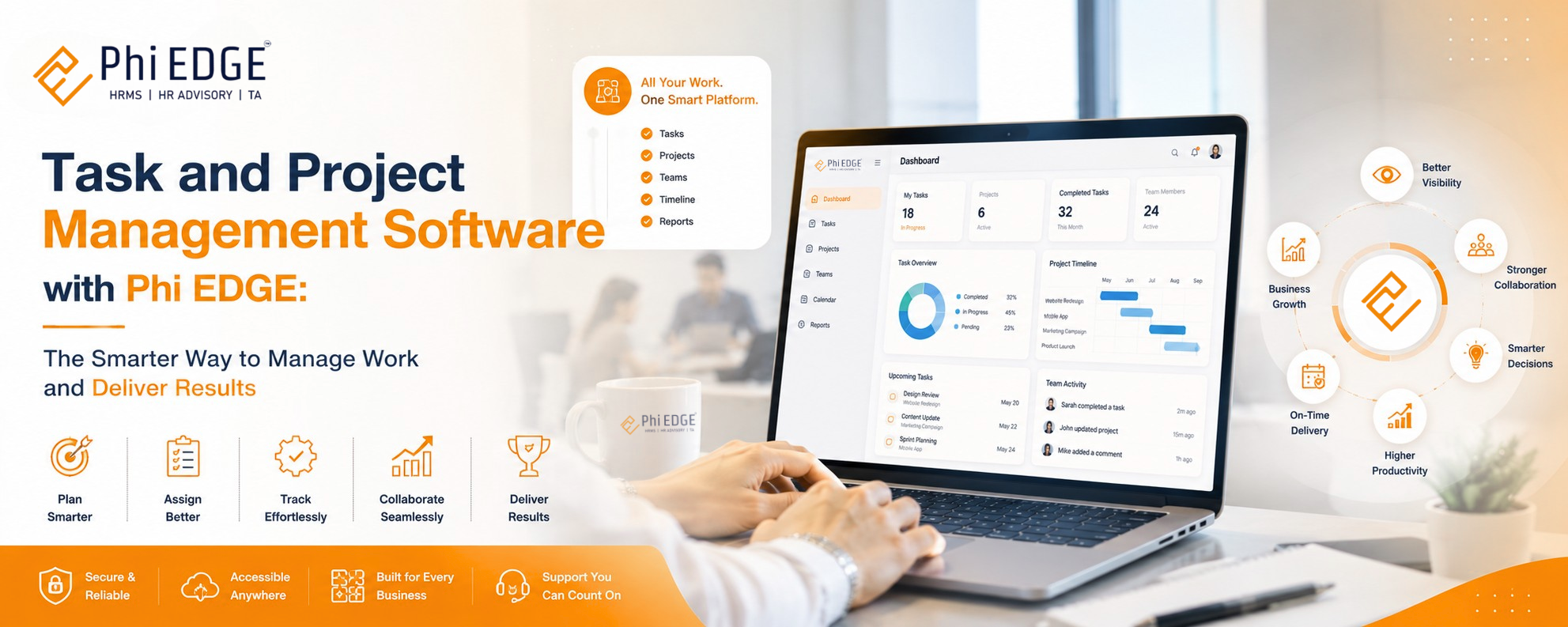
  • Task and Project Management Software with Phi EDGE: The Smarter Way to Manage Work and Deliver Results

    Task and Project Management Software with Phi EDGE: The Smarter Way to Manage Work and Deliver Results

    Managing numerous projects, teams, and deadlines can easily become too much to handle in the hectic business world of today. Effective task and project management is essential for success whether you operate a service-based company, an IT firm, or a digital marketing agency.

    This is where Phi EDGE’s task and project management software revolutionises business operations. Phi EDGE is a centralised platform that gives your workflows clarity, structure, and control rather than depending on dispersed tools, spreadsheets, emails, and manual coordination.

    Businesses can increase productivity, regularly meet deadlines, and guarantee better teamwork with the correct system in place. 

    What is task and project management software?

    Task and project management software is a digital solution designed to help teams plan, execute, track, and complete work efficiently. It allows businesses to organise tasks, assign responsibilities, monitor progress, and ensure the timely delivery of projects.

    Unlike traditional methods, modern project management platforms provide real-time visibility into work progress, enabling teams to stay aligned and accountable.

    Why Businesses Need Project Management Software Today

    Manual project management often leads to missed deadlines, poor communication, and a lack of accountability. As businesses grow, these problems become even more complex.

    Key Challenges Without a Management System

    Lack of Visibility

    Without a centralized system, managers struggle to track who is working on what. This creates confusion and delays.

    Teams Communication

    Teams often rely on emails or chats, which leads to scattered information and missed updates.

    Missed Deadlines

    Without proper tracking and reminders, tasks often get delayed, affecting overall project timelines.

    Inefficient Resource Utilization

    Managers cannot properly allocate resources when they don’t have clear insights into workload and capacity.

    How Phi EDGE Solves These Challenges

    Task and Project Management Software with Phi EDGE is designed to eliminate inefficiencies and create a structured workflow for teams.

    Centralized Task Management

    Phi EDGE allows you to create, assign, and manage tasks from one dashboard. Each task can include:

    • Deadlines
    • Priority levels
    • Assigned team members
    • Status updates

    This ensures that everyone knows their responsibilities and timelines clearly.

    Real-Time Project Tracking

    With Phi EDGE, managers can monitor project progress in real time. This helps in identifying bottlenecks early and taking corrective action before delays occur.

    Seamless Team Collaboration

    Collaboration becomes easier when communication is centralized. Team members can share updates, comments, and files within the platform itself, reducing dependency on external tools.

    Workflow Automation

    One of the biggest advantages of Phi EDGE is automation. Repetitive tasks such as status updates, reminders, and approvals can be automated, saving time and reducing manual effort.

    Key Features of Phi EDGE Task and Project Management Software

    To truly understand its value, let’s explore the core features that make Phi EDGE a powerful solution.

    Smart Task Assignment and Prioritization

    Tasks can be assigned based on team capacity and priority levels. This ensures that critical work is completed on time without overloading employees.

    Visual Project Dashboards

    Dashboards provide a clear overview of ongoing projects, completed tasks, and pending work. This helps managers make faster and better decisions.

    Deadline and Reminder System

    Automated reminders ensure that no task is overlooked. This improves accountability and keeps projects on track.

    Performance Monitoring

    Managers can track individual and team performance based on task completion rates and timelines. This helps identify high performers and areas for improvement.

    Integration with Business Systems

    Phi EDGE can integrate with other business tools such as HRMS, CRM, and accounting systems, creating a unified digital ecosystem.

    Benefits of Using Phi EDGE for Task and Project Management

    Implementing the right software can significantly improve business efficiency.

    Increased Productivity

    When tasks are clearly defined and tracked, employees can focus better and work more efficiently.

    Improved Accountability

    Each task is assigned to a specific person, making it easier to track responsibility and performance.

    Faster Project Delivery

    With better planning and tracking, projects can be completed on time or even ahead of schedule.

    Better Decision Making

    Real-time data allows managers to make informed decisions quickly.

    Reduced Operational Costs

    Automation and efficiency reduce unnecessary delays and resource wastage, saving costs in the long run.

    Task and Project Management Across Industries

    Phi EDGE is not limited to one industry. It can be used across multiple sectors:

    Digital Marketing Agencies

    Manage campaigns, content calendars, ad creatives, and client deliverables efficiently.

    IT and Software Companies

    Track development tasks, bug fixes, and deployment schedules.

    Real Estate Businesses

    Manage site visits, client follow-ups, and project timelines.

    E-commerce Businesses

    Handle product listings, inventory updates, and order processing workflows.


    Conclusion

    Phi EDGE task and project management software is revolutionary for companies trying to boost productivity, efficiency, and teamwork. It helps teams stay organised and complete projects successfully by centralising activities, automating workflows, and offering real-time insights.

    Businesses that use smart management solutions have a big advantage in a competitive market. In addition to making project management easier, Phi EDGE gives teams the tools they need to do their best work. 


    FAQ Section

    Q1. What is task and project management software?

    It is a tool that helps teams plan, organize, track, and complete tasks and projects efficiently.

    Q2. How does Phi EDGE improve team productivity?

    It provides centralized task management, automation, and real-time tracking, helping teams work more efficiently.

    Q3. Is Phi EDGE suitable for small businesses?

    Yes, it is scalable and can be used by startups, small businesses, and large enterprises.

    Q4. Can it integrate with other tools?

    Yes, Phi EDGE can integrate with HRMS, CRM, and other business systems.

    Q5. Why is project management software important?

    It improves efficiency, reduces delays, enhances collaboration, and ensures timely project delivery.


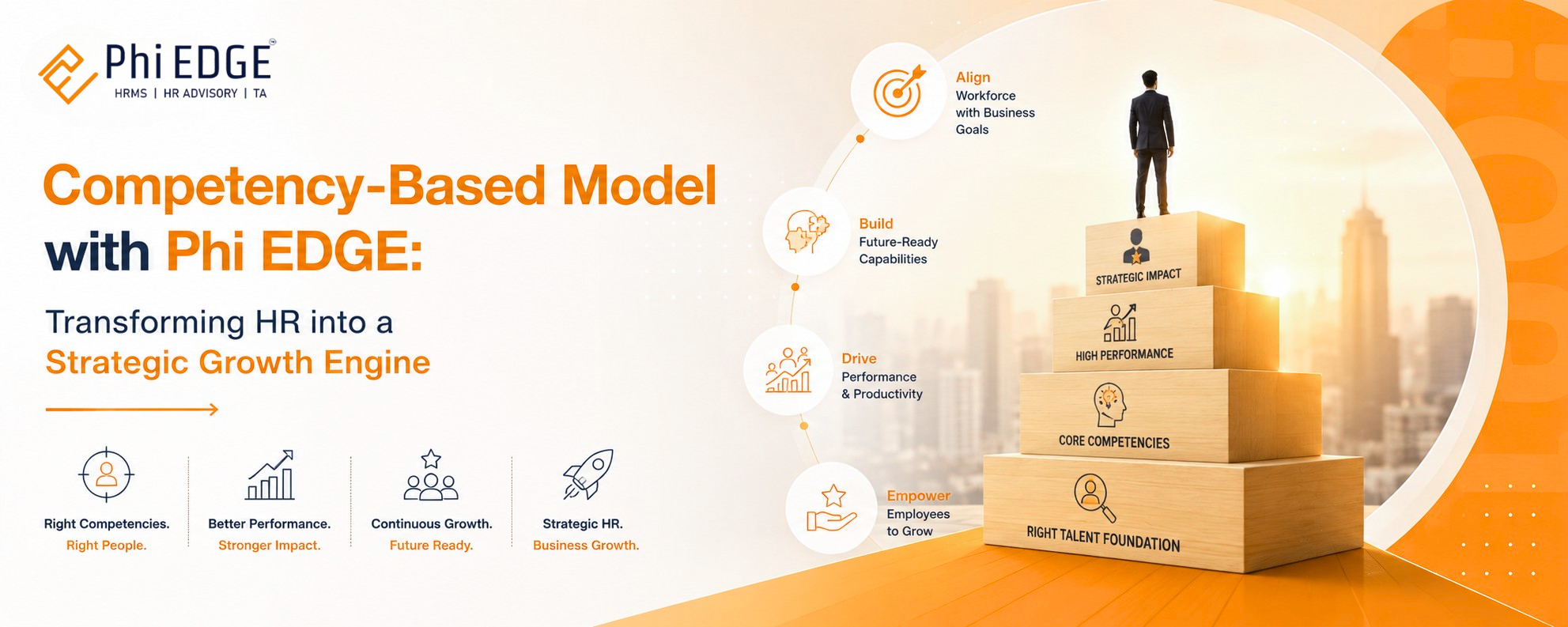
  • Competency Based Model with Phi EDGE

    Competency Based Model with Phi EDGE

    Competency-Based Model with Phi EDGE: Transforming HR into a Strategic Growth Engine

    Hiring the proper people is no longer sufficient in today’s cutthroat corporate environment. To promote steady performance and long-term growth, organisations require workers with the appropriate abilities, attitudes, and skills. The Competency-Based Model with Phi EDGE becomes a potent paradigm for contemporary HR management at this point.

    A competency-based model assesses employees based on quantifiable abilities, knowledge, and behavioural traits, in contrast to traditional HR systems that primarily consider credentials or experience. Businesses can more successfully match personnel strengths with organisational objectives when they use a smart platform like Phi EDGE.

    The end product is an organized, data-driven HR system that boosts hiring, optimizes performance management, and fosters a culture of ongoing improvement. 


    What is a Competency-Based Model in HR?

    A competency-based model is an organized method of managing staff members according to the specific skills needed for each position. Technical proficiency, soft skills, leadership potential, and behavioral characteristics are some of these capabilities. 

    Instead of asking, “What degree does this person have?”, the focus shifts to:


    What can this person actually do, and how well can they perform?

    This model helps organizations create clear expectations for every role and measure employee performance against those expectations.

    Why Businesses Are Adopting Competency-Based Models

    Because old HR procedures frequently fail to evaluate actual performance, modern organizations are abandoning them. A more accurate and useful method of evaluating employees is through competency-based frameworks. 

    Key Benefits of Competency-Based HR Management

    A competency-based approach improves multiple areas of HR operations.

    Better Hiring Decisions

    Recruitment becomes more precise when based on competencies. Instead of relying only on resumes, HR teams can assess whether candidates actually have the skills required for the job.

    This reduces hiring mistakes and improves employee retention.

    Improved Employee Performance

    When employees know what competencies are expected from them, they perform with more clarity and focus. Managers can also provide more specific feedback based on measurable criteria.

     Structured Learning and Development

    Training programs become more effective because they are aligned with skill gaps. Employees receive targeted learning opportunities instead of generic training sessions.

    Fair and Transparent Evaluations

    Performance reviews become unbiased because they are based on defined competencies rather than subjective opinions. This builds trust within the organization.

    How Phi EDGE Powers Competency-Based HR Management

    Phi EDGE makes it simpler to adopt and expand throughout the company by integrating competency-based frameworks into a unified HR system.

    Competency Mapping Based on Roles

    Businesses can specify competencies for every role with Phi EDGE. These skills may consist of:


    • Technical proficiency
    • Communication abilities
    • The capacity to solve problems
    • Characteristics of a leader

    Every employee will be aware of what is required of them in their work thanks to this mapping. 


    Skill Gap Analysis

    One of the most powerful features of Phi EDGE is its ability to identify skill gaps. By comparing required competencies with actual employee performance, HR teams can easily see where improvements are needed.

    This helps in creating personalized development plans for employees.


    Performance Tracking with Data

    Phi EDGE makes it possible to track performance continuously using competency metrics. Instead of depending solely on yearly reviews, managers can assess staff using real-time data.

    Better performance results and quicker feedback cycles follow from this. 


    Integration with HRMS Functions

    The competency-based model works seamlessly with other HRMS functions such as:

    • Payroll management
    • Attendance tracking
    • Employee records
    • Appraisal systems

    This integration ensures that all HR processes are aligned with competency data, creating a unified system.

    Competency-Based Model and Employee Lifecycle

    A competency-based approach impacts every stage of the employee lifecycle, from hiring to growth and retention.

     Recruitment and Selection

    Using competency frameworks, HR teams can design better job descriptions and interview processes. Candidates are evaluated based on real-world skills rather than theoretical knowledge.

    Onboarding and Training

    New employees can be onboarded with clear expectations. Training programs can be customized based on the competencies required for their role.

    Performance Management

    Managers can track employee progress against predefined competencies. This creates a structured performance review system that is both fair and actionable.

    Career Development and Growth

    Workers are able to understand exactly what abilities they need to acquire to advance within the company. This lowers attrition and boosts motivation. 

    Why Competency-Based Models Are the Future of HR

    Today’s businesses work in a dynamic environment where capabilities change quickly. Conventional HR systems find it difficult to adapt to these developments.

    This issue is resolved by a competency-based paradigm that emphasises flexibility and ongoing education. 

    Alignment with Business Goals

    Overall productivity increases when employee competencies match corporate goals. Teams become more productive, and organizations may accomplish their objectives more quickly. 

    Data-Driven Decision Making

    Because HR choices are grounded in quantifiable facts, they become more accurate. As a result, bias is lessened and overall efficiency is increased. 

     Enhanced Employee Engagement

    Employees feel more engaged when they understand their role clearly and receive structured feedback. This leads to higher job satisfaction and better retention.

    Conclusion

    The Competency-Based Model with Phi EDGE completely changes how businesses handle talent; it is more than just an HR tactic. Businesses may create stronger teams and achieve sustainable success by emphasising performance, skills, and ongoing development.

    By offering a single, data-driven platform that links all HR functions, Phi EDGE facilitates the implementation of this paradigm. Everything becomes more organized, clear, and efficient, from hiring to performance management and career development.

    Adopting a competency-based approach is now necessary for businesses hoping to remain competitive in the rapidly evolving world of today.


    FAQ Section

    Q1. What is a competency-based HR model?

    A competency-based HR model concentrates on assessing workers according to the abilities, know-how, and conduct necessary for their position. 

    Q2. How does Phi EDGE support competency-based management?

    In a single, centralized system, Phi EDGE offers capabilities for skill gap analysis, performance monitoring, and competence mapping. 

    Q3. Why is competency-based hiring important?

    It helps organizations select candidates based on real skills, reducing hiring errors and improving productivity.

    Q4. Can small businesses use competency-based models?

    Yes, even small businesses can benefit by improving hiring, training, and employee performance.

    Q5. How does this model improve employee growth?

    It provides clear career paths and identifies skill gaps, helping employees develop and advance in their roles.


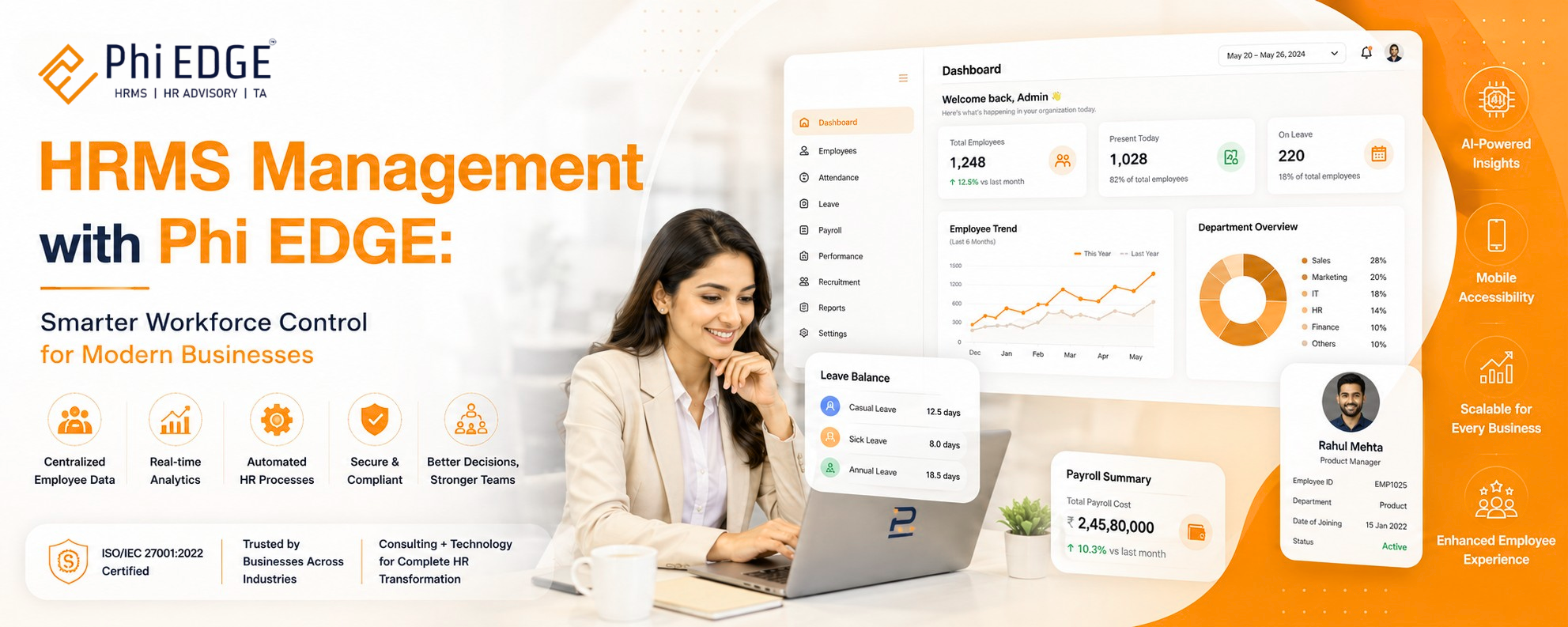
  • HRMS Management with Phi EDGE: Smarter Workforce Control for Modern Businesses

    HRMS Management with Phi EDGE: Smarter Workforce Control for Modern Businesses

    Managing people by hand is no longer feasible in the fast-paced commercial world of today. Businesses require control, speed, accuracy, and openness in all HR procedures. Here, HRMS Management with Phi EDGE becomes a significant benefit.


    Storing employee records is just one of the many functions of a contemporary HRM system. It unifies employee data, payroll, leave, onboarding, performance monitoring, compliance, and attendance into a single, integrated platform. Businesses can streamline HR processes, lower errors, and improve employee and HR staff experiences using Phi EDGE.


    HRMS management enables you to transition from dispersed spreadsheets and tedious human labour to a streamlined digital process, regardless of the size of your business. 

    Why HRMS Management Matters in Modern Businesses

    Human resources are the cornerstone of any organization. Workplace culture, productivity, and corporate growth are all impacted by employee involvement, from recruiting to retirement. When HR activities are handled manually, businesses frequently encounter delays, miscommunication, inaccurate data, and compliance issues.


    HRMS management addresses these problems by combining all employee-related activities into a single system. It allows HR departments to manage people more strategically rather than squandering time on time-consuming administrative duties.


    The Core Benefits of HRMS Management 

    Daily operations are enhanced by an HRMS platform in a number of significant ways. By automating repetitive processes like payroll processing, attendance computation, and leave authorization, it first saves time. Second, it increases accuracy by decreasing human error in salary computations and personnel records. Third, because workers may access their own data, requests, and changes without entirely relying on HR personnel, it promotes transparency.


    Compliance is a significant additional advantage. Companies need to pay close attention to internal policies, tax regulations, and labor legislation. Maintaining accurate records and documentation lowers risk and enhances audit readiness with the aid of an effective HRMS. 

    How Phi EDGE Simplifies HRMS Management

    Phi EDGE is built to make HR operations smoother, faster, and more reliable. Instead of using multiple disconnected tools, businesses can manage essential HR functions from one place. This saves effort and creates a more organised workflow.

    Centralised Employee Data

    One of the biggest strengths of Phi EDGE is centralised employee data management. HR teams can store and access important information such as personal details, job roles, joining dates, salary structures, departments, documents, and employment history in one secure system.

    This makes it easier to find information quickly, update records accurately, and avoid confusion caused by scattered files or outdated spreadsheets.

    Attendance and Leave Management

    Tracking attendance manually can be time-consuming and error-prone. Phi EDGE helps organisations monitor attendance digitally and manage leave requests with better visibility. Employees can apply for leave through the system, while managers can review and approve requests based on company policy.

    This reduces back-and-forth communication, improves planning, and helps HR maintain accurate records for payroll and compliance.

    Payroll Processing Made Easier

    Payroll is one of the most sensitive parts of HR management. Even a small mistake can affect employee trust. Phi EDGE helps businesses automate salary calculations, deductions, allowances, and reimbursements. When attendance, leave, and payroll are connected, the process becomes smoother and more accurate.

    This not only saves time for HR teams but also improves employee satisfaction because salaries are processed in a structured and timely manner.

    Better Employee Onboarding

    Initial impressions are important. An effective onboarding procedure facilitates new hires’ rapid integration and helps them comprehend their role, responsibilities, and business culture. Phi EDGE facilitates onboarding by assisting HR departments with document organisation, workflow creation, and progress monitoring starting on the first day.

    This lessens the workload for HR personnel and gives new hires a professional experience. 

    HRMS Management with Phi EDGE for Employee Productivity

    A well-managed HR system does more than reduce administrative workload. It also improves productivity across the organisation. When employees have quick access to their data, clear policies, and simple request workflows, they spend less time waiting and more time focusing on work.

    Performance Tracking and Review

    A key component of sustained company growth is performance management. Managers can monitor employee performance using HRMS systems based on objectives, evaluations, attendance trends, and productivity metrics. By giving performance talks and evaluation cycles more structure, Phi EDGE can aid this process. 

    Instead of relying only on memory or scattered notes, managers can use real data to make fair and informed decisions. This improves employee development and helps businesses identify top performers as well as training needs.

    Encouraging Accountability and Transparency

    When processes are digital and visible, accountability improves naturally. Employees are aware of how attendance is tracked, how leave is approved, how salary is calculated, and how performance is evaluated. This transparency builds trust and reduces confusion.

    Phi EDGE supports a structured HR environment where everyone understands the process. That is especially important in growing teams where manual communication often becomes messy.

    Why Businesses Are Moving Toward HR Automation

    The business world is becoming more competitive every year. Companies that still depend heavily on manual HR work often struggle with inefficiency. Automation is not just a trend; it is a practical need.

    Reduced Administrative Load

    Answering standard inquiries, updating documentation, verifying leave balances, and handling payroll information frequently take up a significant portion of an HR professional’s workday. This job is greatly reduced by automation, freeing up HR personnel to concentrate on strategic tasks like enhancing workplace culture, recruiting top talent, and engaging employees. 

    Faster Decision-Making

    Making decisions is quicker and more informed when information is centralized. The data is instantaneously available for managers to analyze performance, verify attendance, or grant requests. This increases operational speed and keeps companies flexible. 

    Better Compliance and Record Keeping

    Strong documentation is necessary for financial reporting, labor compliance, and internal audits. By digitally and reliably recording employee-related data, HRMS management enhances recordkeeping. This reduces the possibility of missing or inaccurate records and facilitates information retrieval when needed. 

    How Phi EDGE Supports Scalable Growth

    HR complexity rises as a company expands. Data, approvals, records, and coordination all increase with the number of personnel. If a system is not designed to scale, it might not function well for 200 workers.

    By developing a flexible HR framework that can adjust to changing needs, Phi EDGE helps expand businesses. It enables companies to handle growth without sacrificing control over HR functions. Businesses with numerous teams, departments, or locations that require uniform procedures throughout the company will find this extremely helpful.

    Because HR is more than just managing current personnel, scalability is also important. It involves laying the groundwork for future recruiting, growth, and performance enhancement. Phi EDGE provides that basis for enterprises. 


    Conclusion

    Businesses may more intelligently manage personnel, payroll, attendance, compliance, and performance in a single integrated system with HRMS Management with Phi EDGE. It enhances accuracy, lessens manual labour, and gives HR teams and employees a better experience.

    The requirement for effective HR automation grows as businesses expand. Phi EDGE assists businesses in maintaining organisation, saving time, and confidently creating a more productive workplace.

    HRMS management is now essential for companies looking to grow with clarity and control. It’s a tactical benefit.


    FAQ Section

    Q1. What is HRMS management?
    The practice of utilising software to manage employee data, payroll, attendance, leave, onboarding, and HR functions in a single system is known as HRMS management. 

    Q2. How does Phi EDGE help with HRMS management?
    Phi EDGE supports employee productivity, streamlines payroll, enhances data accuracy, automates HR activities, and manages attendance. 

    Q3. Why is HRMS important for businesses?
    HRMS is crucial because it helps HR teams operate more effectively, saves time, lowers manual error rates, and enhances compliance. 

    Q4. Can HRMS improve employee experience?
    Yes, HRMS improves employee experience by making HR processes faster, more transparent, and easier to access.

    Q5. Is HRMS suitable for small businesses?
    Yes, HRMS is useful for small businesses as well as larger organisations because it helps keep operations organised from the beginning.

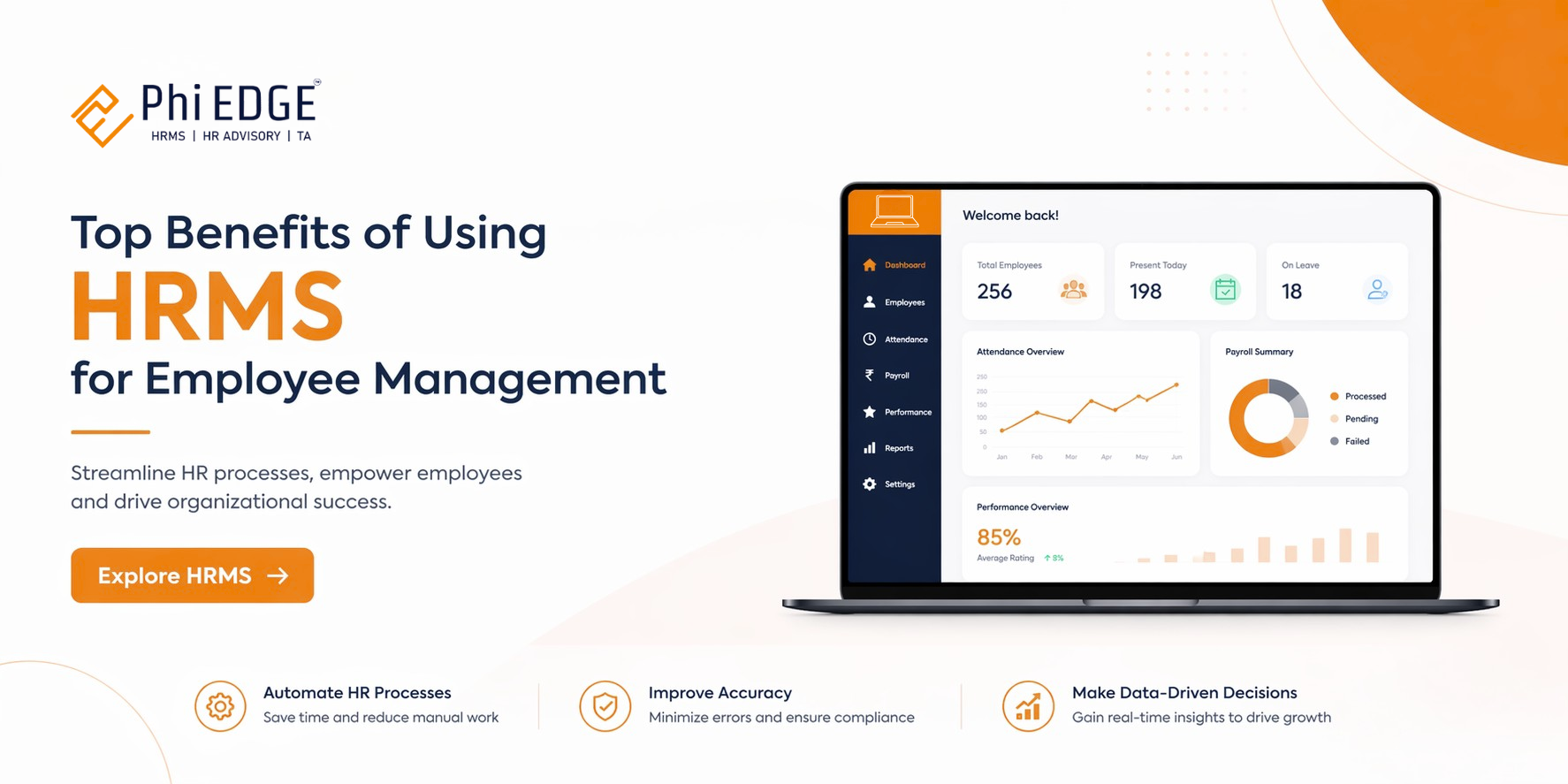
  • Top Benefits of Using HRMS for Employee Management

    Top Benefits of Using HRMS for Employee Management

    Why Your Business Needs an HRMS — and What You’re Missing Without One

    Managing people is one of the most complex parts of running a business. As teams grow, the cracks in spreadsheet-based HR become harder to ignore. Here’s how an HRMS changes the equation—and why more organisations are making the switch.


    If you’ve ever spent an afternoon chasing down an employee’s leave balance or reconciling payroll manually, you already understand the problem. Top Benefits of Using HRMS for Employee Management Traditional HR processes were designed for a different era — one where teams were smaller, compliance was simpler, and “data-driven” meant checking a spreadsheet. Today, that approach simply can’t keep up.


    An HRMS (Human Resource Management System) brings all of your people operations into one connected platform — cutting out the busywork, reducing errors, and giving HR teams the headspace to actually focus on people. Here’s what that looks like in practice.


    1. One place for everything—and everyone

    When employee data is scattered across email threads, shared drives, and outdated spreadsheets, things inevitably fall through the cracks. An HRMS consolidates all records—contracts, roles, performance history, contact details — into a single, always-current source of truth.

    The result? Less time hunting for information, fewer errors caused by stale data, and faster decisions when it matters most.

    HR teams spend up to 40% of their time on manual data management. Centralizing records alone can reclaim a significant portion of that time.

    2. Less admin, more strategy

    Payroll runs, leave approvals, attendance tracking, document generation — these tasks are necessary, but they don’t require human judgment. An HRMS automates the routine so your HR team can do what only humans can do: build culture, resolve conflicts, and develop talent.


    Automation also reduces the kind of small errors that cause big headaches — a miscalculated payslip or a missed compliance deadline can cost far more than the time it takes to fix it.


    3. Decisions backed by real data

    Good HR decisions shouldn’t rely on gut feel alone. An HRMS surfaces real-time analytics — attrition trends, engagement signals, performance patterns — so leaders can act on evidence rather than assumptions.

    Whether you’re planning headcount for the next quarter or trying to understand why a particular team has higher turnover, the data is there. You just need a system that surfaces it clearly.


    4. Performance management that actually works

    Annual reviews, set once and forgotten, rarely drive growth. A well-implemented HRMS replaces that outdated model with continuous goal tracking, structured feedback, and 360° evaluations—so employees know where they stand and what they’re working toward.


    Clarity on expectations isn’t just good for morale. It’s one of the strongest drivers of retention and productivity.


    5 A better experience for employees, not just HR

    Modern employees expect the same ease-of-use from workplace tools that they get in everyday apps. With self-service portals, staff can apply for leave, access their payslips, update personal details, and get answers—without waiting on HR.


    This isn’t just a convenience. Reducing friction in everyday interactions has a measurable impact on how employees feel about where they work.


    6 Staying compliant without the constant anxiety

    Labour laws change. Statutory deadlines come up fast. In businesses without a dedicated compliance team, it’s easy to miss something critical. An HRMS helps you stay on top of it—automating statutory filings, maintaining audit-ready records, and flagging issues before they become liabilities.


    Compliance isn’t just a legal requirement. It’s a foundation of employee trust.

    7 Built to grow with you

    The HR processes that work for a 20-person team break down fast at 200. An HRMS brings structure that scales — consistent workflows, clear approval chains, and processes that don’t require reinventing the wheel every time you hire a new cohort.


    For MSMEs in particular, this kind of infrastructure is often the difference between growing smoothly and growing painfully.


    8 AI-powered capabilities are already here

    The more forward-looking HRMS platforms are now integrating AI — not as a gimmick, but as a genuine capability. Predictive attrition models, smart hiring recommendations, and workforce planning tools are becoming standard features, not premium add-ons.


    Organisations that build on these platforms now will be better positioned when these tools become the baseline expectation.


    Conclusion

    An HRMS isn’t just an HR tool—it’s an investment in how your organisation operates. It frees your people team to focus on people, gives leaders better information to act on, and creates an experience that employees actually appreciate.


    For growing businesses, the question is no longer whether you need one. It’s whether you can afford to keep operating without one.

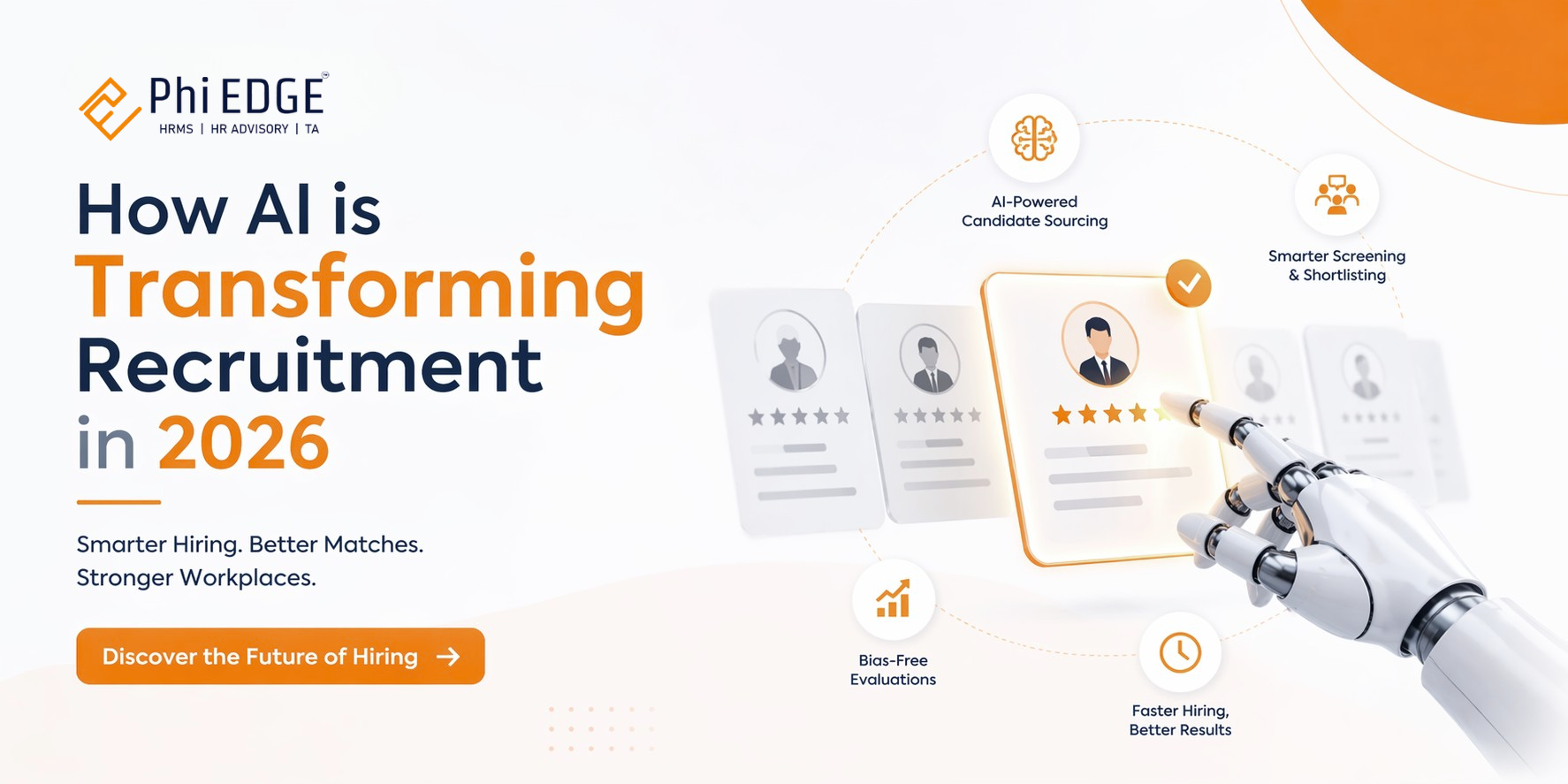
  • How AI is Transforming Recruitment in 2026

    How AI is Transforming Recruitment in 2026

    The Hiring Game Has Changed. Forever.

    Not long ago, recruitment meant stacks of resumes, endless screening calls, gut-feel interviews and weeks of back-and-forth before a single offer letter went out.

    That world is gone.

    In 2026, artificial intelligence isn’t just assisting recruitment—it’s redefining it. How AI is Transforming Recruitment in 2026.  And organisations that haven’t embraced this shift aren’t just moving slowly. They’re falling behind.

    At Phi EDGE, we work closely with HR leaders across industries, and one thing is crystal clear — the way you hire today will determine the talent you retain tomorrow.


    Why Traditional Recruitment Is Broken

    Let’s be honest.

    Traditional hiring was never perfect. It was slow, expensive, biased, and deeply inconsistent. A great candidate could get rejected because a recruiter was having a bad day. An average candidate could sail through because they performed well during the interview.

    The process was built on instinct — not intelligence.

    And the numbers reflect it:


    Average time to hire: 42 days

    Cost per hire: ₹50,000 to ₹200,000+

    Bad hire cost: Up to 30% of annual salary


    These aren’t just HR problems. They’re business problems.


    Enter AI — The Smartest Recruiter in the Room

    AI doesn’t get tired. It doesn’t have unconscious bias. It doesn’t have a favorite candidate. It simply finds the best fit—faster, smarter, and more accurately than any manual process ever could.

    Here’s how AI is transforming every stage of recruitment in 2026:


    1. AI-Powered Resume Screening

    Gone are the days of manually sifting through hundreds of resumes. AI algorithms now scan, score, and rank candidates in seconds—based on skills, experience, cultural fit, and role requirements.

    The result?

    Recruiters spend time on the top 10%, not the bottom 90%.


     2. Predictive Candidate Scoring

    AI doesn’t just match keywords. It predicts performance.

    By analysing patterns from past successful hires, AI scores incoming candidates on their likelihood of success in the role — before a single interview is scheduled.

    This means better hires—fewer regrettable decisions.


    3. AI Interview Assistance

    Structured interviews are now powered by AI—with intelligent question banks, real-time evaluation frameworks and bias detection built in.

    At Phi EDGE HRMS, our AI Interview Assistance tool ensures every candidate is evaluated on the same parameters consistently—removing subjectivity from one of the most critical decisions a business makes.


     4. Automated Candidate Engagement

    AI-powered chatbots now handle:


    Initial candidate queries

    Interview scheduling

    Status updates

    Offer letter communication


    The candidate experience improves dramatically — and your HR team focuses on what truly matters.


     5. Smarter Job Descriptions

    AI analyzes thousands of job postings to help you write bias-free, optimized job descriptions that attract the right talent—not just the most applicants.

    Better job descriptions mean a better candidate pipeline.


    The Phi EDGE Perspective

    At Phi EDGE, we believe AI in recruitment isn’t about replacing human judgment.

    It’s about elevating it.

    The best hiring decisions still need human empathy, cultural understanding, and strategic thinking. AI simply removes the noise — so your recruiters can focus on the signal.

    PhiEDGE AI-Powered HRMS is built with this philosophy at its core:

    ✦ AI Recruitment — Smart screening & candidate ranking

    ✦ AI Interview Assistance — Structured, consistent evaluation

    ✦ AI Competency Mapping — Hire for the future, not just today

    ✦ AI KPI Generator — Set the right goals from Day 1

    ✦ AI-Powered JD Creation — Structure roles with intelligence, align teams, and enable performance from day one.


    What This Means for Your Organisation

    If you’re still running recruitment on spreadsheets, gut feel, and reactive job postings—the gap between you and your competition is widening every single day.

    The organisations winning the talent war in 2026 are those that have made AI a core part of their hiring strategy—not an afterthought.

    The question isn’t whether AI will transform your recruitment.

    It already has. The question is, “Are you ready?”


    Ready to Transform Your Hiring?

    At Phi EDGE, we help organizations build smarter, faster, and fairer recruitment processes—powered by AI and grounded in HR expertise.


    Let’s build a hiring process your competitors can’t match.


    FAQ

    Q1. What is AI recruitment?

    AI recruitment uses artificial intelligence to automate and improve hiring processes like screening, matching, and interviewing.

    Q2. Will AI replace HR recruiters?

    No. AI acts as a co-pilot, handling repetitive tasks so recruiters focus on strategy and decision-making.

    Q3. How does Phi EDGE improve hiring?

    Phi EDGE uses AI to:

    • Filter resumes
    • Match candidates
    • Automate workflows
    • Provide hiring insights

    Q4. Is AI recruitment accurate?

    Yes—when combined with human review, it significantly improves hiring quality and reduces errors.

    Q5. Is AI recruitment expensive

    No. It actually reduces hiring costs by saving time and improving efficiency.

    Q6. Can small businesses use AI hiring tools

    Absolutely. AI tools like Phi EDGE are scalable and perfect for startups, SMEs, and enterprises.

    Q7. How fast can AI reduce hiring time?

    Companies report up to 50% reduction in time-to-hire.

    Consultation with Phi EDGE

    If you want to:
    ✔ Reduce hiring time
    ✔ Get better candidates
    ✔ Automate HR processes
    ✔ Scale your business faster

    Phi EDGE can help you build a powerful AI-driven recruitment system.

    What You Get in Consultation:

    • Hiring funnel audit
    • AI implementation roadmap
    • HR process optimization
    • Cost-saving strategy

    Final Thoughts

    Recruitment in 2026 is not about working harder—it’s about working smarter with AI.

    AI is not the future of hiring. It is the present.

    And platforms like Phi EDGE are helping businesses stay ahead in this competitive talent market.

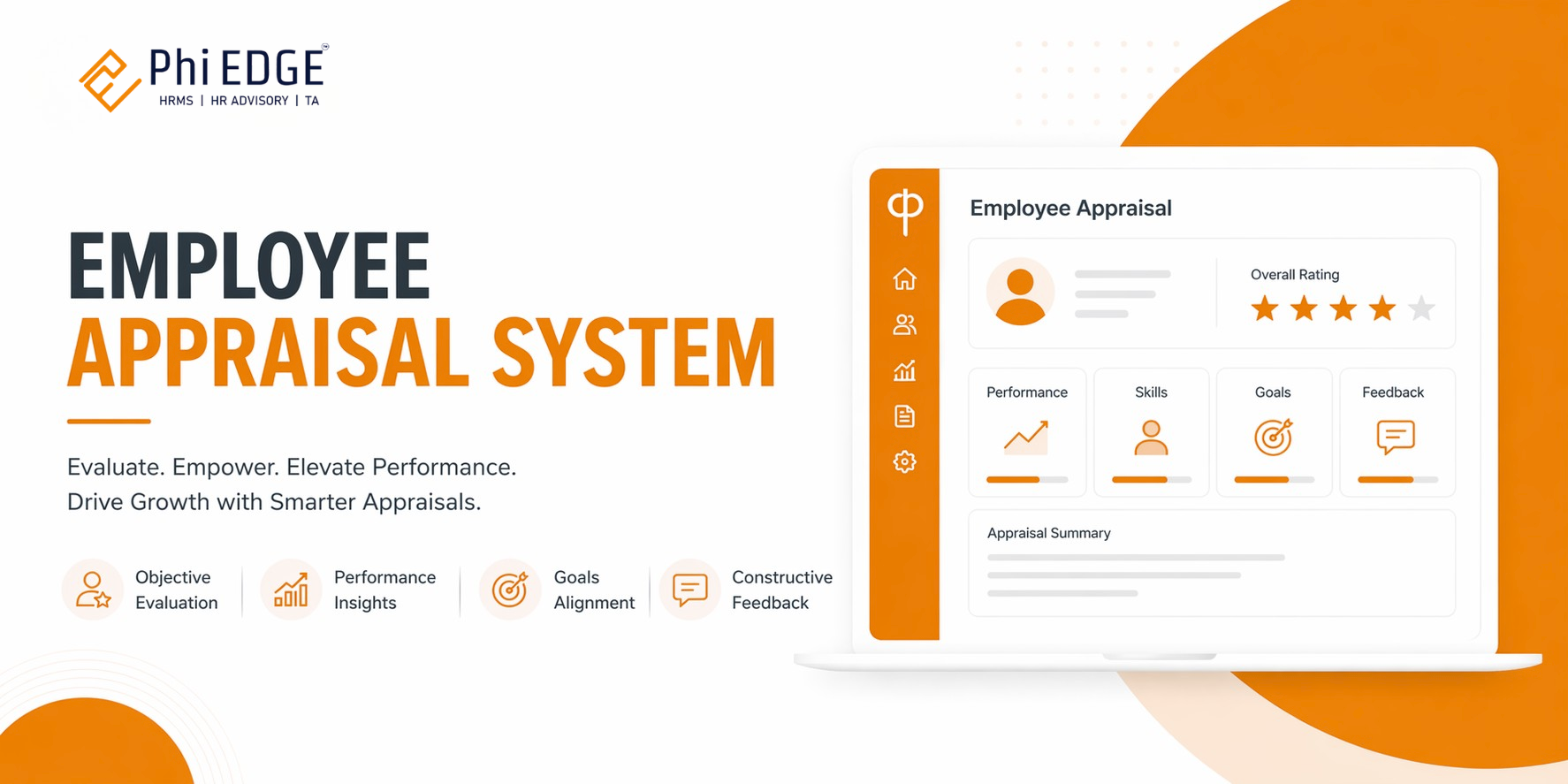
  • Employee Appraisal System with Phi EDGE | Smart HR Tool

    Employee Appraisal System with Phi EDGE | Smart HR Tool

    Managing employee performance is more than just an HR task in today’s fast-paced business world; it’s a key growth strategy. Businesses that regularly assess, mentor, and compensate their staff typically outperform rivals. This is the point at which a Phi EDGE-enabled employee appraisal system becomes revolutionary.

    Businesses can monitor employee performance, pinpoint strengths and shortcomings, and align personal goals with company objectives using an efficient appraisal system. However, conventional appraisal techniques, such as spreadsheets and manual reviews, are frequently ineffective, prejudiced, and time-consuming.

    Businesses may use a clever, data-driven strategy to automate and optimize their appraisal process using Phi EDGE. Implementing a contemporary appraisal system guarantees transparency, employee happiness, and increased productivity regardless of the size of your business—startup, SME, or major organization.


    What is an Employee Appraisal System with Phi EDGE?

    A digital performance management tool called an Employee Appraisal System with Phi EDGE is intended to effectively assess employee performance. It replaces antiquated manual procedures with intelligent analytics, real-time tracking, and automated workflows.

    Important Functions:

    Monitoring performance
    Establishing and tracking goals
    Gathering feedback
    Reports on employee evaluations
    Making decisions based on data

    This system ensures fairness and openness while assisting managers and HR teams in making well-informed decisions.


    Why Your Business Needs an Employee Appraisal System with Phi EDGE

    1. Removes Manual Labour

    Paperwork, Excel sheets, and countless follow-ups are all part of traditional performance appraisals. Phi EDGE saves time and work by automating the entire procedure.

    2. Increases Worker Productivity

    Regular feedback improves employee performance. They remain motivated and focused thanks to a systematic appraisal system.

    3. Guarantees Equitable Assessment

    Workplace morale can be negatively impacted by bias in performance appraisals. Evaluations using Phi EDGE are grounded in actual data and KPIs.

    4. Increases Worker Engagement

    Frequent reviews increase employee engagement by making them feel acknowledged and respected.

    5. Insights Driven by Data

    Access to comprehensive information and analytics enables managers to make more informed HR decisions.


    Key Features of Employee Appraisal System with Phi EDGE

    1. Setting and Monitoring Goals

    Establish team and individual goals that are in line with corporate objectives. Monitor developments in real time.

    2. All-encompassing Feedback

    For a comprehensive performance review, gather input from supervisors, peers, and subordinates.

    3. Workflow Automation
    Automatically schedule appraisals
    Remind people
    Instantaneously generate reports

    4. Dashboard for Performance Analytics

    Learn more about:

    Trends in employee performance
    Levels of productivity
    Performance by department
    5. Modifiable Templates for Appraisals

    Every company is different. You can alter evaluation forms using Phi EDGE to suit your requirements.


    How the Employee Appraisal System with Phi EDGE Works

    1. Establish Performance Objectives

    Establish goals and KPIs for every employee.

    2: Track Development

    Regularly monitor performance using dashboards.

    3: Gather Input

    Get input from a variety of sources.

    4: Assess Performance

    Analyze staff performance using data.

    5: Produce Reports

    Make thorough reports to aid in decision-making.


    Benefits of Using the Employee Appraisal System with Phi EDGE

    For Employers:

    • Saves time and cost
    • Improves workforce efficiency
    • Better decision-making
    • Identifies top performers

    For Employees:

    • Clear performance expectations
    • Regular feedback
    • Career growth opportunities
    • Increased motivation

    Common Challenges in Traditional Appraisal Systems

    Before switching to a modern system like Phi EDGE, businesses often face:

    Lack of Transparency

    Employees don’t understand how they are evaluated.

    Time-Consuming Process

    Manual reviews take weeks or even months.

    Biased Evaluations

    Subjective judgments affect fairness.

    Poor Record Management

    Data is scattered and difficult to analyze.


    How Employee Appraisal System with Phi EDGE Solves These Problems

    ✔ Transparent Process

    Employees can track their performance anytime.

    ✔ Automated System

    Reduces manual work and errors.

    ✔ Objective Evaluation

    Uses KPIs and data instead of opinions.

    ✔ Centralized Data

    All records are stored in one place for easy access.


    Best Practices for Implementing Employee Appraisal System with Phi EDGE

    1. Define Clear Objectives

    Set measurable goals for employees.

    2. Train Your Team

    Ensure managers and employees understand how to use the system.

    3. Encourage Continuous Feedback

    Don’t wait for annual reviews—provide ongoing feedback.

    4. Use Data Effectively

    Analyze reports to improve decision-making.

    5. Align Appraisals with Business Goals

    Ensure employee performance contributes to company growth.


    Employee Appraisal System with Phi EDGE for Different Industries

    1. Startups

    • Manage small teams efficiently
    • Track rapid growth

    2. SMEs

    • Improve HR processes
    • Boost employee productivity

    3. Large Enterprises

    • Handle complex workforce structures
    • Ensure consistent performance evaluation

    Why Choose the Employee Appraisal System with Phi EDGE?

    Choosing the right appraisal system is crucial for business success. Here’s why Phi EDGE stands out:

    • User-friendly interface
    • Scalable for any business size
    • Advanced analytics
    • Customizable features
    • Affordable pricing

    It’s not just a tool—it’s a complete performance management solution.


    Future of Employee Appraisal Systems

    The future of HR lies in automation and AI-driven insights. Systems like Phi EDGE are leading the way by offering:

    • Real-time performance tracking
    • Predictive analytics
    • Continuous feedback loops
    • Integration with other HR tools

    Businesses adopting modern appraisal systems will stay ahead in the competitive market.


    FAQs

    1. What is an Employee Appraisal System with Phi EDGE?

    It is a digital tool that helps businesses evaluate employee performance using data, automation, and real-time tracking.

    2. How does Phi EDGE improve employee performance?

    It provides regular feedback, clear goals, and performance insights, helping employees improve continuously.

    3. Is Phi EDGE suitable for small businesses?

    Yes, it is scalable and works for startups, SMEs, and large enterprises.

    4. Can the system be customized?

    Yes, Phi EDGE allows customization based on your business needs.

    5. How often should appraisals be conducted?

    Quarterly or continuous performance reviews are recommended for better results.


    Conclusion

    For businesses to flourish, an efficient performance management system is now necessary. Organizations may manage employee performance effectively, equitably, and openly with the help of the Employee Appraisal System with Phi EDGE.

    Phi EDGE helps companies maximize the potential of their workforce by streamlining the appraisal process, enhancing communication, and offering useful insights.

    It’s time to improve your system if you want to increase productivity, keep top personnel, and make more informed HR decisions.

  • Performance Appraisal Performance Management | Phi EDGE

    Performance Appraisal Performance Management | Phi EDGE

    Performance Appraisal Performance Management: A Complete Guide for Business Growth

    Introduction

    Effective employee performance management is so crucial in the cutthroat business world of today. Businesses that prioritise systematic assessment and ongoing development frequently outperform their rivals. Performance management and performance appraisal are vital in this situation.

    Annual reviews and ratings are only one aspect of performance management. It is a comprehensive system that assists companies in monitoring worker performance, giving feedback, establishing objectives, and gradually increasing productivity. When properly used, it fosters a culture of development, responsibility, and openness.

    At Phi EDGE, we think that the foundation of any successful company is a robust performance management system. It guarantees that workers are aware of their responsibilities, get frequent feedback, and remain in line with company objectives.

    What is performance appraisal and performance management?

    Organisations use performance management, an organised method, to assess, track, and enhance employee performance.

    Important Elements:

    • Setting goals
    • Performance assessment
    • Constant feedback
    • Development of employees
    • Incentives and acknowledgement

    To put it simply:

    It is a technique that aids companies in regularly assessing and enhancing worker performance.

    Importance of Performance Appraisal Performance Management

    1. Aligns Employee Goals with Business Objectives

    A proper system ensures that employees work towards company goals.

    2. Improves Employee Productivity

    Regular feedback helps employees understand their strengths and areas of improvement.

    3. Enhances Employee Engagement

    Employees feel valued when their performance is tracked and appreciated.

    4. Supports Career Development

    Provides clear growth paths and skill development opportunities.

    5. Enables Better Decision Making

    Managers can make informed decisions regarding promotions, increments, and training.

    Key Elements of Performance Appraisal Performance Management

    Goal Setting

    Clear and measurable goals are the foundation of performance management.

    Performance Evaluation

    Regular assessment of employee performance based on KPIs and targets.

    Continuous Feedback

    Ongoing communication between managers and employees.

    Learning & Development

    Training programmes to improve employee skills.

    Rewards & Recognition

    Acknowledging and rewarding top performers.

    Performance Appraisal vs Performance Management

    Feature Performance Appraisal Performance Management
    Frequency Annual Continuous
    Focus Evaluation Development
    Approach Reactive Proactive
    Goal Rating Growth

    Performance appraisal and performance management combine both evaluation and continuous improvement.

    How Performance Appraisal Performance Management Work

    Set Clear Goals

    Define roles, responsibilities, and expectations.

    Monitor Performance

    Track progress using KPIs and performance metrics.

    Provide Feedback

    Offer regular feedback to guide employees.

    Conduct Appraisals

    Evaluate performance periodically.

    Development Planning

    Create improvement plans based on feedback.

    Reward and Recognize

    Motivate employees through incentives and recognition.

    Benefits of Performance Appraisal Performance Management

    Increased Productivity

    Employees perform better when expectations are clear.

    Better Communication

    Encourages open communication between teams and managers.

    Clear Career Path

    Employees understand their growth opportunities.

    Improved Retention

    Satisfied employees are more likely to stay.

    Data-Driven Decisions

    Helps in making accurate HR decisions.

    Role of Phi EDGE in Performance Management

    At Phi EDGE, we assist companies in putting in place efficient performance management and appraisal systems that are customised to their requirements.

    Our Remedies:

    • Intelligent performance monitoring instruments
    • Personalised KPI configuration
    • Systems for real-time feedback
    • Comprehensive performance reports
    • Planning for employee development

    Our mission is to assist companies in creating motivated, high-performing teams.

    Best Practices for Effective Performance Management

    Set SMART Goals

    Goals should be specific, measurable, achievable, relevant, and time-bound.

    Provide Regular Feedback

    Don’t wait for annual reviews—communicate continuously.

    Use Technology

    Leverage tools to track and analyse performance.

    Focus on Development

    Encourage learning and skill improvement.

    Recognize Achievements

    Celebrate success to boost morale.

    Common Mistakes to Avoid

    • Focusing only on annual reviews
    • Lack of clear goals
    • Ignoring employee feedback
    • Not using data for decisions
    • Overlooking employee development

    Future of Performance Appraisal Performance Management

    The future of performance management is evolving with technology.

    Trends to Watch:

    • AI-driven performance analytics
    • Continuous feedback systems
    • Real-time performance tracking
    • Personalized employee development plans

    Businesses adopting these trends will stay ahead in the competition.

    FAQ 

    1. What is performance appraisal/performance management?

    It is a method that uses organised procedures to assist companies in assessing and enhancing employee performance.

    2. Why is performance management important?

    It enhances overall corporate growth, employee engagement, and productivity.

    3. How often should performance appraisals be conducted?

    While traditional appraisals are annual, modern systems use continuous feedback.

    4. What are the benefits of performance appraisal?

    • Better employee performance
    • Clear career growth
    • Improved communication

    5. Can small businesses use performance management systems?

    Yes, even small businesses can benefit from structured performance tracking.

    Conclusion

    Performance appraisal and performance management are essential for building a successful and growth-oriented organization. It helps businesses align employee goals, improve productivity, and create a culture of continuous improvement.