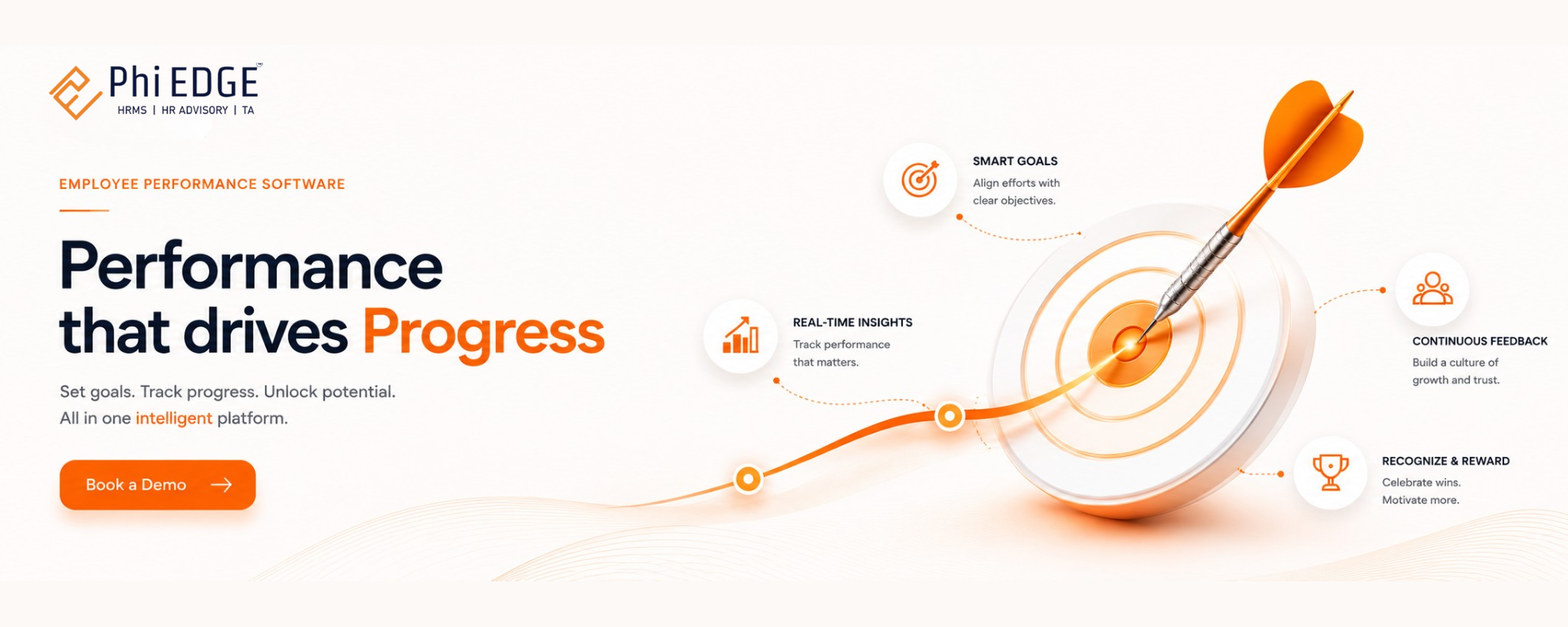
Employee performance is one of the most important factors determining an organization’s success. No matter how strong a company’s products, services, or technology may be, sustainable growth depends on how effectively employees perform and contribute toward organizational goals.
Traditional performance reviews conducted once or twice a year are no longer sufficient. Modern organizations require continuous performance monitoring, goal alignment, real-time feedback, and data-driven workforce decisions.
This is where employee performance software plays a critical role.
In 2026, companies are increasingly adopting advanced HRMS platforms like Phi EDGE HRMS to automate performance management, enhance employee engagement, and create high-performing teams.
This comprehensive guide explains everything businesses need to know about employee performance software, including its benefits, features, comparisons, implementation strategies, and how Phi EDGE HRMS helps organizations build a performance-driven culture.
What is Employee Performance Software?
Employee Performance Software is a digital platform that helps organizations track, evaluate, manage, and improve employee performance throughout the employee lifecycle.
The software provides a structured framework for:
- Goal setting
- KPI tracking
- Performance reviews
- Continuous feedback
- Employee development
- Manager assessments
- Performance analytics
- Succession planning
Instead of relying on spreadsheets and manual evaluations, businesses can manage performance processes through a centralized platform.
The objective is simple:
Improve employee productivity while helping individuals achieve professional growth.
Why Performance Management Matters in 2026
The workplace has undergone significant transformation.
Organizations now face challenges such as:
- Hybrid work environments
- Remote teams
- Skill shortages
- Increased competition for talent
- Rising employee expectations
Without a structured performance management system, companies often experience:
- Poor productivity
- Lack of accountability
- Employee disengagement
- Higher turnover
- Inconsistent evaluations
Modern employee performance software helps businesses overcome these challenges through transparency, automation, and measurable performance metrics.
Key Components of Employee Performance Software
Goal Management
Employees perform better when expectations are clearly defined.
Performance software enables organizations to:
- Set individual goals
- Align goals with company objectives
- Track progress continuously
- Monitor achievement rates
When employees understand how their work contributes to business success, motivation naturally increases.
Example
A sales executive may have quarterly revenue targets while a marketing manager may focus on lead generation metrics.
The software tracks both objectives and measures progress automatically.
Continuous Feedback
Traditional annual reviews often fail because feedback comes too late.
Modern performance platforms encourage:
- Real-time feedback
- Manager check-ins
- Peer recognition
- Continuous coaching
Employees can address challenges immediately rather than waiting months for evaluation.
KPI and Performance Tracking
Organisations need measurable performance indicators.
Employee performance software helps monitor:
- Productivity metrics
- Sales targets
- Project completion rates
- Customer satisfaction scores
- Attendance trends
Managers gain clear visibility into employee contributions.
Performance Reviews and Appraisals
Performance reviews become more objective when supported by data.
The software enables:
- Self-assessments
- Manager evaluations
- Peer reviews
- 360-degree feedback
This creates a balanced evaluation process while reducing bias.
Learning and Development Integration
Performance management is not only about measuring results.
It is also about helping employees improve.
Modern software identifies:
- Skill gaps
- Training requirements
- Career development opportunities
- Leadership potential
Organizations can create personalized development plans for employees.
Top Benefits of Employee Performance Software
Increased Productivity
Employees become more focused when goals are clearly defined and progress is measurable.
Organizations often experience significant productivity improvements after implementing performance management software.
Better Employee Engagement
Employees who receive regular feedback feel more connected to their work.
Engaged employees are:
- More motivated
- More productive
- Less likely to leave
Performance software supports continuous communication between managers and employees.
Improved Retention Rates
One of the biggest reasons employees leave organizations is a lack of growth opportunities.
Performance platforms help employees:
- Understand career paths
- Receive development support
- Track achievements
This strengthens retention efforts.
Data-Driven Decision Making
Managers no longer need to rely on assumptions.
Performance software provides actionable insights into:
- High performers
- Skill gaps
- Promotion readiness
- Workforce productivity
These insights improve talent management decisions.
Fair and Transparent Evaluations
Manual reviews often suffer from inconsistency and bias.
Employee Performance Software creates standardized evaluation processes based on measurable data.
This improves employee trust and organizational fairness.
Real-World Example of Employee Performance Software Success
Consider a manufacturing company employing 1,500 workers across multiple locations.
Before Implementation
The company faced:
- Delayed appraisals
- Lack of performance visibility
- Employee dissatisfaction
- Manual review processes
- Limited career planning
After Implementing Performance Software
The organization achieved:
- Faster review cycles
- Improved employee engagement
- Better manager accountability
- Enhanced workforce productivity
- Data-backed promotion decisions
Leadership gained complete visibility into employee performance across departments.
Employee Performance Software vs Traditional Performance Reviews
Traditional Reviews
Characteristics include:
- Annual evaluations
- Limited feedback
- Manual documentation
- Delayed performance discussions
Challenges
- Feedback becomes outdated
- Employees lose motivation
- Performance issues remain unresolved
Modern Employee Performance Software
Characteristics include:
- Continuous feedback
- Real-time tracking
- Automated workflows
- Goal alignment
- Advanced reporting
Advantages
- Improved productivity
- Better employee development
- Higher engagement
- Stronger business outcomes
The shift from annual reviews to continuous performance management is one of the most important HR trends of 2026.
Essential Features to Look for in Employee Performance Software
Goal and OKR Management
The software should support:
- Goal setting
- Objective tracking
- Department alignment
- Progress dashboards
360-Degree Feedback
Comprehensive feedback improves evaluation quality.
The system should allow:
- Self-assessments
- Peer reviews
- Manager evaluations
- Leadership assessments
Performance Analytics
Organizations need meaningful insights.
Look for dashboards that display:
- Productivity trends
- Employee ratings
- Team performance
- Development opportunities
Automated Review Cycles
Automation reduces HR workload while ensuring timely evaluations.
Employee Development Tools
The best platforms combine performance tracking with employee growth initiatives.
This helps businesses create future leaders.
How to Choose the Right Employee Performance Software
Selecting the right solution requires careful consideration.
Business Size and Scalability
Choose software that can grow with your organization.
A system that supports 50 employees today should support 5,000 tomorrow.
Ease of Use
Complicated systems reduce adoption rates.
Employees and managers should find the platform intuitive and user-friendly.
Integration Capabilities
The software should integrate with:
- HRMS platforms
- Payroll systems
- Attendance management
- Learning management systems
Customization Options
Every organization has unique performance management requirements.
The software should support:
- Custom KPIs
- Review templates
- Department-specific workflows
Reporting and Analytics
Advanced reporting capabilities are essential for strategic workforce planning.
Why Phi EDGE HRMS is the Ideal Employee Performance Software in 2026
Organizations increasingly prefer integrated HRMS platforms rather than standalone performance tools.
Phi EDGE HRMS offers a comprehensive performance management ecosystem designed for modern businesses.
End-to-End Performance Management
Phi EDGE HRMS supports:
Goal Setting
Employees and managers can establish measurable objectives aligned with organizational goals.
Continuous Feedback
Real-time communication enables continuous improvement and stronger manager-employee relationships.
Performance Reviews
Structured appraisal workflows simplify evaluation processes.
KPI Tracking
Organizations gain visibility into employee productivity and goal achievement.
Workforce Analytics
Advanced dashboards provide meaningful performance insights.
Automation That Saves Time
Manual performance management consumes significant HR resources.
Phi EDGE automates:
- Review scheduling
- Notifications
- Feedback collection
- Approval workflows
- Performance reporting
This allows HR teams to focus on strategic initiatives.
Employee-Centric Experience
Employees can:
- Track goals
- View performance history
- Access feedback
- Monitor career progression
This creates greater transparency and engagement.
Advanced Reporting and Decision Support
Phi EDGE HRMS enables leaders to identify:
- High performers
- Future leaders
- Skill gaps
- Training requirements
- Retention risks
These insights support long-term workforce planning.
Common Mistakes Organizations Make in Performance Management
Conducting Reviews Only Once a Year
Performance conversations should be continuous rather than annual.
Ignoring Employee Development
Measuring performance without supporting growth creates frustration.
Lack of Goal Alignment
Employees perform better when organizational expectations are clearly communicated.
Relying on Subjective Evaluations
Data-backed performance management improves fairness and accuracy.
Using Multiple Disconnected Systems
Fragmented tools create reporting inconsistencies and administrative complexity.
Integrated platforms like Phi EDGE HRMS solve these challenges.
Future Trends in Employee Performance Software
Artificial Intelligence and Predictive Analytics
AI will help organizations identify performance risks and development opportunities earlier.
Personalized Employee Development
Future systems will recommend customized learning paths based on employee performance data.
Continuous Performance Management
Annual reviews will continue disappearing in favor of ongoing coaching and feedback.
Skills-Based Workforce Planning
Organizations will increasingly evaluate employees based on skills, capabilities, and future potential.
Conclusion
Employee Performance Software has evolved from a simple appraisal tool into a strategic workforce management solution.
Organizations that invest in modern performance management systems experience:
- Higher productivity
- Improved employee engagement
- Better retention
- Data-driven decision making
- Stronger organizational growth
For businesses looking to build a high-performance culture in 2026, Phi EDGE HRMS provides the technology, automation, analytics, and employee-centric capabilities needed to transform performance management into a competitive advantage.
By adopting a comprehensive solution like Phi EDGE HRMS, organizations can empower employees, strengthen leadership decisions, and create a workforce prepared for long-term success.