The Difference Between HRIS, HRMS, and HCM.
Running a business needs more than just hiring people; it’s about managing their information, processes and strategy effectively.
Now imagine an organisation that does not keep attendance, doesn’t maintain employee records, and does not plan for future need for growth and workforce . Sounds like chaos, right?
That’s what HR looks like without proper structure.
Thankfully, today’s HR structure comes in three stages:
HRIS, HRMS, and HCM.
They almost sound almost similar, but they are not, each one of them represents a different stage in how an organization or business understands its people.
Each of them represents a new level of maturity from storing data to shaping the future of an organisation.
Let’s walk through this Evolution of HR together.
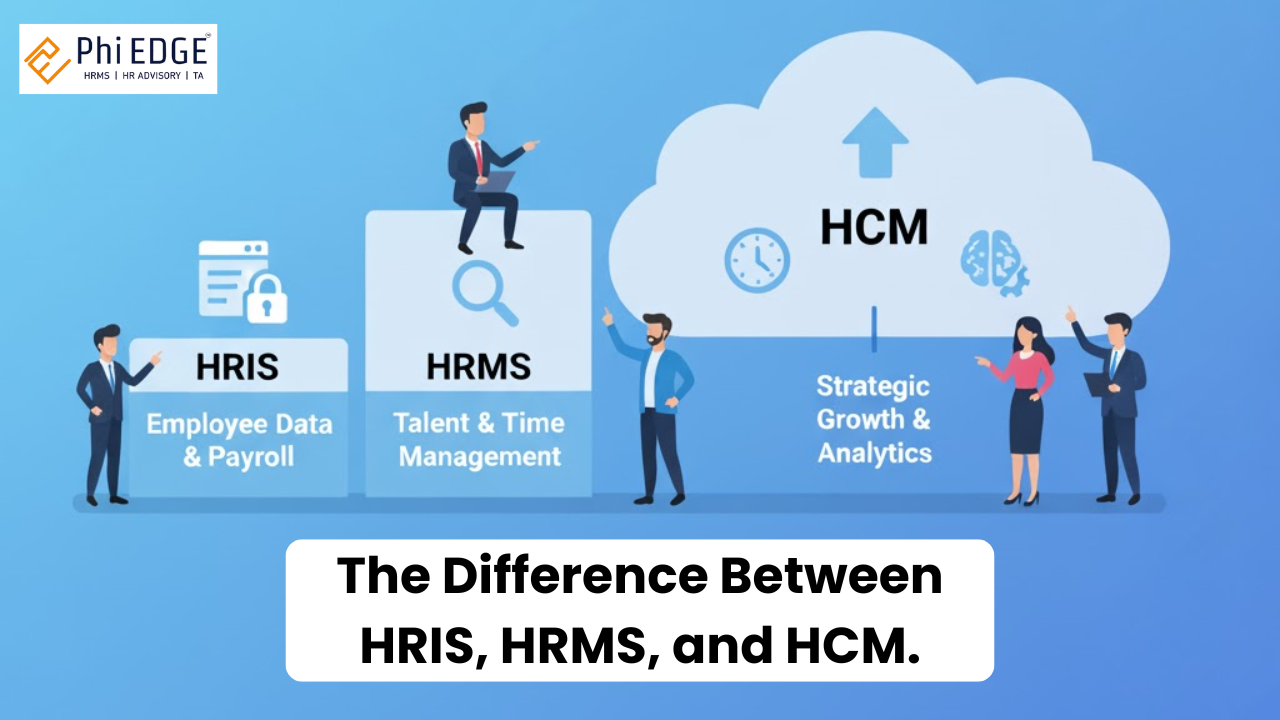
1. HRIS: Managing Employee Data and Information
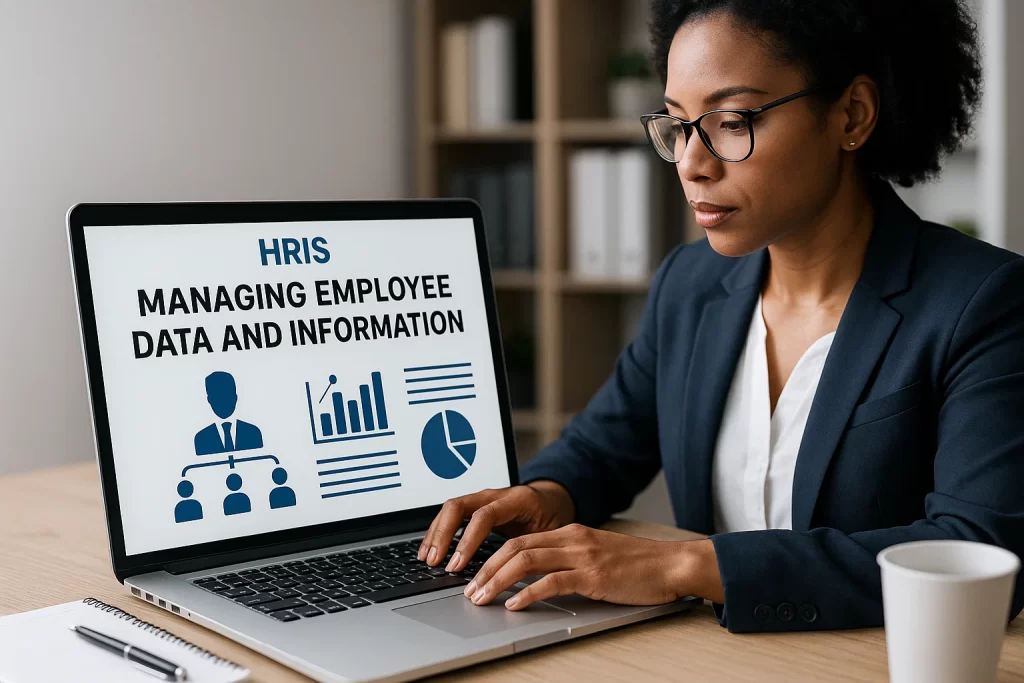
Human Resource Information System is basically your company’s attendance book, but online and automatic. Every company starts by placing a digital structure in place like maintaining accurate employee information, their attendance, and their salary payroll records.
Without HRIS, HR departments have to maintain endless spreadsheets, employee details and the risk of human errors grows every day. But with HRIS, every piece of data from attendance to payroll is under one digital system which is automated and easily accessible giving HR teams the freedom to focus on strategy instead of paperwork.
HRIS doesn’t make people-related decisions, it is only to provide information it simply records people and answers questions like:
● Who’s working here?
● What’s their role?
● How much leave have they taken?
● What’s their salary structure?
It’s the first step toward building an organized structured HR ecosystem, one that replaces confusion with clarity
2.HRMS: The System that Connects People with Processes
Once data is collected, the next step is running the actual organization. That’s where HRMS (Human Resource Management System) comes in.
HRMS uses data from HRIS to coordinate workflows from assigning tasks to monitoring employee performance and managing new job recruitments. Managers can assign roles, schedule shifts, track KPIs, and manage employees everything from one digital
dashboard.
If HRIS here is to tell you what is happening through data, HRMS shows you how things are going to get done i.e. managing the actions that keep the organization running smoothly.
3.HCM:Converting Strategy into Future Growth
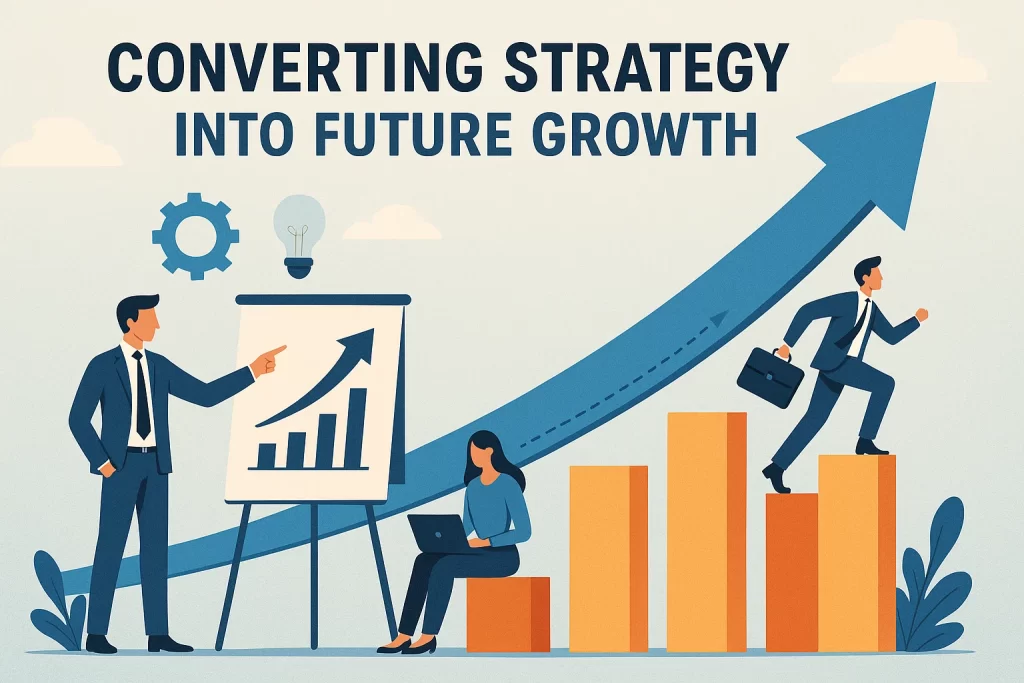
A truly successful organisation doesn’t stop at managing daily functions.It thinks ahead and plans for growth introducing better training, new programs, and long-term success for employees. That’s what HCM (Human Capital Management) does for your company. It’s the kind of place where strategy, planning, and people come together. Where data from HRIS and HRMS is used to make decisions about promotions, training,success, and culture.
Where HRIS and HRMS focus on what’s happening now, HCM focuses on what’s next.
It’s where strategy, leadership, and culture meet. The system doesn’t just record or manage it helps develop the employees of an organisation. HCM uses all the data collected by HRIS and HRMS to make smarter, long-term decisions. It focuses on talent acquisition, employee engagement, leadership development, and future success planning.
In an organization, HCM helps identify future managers, create growth opportunities, and build a culture that inspires people to perform really well.
It answers crucial questions like:
● Who are our top performers, and how do we hold onto them?
● What skills our company needs in the coming five years?
● How do we create a workplace where people are not just working but growing?
How the Three Systems Work Together
Each of these Stages are Built upon the last one without HRIS we cannot perform HRMS and without HRMS we cannot run HCM While each one of these systems have a unique purpose, their real power lies in when they are used together. When HRIS, HRMS, and HCM are connected, your Organization runs like a coordinated school where each and every department knows its role and shares information smoothly.
For example:
When a new employee joins, their details are stored in HRIS. After that HRMS uses that data to schedule onboarding tasks, assign mentors, and track the early performance of the new employee.
Then HCM steps in to identify learning paths, career development opportunities, and leadership potential of that employee.
This will create a smooth flow of information from info collection to performance tracking to making strategic decisions. No manual transfers or human errors , no missing details, no confusion. Everything runs like a school where teachers, students, and the principal are all aligned toward one goal that is growth.
When these three systems are unified:
● HRIS makes sure that data is accurate.
● HRMS ensures that everything runs on a schedule.
● HCM makes Future planning for the organization for its growth.
Together, they transform HR from just a function of organization into the heartbeat of the organization.
How the HR Technology has Evolved over the Years.
The journey of going from HRIS to HCM is also the story of how this HR system has progressed over the time.
● In the past, HR’s role was fully administrative like maintaining records, calculating payroll, and ensuring compliance. That was the HRIS era.
● Then came automation. HRMS emerged in this , helping organizations move faster and manage everyday functions easily such as scheduling, recruiting, and performance
tracking. All of these functions were done digitally.
● Now, the focus is on people. HCM represents a shift from common workings of above like managing employees to nurturing talent. It brings in analytics, employee engagement tools, Use of AI to have valuable insights on things and strategic planning for Future Growth.
This transition shows how organisations themselves have changed from process driven to more people-driven. Today, the businesses that invest in modern HR systems are not just keeping records, they are creating environments where people can learn and grow.
The Future of HR: Connecting People and Integrating the HR system in an Intelligent way.
The Future stage of HR is not about having to choose between HRIS, HRMS, or HCM. It’s about smartly combining all three andusing them in sync basically Intelligence and Integration
Current modern day platforms now combine all three under one system also using in depth and predictive analysis, cloud based systems and Artificial intelligence. These platforms together don’t just store and manage data they actually learn from it predicting risks, suggesting possible promotions, and identifying skill gaps.
This is where HR becomes a business partner helping managers make informed decisions while keeping employees engaged and growing their future.
The future of HR does not just function on digital advancements; it actually has human imprint at its core. Technology sure will handle the repetitive everyday work, but empathy, leadership, and culture will continue to define success from within the organisation.
Conclusion: Making Your Organisation’s Own People First HR System
Every successful organization needs to have its own HR system, A successful organisation is built on empowered people. Using HRIS, HRMS, and HCM helps create such system.
HRIS is the first step by laying the foundation with structure and accuracy.
HRMS brings order and efficiency to everyday working of an organisation.
HCM drives strategy, leadership, and future growth.
Together, they make a complete journey from information to inspiration and growth.
So, if your organisation is managing HR manually, it’s time for a much needed upgrade where data makes crucial decisions, and employees evolve into learners, managers, and future builders. Because in the end, great companies should not be defined by system alone, but by through the people who grow, innovate, and succeed within them.