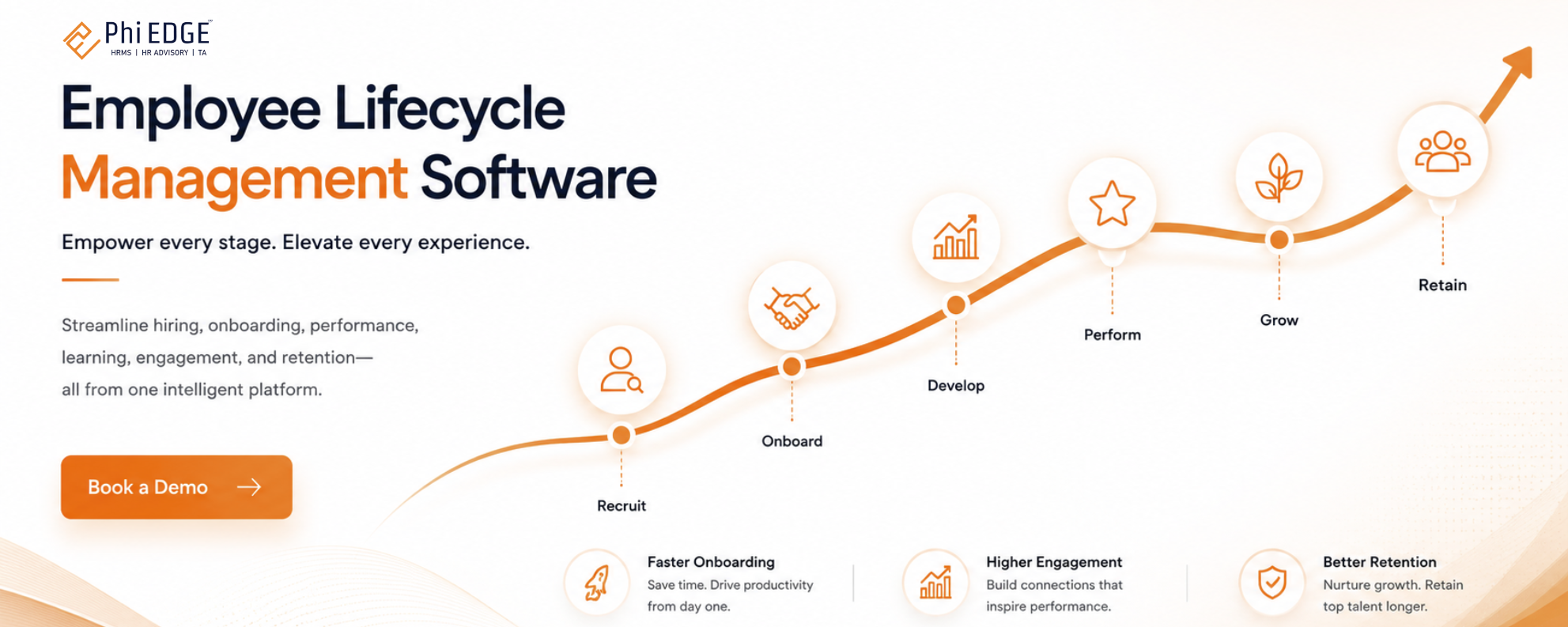
Employee management is no longer limited to attendance tracking and payroll processing. Organizations today need a comprehensive approach to manage every stage of an employee’s journey—from recruitment and onboarding to performance management, engagement, growth, and offboarding.
This is where lifecycle management software becomes essential.
Companies that effectively manage employee lifecycles experience higher productivity, improved retention rates, better compliance, and stronger workforce engagement. In 2026, businesses are increasingly adopting integrated HRMS platforms like Phi EDGE HRMS to automate and optimize employee lifecycle management.
In this guide, we will explore lifecycle management software, its benefits, real-world examples, comparisons, buying considerations, and how Phi EDGE HRMS helps organizations build a future-ready workforce.
What is Lifecycle Management Software?
Lifecycle Management Software is a digital solution that manages and automates every phase of an employee’s journey within an organization.
The employee lifecycle typically includes:
- Recruitment
- Hiring
- Onboarding
- Training and Development
- Performance Management
- Employee Engagement
- Career Growth
- Retention
- Exit Management
Instead of using multiple disconnected systems, organizations can centralize employee data, workflows, approvals, documentation, and analytics through a unified HRMS platform.
The goal is simple: create a seamless experience for both employees and HR teams.
Why Employee Lifecycle Management Matters in 2026
The workplace has evolved significantly.
Today’s workforce expects:
- Faster onboarding experiences
- Self-service HR portals
- Digital documentation
- Transparent performance reviews
- Continuous learning opportunities
- Flexible work arrangements
Without proper lifecycle management, businesses often face:
- High employee turnover
- Poor onboarding experiences
- Compliance risks
- Low engagement levels
- Manual HR inefficiencies
- Increased operational costs
Modern lifecycle management software addresses these challenges through automation, analytics, and employee-centric workflows.
Key Stages of Employee Lifecycle Management
1. Recruitment and Talent Acquisition
The employee journey starts before the first day at work.
Lifecycle Management Software helps HR teams:
- Publish job openings
- Manage applications
- Track candidates
- Schedule interviews
- Evaluate talent efficiently
A streamlined recruitment process helps businesses attract top candidates while reducing hiring costs and time-to-fill positions.
Example
A growing IT company receives 500 applications monthly. Instead of manually reviewing resumes, HR teams can use automated screening and applicant tracking features to shortlist qualified candidates quickly.
2. Employee Onboarding
First impressions matter.
A structured onboarding process helps new employees become productive faster.
Key onboarding features include:
- Digital document collection
- Policy acknowledgments
- Employee information management
- Training assignments
- Welcome workflows
Organizations with effective onboarding programs often see improved retention and employee satisfaction.
3. Learning and Development
Continuous skill development is essential in today’s competitive environment.
Lifecycle management platforms support:
- Employee training programs
- Skill assessments
- Certification tracking
- Learning management integration
- Career development planning
Businesses can identify skill gaps and create personalized growth plans for employees.
4. Performance Management
Performance management is no longer an annual activity.
Modern organizations require:
- Goal setting
- KPI tracking
- Continuous feedback
- Performance reviews
- Development discussions
Lifecycle software enables managers to monitor employee progress and align performance with organizational objectives.
5. Employee Engagement
Employee engagement directly impacts productivity and retention.
Software solutions help organizations:
- Conduct surveys
- Gather feedback
- Measure employee sentiment
- Track engagement metrics
- Recognize achievements
Engaged employees are more likely to stay committed and contribute to business success.
6. Career Growth and Succession Planning
Organizations that invest in employee growth build stronger teams.
Lifecycle Management Software supports:
- Internal mobility
- Leadership development
- Career path planning
- Succession management
This helps companies retain high-performing employees while preparing future leaders.
7. Exit and Offboarding Management
Employee departures should be handled professionally and systematically.
Offboarding workflows may include:
- Exit interviews
- Asset recovery
- Knowledge transfer
- Final settlements
- Compliance documentation
A structured exit process protects organizational knowledge and maintains positive employer branding.
Top Benefits of Lifecycle Management Software
Improved Employee Experience
Employees enjoy smoother interactions throughout their journey.
From onboarding to promotions, every process becomes faster and more transparent.
Increased Productivity
Automation eliminates repetitive HR tasks, allowing teams to focus on strategic initiatives.
Examples include:
- Automated approvals
- Leave management
- Attendance tracking
- Payroll integration
Better Employee Retention
Organizations can proactively identify engagement issues and address them before employees decide to leave.
Enhanced Compliance
Managing employee records manually increases compliance risks.
Lifecycle software helps maintain:
- Audit trails
- Policy compliance
- Documentation accuracy
- Regulatory reporting
Data-Driven Decision Making
Advanced analytics provide insights into:
- Attrition rates
- Employee performance
- Recruitment efficiency
- Workforce planning
Real-World Example of Lifecycle Management Success
Consider a manufacturing company with 1,000 employees operating across multiple locations.
Before Implementation
The company faced:
- Delayed onboarding
- Attendance discrepancies
- High turnover
- Manual payroll processing
- Inconsistent performance reviews
After Implementing Lifecycle Management Software
Results included:
- Faster onboarding processes
- Reduced administrative workload
- Improved attendance accuracy
- Better employee engagement
- Enhanced reporting capabilities
Management gained complete visibility into workforce performance and employee satisfaction.
Lifecycle Management Software vs Traditional HR Systems
Traditional HR Systems
Typically focus on:
- Employee records
- Payroll
- Attendance
Limitations include:
- Siloed data
- Limited automation
- Poor employee experience
- Minimal analytics
Modern Lifecycle Management Software
Provides:
- End-to-end employee management
- Workflow automation
- Self-service capabilities
- Advanced reporting
- Employee engagement tools
- Performance management
Modern solutions create a connected employee experience rather than isolated HR functions.
How to Choose the Right Lifecycle Management Software
Selecting the right solution requires careful evaluation.
Scalability
Choose software that can grow with your organization.
A system suitable for 50 employees should also support future expansion.
User Experience
Employees and HR teams should find the platform intuitive and easy to use.
Complex systems often result in low adoption rates.
Automation Capabilities
Look for automation in:
- Recruitment workflows
- Leave approvals
- Performance reviews
- Employee onboarding
Integration Support
The software should integrate with:
- Payroll systems
- Attendance devices
- ERP platforms
- Learning systems
Analytics and Reporting
Comprehensive reporting helps organizations make informed decisions.
Look for customizable dashboards and workforce analytics.
Why Phi EDGE HRMS Stands Out in 2026
Many organizations struggle with fragmented HR processes spread across multiple tools.
Phi EDGE HRMS offers a unified platform designed to manage the complete employee lifecycle efficiently.
End-to-End Employee Lifecycle Management
Phi EDGE HRMS supports:
- Recruitment management
- Digital onboarding
- Attendance tracking
- Leave management
- Performance monitoring
- Employee engagement
- Exit management
Everything is managed from a centralized platform.
Smart Automation
Manual HR processes consume valuable time.
Phi EDGE automates:
- Employee workflows
- Approval chains
- Notifications
- Documentation processes
This reduces administrative workload significantly.
Advanced Workforce Analytics
Organizations gain actionable insights through:
- Real-time dashboards
- Attrition analysis
- Productivity tracking
- Performance reporting
These insights support strategic workforce planning.
Employee Self-Service Portal
Employees can independently:
- Apply for leave
- Access documents
- Update information
- View attendance records
This improves transparency while reducing HR queries.
Compliance-Focused Architecture
Phi EDGE HRMS helps businesses maintain compliance through:
- Secure employee records
- Audit-ready documentation
- Policy management
- Process standardization
Scalable for Growing Businesses
Whether you’re a startup, SME, manufacturing company, educational institution, or enterprise organization, Phi EDGE HRMS can adapt to evolving workforce requirements.
Common Mistakes Businesses Make When Managing Employee Lifecycles
Ignoring Employee Experience
A poor employee experience often leads to disengagement and turnover.
Relying on Manual Processes
Manual tracking creates errors and inefficiencies.
Lack of Performance Visibility
Without proper performance data, managers struggle to support employee growth.
Poor Offboarding Practices
Unstructured exits can create compliance and operational risks.
Using Multiple Disconnected Systems
Fragmented tools create data inconsistencies and reporting challenges.
Lifecycle Management Software eliminates these issues through a unified approach.
Future Trends in Lifecycle Management Software
The future of HR technology is driven by:
AI-Powered Workforce Analytics
Artificial intelligence will help predict attrition and identify engagement risks.
Personalized Employee Experiences
Organizations will deliver customized learning and career development paths.
Predictive Talent Management
Advanced analytics will support workforce planning and succession management.
Hybrid Workforce Support
Lifecycle platforms will continue evolving to support remote and distributed teams.
Businesses adopting these innovations will gain a competitive advantage in talent management.
Conclusion
Employee lifecycle management is no longer optional for modern organizations. As businesses compete for talent and operational efficiency, managing every stage of the employee journey becomes a strategic priority.
Lifecycle Management Software helps organizations improve employee experiences, enhance productivity, ensure compliance, and make smarter workforce decisions.
For businesses seeking a comprehensive and future-ready HRMS solution, Phi EDGE HRMS delivers end-to-end lifecycle management capabilities, automation, analytics, and scalability needed to thrive in 2026 and beyond.
By investing in the right lifecycle management platform today, organizations can build a stronger, more engaged, and more productive workforce for the future.
FAQ
Q. What is lifecycle management software?
Lifecycle management software helps organizations manage employee journeys from recruitment to exit through a single platform.
- Why is employee lifecycle management important?
It improves employee experience, retention, compliance, and overall workforce productivity. - How does Phi EDGE HRMS support lifecycle management?
Phi EDGE HRMS provides recruitment, onboarding, attendance, payroll, performance, engagement, analytics, and offboarding tools in one platform. - Who should use lifecycle management software?
Startups, SMEs, enterprises, manufacturing companies, educational institutions, and service organizations can benefit from lifecycle management solutions. - What are the key benefits of lifecycle management software?
Automation, better employee experience, workforce analytics, compliance management, and improved retention rates.