The Tech-Infused Evolution of Performance Management: How AI Is Redefining Employee Success
Performance management is no longer limited to annual appraisal forms, manager ratings, and year-end discussions. Modern organisations operate in a faster, data-driven environment where business priorities, employee responsibilities, and skill requirements can change within months.
This shift has created a new era of tech-infused performance management—a connected approach that combines artificial intelligence (AI), real-time analytics, automated KPI tracking, continuous feedback, and workforce intelligence.
For HR leaders, the question is no longer, “How did an employee perform last year?” The more valuable question is, “What is affecting employee performance today, and what action can improve future outcomes?”
This is where modern performance management software and AI-powered HRMS platforms are transforming the employee performance lifecycle.
What Is Tech-Infused Performance Management?
Tech-infused performance management is the use of HR technology, AI, automation, and workforce analytics to continuously set goals, track employee progress, collect feedback, and support data-driven performance decisions.
Unlike traditional appraisal systems, modern performance management creates an ongoing cycle:
Goal Setting → KPI Tracking → Continuous Feedback → Performance Analysis → Development Planning → Goal Realignment
The objective is not simply to give employees a performance score. It is to create a transparent framework that connects individual contribution with departmental and organisational goals.
Platforms such as Phi EDGE bring performance management into a connected HR ecosystem where employee goals, KPIs, feedback, competency data, and workforce insights can support better HR decisions.
Internal Link Suggestion: Performance Management System
Anchor Text: performance management system
Why Is Traditional Performance Management Becoming Outdated?
Traditional performance appraisals usually depend heavily on annual or half-yearly reviews. The problem is simple: businesses do not operate once a year.
Projects change. Customer expectations evolve. Teams adopt new technology. Employees take on additional responsibilities.
An annual appraisal may therefore evaluate an employee using information that is already several months old.
Traditional systems may also face challenges such as:
- Recency bias in manager ratings
- Unclear or generic KPIs
- Delayed employee feedback
- Disconnected performance data
- Manual appraisal documentation
- Limited visibility into employee development
- Difficulty connecting performance with business outcomes
Technology helps organisations move from performance documentation to performance intelligence.
How Is AI Transforming Performance Management?
AI is changing performance management by helping HR teams and managers process performance information faster and identify patterns that may be difficult to detect manually.
However, AI should not become an automatic judge of employees.
Its strongest role is to support better human decisions.
AI-Powered KPI Generation
Creating relevant KPIs for hundreds of employees can be time-consuming. Generic performance metrics can also create unfair evaluations because every role contributes to the organisation differently.
An AI KPI Generator can analyse job roles, responsibilities, and business objectives to suggest measurable performance indicators.
For example, a sales employee may be evaluated using:
- Revenue achievement
- Lead conversion rate
- Customer retention
- Sales pipeline movement
A project manager may require completely different KPIs:
- Project completion timelines
- Budget adherence
- Resource utilisation
- Quality benchmarks
Role-specific KPIs improve performance clarity and help employees understand exactly how success is measured.
Internal Link Suggestion:
Anchor Text: AI KPI Generator Software
URL: /blog/ai-hrms-software-in-india-smart-workforce-management-with-phi-edge/
What Is Continuous Performance Management?
Continuous performance management is an ongoing process of goal tracking, feedback, coaching, and employee development instead of relying only on annual appraisals.
Imagine an employee receives feedback about a performance problem eleven months after it first appeared.
The feedback may be accurate, but the opportunity for early improvement has already been lost.
A continuous performance management system enables managers to conduct regular check-ins, monitor KPI progress, document feedback, and adjust goals when business priorities change.
This creates a more useful question:
“How can we improve performance now?”
rather than:
“Why was performance low last year?”
For employees, continuous feedback can also reduce appraisal surprises. They gain better visibility into expectations, progress, and development areas throughout the performance cycle.
How Does Real-Time Performance Tracking Improve Decision-Making?
Real-time performance tracking gives managers timely visibility into employee goals and measurable progress.
This does not mean monitoring every employee activity.
Effective performance management should focus on relevant outcomes and clearly defined performance indicators.
With real-time dashboards, HR and business leaders can identify:
- Employees exceeding performance goals
- KPIs consistently falling behind
- Departments facing productivity challenges
- Goals that may no longer match business priorities
- Employees who may require coaching or training
- Potential high performers for future development
The value of real-time performance data is not the dashboard itself. The value comes from taking timely action based on the information.
Phi EDGE’s existing case study coverage also explores real-time performance management and cloud-based performance systems, making these topics relevant supporting content for this performance technology cluster.
Can Predictive Analytics Identify Future Performance Risks?
Predictive performance analytics uses historical and current workforce data to identify patterns and potential performance risks.
For example, a performance analytics system may highlight a pattern involving declining KPI achievement, repeated goal delays, or changing feedback trends.
The system can flag the pattern for review.
It should not automatically conclude that the employee is a poor performer.
This distinction is critical.
Predictive analytics should start a conversation—not make the final employee decision.
A manager can review the context. Perhaps the employee has unclear goals. Maybe the workload has increased. The employee may require training, better resources, or role realignment.
Used responsibly, predictive analytics can help organisations move from reactive performance correction to proactive employee support.
How Does 360-Degree Feedback Fit into Modern Performance Management?
Manager-only reviews provide one perspective. Modern organisations increasingly require a broader view of employee contribution, especially for leadership and collaborative roles.
A 360-degree feedback system can collect structured feedback from managers, peers, direct reports, and other relevant stakeholders.
This approach can provide insights into:
- Leadership effectiveness
- Communication skills
- Collaboration
- Accountability
- Decision-making
- People management
- Workplace behaviour
Technology makes the feedback process easier to administer, consolidate, and analyse.
When combined with KPI data, 360-degree feedback creates a more balanced performance picture.
Quantitative KPIs may show what an employee achieved.
360-degree feedback can help explain how the employee achieved it.
Internal Link Suggestion:
Anchor Text: 360-degree feedback for better team performance
How Can Technology Make Performance Appraisals More Transparent?
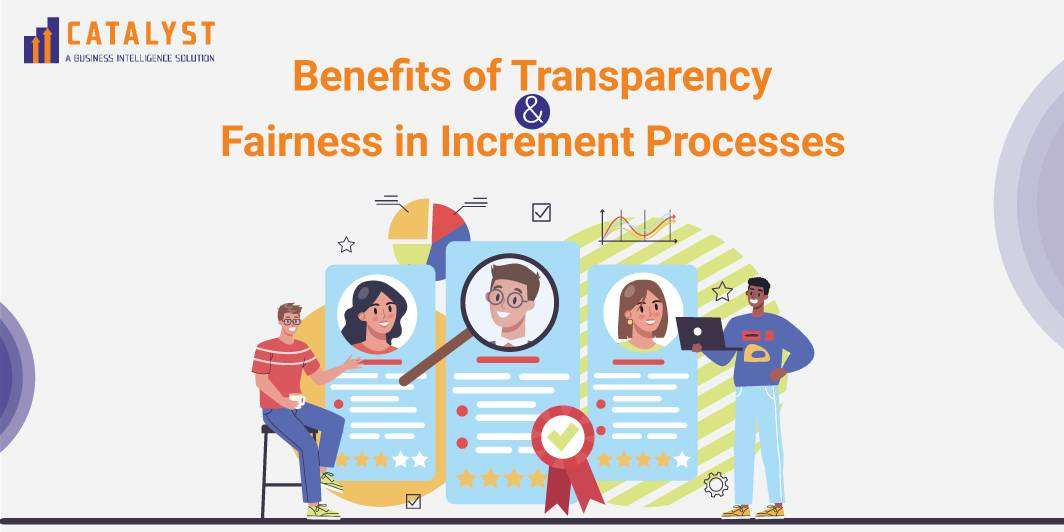
Transparency is one of the biggest advantages of a structured employee performance management system.
Employees should know:
- What goals they are expected to achieve.
- How their performance will be measured.
- Who will provide feedback.
- When performance reviews will happen.
- How performance data may influence development decisions.
A technology-enabled appraisal process can maintain documented goals, KPI progress, feedback records, and review workflows in a centralised system.
This reduces dependence on memory and disconnected spreadsheets.
Transparency does not mean every performance decision becomes automatic. It means the performance process becomes clearer, more consistent, and easier to explain.
Will AI Replace Managers in Employee Performance Reviews?
No. AI can analyse data, identify patterns, recommend KPIs, and simplify performance workflows, but performance management still requires human judgment.
A performance score may show that an employee missed a target.
A manager needs to understand why.
Was the target realistic?
Did market conditions change?
Was the employee given adequate resources?
Did another department create a dependency?
Does the employee require skill development?
AI provides signals. Managers provide context.
The future of performance management is therefore not AI versus human managers.
It is AI-supported human decision-making.
Organisations should also establish governance around performance data, role-based access, review processes, and human oversight when implementing AI-powered HR technology.
How Are Performance Management and Talent Management Becoming Connected?
Performance management cannot operate in isolation.
Employee performance data can support wider talent decisions such as:
- Learning and development
- Succession planning
- Internal mobility
- Leadership development
- Competency mapping
- Employee recognition
This is why integrated Talent Management System Software is becoming increasingly important.
For example, performance data may identify an employee who consistently delivers strong results. Competency information and 360-degree feedback may then reveal whether the employee is ready for a leadership role.
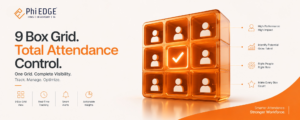
A 9 Box Grid can further help organisations evaluate performance and potential for talent planning.
This creates a connected talent intelligence ecosystem instead of separate HR processes.
Internal Link Suggestions:
Anchor Text: Talent Management System Software
URL: /talent-management-system-software/
Anchor Text: 9 Box Grid for talent placement
URL: /blog/9-box-grid-smart-hr-strategy-for-right-talent-placement-phi-edge/
What Should Businesses Look for in Performance Management Software?
Choosing performance management software should not be based only on the number of features displayed in a product demo.
Businesses should evaluate whether the system fits their actual performance process.
A future-ready platform should support:
- Flexible goal and KPI configuration
- Role-based performance metrics
- Continuous feedback
- Automated appraisal workflows
- Real-time performance dashboards
- 360-degree feedback
- Competency management
- Performance analytics
- Employee self-service
- Integration with HRMS and talent management
Scalability is equally important.
The performance framework of a 100-employee organisation may be very different from the needs of an enterprise managing 500, 1,000, or more employees across departments and locations.
The software should adapt to the organisation’s performance framework instead of forcing every team into one rigid process.
How Phi EDGE Supports the Evolution of Performance Management
Phi EDGE operates across HRMS, HR Advisory, and Talent Acquisition, creating a people and technology ecosystem for modern organisations.
Its performance-focused HR technology capabilities can help businesses structure employee goals, define measurable KPIs, improve appraisal workflows, and use workforce data more effectively.
With technologies such as an AI KPI Generator, performance analytics, 360-degree feedback, and integrated talent management, organisations can build a more connected approach to employee performance.
The objective is not to remove managers from performance decisions.
The objective is to give HR teams and managers better information, structured processes, and timely performance insights.
For organisations moving away from spreadsheet-based appraisals and fragmented feedback processes, an integrated HRMS can create greater visibility across the employee lifecycle.
The Future of Performance Management Is Intelligent, Continuous, and Human-Centred
Performance management is evolving from a periodic HR activity into a continuous business process.
AI will help generate performance metrics.
Automation will simplify appraisal workflows.
Analytics will identify performance patterns.
Connected HR systems will bring goals, feedback, competencies, and talent data together.
But technology alone cannot build a high-performance culture.
The most effective organisations will use technology to create clarity while keeping coaching, empathy, context, and human judgment at the centre of performance decisions.
The future is not about monitoring employees more closely.
It is about understanding performance more intelligently.
For businesses preparing for the next phase of workforce transformation, tech-infused performance management offers an opportunity to turn employee data into meaningful development, stronger accountability, and better business alignment.
Explore Phi EDGE HRMS and discover how intelligent performance management technology can help build a more transparent, data-driven, and future-ready workforce.
Frequently Asked Questions About Tech-Infused Performance Management
What is tech-infused performance management?
Tech-infused performance management combines AI, automation, real-time analytics, KPI tracking, and continuous feedback to improve employee performance processes and support data-driven HR decisions.
How does AI improve employee performance management?
AI can help generate role-specific KPIs, analyse performance patterns, identify potential risks, and provide managers with actionable workforce insights. Final employee decisions should still involve human judgment.
What is the difference between performance appraisal and performance management?
Performance appraisal is usually a periodic evaluation of employee performance. Performance management is a continuous process involving goal setting, feedback, KPI tracking, coaching, development, and performance review.
What is continuous performance management?
Continuous performance management involves regular employee check-ins, ongoing feedback, real-time goal tracking, and timely coaching instead of relying only on annual reviews.
Can performance management software reduce appraisal bias?
Structured KPIs, documented feedback, and multi-source performance data can help reduce dependence on memory and subjective opinions. However, organisations still need human oversight and fair performance policies.
What is an AI KPI Generator?
An AI KPI Generator uses employee role information, responsibilities, and organisational objectives to suggest measurable key performance indicators for performance evaluation.
Why is 360-degree feedback important?
360-degree feedback provides multiple perspectives on employee behaviour, leadership, communication, and collaboration. It can complement quantitative KPI data and create a broader performance view.
Can predictive analytics identify poor performers?
Predictive analytics can identify performance patterns or potential risks, but it should not automatically label employees as poor performers. Analytics should support investigation, coaching, and human decision-making.
Is performance management software suitable for large enterprises?
Yes. Scalable performance management software can help large organisations manage complex appraisal cycles, multiple departments, role-specific KPIs, feedback workflows, and workforce analytics.
How does Phi EDGE help with performance management?
Phi EDGE combines HR technology and performance-focused tools such as AI KPI generation, structured performance processes, analytics, 360-degree feedback, and integrated talent management to help organisations build more transparent and data-driven performance systems.
Navigating Modern Realities:
The continuous evolution of the business landscape has driven organizations to reevaluate traditional performance management methods. Technological advancements are at the forefront of this transformation, offering innovative solutions to the challenges posed by modern workplace dynamics.
Embracing Technology for Performance Excellence
In the pursuit of excellence, organizations are increasingly turning to technology as a strategic ally. This shift signifies a departure from conventional approaches, emphasizing the need for tailored solutions that align with specific needs in the digital era. The adaptability offered by technology becomes a crucial asset, enabling companies to navigate the complicated shades of performance management in a manner that resonates with their unique business objectives.
Tailoring Solutions for Success
The essence of this technological embrace lies in tailoring solutions for success. By leveraging technology, organizations gain the ability to customize solutions that precisely meet their requirements. This adaptability ensures a strategic alignment with the organization’s goals, allowing for a more effective approach to performance management.
Real-time Insights and Visibility
A pivotal advancement in modern performance management is the capacity to provide real-time insights into individual and team performance. This standout feature brings about a transformative shift in the decision-making process, empowering leaders with timely information. This transparency not only enhances decision-making but also fosters a culture of continuous improvement and success.
Collaborative Excellence
Technology, far beyond being a mere tool, emerges as a Phi EDGE for fostering collaborative excellence within organizations. The incorporation of features that facilitate the fluid exchange of ideas and feedback is pivotal. This collaborative culture ensures that employees feel connected, engaged, and actively involved in their professional development, creating an environment conducive to innovation and growth.
Strategic Alignment
In the digital era, technology assumes a pivotal role in aligning individual and team goals with the broader business strategy. This integration ensures that every employee comprehends how their efforts contribute to overarching organizational objectives. The result is a sense of purpose that becomes a driving force behind collective success, as each individual understands their role in the larger narrative of the organization’s journey.
As we delve deeper into this tech-infused evolution of performance management, it becomes evident that technology is not merely a facilitator but a transformative force shaping the very fabric of organizational dynamics. The strategic alignment of technology with business goals propels organizations toward a future where performance management is not just a process but a dynamic, purpose-driven journey.
Phi EDGE: Leading the Charge in Digital Performance Management
Tailored Goal Framework:
Enter Phi EDGE, a solution uniquely tailored to meet the evolving needs of organizations in the digital era. Its customizable goal framework allows businesses to align their goal-setting process with specific objectives, ensuring that employees work towards goals that directly contribute to organizational success.
Real-time Visibility and Collaboration:
Phi EDGE provides a centralized dashboard offering a comprehensive view of individual and team performance. This real-time visibility fosters transparency, ensuring that achievements are celebrated promptly. The collaborative features within Phi EDGE contribute to an environment where ideas flow freely, and feedback is a continuous loop.
Continuous Improvement:
Phi EDGE actively contributes to a culture of continuous improvement. Its collaborative approach to goal setting and feedback enhances communication, ensuring that employees are not just meeting expectations but consistently exceeding them.
Integration with Business Strategy:
Phi EDGE seamlessly integrates performance management practices with overall business strategy. Understanding how individual efforts align with broader organizational objectives provides clarity for employees and reinforces their sense of purpose within the organization.
Phi EDGE: Your Strategic Partner in Performance Transformation
As we witness the tech-infused evolution of performance management, Phi EDGE stands out as your strategic partner in this transformative journey. The platform represents the culmination of technological advancements and innovative thinking, empowering organizations to thrive in the digital era.
Ready to experience the future of performance management? Book a demo with Phi EDGE today and witness firsthand how this cutting-edge solution can revolutionize your approach to performance excellence. Together, let’s embrace the future of performance management and unlock unparalleled achievements in the world of digital collaboration.