Introduction: What Is a 9-Box Grid?
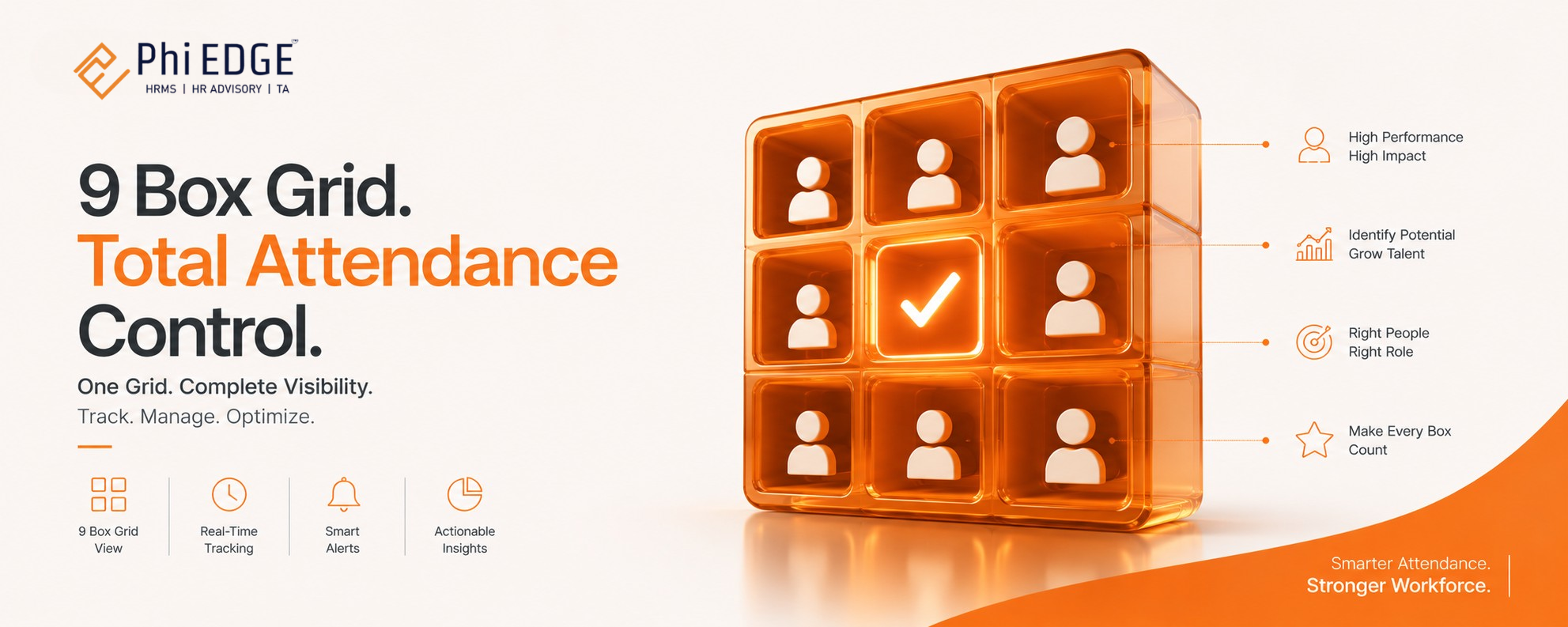
The 9-box grid is a talent-management framework that helps HR teams and managers evaluate employees using two dimensions: current performance and future potential. By placing employees into a simple nine-cell matrix, organizations can identify high performers, emerging leaders, employees who need development, and roles that may require additional support. The 9-box grid is especially useful when companies need to make structured decisions about succession planning, leadership development, promotions, training, and workforce planning. Unlike a simple performance rating, it encourages managers to consider both what an employee is delivering today and what the employee may be capable of achieving in the future. However, the framework works best when organizations use clear definitions, evidence-based assessments, regular reviews, and trained managers rather than relying on subjective opinions. Modern HR software can make this process easier by connecting performance data, goals, competencies, feedback, development plans, and talent reviews in one place. For organizations looking to build a more structured talent-management process, the 9-box grid can provide a practical visual overview while still leaving room for individual employee development and meaningful manager conversations.
What Is a 9-Box Grid?
The 9-box grid is a talent-management matrix traditionally used to assess employees based on:
- Performance
- Potential
These two dimensions create nine possible categories.
A typical grid looks like this:
| Performance / Potential | Low Potential | Medium Potential | High Potential |
| High Performance | Strong Performer | High Performer | Future Leader |
| Medium Performance | Solid Contributor | Core Talent | Emerging Talent |
| Low Performance | Needs Improvement | Development Required | Potential but Underperforming |
The exact terminology can differ from one organization to another.
The important point is that the 9-box grid should not be treated as a permanent label. Employees can move between boxes as their performance, skills, experience, responsibilities, and development change.
How Does the 9-Box Grid Work?
The process generally starts by defining what the organization means by performance and potential.
Step 1 — Measure Performance
Performance may be assessed using:
- KPIs
- KRAs
- Business targets
- Quality metrics
- Project outcomes
- Customer feedback
- Manager observations
- Productivity
- Goal achievement
A sales employee, for example, might be evaluated using revenue, conversion rate, customer retention, and achievement against targets.
Step 2 — Assess Potential
Potential is different from current performance.
Managers may consider:
- Leadership ability
- Learning agility
- Problem-solving
- Adaptability
- Communication
- Strategic thinking
- Ability to handle greater responsibility
- Interest in career progression
Why Performance and Potential Should Be Separate
A common mistake is assuming that a high-performing employee automatically has high potential.
That isn’t always true.
Someone can be excellent in their current position without wanting—or being suited—to manage a larger team.
Similarly, an employee who is currently performing at an average level may have strong learning ability and leadership potential.
That distinction is one of the main reasons organizations use a 9-box grid.
The Nine Boxes Explained
High Performance + High Potential
These employees are often considered future leadership candidates.
They may be suitable for:
- Leadership programs
- Succession planning
- Strategic projects
- Mentoring
- Expanded responsibilities
High Performance + Medium Potential
These employees consistently deliver strong results but may have a more specialized career path.
Organizations can focus on:
- Recognition
- Skill development
- Career specialization
- Retention
High Performance + Low Potential
These employees may be highly valuable specialists.
For example, a senior technical expert may produce excellent work without wanting a broader leadership role.
The right strategy isn’t necessarily promotion. It may be deeper specialization and recognition.
Medium Performance + High Potential
This is an interesting category.
Employees may demonstrate strong capability but haven’t yet reached their expected performance level.
Managers should investigate whether the gap comes from:
- Lack of training
- New responsibilities
- Poor role fit
- Insufficient resources
- Unclear goals
Medium Performance + Medium Potential
These employees are often considered core contributors.
They may benefit from targeted development and clearer career goals.
Medium Performance + Low Potential
The focus may be on maintaining performance while improving specific skills or addressing productivity challenges.
Low Performance + High Potential
This category requires careful analysis.
High potential alone doesn’t compensate for poor current performance.
Managers should identify the reason behind the performance gap before making talent decisions.
Low Performance + Medium Potential
A structured improvement plan may be appropriate.
This could include:
- Coaching
- Training
- Clear KPIs
- Frequent check-ins
- Role clarification
Low Performance + Low Potential
This category usually requires the most immediate intervention.
However, managers should first verify that the assessment is fair and that the employee has received appropriate expectations, resources, training, and feedback.
Why Is the 9-Box Grid Important?
The modern workplace requires organizations to think beyond annual performance ratings.
A manager may know that an employee is performing well, but that alone doesn’t answer important questions such as:
Who could become a future leader?
Who needs development?
Which employees have critical skills?
Where are our succession risks?
The 9-box grid creates a visual way to begin those conversations.
It can also help HR teams connect performance management with broader talent-management activities.
Phi EDGE’s talent-management approach includes areas such as performance management, goal setting, appraisal cycles, 360-degree feedback, learning and succession planning. Phi EDGE Talent Management Software
Benefits of the 9-Box Grid
1. Simple Visual Framework
The matrix makes complex talent information easier to discuss during talent-review meetings.
2. Supports Succession Planning
HR teams can identify employees who may be suitable for future critical roles.
3. Identifies Development Needs
The framework can reveal employees who need coaching, training, mentoring, or additional experience.
4. Improves Talent Discussions
Instead of saying “this employee is good,” managers can discuss performance evidence and future potential.
5. Supports Leadership Development
Employees with strong potential can be considered for leadership-development programs.
6. Helps Workforce Planning
HR can identify talent gaps and future capability requirements.
9-Box Grid vs Traditional Performance Rating
| Traditional Performance Rating | 9-Box Grid |
| Mainly focuses on current performance | Looks at performance and potential |
| Often produces a single score | Places employees into a talent category |
| Limited succession insight | Useful for succession discussions |
| Easier to administer | Requires more thoughtful assessment |
| Primarily review-focused | More closely connected to talent strategy |
| May end with the rating | Can lead to development planning |
The 9-box grid shouldn’t necessarily replace performance reviews. It can complement them.
Example of a 9-Box Grid in Practice
Imagine a technology company has 100 employees.
During its annual talent review, HR identifies:
- 10 high-performance/high-potential employees
- 20 high performers with specialist potential
- 35 core performers
- 20 employees requiring development
- 15 employees needing immediate performance support
Instead of treating every employee the same way, HR can create different development strategies.
High-Potential Group
Offer:
- Leadership training
- Mentoring
- Cross-functional projects
- Strategic assignments
Core Talent
Offer:
- Skill development
- Career planning
- Recognition
- Role-based training
Development Group
Offer:
- Coaching
- Clear goals
- Regular feedback
- Improvement plans
This makes the 9-box grid more useful than simply ranking employees from 1 to 10.
How HR Software Can Improve 9-Box Grid Management
Managing a 9-box grid manually can become difficult as the workforce grows.
HR teams may have to collect:
- Performance ratings
- Employee goals
- KPI results
- Manager feedback
- Competency assessments
- Development plans
- Career information
An integrated HRMS can centralize this information.
With a platform such as Phi EDGE, organizations can connect performance management with broader talent-management processes rather than keeping performance data in disconnected spreadsheets.
For related information, see the internal resource on Talent Management System Software and consider linking this article to relevant Phi EDGE pages covering performance management, HRMS software, employee management, and learning management.
9-Box Grid and AI in 2026
AI is changing how HR teams analyze workforce information.
However, AI should support—not automatically replace—human talent decisions.
AI-assisted HR systems can potentially help organizations:
- Identify performance trends
- Summarize feedback
- Highlight development gaps
- Analyze workforce data
- Recommend learning paths
- Support succession planning
The final talent decision should still involve human judgment, context, and appropriate governance.
For AI-related HR content, organizations can also explore broader research and guidance from Deloitte Insights and SHRM.
Common Mistakes When Using a 9-Box Grid
Mistake 1 — Treating Potential as a Guess
Potential should be based on observable behaviours and evidence.
Mistake 2 — Assuming High Performance Means High Potential
Performance and potential are different concepts.
Mistake 3 — Using the Grid as a Permanent Label
Employees develop over time.
Mistake 4 — Ignoring Employee Context
Managers should consider role changes, new responsibilities, resources, and learning opportunities.
Mistake 5 — Using It Only for Promotions
Not every high-potential employee needs immediate promotion.
Mistake 6 — Creating the Grid Without Follow-Up
The real value comes from what happens after employees are categorized.
Best Practices for Using the 9-Box Grid
Define Clear Criteria
Create written definitions for each performance and potential level.
Use Multiple Data Points
Combine KPIs, goals, competencies, feedback, and business outcomes.
Train Managers
Different managers may interpret “high potential” differently. Training improves consistency.
Calibrate Ratings
Talent-review meetings can help managers challenge inconsistent assessments.
Create Individual Development Plans
Every placement should ideally lead to an appropriate development conversation.
Review Regularly
The 9-box grid should reflect current employee information rather than becoming a once-a-year formality.
9-Box Grid
A credible talent-management article should not present the 9-box grid as a magic formula for making employee decisions.
Good HR practice requires:
- Evidence
- Clear criteria
- Manager accountability
- Employee development
- Consistent evaluation
- Appropriate data governance
- Regular review
From an E-E-A-T perspective, HR technology content should also explain both the strengths and limitations of the framework.
Phi EDGE can strengthen this content strategy by connecting the article to its HRMS and talent-management expertise, product pages, implementation resources, case studies, and relevant HR guides.
What is a 9-box grid?
A 9-box grid is a talent-management matrix used to assess employees according to performance and potential.
What are the benefits of a 9-box grid?
It can support succession planning, employee development, leadership identification, talent reviews, and workforce planning.
Is a 9-box grid the same as a performance review?
No. A performance review primarily evaluates current performance, while a 9-box grid considers both current performance and future potential.
How often should a 9-box grid be reviewed?
Organizations can review it annually or more frequently when business priorities, employee roles, or performance information change.
This question-based structure makes the content easier for search engines and AI systems to interpret.
Frequently Asked Questions About the 9-Box Grid
1. What is the 9-box grid?
The 9-box grid is a talent-management framework that evaluates employees according to their current performance and future potential.
2. What are the two dimensions of a 9-box grid?
The two dimensions are generally performance and potential.
3. Why is it called a 9-box grid?
It uses three performance levels and three potential levels, creating nine possible cells.
4. Is the 9-box grid only for managers?
No. HR teams, business leaders, talent-management professionals, and managers can use it as part of a broader talent-review process.
5. Can small businesses use a 9-box grid?
Yes. A smaller organization can use a simplified framework to support employee development and succession planning.
6. How does the 9-box grid support succession planning?
It can help identify employees who may have the capabilities needed for future leadership or critical positions.
7. Does high performance always mean high potential?
No. An employee can be an excellent performer in their current role without necessarily having the skills, interest, or readiness for a larger role.
8. Can an employee move between boxes?
Yes. Performance and potential can change as employees develop new skills, take on responsibilities, or move into different roles.
9. Is the 9-box grid objective?
Not automatically. Its quality depends on clear criteria, reliable evidence, manager training, calibration, and consistent processes.
10. Can HR software support a 9-box grid?
Yes. HR software can centralize performance, goals, feedback, competency and development information used in talent reviews.
H3: 11. How does Phi EDGE support talent management?
Phi EDGE provides HR technology capabilities covering areas such as talent management, performance management, goals, appraisal cycles, feedback, learning, and succession planning.
H3: 12. How often should companies use the 9-box grid?
Many organizations use it during formal talent-review cycles, while others update talent information more frequently.
13. What is the difference between performance and potential?
Performance describes what an employee is achieving in their current role. Potential refers to their capacity to take on greater responsibilities or more complex roles in the future.
14. Is the 9-box grid useful for employee development?
Yes. It can help HR and managers identify different development needs across employee groups.
15. Can the 9-box grid be used for promotion decisions?
It can inform promotion discussions, but it should not be the sole basis for a promotion decision.
16. What information is needed for a 9-box grid?
Organisations may use performance results, goals, competencies, manager feedback, career aspirations, learning agility, and other relevant evidence.
17. What is a high-potential employee?
A high-potential employee is generally someone who demonstrates the capability and behaviours needed to take on greater responsibilities in the future.
18. What is calibration in talent management?
Calibration is a process where managers and HR review assessments to improve consistency and challenge potential bias.
19. What are the limitations of the 9-box grid?
Potential subjectivity, oversimplification, inconsistent ratings, and misuse of employee categories are common limitations.
20. Should every employee have a development plan?
Ideally, every employee should have meaningful development conversations, although the specific plan can differ according to role, goals, and career aspirations.
Final Thoughts
The 9-box grid remains a practical framework for organizations that want to connect employee performance with future talent needs. Its greatest value is not the nine boxes themselves. The real value comes from the conversations, evidence, development plans, and decisions that happen around them.
For HR teams, the next step is to connect talent reviews with performance management, employee goals, feedback, learning, and succession planning.
With the right HR technology, this process becomes easier to manage and more connected across the employee lifecycle.
Build a Smarter Talent Management Strategy with Phi EDGE
If your organization is still managing employee performance, appraisals, talent reviews, and development planning through disconnected spreadsheets, it may be time to modernize.
Explore Phi EDGE HRMS & Talent Management Software to learn how an integrated HR platform can help bring performance management and talent management together.
Turn employee data into better talent decisions with Phi EDGE.