Pros and Cons of Employee Monitoring: Insights by Phi EDGE
In today’s digital-first workplace, organizations are under increasing pressure to balance productivity, security, and employee well-being. One practice that has gained attention is employee monitoring—the use of tools and systems to track work-related activities. From time-tracking software and project management dashboards to monitoring emails and internet usage, companies are leveraging technology to keep an eye on how employees work.
At Phi EDGE, we specialize in HRMS, HR Advisory, and Talent Acquisition, and we often see organizations debating whether employee monitoring is truly beneficial. While it can increase accountability and data-driven insights, it also raises ethical and privacy concerns. In this blog, we’ll explore the pros and cons of employee monitoring, helping businesses make informed
decisions.
What is Employee Monitoring?

Employee monitoring refers to practices where organizations track employee activities to measure productivity, ensure compliance, and protect company resources. Monitoring can take many forms, including:
● Time and attendance tracking.
● Project progress monitoring via HRMS systems.
● Email and internet usage tracking.
● Screen recording or keystroke logging (more common in highly regulated industries).
● GPS tracking for field employees.
When implemented responsibly, monitoring supports efficiency. However, without transparency,
it can lead to mistrust.
The Pros of Employee Monitoring
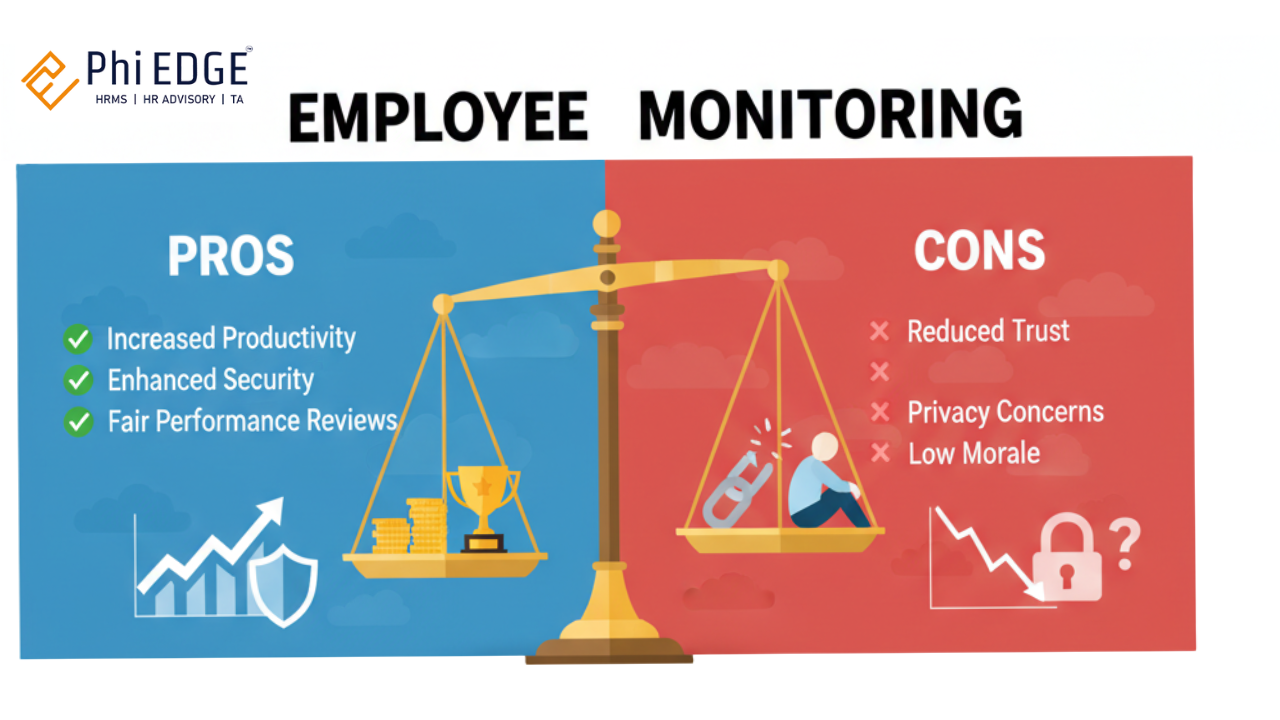
1. Improved Productivity
Monitoring ensures employees stay focused on tasks. With HRMS management systems, managers can see project progress in real time, identify bottlenecks, and optimize workflows.
2. Better Time Management
Time-tracking features in HRMS software in India help employees and employers alike. Workers can understand how they spend their time, while leaders can allocate resources effectively.
3. Enhanced Security
Employee monitoring protects sensitive data by preventing misuse of company resources or unauthorized sharing of information.
4. Accurate Performance Measurement
By integrating monitoring into an HRMS system, businesses get data-driven insights into employee contributions, making appraisals fairer and more objective.
5. Compliance with Regulations
In industries like finance or healthcare, monitoring ensures employees follow protocols, reducing risks of non-compliance.
6. Supports Remote Work
With hybrid and remote work models, monitoring tools assure managers that employees remain productive while working from home.
The Cons of Employee Monitoring
1. Privacy Concerns
Employees may feel their privacy is being invaded, especially with invasive tools like screen recording. This can damage trust.
2. Employee Morale Issues
Excessive monitoring creates a culture of micromanagement. Instead of boosting productivity, it may lead to disengagement.
3. Risk of Misuse
If monitoring data is mishandled, it could be used unfairly against employees or lead to legal consequences.
4. High Costs
Advanced monitoring software and integrations with HRMS systems can be costly, especially for SMEs.
5. False Sense of Productivity
Monitoring time spent doesn’t always reflect quality of work. Overemphasis on hours can discourage creativity and innovation.
6. Potential Legal Challenges
Without clear consent, companies may violate labor or privacy laws, especially in international contexts.
Finding the Right Balance
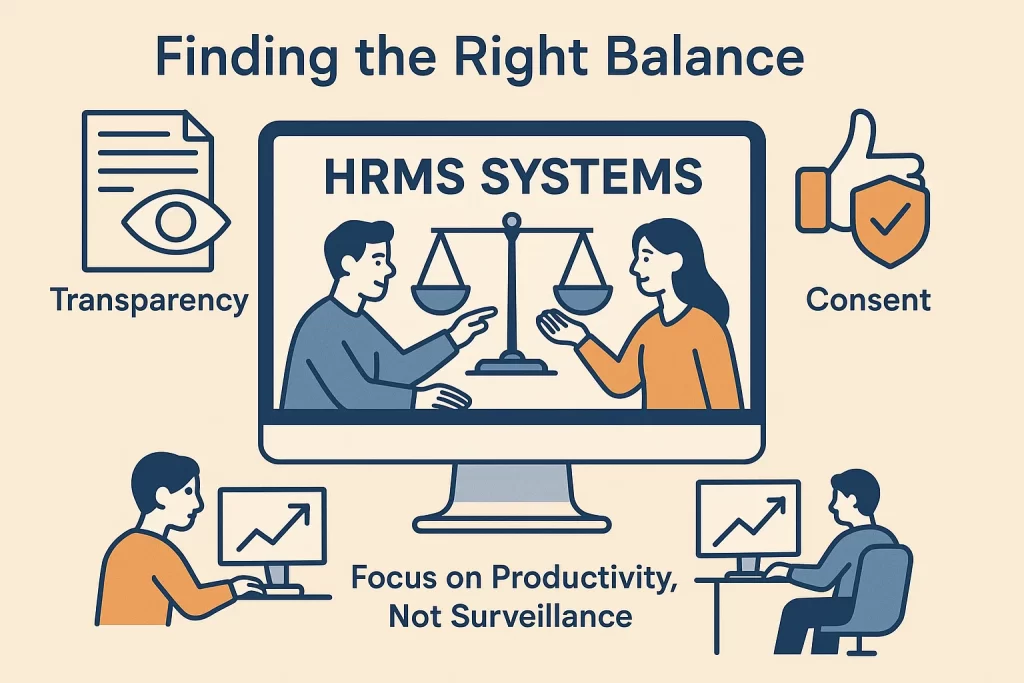
At Phi EDGE, we encourage businesses to use HRMS systems for constructive monitoring rather than invasive practices. Here’s how organizations can strike the right balance:
● Transparency: Inform employees about what is being monitored and why.
● Consent: Obtain clear consent through contracts or policies.
● Focus on Productivity, Not Surveillance: Use monitoring to improve workflows, not to police employees.
● Leverage Data for Growth: Integrate monitoring insights into training, resource allocation, and performance management.
● Set Boundaries: Avoid tracking personal data or activities outside working hours.
How HRMS Software in India Supports Ethical Monitoring
Unlike standalone monitoring tools, HRMS software in India focuses on employee engagement and organizational efficiency. At Phi EDGE, our HRMS systems offer features like:
● Attendance and Leave Tracking: Transparent and automated.
● Project & Task Monitoring: Visibility into progress without micromanagement.
● Performance Management Integration: Data-driven appraisals, reducing bias.
● Employee Self-Service Portals: Employees can view their own data, ensuring fairness. This approach ensures monitoring enhances productivity without compromising trust.
Pros and Cons of Employee Monitoring in Different Industries
● IT & Software: Useful for project tracking, but risks employee burnout if overused.
● Manufacturing: Critical for attendance and safety compliance.
● Financial Services: Essential for data security and regulatory compliance.
● Hospitality: Helpful for scheduling and managing seasonal staff.
● Construction: GPS and project tracking support on-site accountability.
Each industry needs a tailored approach—something Phi EDGE HRMS management solutions deliver through customization.
FAQs on Employee Monitoring
Yes, as long as it’s done transparently, with employee consent, and without violating privacy rights.
HRMS systems track attendance, leave, and performance data fairly, without invasive surveillance.
Yes, when used ethically. Monitoring highlights inefficiencies and helps employees stay accountable.
Yes. Over-monitoring may create fear or dissatisfaction. Transparency is key.
SMEs can benefit from simple monitoring features in HRMS software in India, but should avoid expensive or invasive tools.
Use monitoring as a tool for growth, not punishment. Communicate openly and respect employee boundaries.
Conclusion
The debate around pros and cons of employee monitoring isn’t going away anytime soon. While it offers undeniable benefits like productivity, compliance, and data-driven insights, it also risks employee morale and trust if overused.
At Phi EDGE, we recommend a balanced approach. By using HRMS management tools designed for fairness, transparency, and engagement, businesses can enjoy the benefits of monitoring without compromising their culture.
Looking to integrate ethical employee monitoring into your HR processes? Explore Phi EDGE HRMS software in India and discover how our tailored HRMS systems support productivity, compliance, and employee trust—all in one platform.