
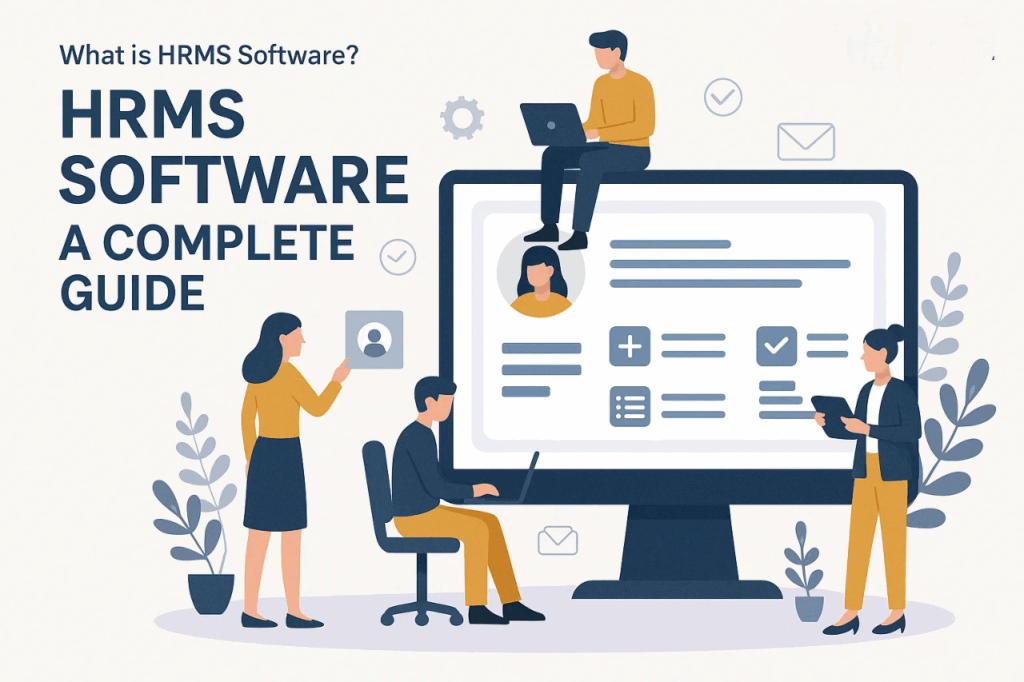
What is HRMS Software? A Complete Guide by Phi EDGE
At Phi EDGE, we believe that people are the heart of every business. Managing them effectively requires more than just spreadsheets or manual processes—it requires modern technology. That’s why we’ve built our expertise across three verticals: HRMS, HR Advisory, and Talent Acquisition. Over the years, we’ve expanded from HR Advisory to advanced HRMS systems and HRIS solutions, supporting industries like Manufacturing, Financial Services, Real Estate, Hospitality, Construction, Academics, and Information Technology.
One of the most common questions we hear is: “What is HRMS software, and why is it important?” Let’s dive into what makes HRMS a game-changer for businesses in India and worldwide.
What is HRMS Software?

HRMS (Human Resource Management System) software is a digital platform that integrates core HR functions such as recruitment, payroll, attendance, leave management, performance tracking, and employee engagement.
Instead of juggling multiple systems, an HRMS system centralizes everything into one platform. For businesses in India, where compliance, scalability, and efficiency are critical, HRMS software in India provides automation, transparency, and real-time insights.
Simply put: HRMS is the backbone of modern workforce management.
History of Human Resource Management Systems
The idea of managing human resources isn’t new—it has evolved over centuries, shaped by industrial growth, workplace complexity, and technological progress. Understanding the history of Human Resource Management Systems (HRMS) helps us appreciate how far we’ve come and why businesses like those supported by Phi EDGE need modern HRMS software today.
Early Stages: The Industrial Revolution
In the late 19th and early 20th centuries, businesses began formalizing labor management. Large factories needed ways to record working hours, calculate wages, and enforce labor laws. During this time, “personnel departments” emerged, focusing mainly on administrative tasks like payroll and compliance. There were no digital HRMS systems yet—everything was manual.
Mid-20th Century: Personnel Management Evolves
By the 1950s and 60s, organizations realized employees were more than just resources—they were assets who needed training, engagement, and development. This was the beginning of performance reviews and structured training programs. Still, most records were paper-based, creating inefficiencies that highlighted the need for automation.
1970s–1980s: The First HR Software
With the rise of mainframe computers, businesses started using software to automate payroll and attendance. This marked the birth of the earliest HRMS systems. However, they were expensive, complex, and accessible only to large corporations.
1990s: HRMS Gains Momentum
By the 1990s, with personal computers and enterprise software becoming more affordable, HRMS software in India and worldwide started integrating core HR functions—payroll, leave, and employee records—into one system. This era marked the transition from personnel management to modern HR management.
2000s: The Rise of Cloud HRMS
The 2000s brought web-based and cloud technologies. HRMS management moved from on-premise servers to cloud-based platforms, making them accessible to businesses of all sizes. Features like recruitment, onboarding, performance appraisals, and employee self-service portals became standard.
Today: Intelligent HRMS Software
Modern HRMS software in India goes beyond automation. With AI, analytics, and mobile-first design, today’s systems empower HR leaders to make data-driven decisions, improve employee engagement, and align workforce strategies with business goals. Companies like Phi EDGE now provide integrated HRMS solutions that combine payroll, compliance, performance management, and employee engagement into a single, user-friendly platform.
Who Uses HRMS Software?
An HRMS system is not limited to one type of organization—it is versatile and beneficial across industries and business sizes. At Phi EDGE, we’ve seen how companies in different sectors adopt HRMS software in India to simplify workforce management and improve efficiency.
1. Small and Medium Enterprises (SMEs)
For growing businesses, managing payroll, attendance, and compliance manually can quickly become overwhelming. An HRMS system helps SMEs reduce errors, save time, and focus on scaling their operations.
2. Large Enterprises
Big organizations with multiple branches, departments, or even global operations rely on HRMS systems for centralized employee data, seamless compliance, and effective workforce planning.
3. Industry-Specific Use Cases
● Manufacturing: Tracks shift workers, overtime, and attendance.
● Financial Services: Ensures payroll and compliance accuracy.
● Hospitality & Retail: Manages seasonal staff and high attrition rates.
● Construction: Coordinates project-based workforce scheduling.
● Academics: Simplifies faculty leave, attendance, and performance.
● IT & Startups: Supports agile teams with performance and payroll integration.
4. HR Teams and Managers
HR professionals use HRMS management to automate repetitive tasks, improve accuracy, and get access to real-time analytics. Managers benefit by easily approving leave requests, tracking performance, and engaging employees.
5. Employees
It’s not just HR—employees themselves use HRMS software via self-service portals. They can download payslips, apply for leave, check attendance, and update their information without HR intervention.
Why Do Businesses Need HRMS Management?
Manual HR processes lead to inefficiencies, errors, and employee dissatisfaction. HRMS management automates repetitive tasks, saves time, and ensures accuracy. At Phi EDGE, we design solutions that:
● Reduce administrative workload.
● Ensure compliance with Indian labor laws.
● Provide real-time employee data.
● Improve employee satisfaction through transparency.
Why is HRMS Software So Important Today?

In today’s digital-first, fast-moving business environment, organizations can’t afford to rely on manual HR processes. Employees expect transparency, speed, and convenience, while leaders need data-driven insights to make strategic decisions. This is why HRMS software has become a critical part of modern business operations. At Phi EDGE, we’ve seen how companies that adopt HRMS systems gain a strong competitive advantage.
1. Managing a Hybrid and Remote Workforce
With the rise of remote and hybrid work models, tracking attendance, managing leave, and monitoring productivity has become more complex. An HRMS system centralizes these functions, making it easier to manage employees no matter where they are located.
2. Ensuring Compliance
In India, labor laws, tax regulations, and statutory requirements are constantly evolving. HRMS software in India ensures automatic updates, accurate payroll processing, and error-free compliance—saving businesses from penalties.
3. Boosting Employee Engagement
Modern employees want self-service options, transparent performance reviews, and timely recognition. With features like employee self-service portals, performance tracking, and recognition tools, HRMS management helps improve engagement and retention.
4. Data-Driven Decision Making
HR leaders need insights into workforce productivity, attrition, and skill gaps. Modern HRMS systems offer advanced analytics and reporting, enabling organizations to make smarter, data-backed decisions.
5. Scaling with Business Growth
As businesses expand, managing HR processes manually becomes impossible. A robust
HRMS system grows with your business—supporting everything from 20 employees to 20,000.
6. Saving Time and Reducing Costs
By automating repetitive tasks like payroll, leave tracking, and compliance, companies save time, reduce administrative costs, and allow HR teams to focus on strategic growth initiatives.
Key Features of Phi EDGE HRMS System
1. Payroll & Compliance
Our HRMS software in India automates salary processing, tax deductions, and statutory compliance like PF, ESIC, and TDS.
2. Leave & Attendance Management
Employees can apply for leave online, managers approve instantly, and the system tracks attendance accurately.
3. Performance Management
Our HRMS includes appraisal cycles, continuous feedback, and KPI alignment—creating a fair performance appraisal system.
4. Recruitment & Onboarding
Hire faster with applicant tracking, digital documentation, and smooth onboarding experiences.
5. Employee Self-Service
From payslips to leave requests, employees can access everything themselves, reducing HR dependency.
6. Analytics & Reporting
Real-time dashboards provide insights into workforce trends, attrition, and productivity.
Benefits of HRMS Software
1. Efficiency – Automates HR tasks, saving time.
2. Accuracy – Reduces human errors in payroll and leave calculations.
3. Transparency – Employees have visibility into their records.
4. Scalability – Works for startups, SMEs, and large enterprises.
5. Engagement – Improves employee morale with self-service and recognition.
At Phi EDGE, our HRMS systems are built to adapt to businesses across industries and growth stages.
HRMS Software in India: Why It’s Different
India’s diverse workforce, complex compliance requirements, and rapidly growing businesses demand a specialized approach. HRMS software in India must:
● Support multilingual and multi-location needs.
● Handle compliance with local labor laws.
● Scale with fast-growing organizations.
● Provide affordability without compromising features.
That’s why Phi EDGE HRMS management solutions are designed specifically for Indian businesses, with flexibility for global scalability.
How Phi EDGE HRMS Stands Apart
● Human-Centric Design: Built for employees, not just HR departments.
● Industry-Specific Customization: Whether you’re in IT, Construction, or Hospitality, our HRMS adapts.
● Integration: Works seamlessly with payroll, performance management, and talent acquisition.
● Advisory + Technology Advantage: Unlike vendors who only provide software, Phi EDGE also provides HR Advisory expertise.
Industries Using Phi EDGE HRMS Systems
● Manufacturing: Automates attendance for shift workers.
● Finance: Ensures compliance with regulations.
● Hospitality: Manages high attrition and seasonal staff.
● Construction: Tracks project-based workforce.
● Academics: Simplifies leave, attendance, and faculty management.
● IT: Aligns agile teams with performance and payroll.
FAQs on HRMS Software
What is HRMS software used for?
HRMS software manages employee data, payroll, attendance, leave, performance, and compliance in one centralized system.
Is HRMS software suitable for small businesses?
Yes. At Phi EDGE, we offer scalable solutions that work for startups, SMEs, and large organizations.
How is HRMS different from HRIS?
HRIS focuses on storing employee information, while HRMS systems combine data management with payroll, performance, and engagement tools.
Can HRMS software in India handle compliance?
Absolutely. Our HRMS is built to meet Indian labor laws like PF, ESIC, TDS, and GST.
Does HRMS integrate with other business systems?
Yes. Phi EDGE HRMS integrates with payroll, finance, and ERP systems.
How secure is employee data in HRMS software?
We use encryption, role-based access, and audit logs to protect sensitive HR data.
How does HRMS improve employee satisfaction?
By offering transparency, self-service access, and fair performance management, employees feel valued and empowered.
Conclusion
So, what is HRMS software? It’s the modern backbone of workforce management. For businesses in India and across industries, HRMS systems bring automation, compliance, and transparency into daily operations. At Phi EDGE, we combine HR Advisory expertise, talent acquisition support, and innovative HRMS technology to deliver solutions that are not just tools—but enablers of growth.
If you’re ready to transform your HR processes, explore Phi EDGE HRMS software in India and discover how it can empower your workforce and scale with your business.