
In today’s dynamic business landscape, organizations are under constant pressure to attract talent, improve productivity, and remain competitive. The best HRMS software in India has emerged as a critical tool to help organizations achieve these goals efficiently.
How HR software optimizes organizational performance, a statistical data
- 57% of HR Professionals Work Beyond Capacity: Over half of HR departments are understaffed, and 57% of HR professionals report working beyond normal capacity. HRMS payroll software and automation tools relieve this burden, allowing HR teams to focus on strategic tasks rather than repetitive administrative work.
- HR people Spend Up to 57% of Their Time on Administrative Tasks: Automating these tasks enables HR professionals to dedicate more time to initiatives that directly impact business growth.
- Almost 9 out of 10 Companies Report AI in HR Saves Time and Increases Productivity: For nearly 90% of organizations, automating HR functions via HR management software India has resulted in significant time savings and productivity improvements.
- 65% of HR Leaders Say Automation Has a Positive Impact: A majority of HR leaders report that HR tools have increased efficiency and productivity in HR management tasks.
- 80% of Organizations Will Integrate HRMS by 2025: The adoption of HRMS in HR is accelerating, with 80% of organizations expected to have AI-powered HR functions by 2025.
- 44% of Talent Managers Use Cloud HR Solutions to Boost Efficiency: Cloud-based HRMS in India is a popular choice for increasing operational efficiency and productivity..
- HR Software Market Growth: The global HR software market is projected to grow from $50 billion in 2024 to $54.64 billion in 2025, driven by automation, cloud adoption, and system integration.
- Underutilization Remains an Issue: Despite these benefits, nearly 60% of employers still underutilize their HRIS, indicating significant potential for further optimization through the support of a reliable HRMS company.
Further, any people analytics—may it be in areas of evaluating performance, identifying training needs basis gaps, planning careers and succession planning or studying attrition analysis—needs data at your fingertips. All such data is available real-time in a good HRMS in India.
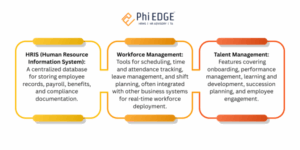
What is an HRIS?
HRIS is a digital solution designed to streamline and automate HR-related processes, such as employee data management, payroll, leave, attendance, employee life cycle management, etc., and other people-related processes and development. It increases administrative efficiency, secures sensitive employee information, and empowers HR teams to focus on strategic initiatives rather than repetitive tasks.
Whereas an HRMS is one step ahead as it further helps in managing employee performance, learning and development needs, planning careers, managing rewards and recognitions etc.—thus enabling HR and management to take data-driven decisions using the top 10 HRMS software in India.
What Does HR Software Include?
Why is HR Software Important for Organizations?
Top HRMS software in India empowers employees, reduces administrative burden, centralizes data, and provides actionable insights through analytics. It enables organizations to manage their workforce more effectively, improve employee satisfaction, and make data-driven decisions that align HR strategies with business goals.
Benefits of Using HR Software
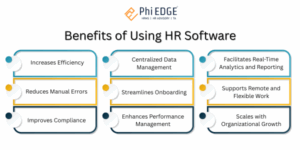
1. Increases Efficiency
HR software automates time-consuming administrative tasks such as payroll processing, attendance tracking, leave management, and benefits administration. By digitizing these repetitive activities, HR professionals can redirect their efforts toward strategic projects like talent development, organizational culture, and workforce planning. This efficiency not only saves time but also reduces operational costs and improves overall productivity across the HR department. Companies looking for the top HRMS software in India prioritize this benefit.
2. Reduces Manual Errors
Manual data entry is prone to mistakes, which can lead to costly payroll errors, incorrect tax filings, and compliance issues. HR software automates calculations and data transfers, minimizing the risk of human error. Built-in validation checks and automated workflows ensure that information is accurate and consistent, which is crucial for maintaining employee trust and avoiding legal complications.
3. Improves Compliance
Labor laws and regulatory requirements are constantly evolving, making compliance a complex challenge. HR software, especially from the top 10 HRMS software in India, is regularly updated to reflect the latest legal changes, helping organizations stay compliant with tax laws, labor regulations, and industry standards. The software also maintains detailed audit trails and generates compliance reports automatically, reducing the risk of penalties and ensuring that your organization is always prepared for audits.
4. Centralized Data Management
HR software consolidates all employee information-such as personal details, performance records, payroll data, and benefits-into a single, secure database. This centralization eliminates data silos, making it easy for authorized personnel to access up-to-date information quickly. Enhanced data security features, such as encryption and role-based access, protect sensitive employee data and ensure privacy compliance.
5. Streamlines Onboarding
Phi EDGE Employee Life Cycle Management (ELCM) module transforms the onboarding experience by automating and standardizing every step of the process. From the moment a candidate accepts an offer, the ELCM system initiates seamless workflows that guide both HR teams and new hires through document submission, policy acknowledgments, and mandatory training schedules. This automation eliminates manual paperwork, reduces administrative errors, and ensures that all compliance requirements are met from day one.
6. Enhances Performance Management
HR software provides robust tools for setting individual and team goals, tracking progress, scheduling performance reviews, and collecting 360-degree feedback. Automated reminders and performance analytics help managers identify high performers, address skill gaps, and implement targeted development plans. HR management software approach fosters continuous improvement and supports a culture of accountability and growth.
7. Facilitates Real-Time Analytics and Reporting
Advanced HR software offers powerful analytics dashboards and customizable reports that provide real-time insights into key HR metrics-such as employee turnover, absenteeism, and engagement levels. These insights enable HR leaders to make informed decisions, forecast workforce needs, and measure the impact of HR initiatives on organizational performance. Data-driven decision-making leads to better outcomes and a more agile organization.
8. Boosts Employee Engagement and Self-Service
Self-service portals in HRMS tools empower employees to manage their own HR tasks, such as updating personal information, submitting leave requests, viewing pays lips, and accessing company policies. This autonomy increases transparency, reduces HR’s administrative workload, and enhances employee satisfaction. Many HRMS software in India also include engagement tools like surveys, feedback channels, and recognition programs to further boost morale.
9. Supports Remote and Flexible Work
Cloud-based HR solutions make it easy for employees and managers to access HR functions from anywhere, at any time, using any device. This flexibility is essential for supporting remote work, hybrid teams, and geographically dispersed workforces. Features like digital time tracking, virtual onboarding, and online collaboration tools ensure business continuity and maintain productivity regardless of location.
10. Scales with Organizational Growth
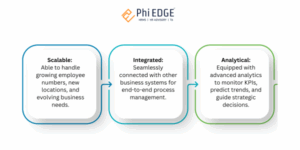
Modern HR management software is designed to be scalable, meaning it can accommodate your organization’s growth-whether you’re adding new employees, expanding to new locations, or restructuring departments. The software can easily adapt to changing business needs without requiring major upgrades or disruptions, ensuring that your HR processes remain efficient and effective as your organization evolves.
By leveraging these benefits, organizations can transform their HR departments from administrative centers into strategic partners that drive business success.
How to Choose the Right HR Software
Selecting the best HRMS software involves:
- Assessing Organizational Needs: Identify the HR processes that require automation and improvement.
- Evaluating Features: Ensure the software includes essential modules like HRIS, workforce management, and talent management.
- Scalability: Choose a solution that can grow with your organization’s size and complexity.
- Integration Capabilities: Ensure seamless integration with existing business systems (ERP, payroll, CRM) for unified data flow.
- Analytics and Reporting: Prioritize platforms with robust analytics to support data-driven HR strategies.
- User Experience: Opt for intuitive interfaces and mobile access to boost adoption and usability.
Execution: Beyond Software – Adapting for Strategic Alignment
The most effective HRMS software go beyond software implementation. They offer expert guidance to align HR strategies with broader business goals, ensuring that technology adoption translates into measurable organizational performance improvements. Partnering with vendors that provide onboarding support, training, and ongoing consultation can maximize the value of your HR investment.
Modern HR Software Must Be
 Conclusion
Best HRMS software in India is no longer a luxury but a necessity for organizations aiming to optimize performance, retain talent, and drive growth. By automating routine tasks, centralizing data, and providing actionable insights, HR management software empowers organizations to align their workforce strategies with business objectives-delivering measurable improvements in efficiency, compliance, and employee satisfaction. As the workplace continues to evolve, investing in scalable, integrated, and analytics-driven HRMS tools is key to staying ahead in the competitive landscape. However an organisation should transit from an HRIS to an HRMS as an HRMS helps in talent management and development and is more strategic in nature.