HR Lifecycle Management Services: The Foundation of a Successful Workforce Strategy
Employees are the backbone of every organization. However, managing employees effectively requires much more than recruitment and payroll processing. Organizations must create a structured journey that supports employees from their first interaction with the company to their final day of employment.
This journey is known as the Employee Lifecycle.
In today’s competitive business environment, companies that invest in HR Lifecycle Management Services experience higher employee satisfaction, improved productivity, stronger retention, and better compliance.
As organizations adopt digital transformation initiatives, integrated HRMS platforms like Phi EDGE HRMS are helping businesses automate and optimize every stage of the employee lifecycle.
This comprehensive guide explains what HR lifecycle management services are, their benefits, real-world applications, comparisons, buying considerations, expert recommendations, and how Phi EDGE HRMS helps businesses create a high-performing workforce in 2026.
What Are HR Lifecycle Management Services?
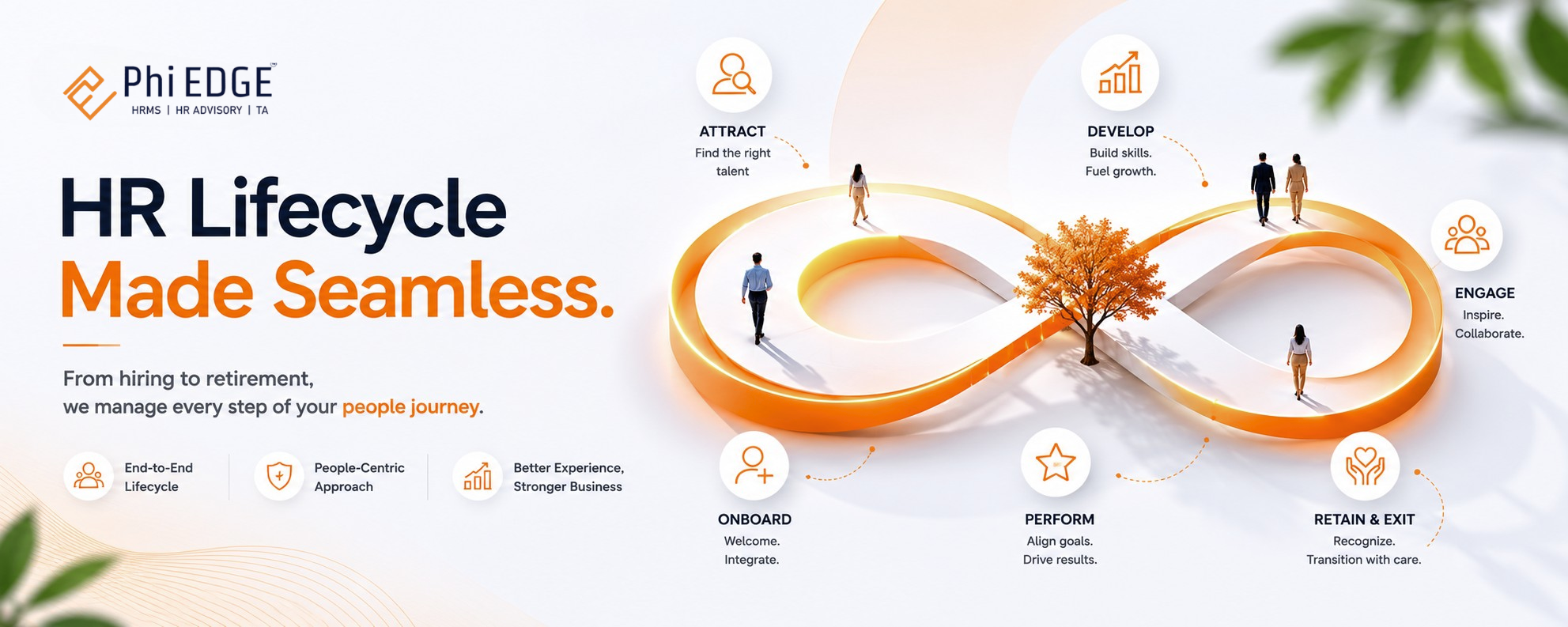
HR Lifecycle Management Services refer to the processes, tools, and technologies used to manage every stage of an employee’s relationship with an organization.
The lifecycle typically includes:
Recruitment
Attracting and hiring the right talent.
Onboarding
Helping new employees become productive quickly.
Training and Development
Building employee skills and capabilities.
Performance Management
Monitoring and improving employee performance.
Employee Engagement
Enhancing workplace satisfaction and motivation.
Career Development
Supporting employee growth and leadership development.
Retention
Reducing employee turnover.
Offboarding
Managing employee exits professionally and compliantly.
A structured lifecycle management approach ensures employees receive consistent support throughout their journey.
Why HR Lifecycle Management Matters in 2026
Modern workplaces are evolving rapidly.
Organisations deal with issues like:
- Hybrid workplaces
- Lack of talent
- Higher standards for employees
Diversity in the workforce
- Initiatives for digital transformation
- In the absence of an effective lifecycle management plan, companies frequently face:
- High rates of attrition
- Low levels of engagement among employees
- Unsatisfactory onboarding experiences
- Inconsistent assessments of performance
- Inefficiencies in administration
Organisations can overcome these obstacles and increase worker productivity with the use of HR lifecycle management services.
The Seven Stages of HR Lifecycle Management
Talent Acquisition and Recruitment
Recruitment is the first interaction between an organisation and a potential employee.
Effective recruitment strategies help businesses:
- Attract qualified candidates
- Reduce hiring costs
- Improve candidate experience
- Shorten hiring timelines
Example
A technology company receiving hundreds of applications every month can use automated recruitment workflows to identify the best candidates faster.
Employee Onboarding
The onboarding process significantly influences employee retention.
Research consistently shows that employees who experience structured onboarding adapt more quickly and remain with organizations longer.
Effective onboarding includes:
Documentation Management
Digital collection and verification of employee documents.
Policy Training
Introduction to company policies and workplace expectations.
Team Integration
Helping employees understand organizational culture and workflows.
Learning and Development
Employee skills require continuous improvement.
Organizations that invest in learning and development benefit from:
- Higher productivity
- Better innovation
- Increased employee satisfaction
Training programs may include:
- Technical skills
- Leadership development
- Compliance training
- Industry certifications
Performance Management
Performance management ensures employees remain aligned with organizational goals.
Modern performance management focuses on:
Goal Setting
Clear expectations and measurable objectives.
Continuous Feedback
Regular communication between managers and employees.
Performance Reviews
Data-driven evaluation processes.
Organizations that provide ongoing feedback typically achieve stronger workforce performance.
Employee Engagement
Engaged employees contribute more effectively to business success.
HR Lifecycle Management Services help organizations measure and improve:
- Employee satisfaction
- Workplace culture
- Team collaboration
- Recognition programs
Highly engaged employees are generally more productive and less likely to leave.
Retention and Career Growth
Retaining top talent is often more cost-effective than hiring replacements.
Organizations can improve retention by providing:
- Career progression opportunities
- Leadership development programs
- Internal mobility options
- Personalized growth plans
Employees who see long-term opportunities are more likely to remain committed to the organization.
Offboarding and Exit Management
A structured offboarding process protects organizational knowledge and maintains professional relationships.
Effective offboarding includes:
- Exit interviews
- Asset recovery
- Final settlements
- Documentation completion
- Knowledge transfer
A positive exit experience can strengthen employer branding and future recruitment efforts.
Key Benefits of HR Lifecycle Management Services
Improved Employee Experience
Employees receive a consistent and structured experience throughout their journey.
This increases satisfaction and engagement.
Increased Productivity
Automated workflows reduce administrative delays and help employees focus on meaningful work.
Better Employee Retention
Organizations can identify and address issues before employees decide to leave.
Enhanced Compliance
Lifecycle management helps maintain:
- Employee records
- Policy acknowledgments
- Audit trails
- Regulatory compliance
Data-Driven Workforce Decisions
Organizations gain valuable insights into:
- Employee performance
- Attrition trends
- Recruitment effectiveness
- Workforce planning
These insights improve decision-making.
Real-World Example of HR Lifecycle Management Success
Consider a manufacturing company with 1,200 employees across multiple locations.
Before Lifecycle Management Implementation
The company faced:
- High employee turnover
- Delayed onboarding
- Inconsistent performance reviews
- Manual HR processes
- Limited workforce visibility
After Adopting HR Lifecycle Management Services
The organization achieved:
- Faster onboarding
- Better employee engagement
- Improved retention
- Enhanced compliance
- Stronger workforce productivity
Management gained complete visibility into the employee journey from hiring to exit.
HR Lifecycle Management Services vs Traditional HR Management
Traditional HR Management
Traditional HR systems typically focus on:
- Employee records
- Payroll
- Attendance
Limitations
- Fragmented processes
- Limited automation
- Minimal employee engagement support
- Weak reporting capabilities
HR Lifecycle Management Services
Lifecycle-focused solutions provide:
- End-to-end employee management
- Automated workflows
- Employee self-service
- Performance tracking
- Workforce analytics
This creates a more connected and efficient employee experience.
How to Choose the Right HR Lifecycle Management Solution
Selecting the right solution requires evaluating several important factors.
Scalability
The system should support future business growth.
Ease of Use
Employees and HR teams should be able to use the platform easily.
Automation Features
Look for automation in:
- Recruitment workflows
- Onboarding processes
- Performance reviews
- Leave approvals
- Exit management
Integration Capabilities
The platform should integrate with:
- Payroll systems
- Attendance management
- ERP software
- Learning management systems
Reporting and Analytics
Advanced reporting helps organizations make informed workforce decisions.
Why Phi EDGE HRMS Is a Preferred HR Lifecycle Management Solution in 2026
Many organizations struggle with disconnected HR tools and manual processes.
Phi EDGE HRMS provides a unified platform that manages every stage of the employee lifecycle efficiently.
End-to-End Employee Lifecycle Management
Phi EDGE HRMS supports:
Recruitment Management
Simplified hiring workflows and candidate tracking.
Digital Onboarding
Faster employee integration and documentation management.
Attendance and Leave Management
Accurate workforce tracking and policy compliance.
Performance Management
Goal setting, feedback, and employee evaluations.
Employee Engagement
Tools designed to improve workplace satisfaction.
Offboarding Management
Structured exit processes and documentation workflows.
Smart HR Automation
Manual HR tasks consume significant time and resources.
Phi EDGE automates:
- Employee workflows
- Approval processes
- Notifications
- Documentation tracking
This improves efficiency while reducing administrative burden.
Employee Self-Service Portal
Employees can:
- Apply for leave
- Access documents
- Update personal information
- View attendance records
This enhances transparency and employee satisfaction.
Advanced Workforce Analytics
Organizations gain visibility into:
- Employee productivity
- Retention trends
- Performance metrics
- Workforce planning
These insights support strategic HR decision-making.
Compliance and Security
Phi EDGE HRMS helps businesses maintain:
- Secure employee records
- Regulatory compliance
- Audit-ready documentation
- Standardized HR processes
Common Mistakes Organizations Make in Lifecycle Management
Focusing Only on Recruitment
Hiring is important, but employee success depends on the entire lifecycle.
Neglecting Employee Development
Lack of growth opportunities often leads to turnover.
Conducting Annual Performance Reviews Only
Continuous feedback is more effective than yearly evaluations.
Ignoring Employee Engagement
Engagement directly impacts productivity and retention.
Using Multiple Disconnected Systems
Fragmented tools create inefficiencies and inconsistent employee experiences.
Integrated platforms provide a better solution.
Future Trends in HR Lifecycle Management Services
Artificial Intelligence in HR
AI will help organizations predict turnover risks and identify development opportunities.
Personalized Employee Experiences
Future HR systems will deliver customized career paths and learning recommendations.
Predictive Workforce Planning
Advanced analytics will improve hiring and succession planning decisions.
Hybrid Workforce Support
Lifecycle management solutions will continue evolving to support remote and distributed teams.
Expert Advice: Building a Strong Employee Lifecycle Strategy
Organizations should focus on:
Employee-Centric Processes
Design workflows around employee needs rather than administrative convenience.
Continuous Communication
Encourage regular feedback and transparent communication.
Technology-Driven Automation
Reduce manual tasks through intelligent HRMS solutions.
Data-Based Decision Making
Use workforce analytics to improve employee experiences and business outcomes.
Conclusion
For companies looking for long-term success and workforce excellence, HR Lifecycle Management Services are now a must.
Stronger employee experiences and improved business outcomes are produced by companies that successfully handle hiring, onboarding, development, performance, engagement, retention, and offboarding.
Organisations may automate HR procedures, boost employee engagement, increase compliance, and make more informed workforce decisions by putting in place a complete system like Phi EDGE HRMS.
A planned employee lifecycle strategy will continue to be a vital component of productivity, retention, and organisational success as companies continue to adjust to the nature of work in 2026.
FAQ Section
What are HR Lifecycle Management Services?
HR Lifecycle Management Services help organizations manage employee journeys from recruitment to offboarding through structured processes and technology.
Why is HR Lifecycle Management important?
It improves employee experience, productivity, retention, compliance, and workforce visibility.
How does Phi EDGE HRMS support employee lifecycle management?
Phi EDGE HRMS provides recruitment, onboarding, attendance, payroll, performance management, employee engagement, analytics, and offboarding tools in a single platform.
Which industries benefit from HR Lifecycle Management Services?
Manufacturing, IT, healthcare, education, retail, logistics, professional services, and enterprises of all sizes can benefit.
What is the biggest advantage of lifecycle management software?
It creates a connected employee experience while improving efficiency, retention, and workforce performance.