 +91 8956049164
  contact@phiedge.co.in


What is a Performance Management System in HRM?
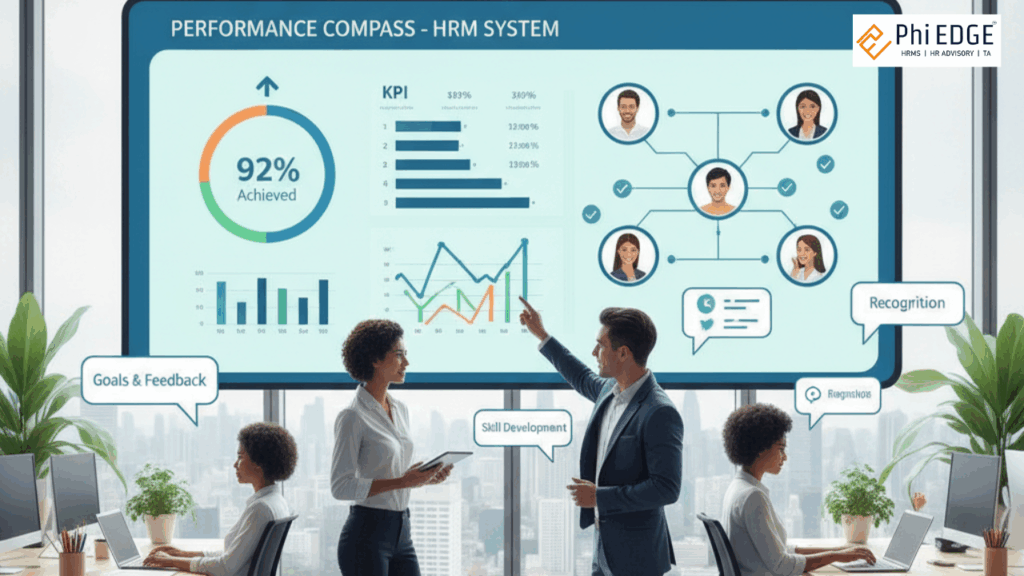
What is a Performance Management System in HRM? A Complete Guide
At Phi EDGE, we’ve always believed that people are the core of every successful business. Over the years, our services have expanded from HR Advisory to Talent Acquisition and advanced HRMS solutions, helping organizations across industries like Manufacturing, Financial Services, Real Estate, Hospitality, Construction, Academics, and IT achieve more.
One of the most important tools for businesses today is a Performance Management System in HRM. It’s not just about evaluating employees—it’s about building a culture of growth, accountability, and transparency. This blog explores what a Performance Management System in HRM is, why it matters, its benefits, and how Phi EDGE helps organizations implement it effectively.
What is a Performance Management System in HRM?
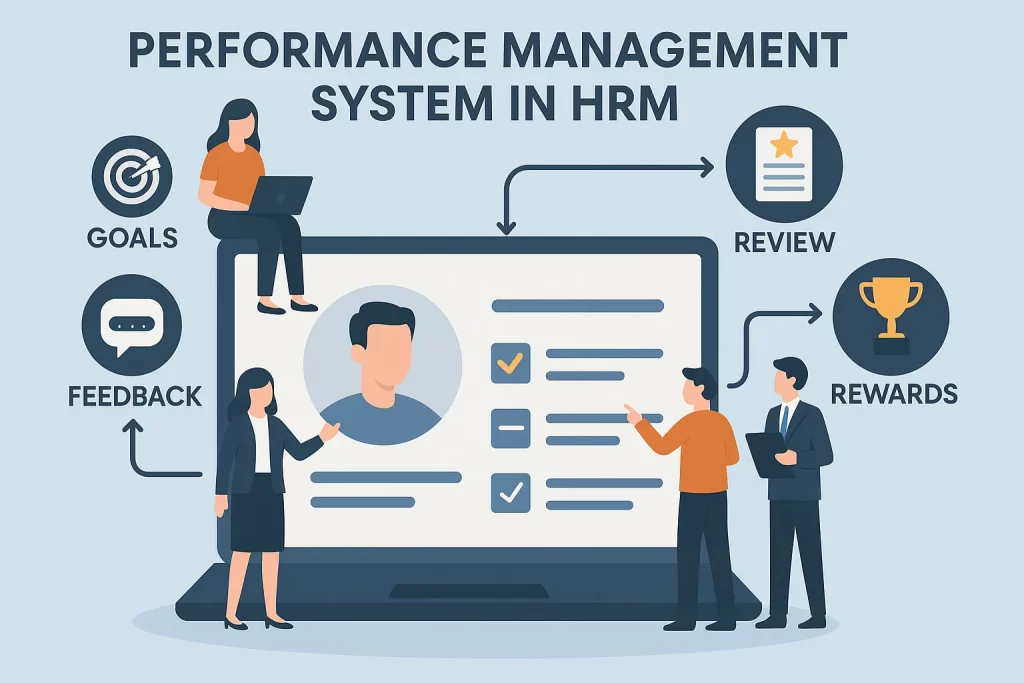
A Performance Management System in HRM is a structured framework designed to monitor, evaluate, and improve employee performance in alignment with organizational goals.
Unlike the traditional performance appraisal system that happens once a year, modern performance appraisal performance management is continuous. It involves setting goals, providing feedback, tracking progress, and rewarding achievements throughout the employee lifecycle.
At Phi EDGE, we see performance management as more than just numbers—it’s about engaging employees, driving productivity, and fostering leadership.
Key Components of a Performance Management System
1. Goal Setting and Alignment
Clear, measurable goals are defined for employees that align with business objectives.
2. Continuous Feedback
Instead of annual reviews, managers provide ongoing feedback, helping employees stay on track.
3. Performance Reviews
Structured appraisals using a performance appraisal system to measure individual contributions.
4. Training and Development
Identifying gaps and providing learning opportunities through integrated HRMS tools.
5. Recognition and Rewards
Motivating employees by recognizing achievements and linking rewards to performance.
6. Analytics and Reporting
Using data-driven insights to identify trends, top performers, and areas of improvement.
Why Performance Management is Crucial in HRM
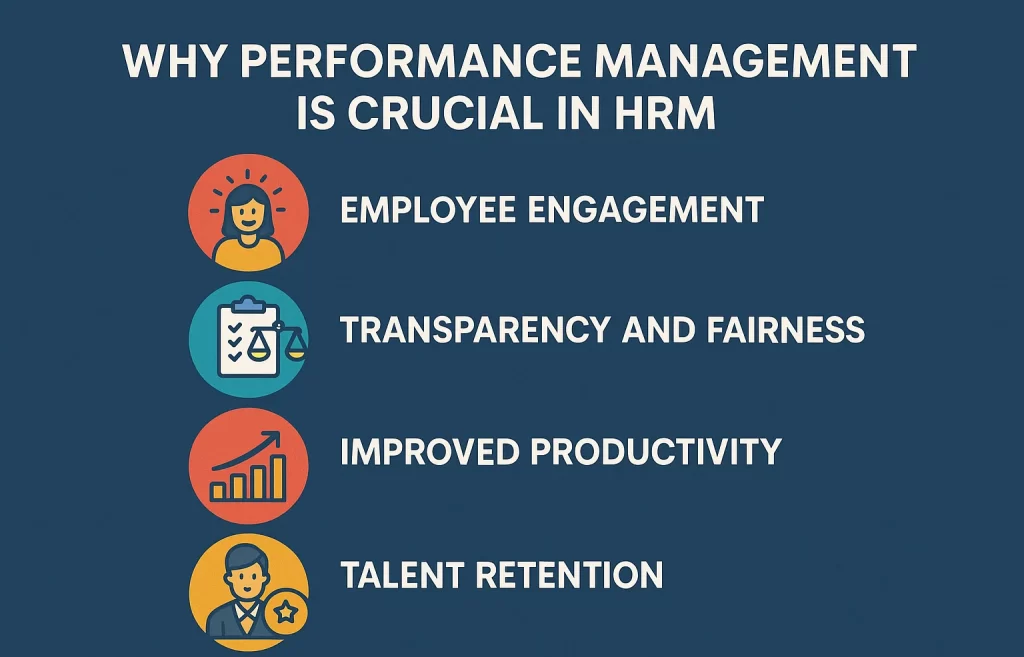
1. Employee Engagement
Employees who receive regular feedback and recognition are more motivated and engaged.
2. Transparency and Fairness
A well-structured performance appraisal system ensures fair evaluations based on
measurable outcomes.
3. Improved Productivity
Employees perform better when they have clear goals and real-time feedback.
4. Talent Retention
Employees feel valued when their contributions are recognized, reducing attrition rates.
5. Business Growth
Performance management aligns employee efforts with organizational strategy, driving growth.
Traditional Appraisal vs Modern Performance Management
● Traditional Appraisals: Annual, subjective, often one-sided.
● Modern Performance Management: Continuous, data-driven, collaborative.
At Phi EDGE, our performance management systems in HRM integrate advanced HRMS technology with advisory expertise, ensuring organizations shift from outdated annual reviews to dynamic, ongoing performance practices.
How HRMS Software Enhances Performance Management
Modern HRMS systems make performance management seamless by integrating data and automation.
Key Features in Phi EDGE HRMS:
● Automated Goal Tracking: Employees and managers can track progress in real-time.
● 360-Degree Feedback: Feedback from peers, managers, and clients ensures holistic evaluations.
● Customizable Performance Appraisal System: Tailored to industry-specific needs.
● Analytics Dashboard: Visual reports for data-driven decisions.
● Integration with Training: Links performance gaps to learning modules.
By embedding performance appraisal performance management directly into HRMS, businesses gain accuracy, efficiency, and transparency
Benefits of Implementing a Performance Management System in HRM
1. Objective Evaluations
Eliminates bias by using structured metrics and continuous data.
2. Improved Communication
Facilitates open conversations between employees and managers.
3. Scalable for All Sizes
Whether you’re a startup or a multinational, performance appraisal systems can scale with your workforce.
4. Better Workforce Planning
Helps HR teams identify future leaders and succession planning opportunities.
5. Cost Savings
By retaining talent and improving productivity, companies save on recruitment and training costs.
Why Choose Phi EDGE for Performance Management?
At Phi EDGE, we don’t just deliver HRMS software—we combine it with HR advisory expertise. That means we help businesses:
● Build tailored performance appraisal systems.
● Design competency-driven evaluations.
● Provide advisory support for goal-setting and employee engagement.
● Implement continuous feedback culture.
Our clients across industries trust Phi EDGE to not only automate HR processes but also create people-centric growth strategies.
Real-Life Example
A large IT services company was facing challenges with outdated annual reviews. By implementing Phi EDGE’s Performance Management System in HRM, they achieved:
● 40% faster appraisal cycles.
● Improved employee satisfaction scores by 25%.
● Identified and developed 15% more high-potential employees for leadership roles.
FAQs on Performance Management System in HRM
It’s a structured framework to evaluate, improve, and align employee performance with organizational goals.
A performance appraisal system is a part of the broader performance management system in HRM, which includes continuous feedback, training, and goal alignment.
It boosts engagement, ensures fairness, improves productivity, and drives business growth.
Yes. At Phi EDGE, we design scalable systems suitable for SMEs as well as large enterprises.
By automating goal tracking, integrating feedback, and linking appraisals to payroll and training.
All industries benefit, but fast-changing sectors like IT, finance, and manufacturing see the highest ROI.
No, it also helps managers and leadership align strategies, making it an organization-wide growth tool.
Conclusion
A Performance Management System in HRM is more than just an appraisal—it’s a culture shift. By moving away from traditional reviews to continuous, data-driven, and people-focused evaluations, businesses unlock their true potential.
At Phi EDGE, we bring together HRMS technology, advisory expertise, and talent solutions to deliver end-to-end performance appraisal performance management systems. Whether you want to improve employee engagement, enhance transparency, or build future leaders, our performance appraisal systems help you achieve it all.
Ready to transform your organization’s performance journey? Partner with Phi EDGE and explore the power of integrated Performance Management System in HRM.
