 +91 8956049164
  contact@phiedge.co.in


How a Daily Work Management System Improves Team Accountability
How a Daily Work Management System Improves Team Accountability
In today’s fast-paced business world, every minute counts. Workloads are growing, teams are becoming increasingly diverse, and deadlines are tighter than ever. Amidst this complexity, ensuring that daily tasks are completed on time with transparency, consistency, and accountability has become a strategic priority. This need is particularly pressing for organizations navigating hybrid work environments, remote teams, and cross-functional collaboration.
At Phi EDGE, we understand these challenges deeply. Our expertise spans three essential business verticals—HRMS, HR Advisory, and Talent Acquisition—and over the years, our services have expanded from traditional HR consulting to cutting-edge HRMS software and HRIS talent management solutions. Today, we support companies across industries such as Manufacturing, Financial Services, Real Estate, Hospitality, Construction, Academics, and IT. Across all these sectors, one truth stands clear: A robust Daily Work Management System can dramatically improve team accountability and overall organizational performance.
In this blog, we’ll explore how modern teams are transforming accountability through a Daily Work Management System, the role of a daily task management app, and how Phi EDGE’s solutions empower teams to stay aligned, responsible, and productive every single day.
The Challenge: Why Team Accountability Matters More Than Ever
Accountability in the workplace isn’t just about responsibility—it’s about clarity, ownership, and consistency. When teams know what they are responsible for, understand how their daily tasks contribute to broader goals, and are held answerable for outcomes, organizations flourish.
However, many companies still rely on outdated systems: spreadsheets, scattered messages, or manual to-do lists. While these may work in limited contexts, they fail at scale. Teams lose track of who is doing what, managers struggle to monitor progress, and miscommunication becomes a drain on both time and morale.
Imagine a hybrid team where one person works from the office, another from home, and yet another is frequently on client sites. Without a proper Daily Work Management System, how do you ensure that work assignments are transparent and progress is measurable? How do you hold each team member accountable for their contributions? This is where a modern system, supported by intelligent software, bridges the gap.
What Is a Daily Work Management System?
A Daily Work Management System is a structured digital framework designed to help teams plan, execute, track, and manage their day-to-day tasks. Unlike static lists or manual notes, this system provides real-time visibility into who is working on what, how progress is being made, and what outcomes are expected.
At the heart of such a system is a daily task management app—a tool that brings tasks to life with timelines, priorities, ownership, deadlines, and collaborative capabilities. This isn’t just a list of chores; it is a living, actionable representation of team workflows, shared priorities, and organizational objectives.
By deploying a structured Daily Work Management System, organizations can achieve:
● Clear assignment of tasks and responsibilities.
● Enhanced transparency in task workflows.
● Real-time tracking and updates.
● Improved collaboration across teams.
● Data-backed performance reviews.
● Reduced miscommunication and redundancies.
Why Traditional Task Management Falls Short
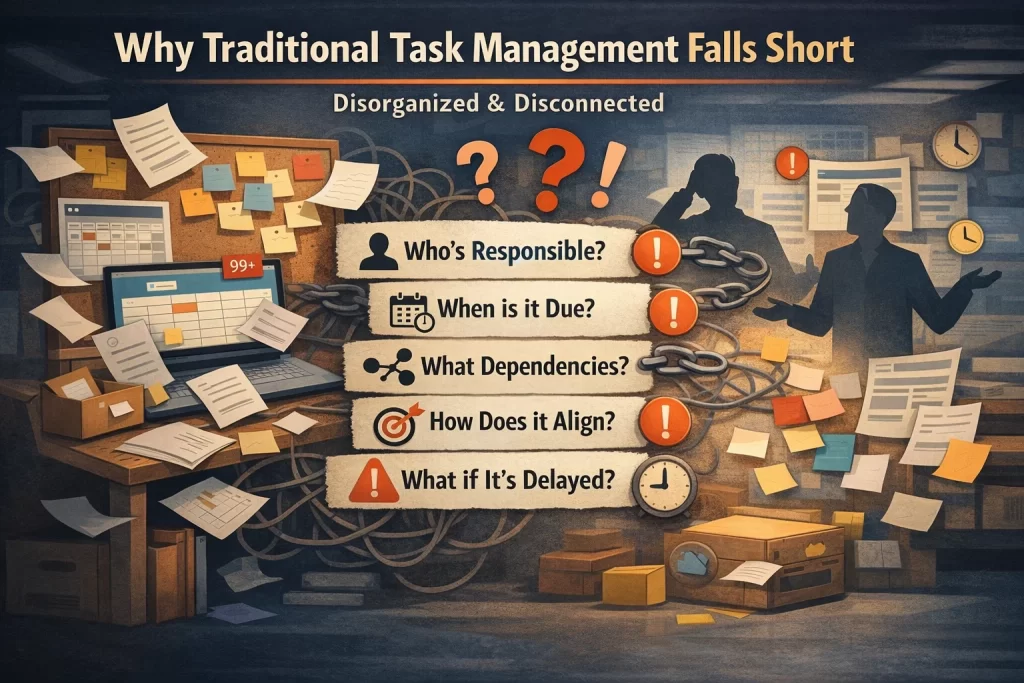
Traditional task systems—notes, spreadsheets, email threads—are static and disconnected. They may work for personal reminders or small groups, but as teams grow, these methods become chaotic. A lack of centralized visibility means tasks are easily forgotten, misprioritized, or duplicated.
Moreover, these systems do not support real accountability. They fail to answer critical questions like:
● Who is responsible for a specific task?
● When is it due?
● What dependencies does it have?
● How does it align with broader organizational goals?
● What happens if it is delayed?
Without answers to these questions, accountability remains aspirational rather than actionable.
That’s where a Daily Work Management System shines. This system provides structure, clarity, and data so that accountability is no longer a concept—it’s a measurable outcome.
How a Daily Task Management App Empowers Teams
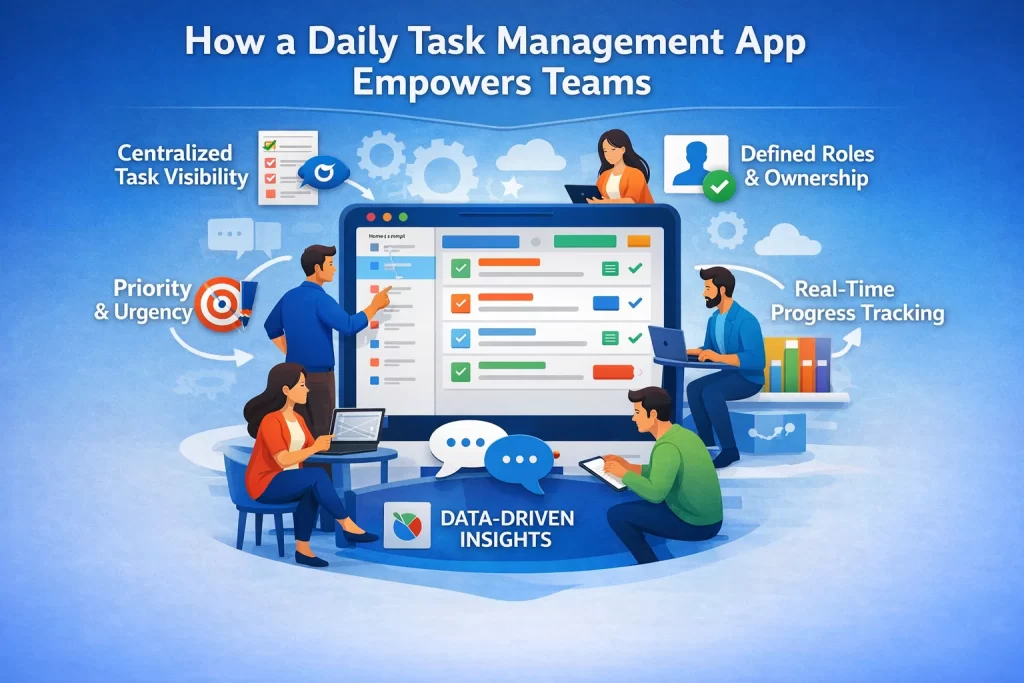
A daily task management app is the practical implementation of a Daily Work Management System. It becomes the digital workspace where employees and teams interact with their daily responsibilities.
Here’s how it elevates team accountability:
Centralized Task Visibility
When all tasks are housed in a single app accessible to every relevant team member, there is no ambiguity. Every person knows exactly what they are responsible for, and managers can see the big picture at a glance. This transparency drives ownership and reduces confusion.
Defined Roles Increase Ownership
Task ownership is clearly assigned. When employees know that a task is explicitly theirs, with a deadline and context, they naturally take it more seriously. The daily task management app embeds this accountability into daily workflows.
Prioritization Clarifies Urgency
Not all tasks are equal. A smart Daily Work Management System allows teams to prioritize work. Employees are guided to focus on what matters most, rather than reacting to random requests or distractions.
Real-Time Updates Encourage Progress Tracking
Static task lists become outdated quickly. A daily system updates in real time as tasks are completed, paused, or reassigned. Managers can immediately see progress, identify blockers, and take corrective action before small issues escalate.
Collaboration Happens Within Context
Instead of siloed messages or disconnected conversations, communication happens within the task itself. This means questions, feedback, changes in scope, and updates are all recorded in context—promoting responsible collaboration.
Data Supports Feedback and Performance Reviews
When you have a system that tracks completion, timelines, and task outcomes, managers no longer rely on memory or subjective impressions during reviews. Accountability becomes measurable, which supports fairer, more accurate evaluations.
Real Accountability Through Data and Insight
Accountability isn’t punishment. Accountability is clarity. When teams use a Daily Work Management System, they gain access to data that tells a story:
● Who completed what tasks and when?
● Which tasks were delayed—and why?
● Who regularly delivers on time?
● Who might be overloaded or underutilized?
● How do individual contributions align with team outcomes?
These insights form the foundation of responsible management. At Phi EDGE, we ensure that our daily work management features integrate seamlessly with HRMS Software data. This means task insights become part of broader HR analytics, supporting performance reviews, team planning, and skills development.
The Behavioral Impact of a Daily Work Management System
A structured system changes behavior. When employees know what is expected of them and see that their contributions are visible, accountability becomes part of the culture—not just a requirement.
Employees begin to:
● Plan their days more intentionally.
● Communicate proactively when issues arise.
● Reprioritize based on impact—not urgency alone.
● Support peers by sharing updates and context.
Managers begin to:
● Coach instead of just direct.
● Spot risks earlier.
● Support teams with actionable data.
● Celebrate wins with evidence, not guesswork.
This cultural change is one of the most powerful outcomes of adopting a Daily Work Management System.
How Phi EDGE’s Daily Work Management System Fits Into HRMS
Efficient daily work management should not operate in isolation. It must integrate with broader HR functions: performance reviews, employee engagement, attendance tracking, and talent management. This is precisely what makes the Daily Work Management System offered by Phi EDGE so impactful.
Phi EDGE’s HRMS ecosystem combines daily task management with HR data streams. This unified approach allows organizations to:
● Track how daily work contributes to quarterly goals.
● Link task performance with skill development paths.
● Tie completion data into performance appraisal cycles.
● Monitor workload distribution across teams.
● Adjust staffing and resourcing dynamically.
By embedding a daily work management system within HRMS, Phi EDGE bridges operational execution with strategic human resource planning.
AI-Driven Enhancements for Daily Work Management
Incorporating artificial intelligence elevates daily task management even further. AI can:
● Suggest task priorities based on past trends.
● Predict bottlenecks before they occur.
● Identify workload imbalances across teams.
● Recommend optimal resource allocation.
● Provide sentiment analysis around task completion patterns.
These intelligent capabilities add predictive and proactive elements to a Daily Work Management System—turning reactive teams into forward-thinking, adaptive high performers
Measuring Accountability: What Success Looks Like
Accountability is measurable. With the right system in place, organizations can track:
● Task completion rates
● Timeliness of delivery
● Manager vs. employee estimates of effort
● Rework frequency
● Bottleneck patterns
● Resource capacity utilization
These metrics feed directly into performance analytics, giving HR leaders concrete evidence of where improvements are happening—and where they are needed.
Overcoming Resistance to Daily Work Management Tools
It’s natural for employees or managers to resist new systems. Common concerns include:
● “This feels like micromanagement.”
● “I already know my tasks.”
● “It’s just another tool to learn.”
However, when implemented thoughtfully, a daily task management app is the opposite of micromanagement. It empowers individuals with clarity and reduces the anxiety of unclear expectations. Clear assignment, timelines, and visibility mean people can manage their own work with confidence.
Phi EDGE emphasizes onboarding, clear communication, and user training as part of every deployment. When teams see immediate value—less confusion, fewer meetings, smoother workflows—they adopt the system naturally.
Case Example: Accountability in Action
Imagine a team working on a product launch. Without a daily management system, tasks are scattered across emails, chats, and sticky notes. Deadlines slip because dependencies are hidden. Managers are unsure who is responsible for critical steps.
With a Daily Work Management System from Phi EDGE, every task is logged with clear ownership, deadlines, dependencies, and relationships to key goals. The team receives daily reminders, progress dashboards show real-time status, and managers can intervene earlier when trends show delays.
Instead of reacting to problems after they occur, the team collaborates proactively and decisions are backed by data—not guesswork.
Why Every Organization Should Invest in Daily Work Management
A Daily Work Management System is no longer a convenience—it’s a competitive advantage. In an era where teams are distributed, tasks are interdependent, and speed matters, organizations that master daily execution outperform their peers.
With such a system, organizations experience:
● Better clarity across teams
● Higher individual ownership
● Fewer miscommunications
● Faster decision-making
● Stronger performance outcomes
● Better alignment with organizational goals
And because Phi EDGE’s solution is integrated into a comprehensive HRMS platform, the benefits extend beyond daily tasks into performance management, employee engagement, training, and retention.
Frequently Asked Questions (FAQs)
Q1. What is a Daily Work Management System?
A Daily Work Management System is a digital framework that helps teams organize, track, and complete daily tasks with clarity and accountability, often through a daily task management app.
Q2. How does daily work management improve accountability?
It provides visibility into who is responsible for what, when tasks are due, and how progress is tracked. This clarity builds ownership and encourages consistent follow-through.
Q3. What is a daily task management app used for?
A daily task management app helps users log tasks, set priorities, assign responsibilities, track progress, and communicate within the task context.
Q4. Can this system integrate with HRMS Software?
Yes. When embedded within broader HRMS Software, a Daily Work Management System aligns daily activities with performance tracking, attendance, and strategic planning.
Q5. Is this suitable for remote or hybrid teams?
Absolutely. Visibility and real-time updates make daily work management particularly valuable for remote and hybrid workforce models.
Q6. How quickly can an organization implement such a system?
With cloud-based platforms like Phi EDGE, deployment and adoption can begin within weeks, depending on scale and customization.
Q7. Does this replace performance evaluations?
No. It enhances performance evaluations by providing real data on task execution, timelines, and outcomes—feeding directly into appraisal cycles.
Q8. Does AI play a role in daily work management?
Yes, AI can enhance sequencing, prioritization, prediction of bottlenecks, and intelligent resource allocation, making daily workflows smarter and more adaptive.
Conclusion: Accountability Is Not Optional—It’s Strategic
In the modern workplace, accountability is one of the strongest predictors of performance, employee satisfaction, and business results. Without clear visibility into daily tasks, team commitments become fragmented, outcomes become unpredictable, and opportunities for improvement are missed.
A Daily Work Management System powered by a capable daily task management app, integrated within a broader HRMS ecosystem, creates an environment where accountability is natural, data is authoritative, and teams can thrive together.
At Phi EDGE, we help organizations unlock these advantages by combining intelligent technology, HR insight, and practical implementation strategies that elevate daily work into strategic performance.
When individuals know what is expected of them and teams are empowered to manage their work collaboratively and transparently, everyone benefits—employees, managers, and organizations alike.
With Phi EDGE, accountability becomes part of your team’s DNA—not just a goal on paper.
